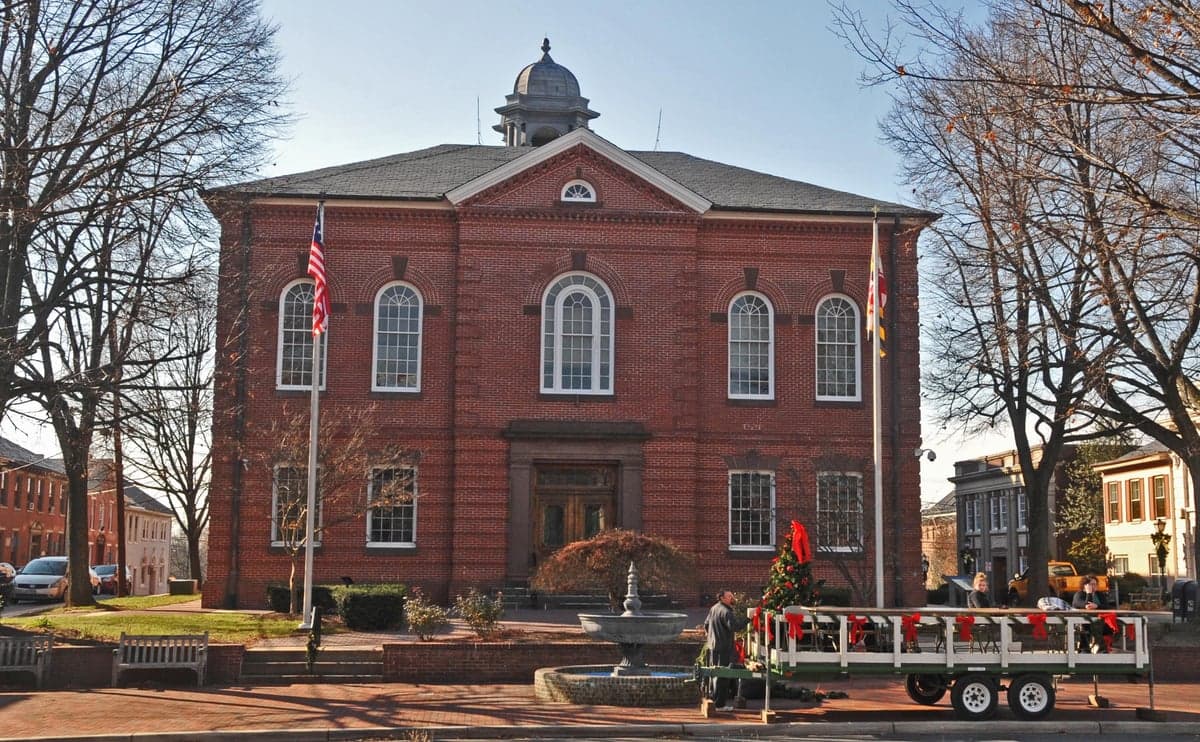
Photo: Wikipedia
Political ClimatePolitical Climate in Harford County
Showing district-level results — no local-only data available.
Local Political AnalysisPolitical Analysis of Harford County
Harford County has long been a reliably conservative stronghold in a deeply blue state, with a Cook PVI of R+8 that reflects its consistent preference for Republican candidates and limited-government principles. But if you’ve lived here as long as I have, you’ve watched the political ground shift under your feet — not in the county’s overall lean, but in the quiet, creeping way that progressive policies have started to seep into local governance, especially around Bel Air and Aberdeen. The county still votes red, but the battles are getting harder, and the state’s D+17 tilt is a constant weight on our local autonomy.
How it compares to the rest of Maryland
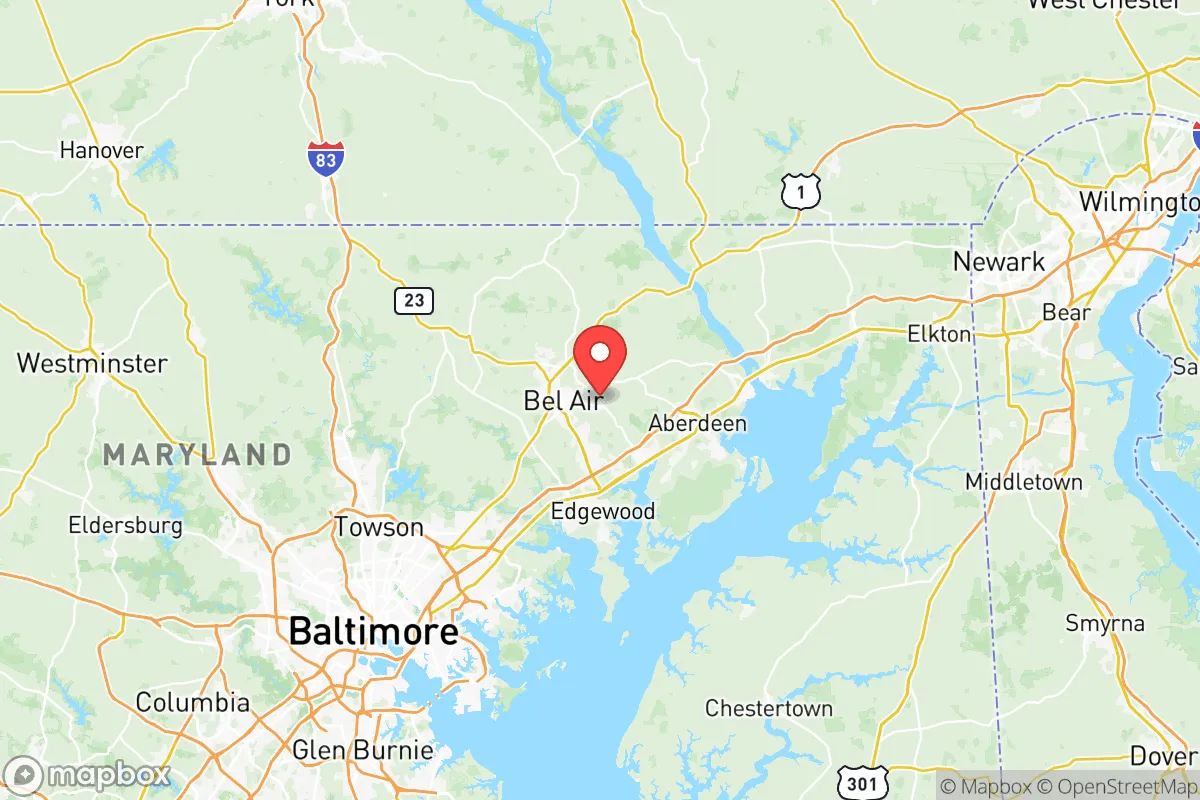
The contrast between Harford County and Maryland as a whole is stark. While the state legislature in Annapolis pushes through progressive priorities — from sweeping gun control laws to energy mandates that limit property rights — Harford County’s elected officials have generally pushed back. Towns like Fallston and Jarrettsville remain deeply red, with precincts routinely delivering 60-70% of the vote for Republican candidates. Bel Air, the county seat, is a mixed bag: the core leans more moderate, but the surrounding rural areas keep it conservative. Aberdeen and Havre de Grace show more blue-leaning tendencies, driven by younger families and government workers tied to Aberdeen Proving Ground. The swing precincts are in the suburban sprawl between Bel Air and the I-95 corridor, where newcomers from Baltimore County have brought more progressive voting habits. That’s where the real fight is — those precincts can flip a countywide race by a few hundred votes.
What this means for residents
For those of us who value personal freedoms and limited government, the biggest concern is the growing disconnect between local preferences and state mandates. Harford County residents have repeatedly voted against tax hikes and zoning overhauls, only to see Annapolis override local control on issues like renewable energy siting and education curriculum. The county’s school board, once reliably conservative, has seen progressive-backed candidates win seats in recent cycles, particularly in the Bel Air area. If you’re worried about government overreach into your family’s decisions — whether it’s health mandates, school choice, or property rights — Harford County still offers more breathing room than most of Maryland, but that margin is shrinking. The 2024 election saw Republican candidates win countywide races by narrower margins than a decade ago, and the trend line is concerning.
Culturally, Harford County remains a place where neighbors know each other, where the VFW halls are full on Friday nights, and where the Second Amendment is still widely respected. But the policy battles are real: fights over mask mandates in schools, debates over library content, and zoning disputes that pit rural landowners against developers backed by county officials. The long-term trajectory depends on whether the county can hold the line against the state’s progressive tide, or whether the suburbanization of places like Churchville and Forest Hill will slowly turn the county purple. For now, it’s still a red island in a blue sea — but the water is rising.

State Political ClimatePolitical Climate in Maryland
State Political AnalysisPolitical Environment in the State
Maryland is a deeply blue state with a Cook PVI of D+17, meaning it votes about 17 points more Democratic than the national average in presidential elections. The state hasn't backed a Republican for president since George H.W. Bush in 1988, and Democrats hold supermajorities in both chambers of the General Assembly. Over the last 20 years, the state has shifted steadily leftward, driven by explosive growth in the Washington, D.C. suburbs and the consolidation of progressive power in Baltimore and the I-95 corridor.
Urban vs. rural divide
The political map of Maryland is a tale of two states. The western counties — Garrett, Allegany, and Washington — vote reliably Republican, with Garrett County often delivering 70%+ for GOP candidates. The Eastern Shore, places like Queen Anne's and Caroline counties, also leans red, though less overwhelmingly. But these areas are sparsely populated. The real power lies in the D.C. suburbs: Montgomery County and Prince George's County alone account for nearly a third of the state's population and vote 75-80% Democratic. Baltimore City is another Democratic stronghold, while Baltimore County and Howard County have trended blue as well. The only real GOP foothold in the central part of the state is Carroll County, which remains a conservative outlier. The result is a state where rural and exurban conservatives feel increasingly powerless, as the urban crescent from Frederick through Baltimore to the D.C. line dictates every statewide election.
Policy environment
Maryland's policy environment is aggressively progressive. The state has a graduated income tax with a top rate of 5.75%, plus county-level income taxes that push the combined rate well over 8% in many jurisdictions. Property taxes are high, especially in Montgomery and Prince George's counties. The state has a strict regulatory posture on business, with a minimum wage that hit $15 an hour in 2024 and is indexed to inflation. Education policy is dominated by the Blueprint for Maryland's Future, a massive funding plan that pours billions into public schools but has done little to stem the decline in test scores, particularly in Baltimore City. Healthcare is heavily regulated, with a state-run insurance exchange and strict certificate-of-need laws that limit competition. On election law, Maryland has no-excuse mail-in voting, same-day registration, and automatic voter registration — all of which benefit the dominant Democratic machine. The state also has a strict gun control regime, including a ban on "assault weapons," a handgun roster, and a requirement for a state police-issued permit to purchase a handgun.
Trajectory & freedom
Maryland is becoming less free by any measure. The 2024 legislative session saw the passage of a "parental rights" bill that was watered down to the point of irrelevance, while a bill to require schools to notify parents of changes in a child's gender identity died in committee. Meanwhile, the state expanded its already strict gun laws, banning firearms in most public buildings and creating a "sensitive places" list that critics say effectively bans carry in large swaths of the state. On medical freedom, Maryland was one of the first states to impose strict COVID-19 mandates, including vaccine requirements for state employees and schoolchildren, and has shown no appetite for rolling them back. The state's tax burden is among the highest in the nation, and there is no serious movement to reduce it. The only area where Maryland has moved toward freedom is on marijuana — it legalized recreational use in 2023 — but that's a national trend, not a Maryland-specific one.
Civil unrest & political movements
Maryland has a history of civil unrest, most notably the 2015 Baltimore riots following the death of Freddie Gray in police custody. That event exposed deep racial and economic divides in the city and led to a sustained period of activism around policing and criminal justice reform. On the left, groups like the Baltimore Action Legal Team and the Maryland Justice Project remain active, pushing for further defunding of police and decarceration. On the right, the Maryland Republican Party is weak and fractured, but there are grassroots movements in places like Carroll County and the Eastern Shore focused on school board elections, parental rights, and Second Amendment advocacy. Immigration is a flashpoint: Maryland is a sanctuary state, with a 2023 law that prohibits state and local law enforcement from cooperating with federal immigration authorities. This has led to tensions in more conservative counties, with some sheriffs vowing to ignore the law. Election integrity remains a concern for conservatives, given the state's expansive mail-in voting system and the lack of voter ID requirements.
Projection
Over the next 5-10 years, Maryland will likely become even more blue. The D.C. suburbs are growing faster than the rest of the state, and the in-migration is overwhelmingly from people who work in the federal government or the progressive nonprofit sector. The rural and exurban areas that vote Republican are losing population. The only wild card is the possibility of a national realignment that could make the state more competitive, but that seems unlikely given the current trajectory. A conservative moving to Maryland should expect to live in a state where their political views are in the minority, where taxes will continue to rise, and where the regulatory environment will become more restrictive. The best bet for a conservative is to settle in Carroll County or one of the Eastern Shore counties, where local government is still friendly, but even there, state-level policies will constrain local autonomy.
For a new resident, the bottom line is this: Maryland is a beautiful state with great schools in some areas and a strong economy, but it comes with a heavy price tag in taxes and a loss of personal freedom. If you value low taxes, gun rights, and local control, you will find yourself fighting an uphill battle. If you can afford the cost and are willing to adapt to the political environment, places like Frederick, Hagerstown, or Salisbury offer a decent quality of life. But don't expect the state to change direction anytime soon.
* Values derived from national, state, county, city and local statistics and may differ in a specific area. Last updated: 2026-06-06T04:56:48.000Z
Narrative content on this page is AI-generated and may contain mistakes. Verify any details that matter before acting on them.
ReloMaps may earn a commission from affiliate links at no extra cost to you.

