 Popular
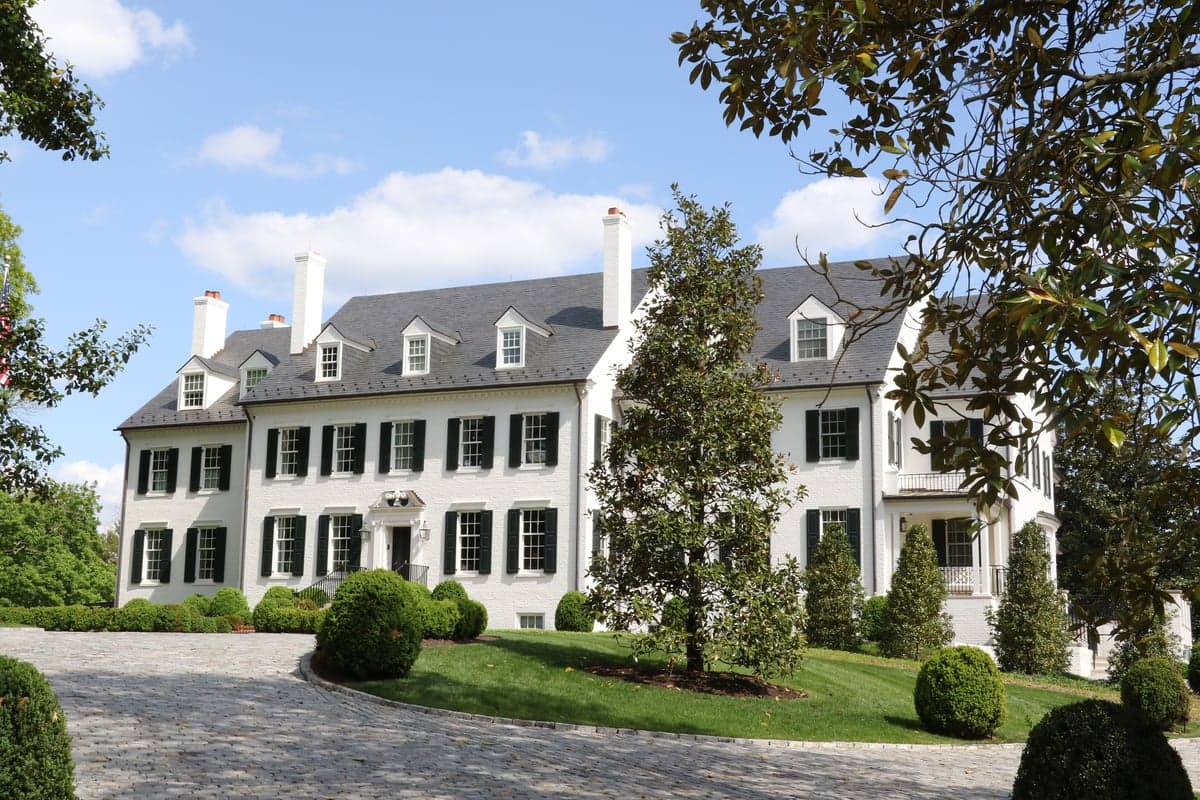
Photo: Wikipedia
Demographics of McLean, VA
Affluence Level in McLean, VA
A wealthy area with high-earning, well-educated households. Incomes, home values, and educational attainment meaningfully outpace national averages.
Census doesn't track above $250K
People of McLean, VA
McLean, Virginia is a densely educated, affluent community of 50,232 residents where 85.1% of adults hold a college degree and the foreign-born population stands at a moderate 8.6%. The city’s character is defined by a predominantly white (65.8%) professional class, a significant East/Southeast Asian minority (16.8%), and a smaller Indian-subcontinent community (3.7%), with Hispanic (5.6%) and Black (2.2%) populations remaining modest. Distinctive identity markers include a strong federal-government and defense-contractor employment base, top-ranked public schools, and a political culture that leans center-right in local elections, though national partisan splits are visible across neighborhoods.
How the city was settled and grew
McLean’s original population was drawn by the same forces that shaped much of Northern Virginia: tobacco-based agriculture along the Potomac River and the strategic value of the nearby Chain Bridge crossing. The area was sparsely farmed through the 18th and 19th centuries, with the first real settlement cluster forming around the Langley Fork area, where a handful of Anglo-American families operated grist mills and small plantations. The arrival of the Washington and Old Dominion Railroad in the early 1900s triggered the first suburban wave, as Washington, D.C. professionals built summer homes and commuter cottages in what became Chesterbrook and Salona. These early neighborhoods were almost entirely white and native-born, populated by government clerks, military officers, and business owners seeking rural respite within commuting distance of the capital. The Great Depression slowed growth, but the post-World War II boom—fueled by the expansion of the federal government and the rise of the CIA headquarters in Langley—transformed McLean into a full-fledged bedroom community. Developers like the Broyhill family built large tracts of single-family homes in areas such as Broyhill Crest and Broyhill Langley, attracting a wave of white, college-educated professionals from across the country who valued proximity to D.C. and the newly built Capital Beltway.
Modern era (post-1965)
The 1965 Hart-Cellar Act had a limited immediate effect on McLean compared to other D.C. suburbs, but the long-term impact is visible in the city’s East/Southeast Asian population, which now stands at 16.8%. The primary driver was not direct immigration from Asia but rather secondary migration from other U.S. metro areas. Highly skilled Chinese, Korean, and Vietnamese professionals—many already holding advanced degrees and H-1B visas—moved into McLean from the 1990s onward, drawn by the Langley High School attendance zone and the concentration of technology and consulting jobs at firms like Booz Allen Hamilton and Capital One. These families concentrated in the Langley Forest and Woodside Estates neighborhoods, where homes are larger and school performance is highest. The Indian-subcontinent community (3.7%) followed a similar pattern, clustering in the Franklin Park area and the newer developments near the Tysons Corner border. The Hispanic population (5.6%) is more dispersed but has a visible presence in the McLean Gardens apartment complexes and service-worker housing near Chain Bridge Road. The Black population (2.2%) remains small and is largely composed of long-established families in the Salona Village area, with little recent in-migration. Domestic in-migration during this period shifted from government workers to private-sector executives and entrepreneurs, many of whom bought into the Ballantrae Farms and Merrywood estates, reinforcing McLean’s reputation as one of the wealthiest zip codes in the United States.
The future
McLean’s population is heading toward greater ethnic diversification at the top of the income ladder, but the city is not tribalizing into distinct enclaves in the way some larger suburbs have. The East/Southeast Asian share (16.8%) is likely to plateau as housing costs push younger families toward more affordable Fairfax County neighborhoods like Chantilly or Centreville. The Indian-subcontinent community (3.7%) is growing slowly, primarily through intra-metro moves rather than new immigration. The Hispanic and Black shares are expected to remain stable or decline slightly as older residents age out and are replaced by higher-income buyers. The white share (65.8%) will continue to shrink gradually, but McLean will remain a majority-white, highly educated, and politically moderate-to-conservative community for the foreseeable future. The biggest demographic shift may be generational: as the baby-boomer cohort downsizes or moves to retirement destinations, younger families—often dual-income, both with graduate degrees—are buying into the Langley and Chesterbrook neighborhoods, maintaining the city’s character while slowly lowering the median age.
For someone moving in now, McLean is becoming an increasingly professional-class, globally oriented suburb where educational attainment and household income are the primary social markers, not ethnic background. The city offers stability, top-tier schools, and a low-crime environment, but at a price point that filters for high earners. It is not a place of rapid demographic upheaval, but of gradual, orderly replacement—a safe bet for conservative-leaning families who value continuity and institutional strength.

* Values derived from national, state, county, city and local statistics and may differ in a specific area. Last updated: 2026-04-27T14:48:07.000Z
Narrative content on this page is AI-generated and may contain mistakes. Verify any details that matter before acting on them.
ReloMaps may earn a commission from affiliate links at no extra cost to you.

