 Popular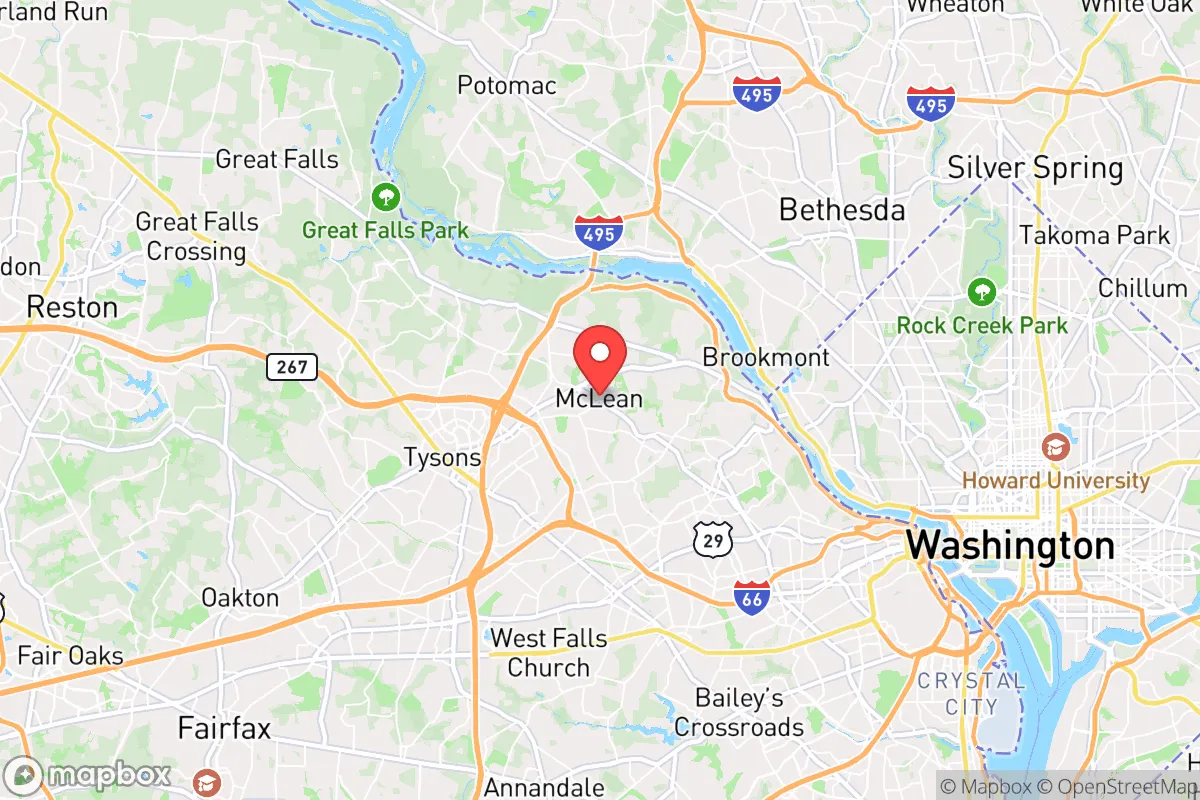
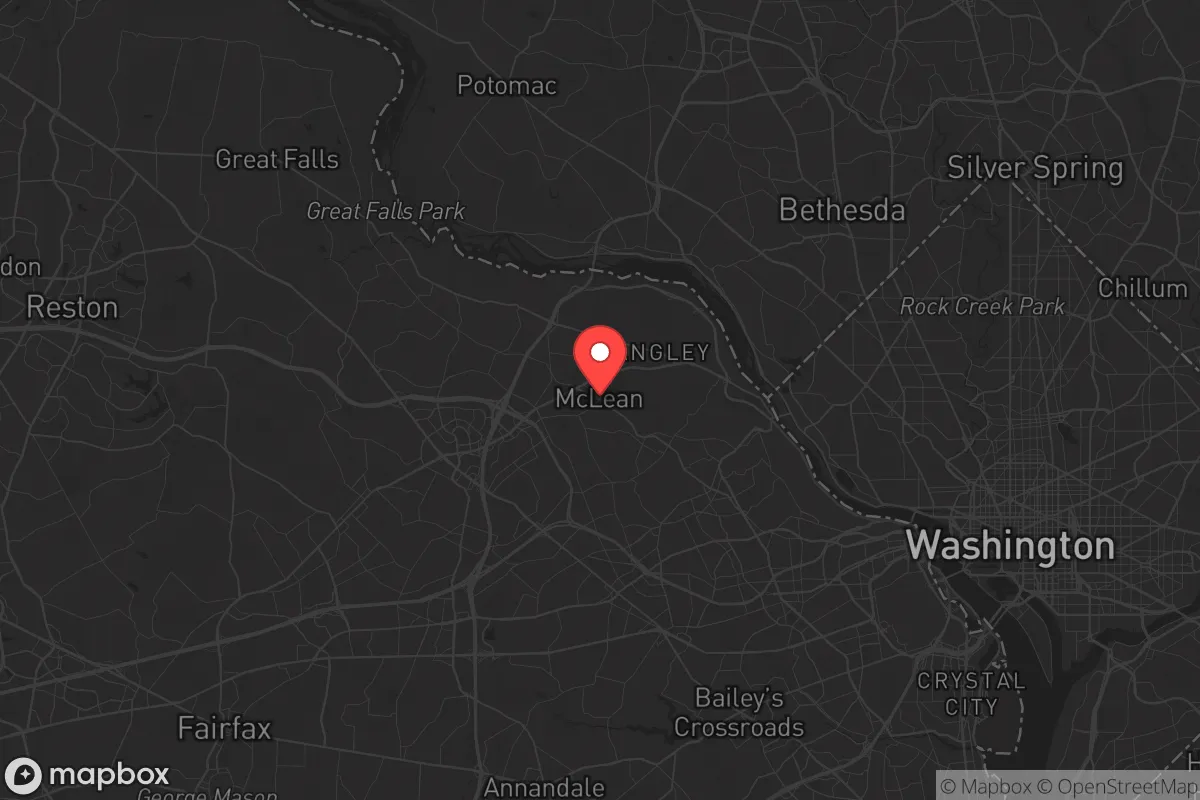
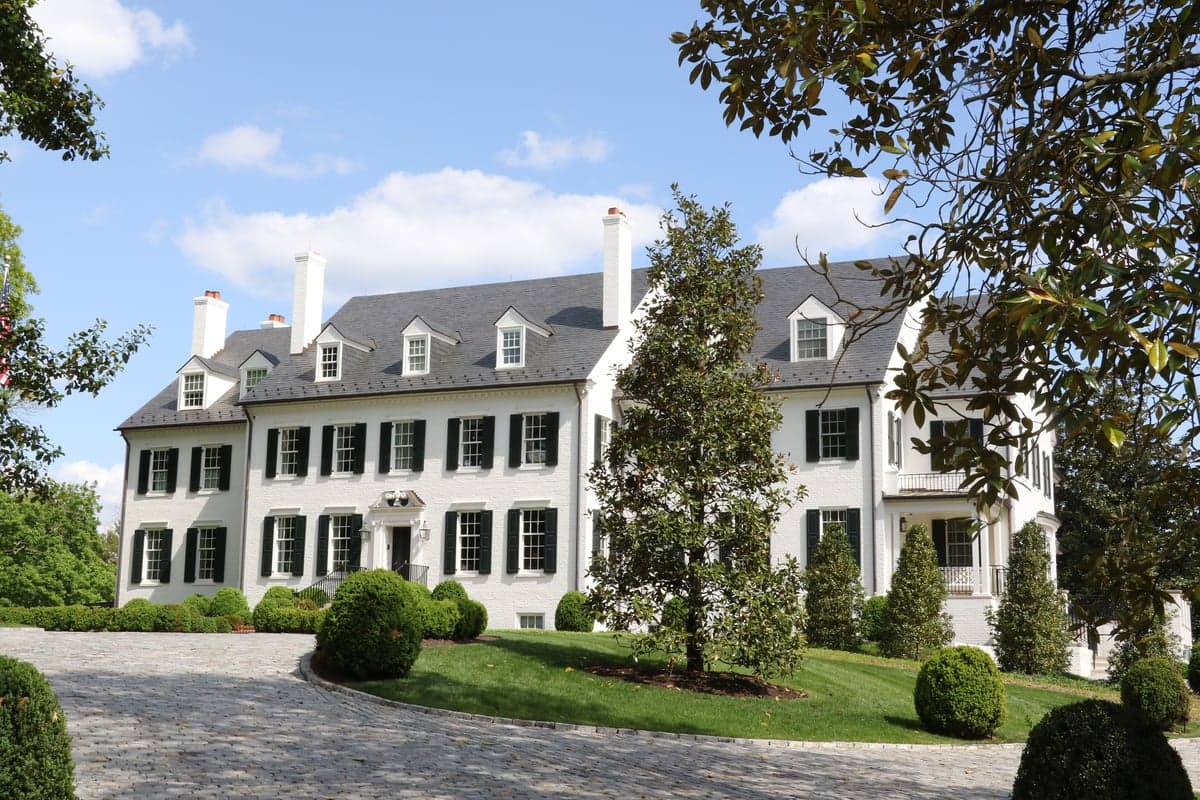
Photo: Wikipedia
Political ClimatePolitical Climate in McLean, VA
District shown is the primary district for this city’s centroid. Cities may span multiple districts.
Local Political AnalysisPolitical Analysis of McLean, VA
McLean, Virginia, is about as deep blue as it gets in the D.C. suburbs, with a Cook Partisan Voting Index of D+26. That means the area votes more than a quarter more Democratic than the national average, and it’s been trending that way for decades. If you’re looking at the political climate here, you’re looking at a place where progressive policies are the baseline, not the exception—and where the local government and school board often feel like they’re operating with a mandate to push further left every cycle.
How it compares
Drive 15 minutes west to Great Falls or 20 minutes south to Clifton, and you’ll feel a noticeable shift. Those areas still lean Republican, with precincts that often vote +10 to +15 R in local races. McLean, by contrast, is surrounded by similarly blue enclaves like Arlington and Bethesda, creating a regional bubble where conservative voices are increasingly rare. In the 2024 presidential primary, McLean precincts gave Joe Biden over 80% of the vote, while nearby Vienna and Oakton hovered closer to 60-65% Democratic. The difference isn’t subtle—it’s a cultural and political chasm that’s widened in the last five years, especially as Fairfax County’s board of supervisors has pushed zoning changes and tax hikes that hit homeowners hard.
What this means for residents
For a conservative-leaning family or retiree, living in McLean means accepting that your vote on local issues—school board, county board, even the sheriff’s race—is almost always going to be on the losing side. The Fairfax County school board, which oversees McLean’s top-rated public schools, has adopted policies like critical race theory-inspired curriculum and gender identity guidelines that allow students to change names and pronouns without parental consent. The county board has also pushed through higher property tax rates (the effective rate is now about $1.15 per $100 of assessed value) and upzoning that allows more dense housing in single-family neighborhoods. If you value local control and limited government, these are red flags that signal a growing disconnect between the people who live here and the people who run it.
On the ground, you’ll find that most of your neighbors are friendly and civic-minded, but political conversations are often one-sided. The local Republican committee struggles to find candidates for many races, and conservative viewpoints are rarely represented in the McLean Patch or the Falls Church News-Press. The long-term trajectory is concerning: as the county becomes more diverse and more reliant on federal government jobs, the appetite for progressive policies only grows. The 2025 county board elections saw a 12-point swing further left, with the Democratic slate winning every seat by double digits. If you’re looking for a place where your vote matters on the local level, McLean is not it—but if you’re willing to be a quiet minority in a wealthy, well-run suburb, the schools and amenities are still world-class.

State Political ClimatePolitical Climate in Virginia
State Political AnalysisPolitical Environment in the State
Virginia is a purple state that has been trending blue over the past two decades, but it’s not a monolith. The northern Virginia suburbs of Washington, D.C. — places like Arlington, Alexandria, and Loudoun County — now drive statewide elections with a heavily Democratic, high-density, and increasingly progressive electorate. Meanwhile, the rest of the state — from the Shenandoah Valley to Southside and the Tidewater region — remains reliably conservative. The result is a state that flipped from reliably red in the 2000s (voting for George W. Bush twice) to solidly blue in presidential races since 2008, with Democrats now controlling the governorship and both chambers of the legislature as of 2024. For a conservative considering relocation, the key question is whether you’re moving to the D.C. orbit or to the real Virginia.
Urban vs. rural divide
The political map of Virginia is a textbook case of the urban-rural split. The entire Democratic majority is built on the D.C. suburbs — Fairfax, Prince William, Loudoun, and Arlington counties — which together account for over a third of the state’s population. These areas vote 60-70% Democratic and have grown explosively with federal contractors, tech workers, and transplants from blue states. The second Democratic stronghold is the Richmond metro, especially the city itself and Henrico County, which have shifted left as the city has gentrified. The third is the Hampton Roads area, where Norfolk and Virginia Beach are competitive but lean blue in statewide races. Everything else — the Shenandoah Valley (Winchester, Harrisonburg, Staunton), Southside (Danville, Martinsville), Southwest Virginia (Bristol, Abingdon), and most of Central Virginia (Lynchburg, Bedford) — votes 60-70% Republican. The divide is so stark that a conservative moving to Virginia needs to understand that your vote will be drowned out if you settle in NoVA, but will count heavily in places like Fredericksburg or Roanoke, which are more balanced.
Policy environment
Virginia’s policy environment has shifted dramatically left since Democrats took full control in 2020. The state has a flat income tax rate of 5.75%, which is moderate but not low, and sales tax is 5.3% (higher in some localities). Property taxes are set locally and vary widely — Loudoun County has some of the highest in the state, while Pittsylvania County is much lower. On education, Virginia has seen a push for critical race theory in public schools, particularly in NoVA, and Governor Youngkin’s 2022 executive order banning “inherently divisive concepts” was a temporary win for parental rights, but the underlying curriculum battles continue. Healthcare policy is mixed: Virginia expanded Medicaid under the Affordable Care Act in 2019, which was a conservative defeat, but the state also has relatively strong right-to-work laws and no state-level rent control. Election laws are a flashpoint: Virginia has no-excuse absentee voting, same-day registration, and automatic voter registration, which conservatives view as lax. The state also has a Democratic trifecta as of 2024, meaning the governor’s veto can be overridden, and the legislature has passed bills on gun control, abortion access, and renewable energy mandates.
Trajectory & freedom
On personal liberty, Virginia is a mixed bag trending in the wrong direction. Gun rights have been under sustained assault: in 2020, Democrats passed a one-handgun-per-month limit, universal background checks, a red flag law, and a ban on assault weapons for those under 21. These laws were a direct response to the 2019 Virginia Beach shooting and the subsequent “gun sanctuary” movement where over 100 counties declared themselves Second Amendment sanctuaries. Parental rights saw a win with Youngkin’s 2022 executive order on transparency in school curricula, but the legislature has since blocked efforts to codify it. Medical autonomy is under threat: Virginia has no parental consent requirement for minors seeking abortions, and the state has expanded abortion access to include late-term procedures in some cases. Property rights are relatively strong, but the state has aggressive eminent domain powers for transportation projects, and localities in NoVA have imposed upzoning mandates that reduce single-family zoning. Taxation is creeping upward: the state’s gas tax was increased in 2020, and there are recurring proposals for a wealth tax on high-income earners. The trajectory is clear: Virginia is becoming less free on multiple fronts, especially for gun owners, parents, and taxpayers.
Civil unrest & political movements
Virginia has been a national flashpoint for political movements. The 2017 Unite the Right rally in Charlottesville put the state on the map for violent left-right clashes, and the aftermath saw the removal of Confederate statues and a wave of “cancel culture” targeting historical figures. The 2020 Black Lives Matter protests in Richmond were some of the largest in the country, with the Robert E. Lee statue becoming a focal point. On the right, the Second Amendment sanctuary movement in 2019-2020 was the largest grassroots mobilization in modern Virginia history, with over 100 counties passing resolutions. Immigration politics are tense: NoVA and Richmond have sanctuary city policies that limit cooperation with ICE, while rural counties have passed resolutions opposing them. Election integrity is a hot topic: Virginia’s 2020 election was secure, but the state’s same-day registration and no-excuse absentee voting have led to ongoing concerns about ballot security. The 2021 gubernatorial election saw Youngkin win on a parental rights and education platform, but the 2023 legislative elections gave Democrats full control again, showing the state’s volatility. A new resident in NoVA will see constant political activism, while in rural areas, the culture is more traditional and less confrontational.
Projection
Over the next 5-10 years, Virginia will likely continue its leftward drift, driven by in-migration from blue states into NoVA and Richmond. The D.C. suburbs are growing faster than the rest of the state, and these new residents are overwhelmingly Democratic. The 2025 gubernatorial election will be a bellwether: if a Republican can win again, it will show the state is still competitive, but if Democrats hold the governorship, the trend is locked in. The 2024 presidential election saw Virginia go blue by 5 points, a narrower margin than 2020, but still a loss for conservatives. The rural exodus is real: young people are leaving Southwest Virginia and Southside for cities, further diluting conservative votes. The legislative map is gerrymandered by a bipartisan commission, but the current districts favor Democrats in the House of Delegates. The policy trajectory is toward higher taxes, more gun control, expanded abortion access, and progressive education mandates. For a conservative moving in now, the realistic expectation is that Virginia will be a blue state within a decade, with the only redoubt being the rural counties and a few conservative suburbs like Chesterfield and Spotsylvania.
For a conservative considering relocation, Virginia offers a stark choice: live in the D.C. orbit and accept a blue political environment with high taxes and progressive policies, or move to the rural or exurban areas where your vote still matters and your lifestyle is more traditional. The state’s natural beauty, strong economy, and military presence are real assets, but the political climate is increasingly hostile to conservative values. If you’re a parent concerned about school curriculum or a gun owner worried about your rights, Virginia is not the safe haven it was 20 years ago. The best bet for a conservative is to target counties like Augusta, Rockingham, or Bedford, where the local culture is still red, and hope that the state’s leftward march can be slowed by a future Republican governor. But don’t expect the state to flip back — the demographic tide is strong, and Virginia is now a blue state in all but name.
* Values derived from national, state, county, city and local statistics and may differ in a specific area. Last updated: 2026-04-27T14:48:07.000Z
Narrative content on this page is AI-generated and may contain mistakes. Verify any details that matter before acting on them.
ReloMaps may earn a commission from affiliate links at no extra cost to you.

