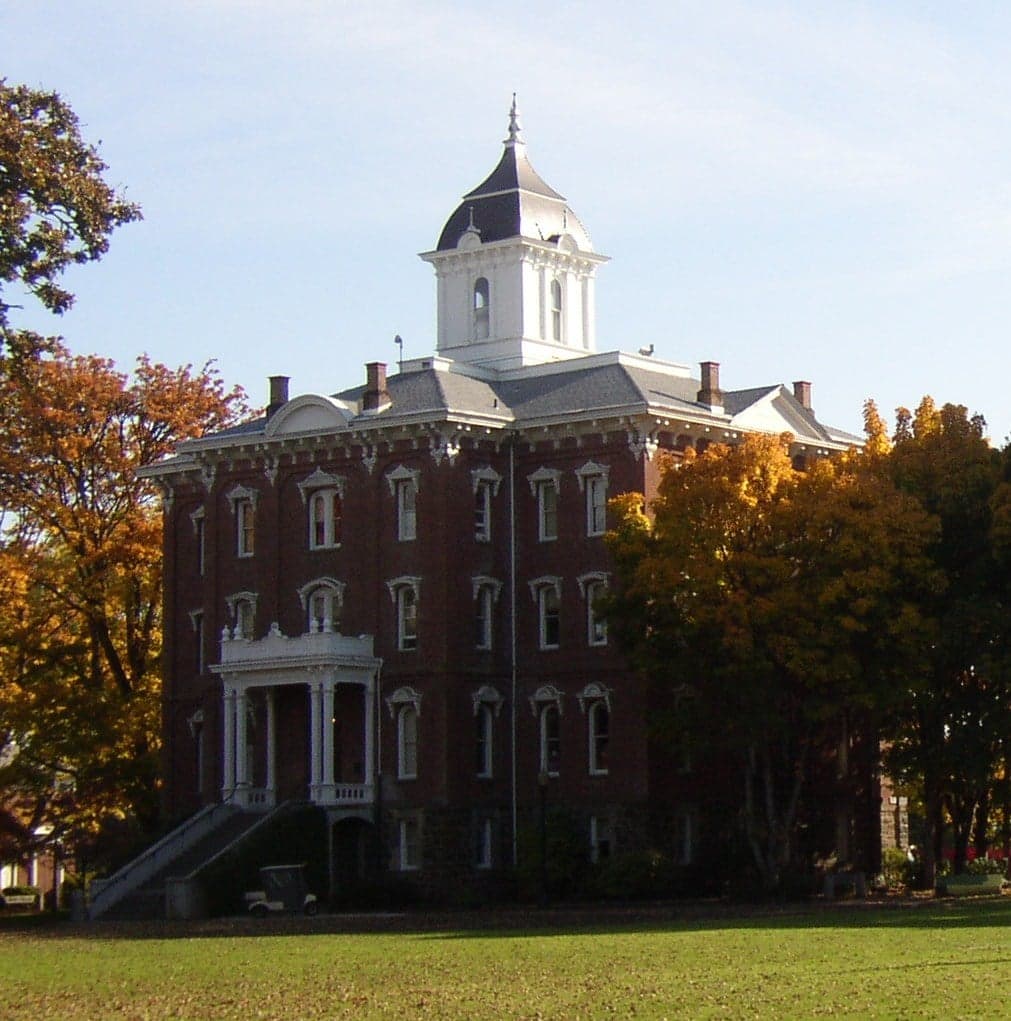
Photo: Wikipedia
Demographics of Mcminnville, OR
Affluence Level in Mcminnville, OR
A middle-class area roughly in line with national averages across income, home values, education, and employment.
People of Mcminnville, OR
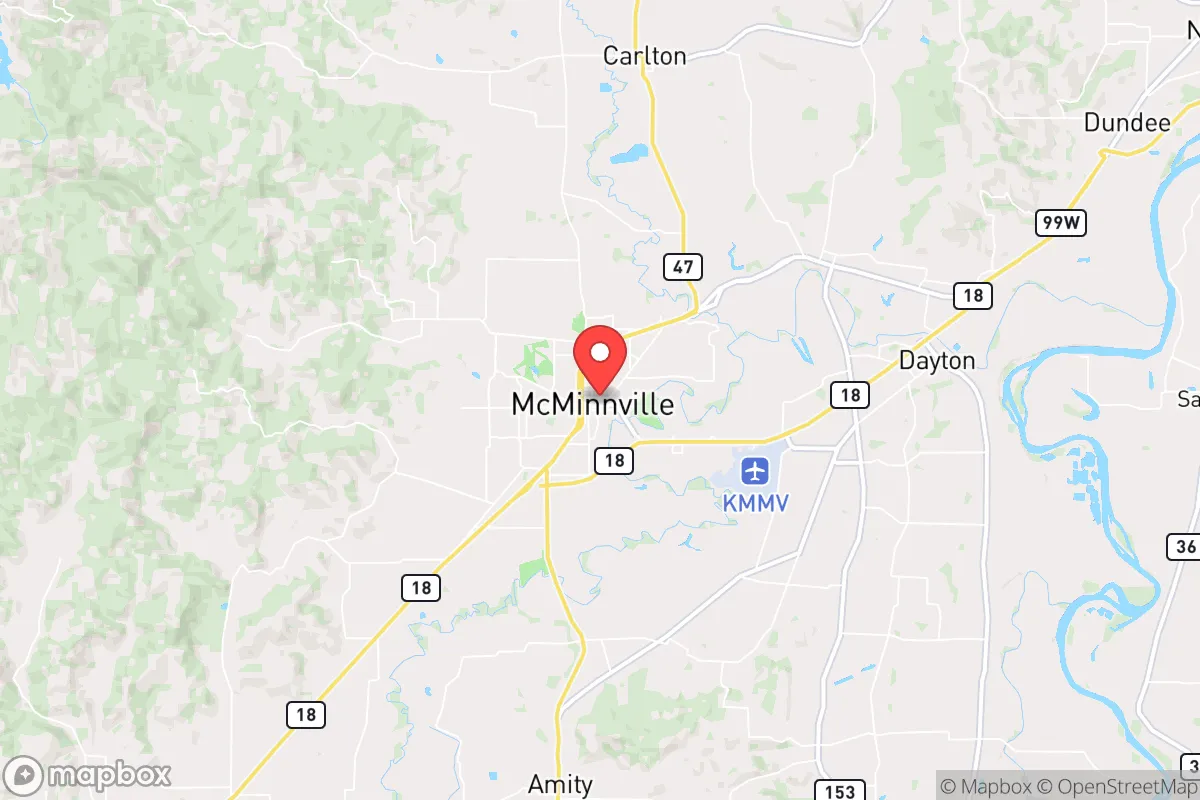
McMinnville, Oregon, is a city of roughly 34,500 residents where the population is predominantly white (70.9%) with a substantial and growing Hispanic community (20.2%), reflecting a demographic story shaped by agriculture, education, and a steady domestic in-migration from the West Coast. The city’s character is rooted in its role as the commercial and cultural hub of the Willamette Valley’s wine country, with a density that feels suburban but a social fabric that remains distinctly small-town. For a conservative-leaning audience, McMinnville offers a community where traditional family structures are visible, property crime rates are a concern, and the political lean of Yamhill County has historically been more moderate-to-conservative than the Portland metro area, though recent shifts show a gradual leftward trend.
How the city was settled and grew
McMinnville’s original population was drawn by the Donation Land Claim Act of 1850, which brought white American settlers—primarily from the Midwest and Upper South—to the fertile Willamette Valley. The city was platted in 1856 by William T. Newby, a Tennessee-born settler who donated land for a townsite. The earliest neighborhoods, such as Old Town McMinnville (the original commercial core around Third Street) and the West Side Historic District, were built by these pioneer families, who established a farming economy centered on wheat, hops, and later, tree fruits. A second wave arrived with the railroad in the 1870s, bringing a small number of Irish and German laborers who settled in the Railroad District near the tracks. By the early 20th century, the founding of Linfield College (now Linfield University) in 1849 attracted a modest influx of faculty and students, but the city remained overwhelmingly white and Protestant through the 1950s. The population grew slowly, reaching about 5,000 by 1950, with the Northwest Neighborhood (near the college) becoming a middle-class enclave for educators and professionals.
Modern era (post-1965)
The most significant demographic shift began after the 1965 Hart-Cellar Act, but McMinnville’s modern transformation was driven less by international immigration and more by domestic in-migration and the expansion of the wine industry. The 1970s saw the first substantial Hispanic population arrive, drawn by agricultural jobs in the surrounding vineyards and nurseries. These workers initially settled in the Southwest McMinnville area, near the industrial and agricultural zones, and later concentrated in the Northeast Neighborhood around Lafayette Avenue, where older, more affordable housing stock exists. Today, the Hispanic community makes up 20.2% of the population, a share that has grown steadily from about 8% in 1990. The foreign-born population is 5.9%, with the majority being Mexican-born. Meanwhile, the white population has declined from roughly 85% in 2000 to 70.9% today, as younger, more liberal-leaning residents from Portland and the West Coast have moved in, particularly to newer subdivisions like West Hills and Meadowbrook, which feature larger homes and attract families seeking lower housing costs than the Portland metro. The East/Southeast Asian population (1.8%) and Black population (0.5%) remain very small, with no significant enclaves. The Indian subcontinent population is effectively zero (0.0%).
The future
McMinnville’s population is projected to continue growing at a moderate pace, driven by its status as a regional employment center for healthcare (Willamette Valley Medical Center), education (Linfield University), and wine tourism. The Hispanic community is likely to grow further, both through natural increase and continued migration for agricultural work, but it is also assimilating into the broader community—second-generation Hispanic residents are increasingly moving into the West Hills and Meadowbrook subdivisions, blurring the older geographic divides. The white population is aging and slowly declining, while the small East/Southeast Asian and Black populations are expected to remain marginal. The city is not tribalizing into distinct ethnic enclaves; rather, it is becoming more integrated, with the main social divide being between long-term residents (many of whom are conservative-leaning) and newer arrivals from the Portland area (who tend to be more liberal). Over the next 10–20 years, McMinnville will likely become slightly more diverse, slightly more liberal, and slightly more suburban, but it will retain its core identity as a white-majority, family-oriented, wine-country town.
For someone moving in now, McMinnville offers a stable, growing community where the cost of living is lower than Portland but higher than rural Oregon, and where the demographic changes are gradual rather than disruptive. The city is becoming more diverse and politically moderate, but it remains a place where traditional values and family life are still the norm, particularly in the established neighborhoods like the West Side Historic District and Northwest Neighborhood.

* Values derived from national, state, county, city and local statistics and may differ in a specific area. Last updated: 2026-04-24T12:55:03.000Z
Narrative content on this page is AI-generated and may contain mistakes. Verify any details that matter before acting on them.
ReloMaps may earn a commission from affiliate links at no extra cost to you.

