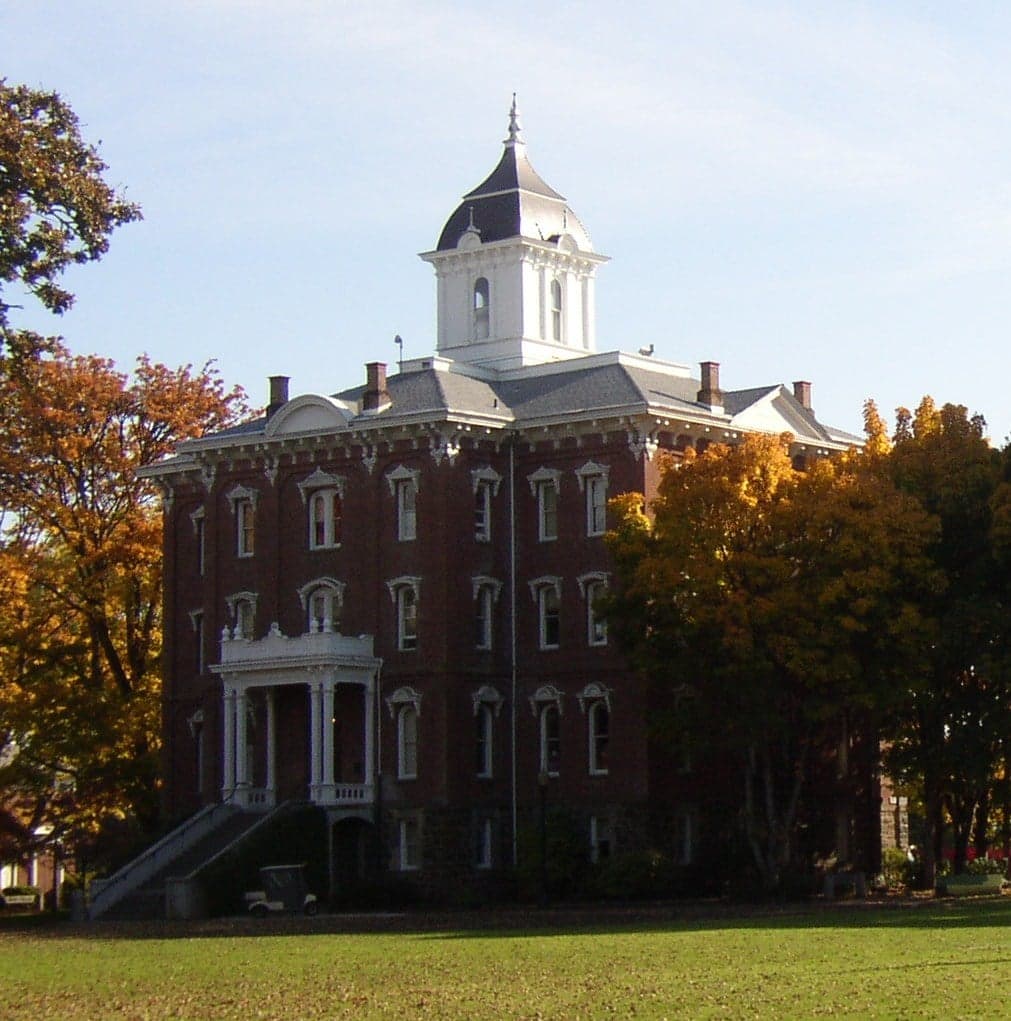
Photo: Wikipedia
Strategic Assessment of Mcminnville, OR
Meaningful friction. Expect exposure to either population pressure, blast zones, or natural disaster risk. Consider buying a retreat property.
What does the Strategic Assessment tell us?
Our Strategic Assessment grades tactical survivability of an area. Major population centers, military targets, fallout zones, natural disasters, and border exposure all drive risk — lower exposure means a more defensible position in a crisis.
This is heavily inspired by Joel Skousen's Strategic Relocation book. Highly recommended you checkout the book ($)What does this tell us?
Our Strategic Assessment grades tactical survivability of an area. Major population centers, military targets, fallout zones, natural disasters, and border exposure all drive risk — lower exposure means a more defensible position in a crisis.
This is heavily inspired by Joel Skousen's Strategic Relocation book. Highly recommended you checkout the book ($)Strategic Pillars

Key Distances
Regional Safe Places
Below is our recommended "safe zones" in Oregon and the surrounding area based on our strategic heuristics. For most people, it's unrealistic to live in a “safe zone” full-time due to work, family or other personal reasons. They tend to be more rural. However, many of these areas are perfect for second homes and retreat properties that double as a vacation home or even a short-term rental.


Important Note: For informational purposes only. This does not mean nothing bad ever happens in the green zones. Please use common sense. This is based on public data and modeled with AI. We tried to take a conservative approach but mistakes happen. We update this regularly as new information becomes available.
Solar Generator Recommendations
Backup power matters more here than in safer locations. We've picked three solar generators across budgets and capacity tiers — start with the budget unit if you only need a few essentials, or step up if you want to run a fridge and HVAC for days at a time.

Jackery Portable Power Station Explorer 300
Budget OptionPower on the Go: Weighing only 11 lbs, it's convenient to set up and store with book-sized foldable solar panels

BLUETTI Portable Power Station AC180
Designed for both indoor and outdoor scenarios, AC180 is highly capable as it has a robost capacity and continuous output power.

EF ECOFLOW DELTA Pro Ultra Power Station
Upgraded PickEcoFlow DELTA Pro Ultra is a whole-home energy system designed to grow with your family. Integrated with the Smart Home Panel 2, it scales to meet your evolving energy needs — keeping your home powered, intelligent, and secure through every stage of life.
We earn a commission, at no additional cost to you.
Strategic Assessment Analysis
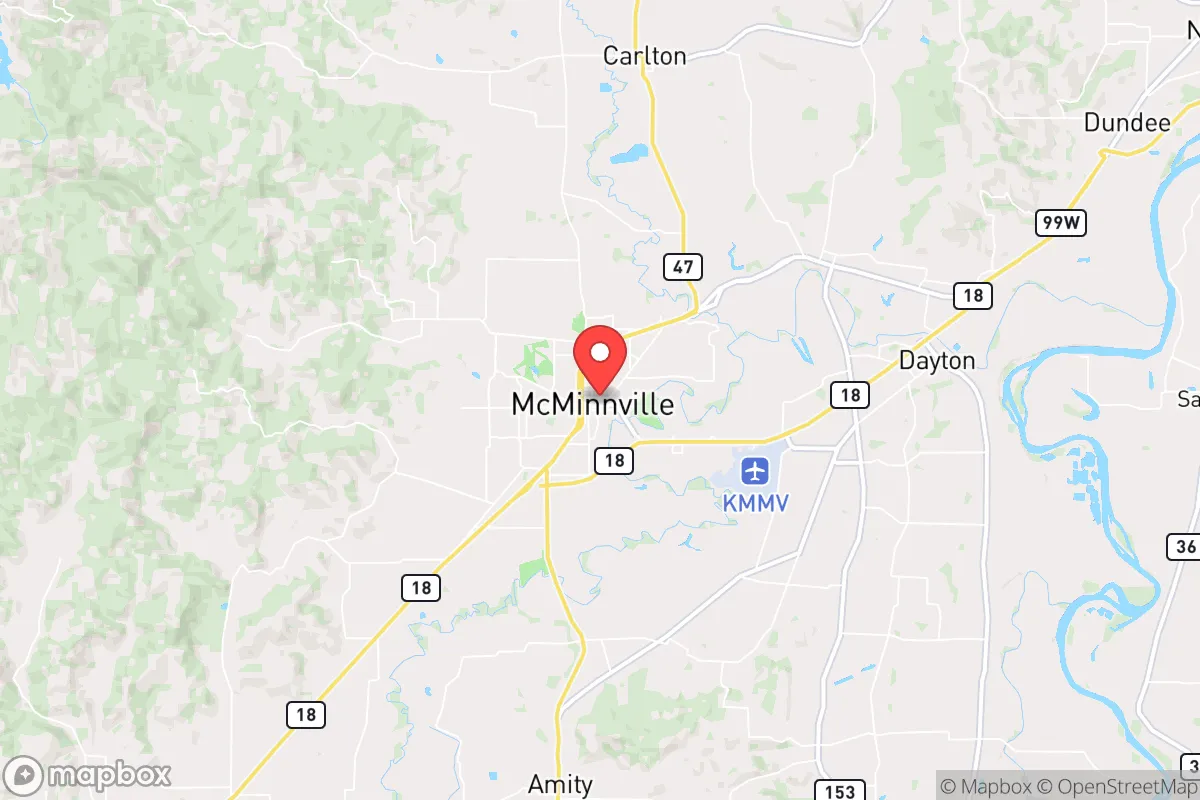
McMinnville, Oregon, sits in a sweet spot that few preppers fully appreciate: close enough to the Willamette Valley’s economic engine to sustain a normal life, but far enough from Portland’s urban core to offer genuine strategic depth. The city’s position in Yamhill County—roughly 40 miles southwest of Portland and 25 miles inland from the Pacific—gives it a layered buffer against the kind of cascading failures that hit dense metro areas first. For a conservative-leaning relocator thinking about civic unrest, supply chain disruptions, or even a major seismic event, McMinnville offers a rare combination of agricultural self-sufficiency, defensible geography, and a community that hasn’t fully surrendered to the coastal progressive agenda. It’s not a bunker, but it’s a solid base camp.
Geographic position and natural advantages for long-term survival
McMinnville’s real strength is its location within the Willamette Valley’s food basket. Yamhill County is one of Oregon’s top agricultural producers—think wine grapes, hazelnuts, berries, and grass seed—which means local food sources are abundant even in a disrupted market. The city sits on the Yamhill River, a tributary of the Willamette, providing a reliable freshwater source that’s less vulnerable to contamination than the main river corridor. The surrounding terrain is a mix of rolling hills and valley floor, offering natural chokepoints for anyone trying to approach from the east or west. The Coast Range to the west acts as a barrier against tsunami inundation (the Pacific is about 30 miles away as the crow flies, but the mountains absorb the worst of any wave surge). To the east, the Cascade foothills provide a similar buffer against volcanic ashfall from Mount Hood or Mount Jefferson. McMinnville’s elevation—around 160 feet—keeps it above most floodplains, though low-lying areas near the river can flood during heavy rain. For a relocator, this means you’re not betting on a single water source or a single evacuation route; you’ve got options.
Risks, exposures, and proximity to fallout-relevant landmarks
No place is perfect, and McMinnville has its share of vulnerabilities. The biggest concern is its proximity to Portland’s urban collapse zone. At 40 miles, you’re within a day’s walk for a motivated group fleeing a major disaster—whether that’s a Cascadia Subduction Zone earthquake, a civil unrest event, or a coordinated attack on infrastructure. Portland is a primary target for any mass-casualty scenario: it’s a major port, a transportation hub, and home to critical federal facilities (including the Portland International Airport and the Bonneville Dam complex upriver). If Portland goes dark, expect a wave of refugees heading southwest along Highway 99W, which runs straight through McMinnville. The city itself has a population of about 36,000, which is manageable, but it’s not remote enough to avoid being a waypoint. Additionally, the Yamhill River is a modest waterway—fine for daily use, but not a strategic barrier. A determined group could cross it at multiple points. The McMinnville Municipal Airport (MMV) is a general aviation field that could become a target for looters or a rally point for FEMA-style operations, depending on the scenario. There’s also the Spirit Mountain Casino about 20 miles west, which draws a transient crowd and could become a flashpoint in a breakdown. On the plus side, there are no nuclear power plants within 100 miles (the closest is Trojan, decommissioned, near Rainier, OR), and no major military bases that would attract a kinetic strike. The biggest fallout risk is from a Cascadia quake triggering a tsunami that hits the coast, but McMinnville’s inland position and elevation make it safe from that direct threat.
Practical resilience for a relocator: food, water, energy, and defensibility
For a prepper thinking about day-to-day survival, McMinnville checks several boxes. Food security is strong: the city is surrounded by working farms, and the McMinnville Farmers’ Market runs from May through October, offering direct access to local produce, meat, and eggs. The Yamhill County Fairgrounds host livestock auctions and agricultural events, so you can source animals or seeds without relying on big-box stores. Water comes from the Yamhill River and the McMinnville Water & Light system, which draws from a combination of surface and groundwater. The utility is municipally owned, which means less bureaucratic red tape in a crisis, but the system is vulnerable to power outages—so a backup well or rainwater catchment is smart. Energy is a mixed bag: the grid is tied to the Pacific Northwest’s hydro-heavy system, which is reliable in normal years but can fail during a Cascadia event (dams may be damaged or shut down). Solar is viable here—McMinnville gets about 150 sunny days per year, not great but enough for a modest off-grid setup. Wood heating is practical, given the surrounding forests, but you’ll need a permit for cutting on public land. Defensibility is where McMinnville falls short of a mountain redoubt. The city is laid out on a flat valley floor with a grid street pattern, making it hard to control access points. The best bet is to buy property on the hills west of town (near the Coast Range foothills) or east toward the Eola Hills, where you get elevation, natural cover, and longer sightlines. The local gun culture is strong—Yamhill County is a Second Amendment-friendly area with several gun shops and ranges—and the sheriff’s office is conservative-leaning, which matters if you need to rely on local law enforcement rather than state or federal assets. The McMinnville Police Department is professional but small (about 40 officers), so don’t expect a quick response in a widespread event.
Overall, McMinnville is a solid strategic choice for a conservative relocator who wants to stay within driving distance of Portland’s job market but maintain a credible survival posture. It’s not a bug-out location for a total collapse—you’d want to go deeper into the Coast Range or the Cascades for that—but for a long-term resilience play, it offers a rare balance of agricultural abundance, manageable risk, and a community that hasn’t been fully captured by the progressive machine. The key is to buy property with defensible terrain, invest in off-grid water and power, and build relationships with local farmers and gun owners before you need them. If you’re looking for a place to ride out the next decade of instability without completely abandoning civilization, McMinnville deserves a hard look.

* Values derived from national, state, county, city and local statistics and may differ in a specific area. Last updated: 2026-04-24T12:55:03.000Z
Narrative content on this page is AI-generated and may contain mistakes. Verify any details that matter before acting on them.
ReloMaps may earn a commission from affiliate links at no extra cost to you.

