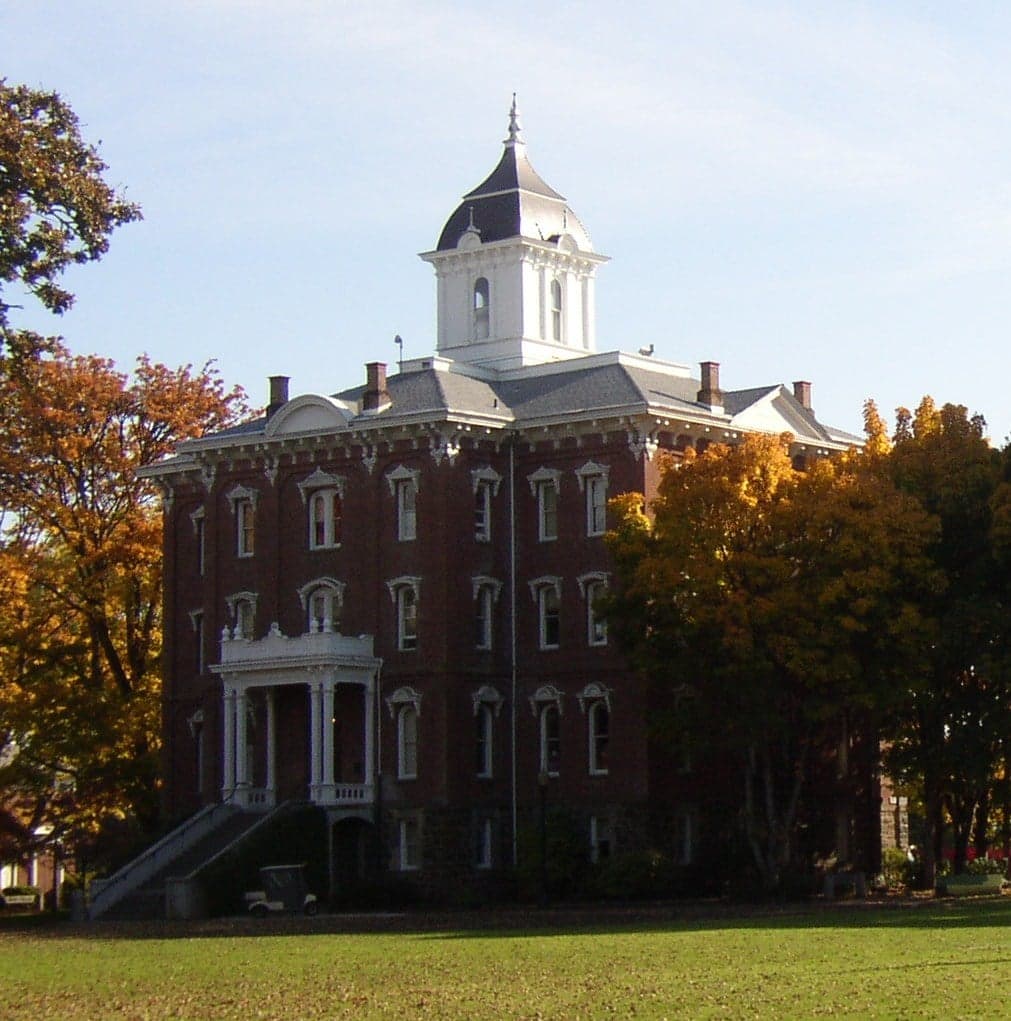
Photo: Wikipedia
Political ClimatePolitical Climate in Mcminnville, OR
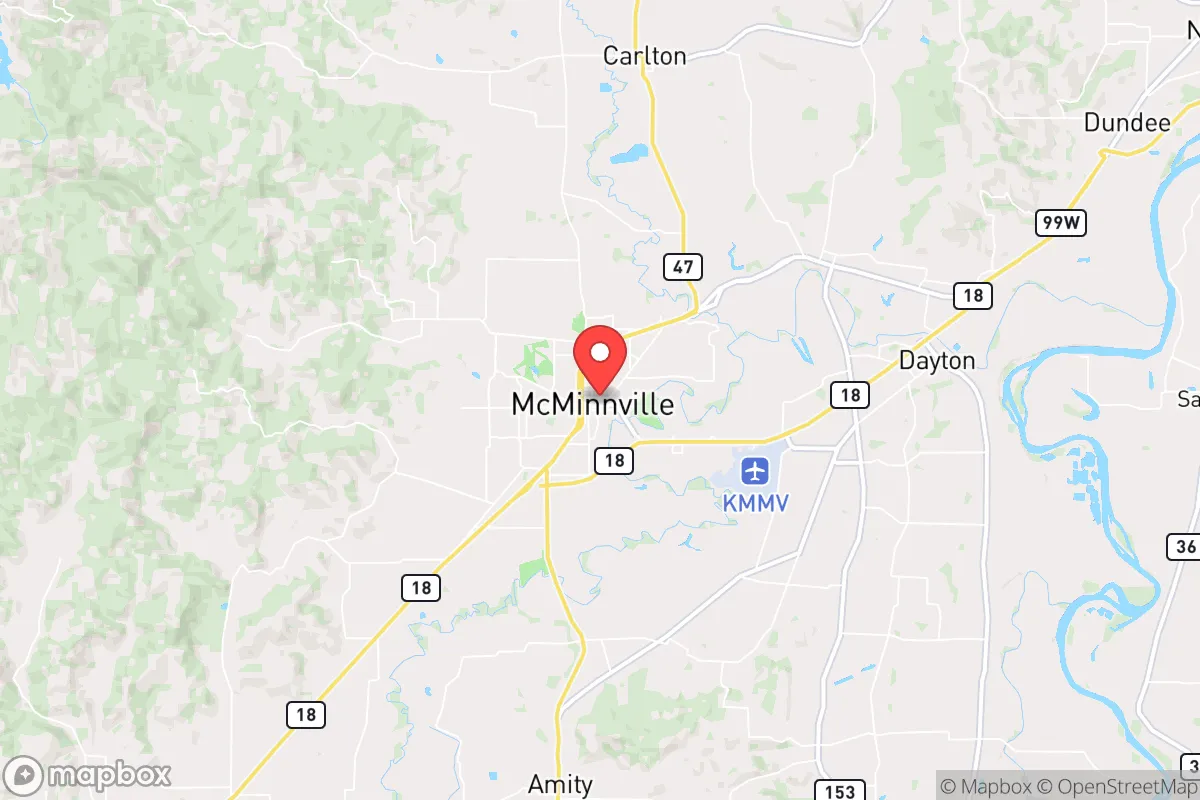
District shown is the primary district for this city’s centroid. Cities may span multiple districts.
Local Political AnalysisPolitical Analysis of Mcminnville, OR
McMinnville has shifted noticeably left in recent years, and if you’ve lived here as long as I have, you’ve felt it. The Cook PVI of D+6 tells the story: this town leans reliably Democratic, and that lean has gotten stronger since the 2020 election. It wasn’t always this way. Ten, fifteen years ago, you could count on a healthy mix of conservative and moderate voices at city council meetings and around the dinner table. Now, the progressive wing has taken the reins, and it shows in everything from land-use policies to how the local schools approach curriculum. If you’re a conservative, you’re not alone here, but you’re definitely in the minority, and that minority is getting smaller.
How it compares
Drive twenty minutes east to Newberg, and you’ll find a town that’s still fighting to hold the line. Newberg’s city council has been locked in battles over things like library book content and public displays of political symbols—battles that McMinnville’s current leadership would never even consider. Head south to Salem, and you’re in deep blue territory, where state-level policies on taxes, housing mandates, and environmental regulations get cooked up and then trickle down to us. McMinnville sits right in the middle of that pipeline, and it shows. The contrast with nearby rural communities like Sheridan or Willamina is stark: those towns still vote heavily Republican, but they lack the economic pull to counterbalance McMinnville’s influence in county politics. So while you can find like-minded folks in the outlying areas, the city itself is firmly in the progressive camp.
What this means for residents
For a conservative living in McMinnville, the practical effects are real. Property taxes have climbed steadily, driven by school bonds and urban renewal districts that the progressive majority approves without much pushback. You’ll see more regulations on short-term rentals, stricter building codes, and a growing push for “equity” training in local government offices. The school board has embraced curriculum changes that prioritize social-emotional learning over traditional academics, and parents who object are often dismissed as out of touch. Second Amendment rights are under constant pressure—not from local ordinances yet, but from the state legislature, and McMinnville’s representatives rarely push back. If you value personal freedom, you’ll find yourself watching every city council agenda like a hawk, because the creep is steady, even if it’s slow.
On a cultural level, McMinnville still has its charms—the Air Show, the wine country, the sense of community at local diners—but the political drift is unmistakable. The long-term trajectory is concerning. As Portland’s influence spreads outward and new residents move in from California and the West Coast corridor, the local character is being reshaped. The old guard of farmers, loggers, and small business owners is aging out, replaced by remote workers and retirees who bring big-city expectations with them. If you’re thinking of moving here, know that you’ll be swimming against a strong current. But if you’re willing to get involved, show up to meetings, and vote in every local election, you can still make your voice heard. It’s just going to take more work than it used to.

State Political ClimatePolitical Climate in Oregon
State Political AnalysisPolitical Environment in the State
Oregon has long been painted as a deep-blue state, but the reality is far more fractured. The state’s overall partisan lean is a solid Democratic advantage at the statewide level—every major office is held by a Democrat—but that’s almost entirely driven by the Portland metro area and the Willamette Valley corridor. Over the last 10-20 years, the state has lurched leftward on cultural and economic issues, but that shift has been met with a fierce, growing backlash in rural and exurban areas. The 2024 presidential race saw Oregon’s margin tighten slightly, with Democrats still winning by about 10 points, but the real story is the widening chasm between the liberal urban core and the rest of the state, which is increasingly voting like Idaho.
Urban vs. rural divide
The political map of Oregon is a tale of two worlds. Multnomah County (Portland) alone delivers roughly 20% of the state’s vote, and it’s reliably Democratic by 40+ points. Washington County (suburban Portland) and Lane County (Eugene) add another massive blue bloc. But drive an hour in any direction from Portland, and the landscape flips. Eastern Oregon counties like Malheur, Harney, and Lake routinely vote 70-80% Republican. The real flashpoints are the exurban and rural counties that used to be swing areas but have hardened red. Clackamas County, once a bellwether, has trended right in recent cycles, with suburban towns like Oregon City and Canby becoming GOP strongholds. Meanwhile, Bend in Deschutes County has become a political battleground—the city itself is liberal, but the surrounding high desert is deeply conservative, making it one of the few competitive counties in the state. The I-5 corridor from Portland to Eugene is the Democratic engine; everything east of the Cascades is a Republican fortress.
Policy environment
Oregon’s policy environment is a mixed bag that leans heavily progressive, with some notable exceptions. The state has no sales tax, which is a major plus for conservatives, but it has one of the highest personal income tax rates in the nation (top bracket 9.9%). Property taxes are capped by Measure 5 and Measure 50, but local bond measures can push them up. The regulatory posture is aggressive: Oregon’s land-use laws are among the most restrictive in the country, limiting development and driving up housing costs, especially in the Willamette Valley. Education policy is dominated by teachers’ unions, and the state has seen a steady decline in test scores despite above-average per-pupil spending. Healthcare is heavily regulated, with a state-run insurance exchange and a Medicaid expansion that covers about 30% of residents. Election laws are relatively open: Oregon was the first state to vote entirely by mail, and automatic voter registration is the norm. There’s no voter ID law, which is a point of contention for conservatives concerned about election integrity. The state also has a “sanctuary” law (ORS 181A.820) that limits local law enforcement cooperation with federal immigration authorities.
Trajectory & freedom
On the freedom front, Oregon is a study in contradictions. Personal liberty has expanded in some areas and contracted sharply in others. On the positive side for conservatives, Oregon’s Measure 114, which would have required a permit to purchase a firearm and banned magazines over 10 rounds, was passed by voters in 2022 but has been blocked by court challenges—it remains in legal limbo, and gun rights advocates are cautiously optimistic. On the negative side, the state has enacted some of the nation’s strictest drug decriminalization laws (Measure 110 in 2020), which led to a visible spike in public drug use and homelessness. That law was partially rolled back in 2024, but the damage to public order is done. Parental rights have been under assault: the state passed a law (HB 2002 in 2023) that allows minors to access reproductive health care, including abortion and gender-affirming care, without parental consent. This has sparked a massive backlash, with parents’ rights groups forming in every county. Property rights are constrained by the land-use system, and the state’s rent control law (SB 608) limits annual rent increases to 7% plus inflation, which has discouraged new housing construction. Medical autonomy took a hit with the state’s COVID-19 vaccine mandates, which were among the longest-lasting in the nation.
Civil unrest & political movements
Oregon has been a flashpoint for civil unrest, particularly in Portland. The 2020 George Floyd protests turned into months-long nightly demonstrations, with the city becoming a national symbol of left-wing activism and property destruction. The “Wall of Moms” and “Patriot Prayer” groups clashed in the streets, and the federal government deployed agents to protect the courthouse. Since then, the intensity has faded, but the activist infrastructure remains. On the right, the “People’s Rights” network and local “Constitutional Sheriffs” movements have gained traction in rural counties, with some sheriffs publicly refusing to enforce certain state gun laws. Immigration politics are tense: Portland’s sanctuary status has drawn criticism, but the issue is less visible than in border states. There’s a growing “Greater Idaho” movement, where 13 rural counties have voted to consider seceding from Oregon and joining Idaho, citing cultural and political differences. While legally unlikely, it’s a powerful symbol of the rural-urban divide. Election integrity remains a hot topic: the 2020 and 2022 elections saw no major scandals, but many conservatives remain skeptical of the mail-in system, especially after a 2023 incident where a ballot drop box was set on fire in Portland.
Projection
Over the next 5-10 years, Oregon is likely to continue its current trajectory: the Portland metro will become even more progressive, while rural and exurban areas will harden into conservative strongholds. The demographic trends are clear: in-migration from California has slowed, but the people moving in are still disproportionately liberal and wealthy, settling in Portland, Bend, and the Willamette Valley. Meanwhile, conservative families and retirees are leaving for Idaho, Texas, and Montana. This “brain drain” of conservatives will likely make statewide elections even more lopsided. However, the backlash is real: the “Greater Idaho” movement could gain more traction, and rural counties may push for more local autonomy. The housing crisis will continue to drive political discontent, and the drug decriminalization experiment will remain a cautionary tale. A new resident moving in now should expect a state where their vote may feel meaningless in statewide races, but where local politics—especially at the county and city level—are fiercely contested and consequential.
Bottom line for a new resident: Oregon offers stunning natural beauty and no sales tax, but you’ll pay for it with high income taxes, restrictive land-use laws, and a state government that often prioritizes progressive social policies over individual liberty. If you’re a conservative, you’ll find your tribe in the eastern counties, the exurbs, and parts of the southern Willamette Valley, but you’ll be swimming against the current in statewide elections. The best advice: pick your county carefully, get involved in local politics, and be prepared for a political climate that’s as divided as the landscape itself.
* Values derived from national, state, county, city and local statistics and may differ in a specific area. Last updated: 2026-04-24T12:55:03.000Z
Narrative content on this page is AI-generated and may contain mistakes. Verify any details that matter before acting on them.
ReloMaps may earn a commission from affiliate links at no extra cost to you.

