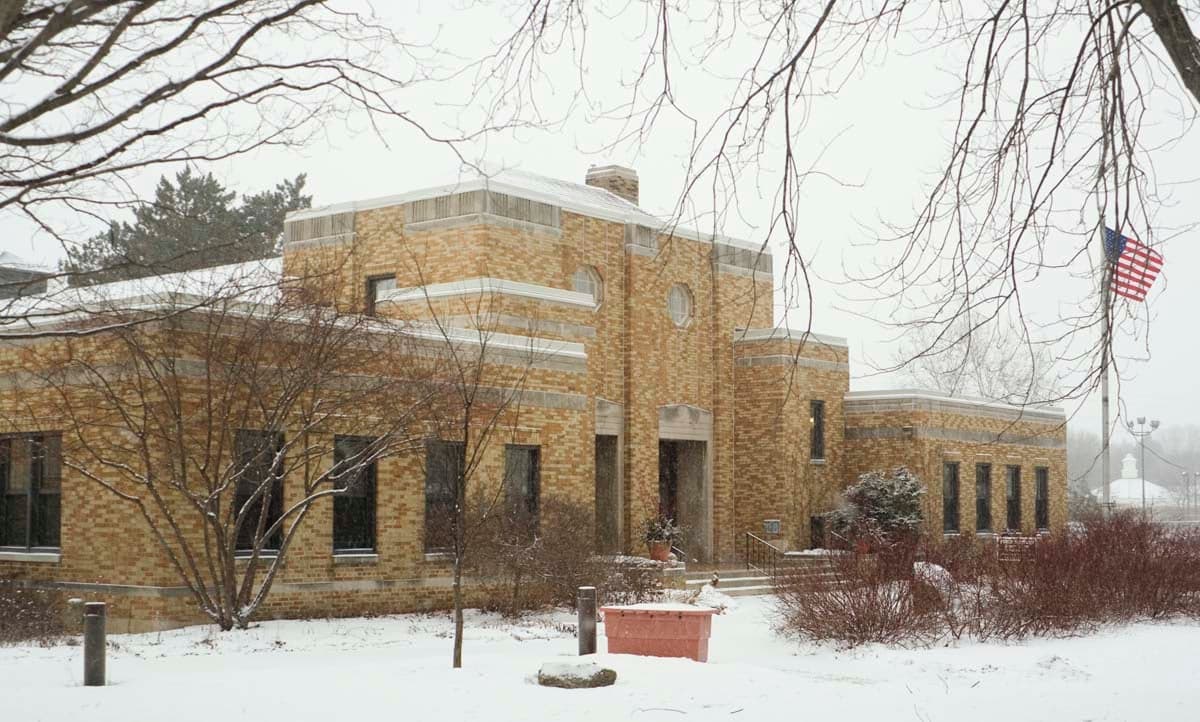
Photo: Wikipedia
Strategic Assessment of Mequon, WI
Meaningful friction. Expect exposure to either population pressure, blast zones, or natural disaster risk. Consider buying a retreat property.
What does the Strategic Assessment tell us?
Our Strategic Assessment grades tactical survivability of an area. Major population centers, military targets, fallout zones, natural disasters, and border exposure all drive risk — lower exposure means a more defensible position in a crisis.
This is heavily inspired by Joel Skousen's Strategic Relocation book. Highly recommended you checkout the book ($)What does this tell us?
Our Strategic Assessment grades tactical survivability of an area. Major population centers, military targets, fallout zones, natural disasters, and border exposure all drive risk — lower exposure means a more defensible position in a crisis.
This is heavily inspired by Joel Skousen's Strategic Relocation book. Highly recommended you checkout the book ($)Strategic Pillars

Key Distances
Regional Safe Places
Below is our recommended "safe zones" in Wisconsin and the surrounding area based on our strategic heuristics. For most people, it's unrealistic to live in a “safe zone” full-time due to work, family or other personal reasons. They tend to be more rural. However, many of these areas are perfect for second homes and retreat properties that double as a vacation home or even a short-term rental.
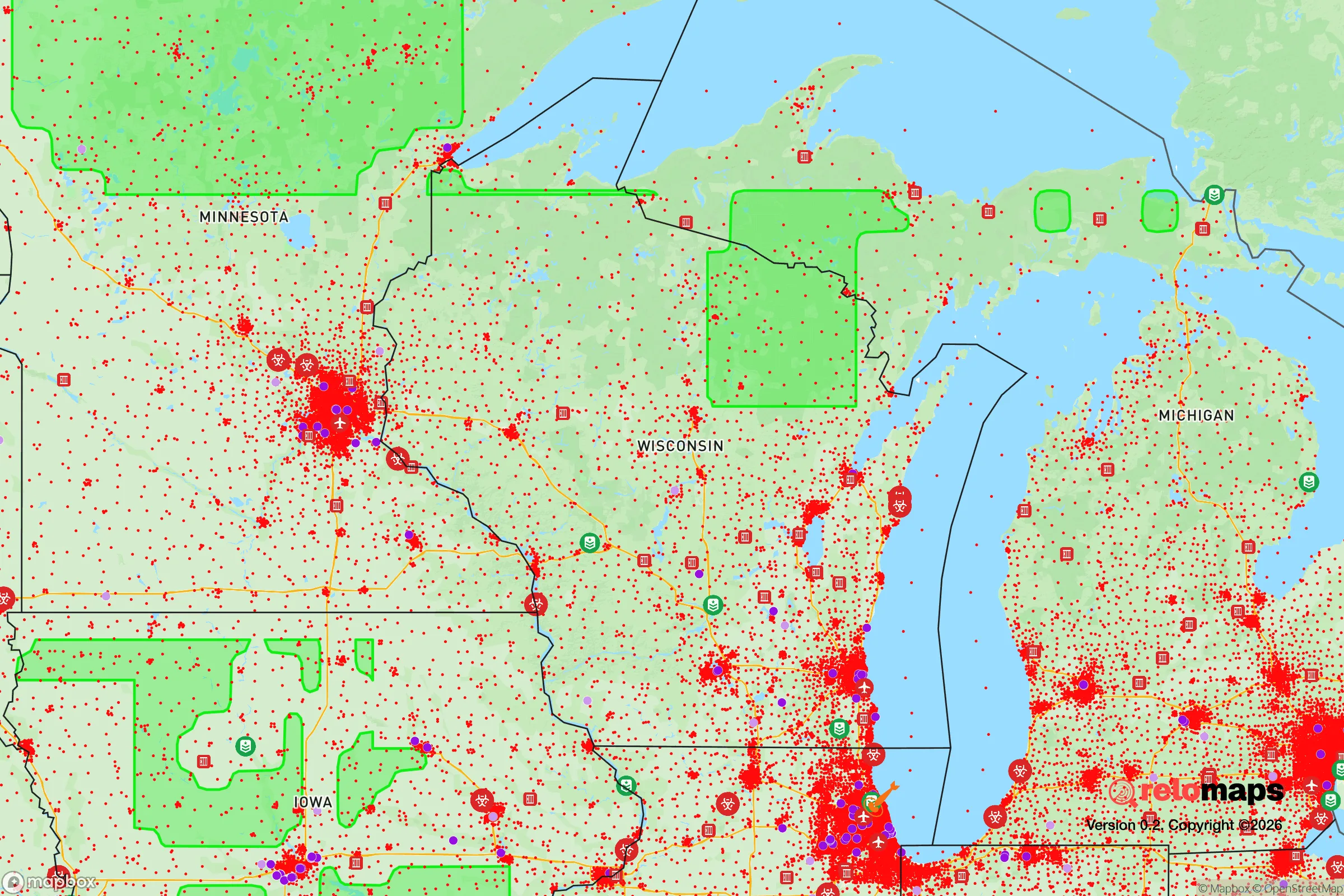
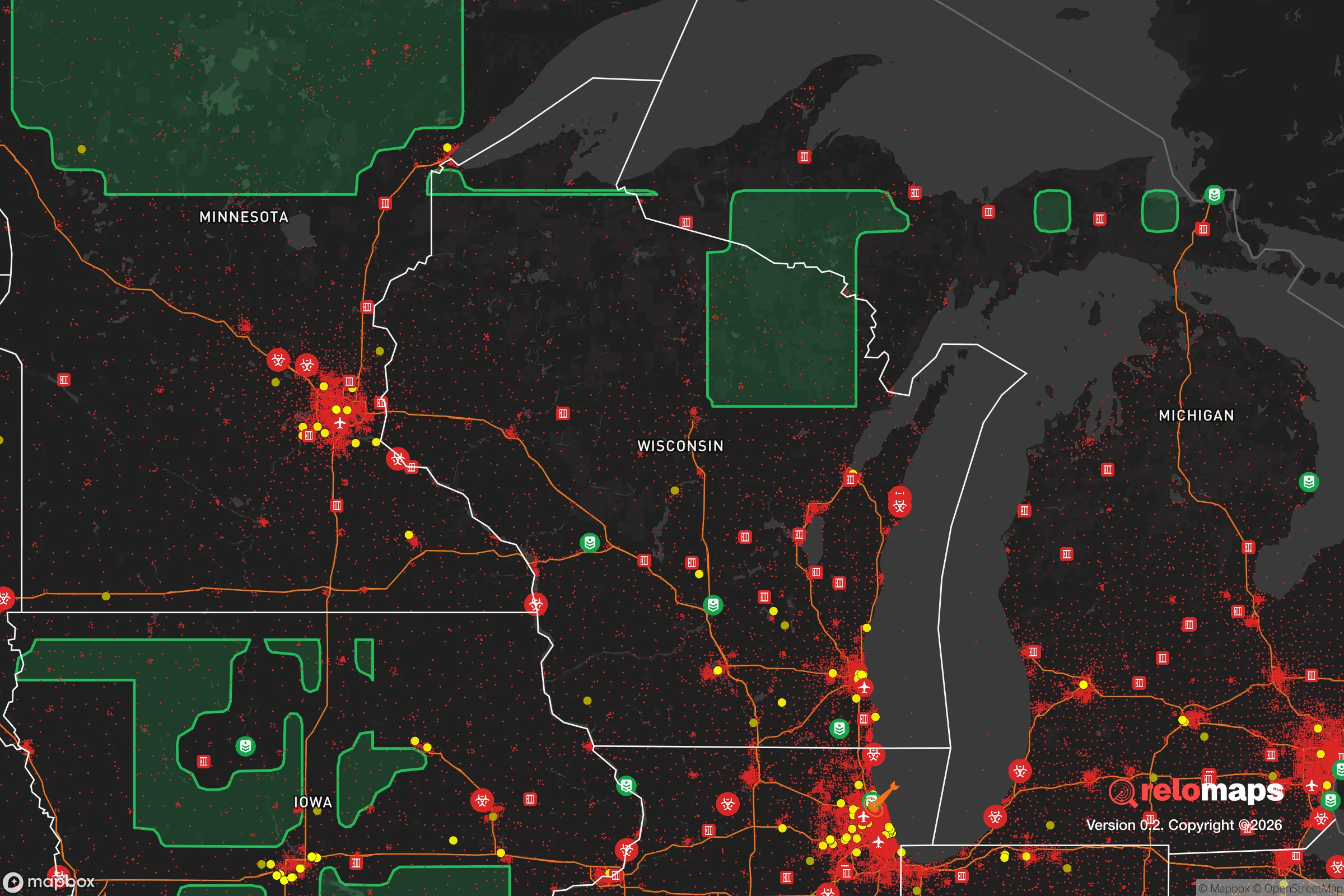


Important Note: For informational purposes only. This does not mean nothing bad ever happens in the green zones. Please use common sense. This is based on public data and modeled with AI. We tried to take a conservative approach but mistakes happen. We update this regularly as new information becomes available.
Solar Generator Recommendations
Backup power matters more here than in safer locations. We've picked three solar generators across budgets and capacity tiers — start with the budget unit if you only need a few essentials, or step up if you want to run a fridge and HVAC for days at a time.

Jackery Portable Power Station Explorer 300
Budget OptionPower on the Go: Weighing only 11 lbs, it's convenient to set up and store with book-sized foldable solar panels

BLUETTI Portable Power Station AC180
Designed for both indoor and outdoor scenarios, AC180 is highly capable as it has a robost capacity and continuous output power.

EF ECOFLOW DELTA Pro Ultra Power Station
Upgraded PickEcoFlow DELTA Pro Ultra is a whole-home energy system designed to grow with your family. Integrated with the Smart Home Panel 2, it scales to meet your evolving energy needs — keeping your home powered, intelligent, and secure through every stage of life.
We earn a commission, at no additional cost to you.
Strategic Assessment Analysis
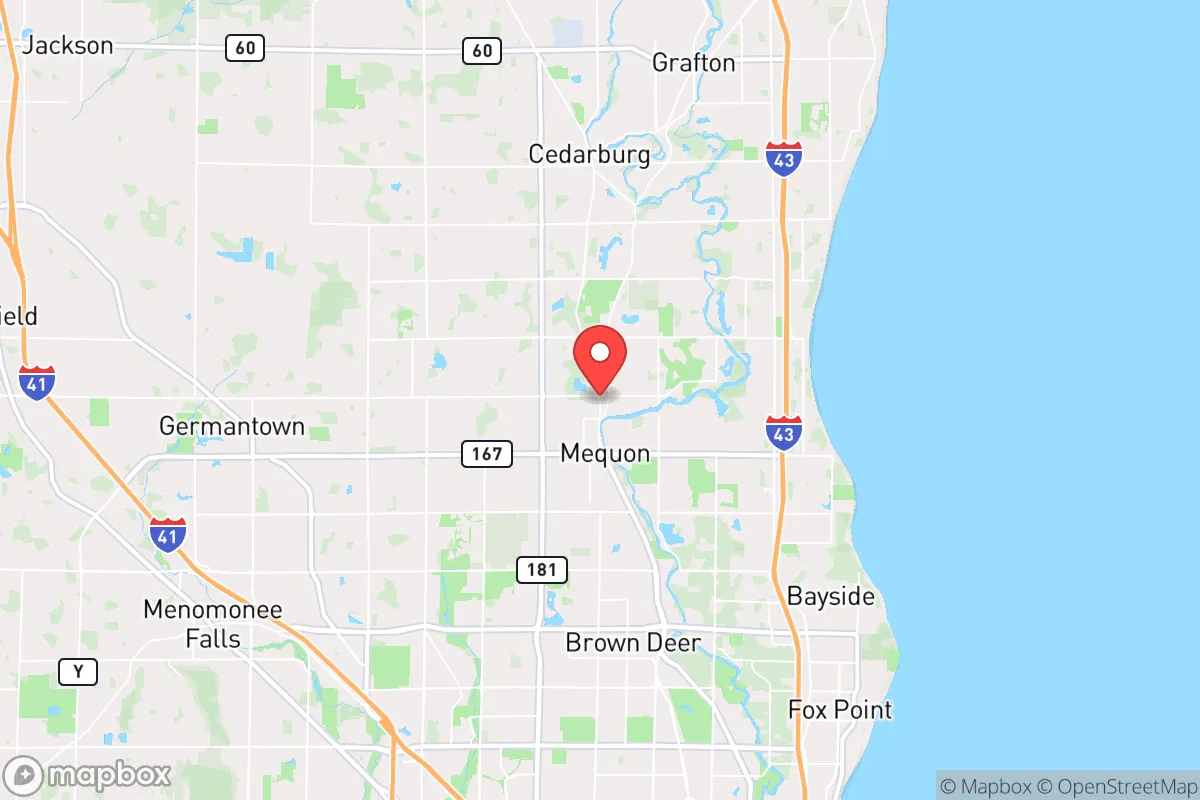
Mequon, Wisconsin, offers a strategic paradox for the conservative prepper: it is a wealthy, well-managed enclave with strong community bonds and defensible geography, yet it sits uncomfortably close to the potential fallout of a major urban collapse. Located just 20 miles north of Milwaukee along the Lake Michigan shoreline, this city of roughly 24,000 residents provides a buffer from immediate urban chaos while still being within striking distance of the resources and threats that define the region. For the relocator prioritizing resilience, Mequon’s advantages—its natural barriers, affluent infrastructure, and relative isolation from the worst of Milwaukee’s crime and instability—must be weighed against its proximity to a major metropolitan area that could become a source of unrest, disease, or resource competition in a crisis.
Geographic position and natural advantages for long-term stability
Mequon’s location is its strongest card. The city is bounded by Lake Michigan to the east, the Milwaukee River to the south, and a patchwork of wetlands, ravines, and forested corridors that break up the suburban grid. This natural topography creates chokepoints and defensible perimeters that are rare in the Midwest. The lake provides a near-limitless source of fresh water—critical for any long-term survival scenario—and moderates the local climate, reducing the severity of both winter cold and summer heat. The Ozaukee County area is also notably less dense than the Milwaukee metro core: population density here hovers around 600 people per square mile, compared to over 6,000 in Milwaukee proper. That lower density means fewer neighbors to compete with for resources, less noise and light pollution, and more room for private food production, water storage, and off-grid energy systems. The region’s glacial till soils are fertile, and the growing season, while short, is reliable enough for serious gardening or small-scale farming. For a relocator thinking in decades, not months, Mequon’s land and water access are genuine assets.
Risks, exposures, and proximity to fallout-relevant landmarks
The flip side is that Mequon is not remote. It lies directly in the shadow of Milwaukee, a city with deep structural problems: high violent crime rates, a strained police force, and a history of civil unrest. In a mass casualty event or societal breakdown, Milwaukee’s population of nearly 600,000 could become a source of desperate migration north along I-43 and Highway 57, both of which run straight through Mequon. The city is also within 30 miles of the Port of Milwaukee, a major Great Lakes shipping hub that could become a target for sabotage or a vector for disease. Further, the nearby University of Wisconsin-Milwaukee and the Milwaukee Regional Medical Center—a massive hospital complex—are potential focal points for panic, looting, or quarantine failures. On the industrial side, Mequon is downwind of several chemical plants and refineries in the Milwaukee area, including the WE Energies Valley Power Plant and the numerous manufacturing facilities along the Menomonee River Valley. A major industrial accident or terrorist event could send toxic plumes directly over Ozaukee County. The city itself has no major military or government installations, which is a double-edged sword: it reduces the chance of being a direct target, but also means no nearby FEMA supply depots or National Guard staging areas in a crisis.
Practical resilience for a relocator: food, water, energy, and defensibility
For the individual or family serious about self-sufficiency, Mequon offers a mixed bag. Water is abundant: Lake Michigan is the obvious source, but the Milwaukee River and numerous inland ponds and streams provide redundancy. The city’s water utility is reliable and well-maintained, but in a grid-down scenario, a hand pump or solar-powered well on private property would be essential—most homes here are on municipal water, not wells. Food production is feasible but requires land. Many lots in Mequon are half-acre to several acres, and the city’s zoning allows for backyard chickens, bees, and small livestock. The Ozaukee County Farmers Market and local CSAs are good for normal times, but for prepping, the key is that the area has a strong agricultural heritage—neighbors may be more open to barter and cooperative gardening than in a typical suburb. Energy resilience is a weak point. The grid is standard suburban, with overhead lines vulnerable to ice storms, wind, and potential sabotage. Solar is permitted but not widespread; natural gas is the primary heating fuel. A backup generator and a wood stove are near-mandatory for any serious prepper here. Defensibility is situational. The eastern half of Mequon, along the lake bluffs, offers natural observation points and limited access points. The western side, near I-43, is more exposed. The city’s police force is well-funded and professional, but in a widespread collapse, they would be stretched thin. The local community is overwhelmingly white, affluent, and politically conservative—Ozaukee County voted +24 points for Trump in 2024—which means a higher likelihood of like-minded neighbors and a shared cultural baseline for mutual aid. That social cohesion is a resilience factor that cannot be bought.
Overall, Mequon is a solid B+ for the strategic relocator who wants to stay within striking distance of the Great Lakes region’s resources while maintaining a buffer from urban chaos. It is not a bug-out location—it is a hold-and-build location. The risks are real: proximity to Milwaukee’s potential collapse, industrial exposure, and a grid that is not hardened. But the natural advantages—water, defensible terrain, fertile land, and a politically aligned community—make it one of the better options in southeastern Wisconsin for someone who wants to be prepared without going full off-grid. If you are willing to invest in backup power, water filtration, and a solid perimeter plan, Mequon can work. If you need absolute isolation and zero risk of urban spillover, look further north toward Door County or the Upper Peninsula. But for a balanced play between civilization and survival, this suburb holds its ground.

* Values derived from national, state, county, city and local statistics and may differ in a specific area. Last updated: 2026-04-21T10:05:43.000Z
Narrative content on this page is AI-generated and may contain mistakes. Verify any details that matter before acting on them.
ReloMaps may earn a commission from affiliate links at no extra cost to you.

