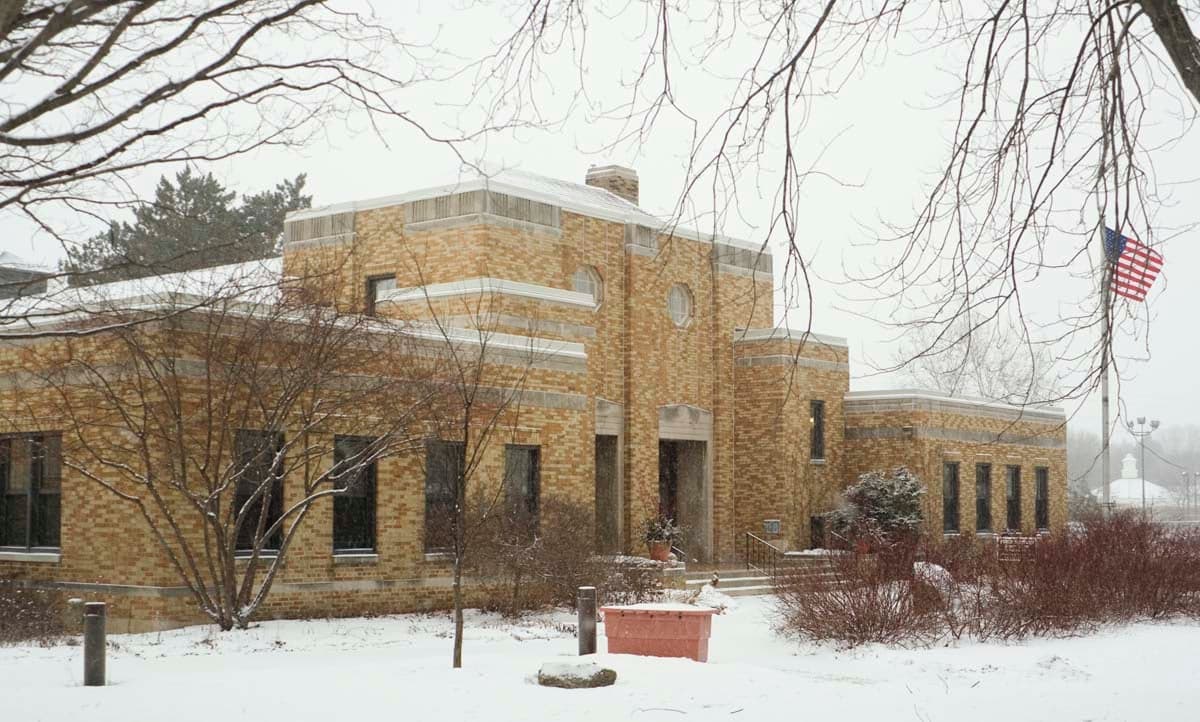
Photo: Wikipedia
Political ClimatePolitical Climate in Mequon, WI
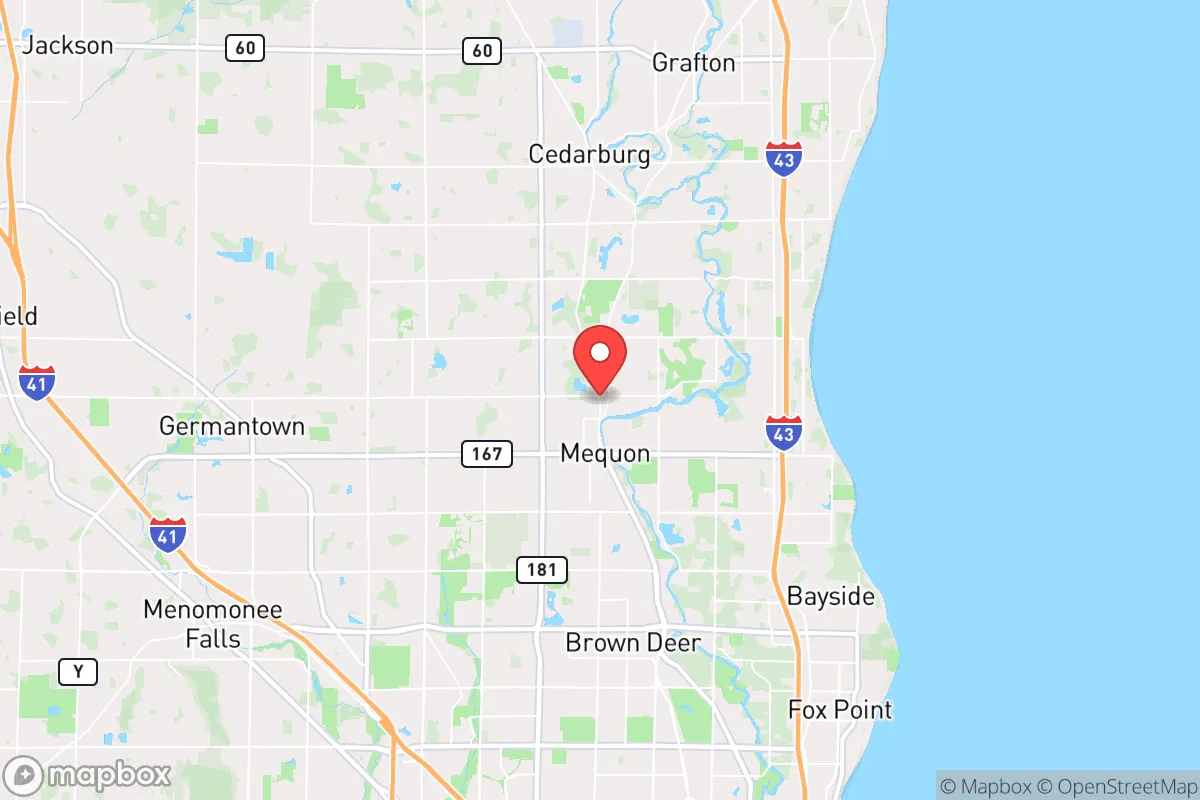
District shown is the primary district for this city’s centroid. Cities may span multiple districts.
Local Political AnalysisPolitical Analysis of Mequon, WI
Mequon has long been a solidly conservative community, and that hasn't changed much, even as the rest of the state has gotten a little more purple. The city sits in Ozaukee County, which is reliably Republican, and the area's Cook PVI of R+8 tells you pretty much everything you need to know about the baseline. You can feel it in the local elections, the school board meetings, and just the general vibe around town—people here value personal responsibility and don't have much patience for government overreach. That said, there's been a slow, creeping shift in some of the nearby suburbs, especially as Milwaukee's influence pushes north, and it's something worth keeping an eye on.
How it compares
If you drive ten minutes south into Glendale or Shorewood, you're in a completely different political universe—those areas lean heavily Democratic, with a lot of progressive energy around local policy and schools. Even Thiensville, right next door, has a slightly more moderate feel, though it's still pretty red. The real contrast is with Milwaukee proper, where the city council and county board have been pushing things like defunding the police and lax crime policies for years. Mequon residents see that and want no part of it. The city's tax base is strong, the schools are excellent, and people here generally believe that the government that governs least governs best. When you look at the surrounding towns like Cedarburg or Grafton, you see a similar conservative streak, but Mequon tends to be a bit more affluent and a bit more engaged in state-level politics.
What this means for residents
For folks living here, the political climate translates into a pretty straightforward daily reality. You're not going to see the kind of social experimentation you might in Madison or Milwaukee—no radical school curriculum changes, no heavy-handed lockdowns, no aggressive zoning overhauls that tell you what you can do with your own property. The city council has generally been good about keeping taxes reasonable and staying out of people's lives. But there's been a noticeable uptick in progressive activism in the last few years, especially around environmental issues and diversity initiatives in the schools. It's still a minority voice, but it's louder than it was a decade ago. The concern for a lot of long-time residents is that if you let that foot in the door, it's hard to push it back out. The 2024 election cycle showed that the county is still solidly red, but the margins in some precincts have tightened, and that's something to watch.
Culturally, Mequon is still a place where people wave at each other on the street and the Fourth of July parade is a big deal. The local paper's letters to the editor are full of folks arguing about property taxes and school referendums, not about defunding anything. But the biggest policy distinction is probably the city's approach to development and land use—Mequon has been pretty aggressive about preserving its rural character and open spaces, which is a direct reflection of the conservative preference for local control over state mandates. The worry is that as the state legislature and governor's office shift, those local decisions could get preempted by Madison. For now, though, if you value your freedoms and want to live somewhere that doesn't treat you like a subject, Mequon is still one of the safest bets in southeastern Wisconsin. Just keep your eyes on the school board elections.

State Political ClimatePolitical Climate in Wisconsin
State Political AnalysisPolitical Environment in the State
Wisconsin has long been a classic swing state, but over the past decade it has hardened into a deeply polarized battleground where the rural-urban split defines everything. The state’s overall partisan lean is essentially a coin flip—within a point or two of 50-50 in presidential races—but the coalition that gets you there is anything but moderate. The blue wall of Milwaukee and Dane County (Madison) now has to overcome massive red margins in the WOW counties (Waukesha, Ozaukee, Washington) and the entire northern and western rural expanse. Over the last 20 years, the state has drifted rightward on cultural and economic freedom issues, even as its largest cities have lurched left. For a conservative considering relocation, the key question is whether you want to live inside the bubble of a blue city or in the increasingly red countryside where the state’s traditional values still hold.
Urban vs. rural divide
The political map of Wisconsin is a tale of two worlds. Milwaukee and Madison are the Democratic strongholds, with Madison being one of the most progressive cities in the Midwest—think rent control, sanctuary city policies, and a city council that openly flirts with defunding the police. Milwaukee County went +40 for Biden in 2020, and Dane County was even bluer at +52. But drive 20 minutes outside either city and the landscape flips hard. The WOW counties—Waukesha, Ozaukee, and Washington—are among the most reliably Republican suburbs in the nation, routinely delivering 60-70% of their votes for GOP candidates. Further north, the rural counties like Marathon (Wausau), Brown (Green Bay), and Outagamie (Appleton) have been trending redder as blue-collar voters and farmers abandon the Democratic Party over trade, guns, and cultural issues. The real story is the Driftless Region in the southwest—counties like Vernon, Crawford, and Richland—which were historically Democratic but have flipped hard red in the Trump era. If you’re looking for a place where your vote actually counts and your neighbors share your values, the rural and exurban areas are where the action is.
Policy environment
Wisconsin’s state-level policy environment is a mixed bag for conservatives. On the plus side, the state has a flat income tax (currently 4.4% after recent cuts), no inheritance tax, and a right-to-work law that keeps unions weak outside of government. The legislature, under Republican control since 2011, has passed permitless carry for firearms, school choice expansion (the Milwaukee and Racine voucher programs are among the oldest in the nation), and a near-total ban on abortion after 14 weeks. Property taxes are moderate, but the state’s reliance on local levies means they vary wildly—expect lower rates in rural areas like Polk County and higher ones in Madison. The downside: the state has a Democratic governor, Tony Evers, who has vetoed conservative priorities like election integrity reforms and parental rights bills. The result is a policy stalemate where the legislature passes good bills and the governor kills them. For a new resident, the practical takeaway is that your local government matters more than the state—choose a county with a strong conservative board and sheriff who won’t enforce blue-state mandates.
Trajectory & freedom
Wisconsin’s trajectory on personal freedom is a tug-of-war. On the positive side, the state has expanded gun rights significantly: in 2011 it passed shall-issue concealed carry, and in 2023 it enacted permitless carry (Act 12), making Wisconsin one of the most firearm-friendly states in the Midwest. Property rights are strong, with no statewide rent control and limited zoning restrictions outside of Madison and Milwaukee. Parental rights got a boost in 2023 with a law requiring schools to notify parents of curriculum changes, though Evers vetoed a broader bill that would have banned gender ideology instruction in K-3. The concerning trend is the growing power of blue cities to impose their own progressive agendas—Madison has a paid sick leave mandate, Milwaukee has a “safe harbor” ordinance for illegal immigrants, and both have defunded police in practice if not in name. The state Supreme Court flipped to a 4-3 liberal majority in 2023, which has already led to a redistricting lawsuit that could flip the legislature blue by 2026. If that happens, expect a rapid expansion of government overreach: higher taxes, stricter gun laws, and a loss of school choice. The freedom trajectory is currently neutral, but the next election cycle could tip it decisively one way or the other.
Civil unrest & political movements
Wisconsin has a history of political flashpoints that new residents should be aware of. The 2011 Act 10 protests in Madison, which drew over 100,000 people to the Capitol, were a defining moment—the left showed it could mobilize massively against union reform. More recently, the 2020 Kenosha riots after the Jacob Blake shooting saw businesses burned and two people killed in civil unrest, with the city still recovering. The state has a strong grassroots conservative movement, particularly in the WOW counties and the Fox Valley, where groups like the Wisconsin Family Action and the Wisconsin Gun Owners lobby are active. Election integrity remains a hot-button issue: the 2020 election saw the state’s use of “Zuckerbucks” (private funding for election administration) and a controversial decision by the Wisconsin Elections Commission to allow ballot drop boxes, which the state Supreme Court later ruled illegal. Immigration politics are less heated than in border states, but the sanctuary policies in Madison and Milwaukee are a growing concern for conservatives who want to see law enforcement prioritize public safety over political correctness. If you move to a rural county like Clark or Taylor, you’ll see little of this—but in the cities, it’s a constant undercurrent.
Projection
Looking five to ten years out, Wisconsin is at a demographic and political crossroads. The state is seeing modest in-migration from Illinois, Minnesota, and California—mostly conservatives fleeing blue states for lower taxes and more freedom. These newcomers are settling in the WOW counties, the Fox Valley, and the Driftless Region, reinforcing the red rural and exurban areas. However, the cities of Madison and Milwaukee are growing faster, fueled by young progressives and university expansion. The wild card is the state Supreme Court’s 2023 flip: if the court imposes a gerrymander-friendly map, Democrats could take the legislature by 2026, leading to a wave of progressive legislation—think a state-level income tax hike, gun control, and a repeal of school choice. If Republicans hold the legislature, the state will continue its slow drift rightward on cultural issues while maintaining its fiscal conservatism. For a conservative moving in now, the safest bet is to choose a county with a strong local conservative majority—places like Washington County or Outagamie County—where even a blue state government can’t easily impose its will. The next five years will determine whether Wisconsin becomes a red island in a blue Great Lakes region or a purple state that eventually tips blue.
For a conservative considering Wisconsin, the bottom line is this: the state offers a high degree of personal freedom in its rural and exurban areas, with low taxes, strong gun rights, and a culture of self-reliance. But you need to choose your location carefully. Avoid Madison and Milwaukee unless you’re prepared to fight blue-city policies daily. Instead, look at the WOW counties, the Fox Valley, or the Driftless Region, where your vote matters and your values are shared. The state is a battleground, but if you pick the right county, you can live a life free from the worst of government overreach—at least for now. Keep an eye on the state Supreme Court and the 2026 elections; they’ll decide whether Wisconsin stays a place where freedom thrives or becomes another Illinois.
* Values derived from national, state, county, city and local statistics and may differ in a specific area. Last updated: 2026-04-21T10:05:43.000Z
Narrative content on this page is AI-generated and may contain mistakes. Verify any details that matter before acting on them.
ReloMaps may earn a commission from affiliate links at no extra cost to you.

