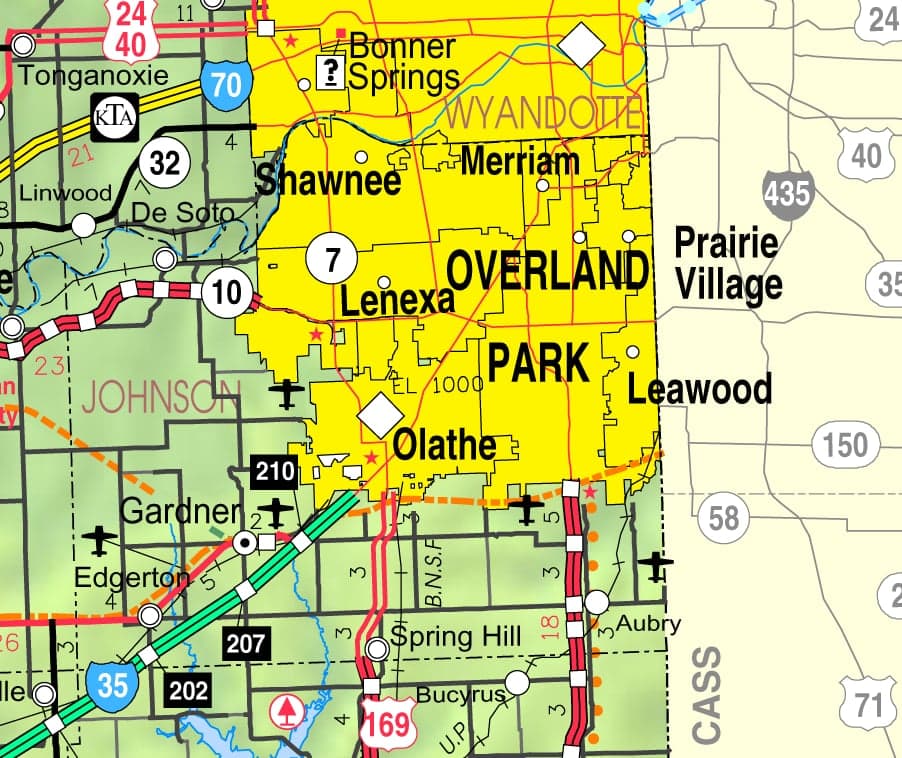
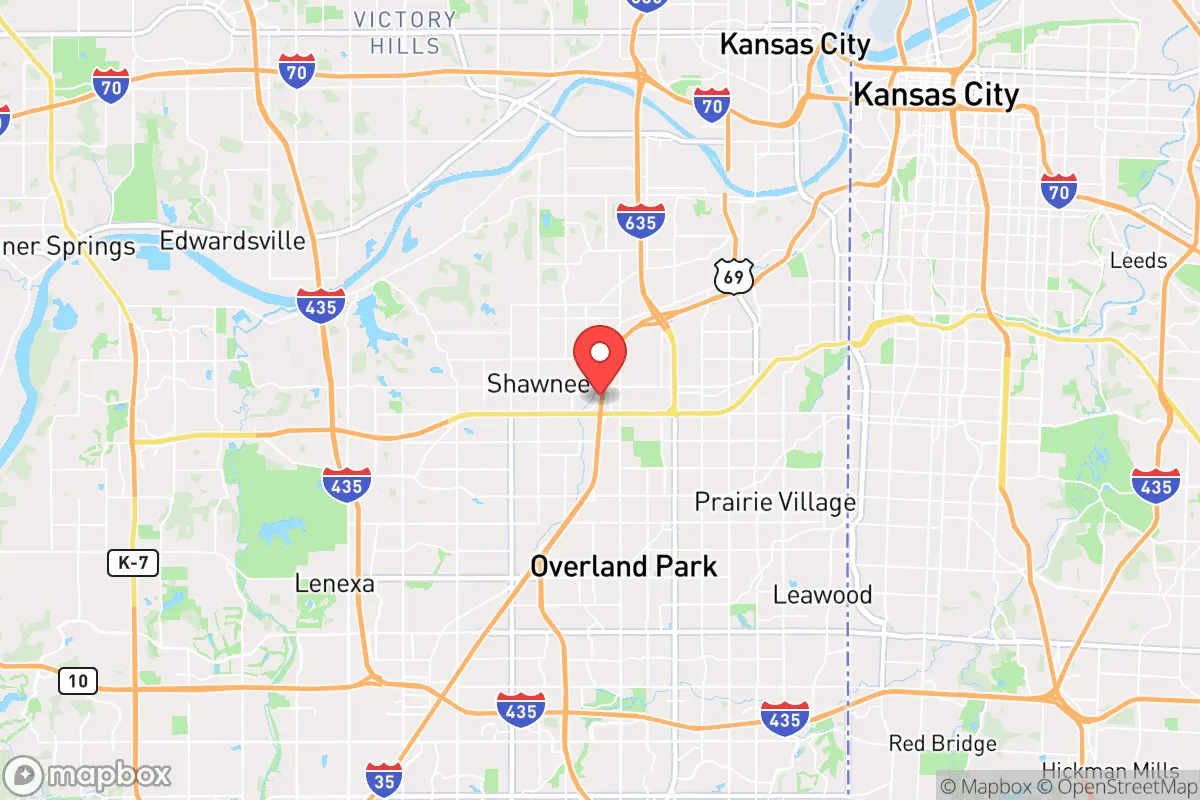
Photo: Wikipedia
Demographics of Merriam, KS
Affluence Level in Merriam, KS
A middle-class area roughly in line with national averages across income, home values, education, and employment.
People of Merriam, KS
The people of Merriam, Kansas today form a predominantly white, middle-class suburban community of 11,036 residents, characterized by a notably high college attainment rate of 41.5% and a low foreign-born share of just 1.8%. The city’s identity is shaped by its role as a stable, family-oriented suburb within the Kansas City metropolitan area, with a population that is 76.8% white, 11.6% Hispanic, 6.6% Black, and 1.4% East/Southeast Asian. Merriam’s residents are concentrated in established neighborhoods like the historic downtown area and the post-war subdivisions that define its residential character, creating a community that values proximity to urban amenities while maintaining a quieter, suburban atmosphere.
How the city was settled and grew
Merriam’s settlement began in the 1860s as a railroad stop along the Kansas City, Fort Scott and Gulf Railroad, with the first wave of residents being European-American farmers and railroad workers drawn by the promise of land and transportation access. The city was officially incorporated in 1872, and its early growth was modest, centered around the original Merriam Townsite near the railroad depot, where German and Irish immigrants built homes and small businesses. The arrival of the Shawnee Mission Parkway in the 1920s spurred a second wave of development, with families moving into the Shawnee Mission area—a neighborhood of modest bungalows and craftsman homes that still retains its historic character. By the mid-20th century, Merriam’s population remained overwhelmingly white and native-born, with the 1950 census recording less than 1% non-white residents, reflecting the broader segregation patterns of suburban Johnson County.
Modern era (post-1965)
The post-1965 period brought gradual demographic diversification, driven by suburban expansion and the construction of affordable housing in neighborhoods like Merriam Village and Antioch Hills. These areas, developed in the 1970s and 1980s, attracted a mix of white middle-class families and a growing number of Hispanic and Black residents seeking newer homes with good schools and lower crime rates than inner-city Kansas City. The Hispanic population rose from under 2% in 1980 to 11.6% today, with many families settling in the West 63rd Street corridor, where older ranch-style homes and duplexes offered entry-level housing. The Black population grew to 6.6%, concentrated in the Johnson Drive area near the city’s commercial core, while the East/Southeast Asian community (1.4%) and Indian-subcontinent residents (0.6%) remain small but stable, often drawn by professional opportunities at nearby employers like the University of Kansas Medical Center. The white share declined from 95% in 1970 to 76.8% today, but Merriam has not experienced the rapid ethnic turnover seen in some neighboring suburbs; instead, it has absorbed new groups gradually into existing neighborhoods without creating distinct ethnic enclaves.
The future
Merriam’s population is likely to continue its slow diversification, though the pace will be tempered by the city’s limited housing stock and high home values—median home prices exceed $300,000, filtering out lower-income immigrants. The Hispanic and Black shares are projected to grow modestly, reaching perhaps 14% and 8% respectively by 2040, as younger families move into the Merriam Estates and Shawnee Mission Hills subdivisions, which offer larger lots and newer construction. The East/Southeast Asian and Indian populations are expected to remain small, as these groups tend to cluster in higher-density suburbs like Overland Park. The city is not tribalizing into distinct enclaves; rather, it is homogenizing into a broadly middle-class, politically moderate suburb where racial and ethnic differences are muted by economic similarity. The foreign-born share will likely stay below 3%, as Merriam lacks the rental stock and ethnic institutions that attract new immigrants.
For someone moving in now, Merriam is becoming a stable, slowly diversifying suburb where the population is aging in place—the median age is 40.2—and new arrivals are predominantly domestic, college-educated families seeking good schools and short commutes. The city offers a predictable, low-risk environment for conservative-leaning individuals and parents who value safety, property values, and community stability over urban diversity or rapid change.

* Values derived from national, state, county, city and local statistics and may differ in a specific area. Last updated: 2026-04-30T06:49:56.000Z
Narrative content on this page is AI-generated and may contain mistakes. Verify any details that matter before acting on them.
ReloMaps may earn a commission from affiliate links at no extra cost to you.

