Photo: Wikipedia
Political ClimatePolitical Climate in Merriam, KS
District shown is the primary district for this city’s centroid. Cities may span multiple districts.
Local Political AnalysisPolitical Analysis of Merriam, KS
Merriam, Kansas, sits in a political pocket that’s shifted noticeably over the last decade. The Cook PVI of D+2 tells you it leans slightly Democratic, but that’s a recent development—this area used to be reliably conservative, and you can still feel that older, more independent streak in a lot of the longtime residents. The shift has been driven mostly by newcomers from Kansas City and Johnson County’s growing professional class, and it’s changed the local conversation on everything from taxes to how much say the county government has in your day-to-day life.
How it compares
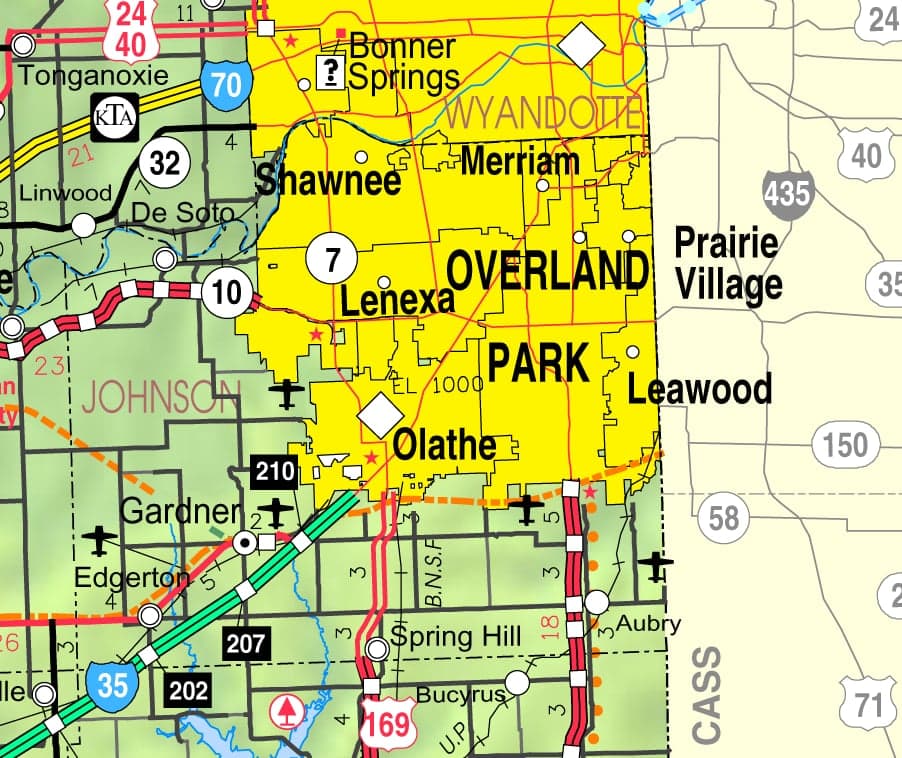
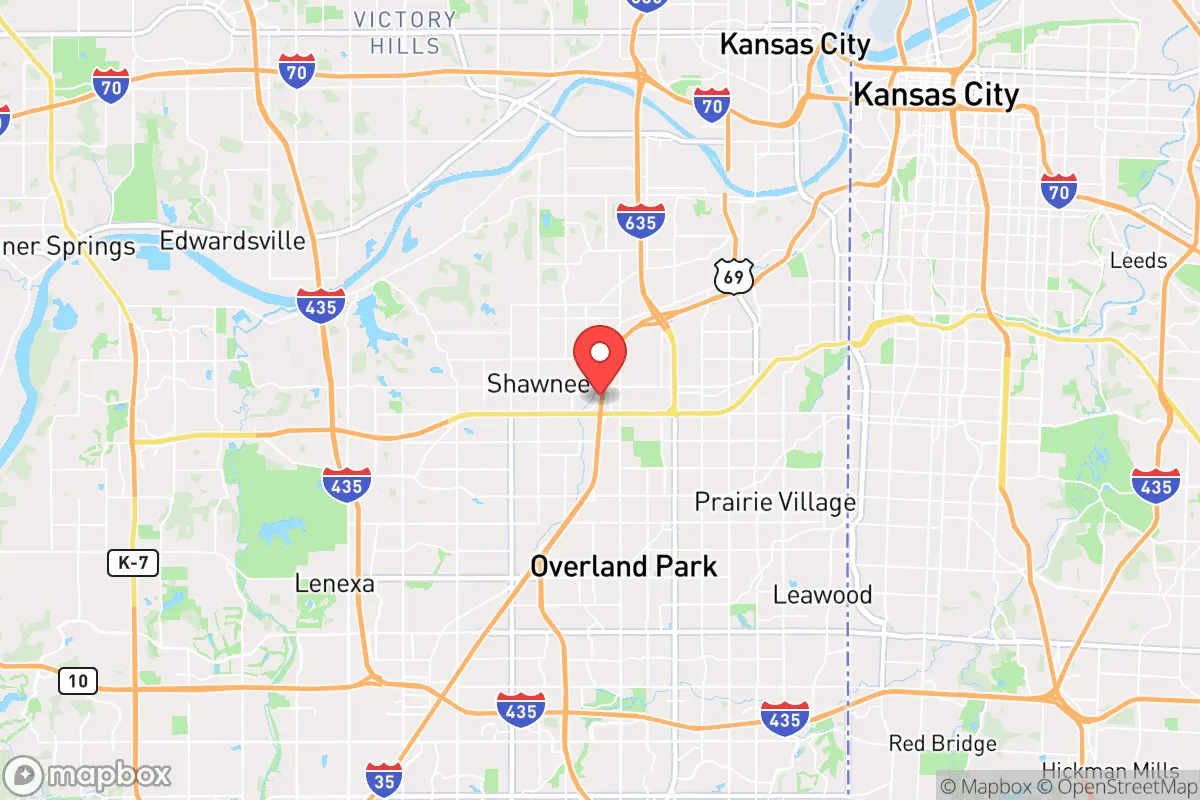
Drive ten minutes east into Overland Park or south into Olathe, and you’re in solidly Republican territory—those areas still vote red by comfortable margins. Head west into Shawnee, and it’s a similar story, though a bit more purple. Merriam is the odd one out in this part of Johnson County, and that’s not an accident. It’s a smaller, older suburb with more renters and a younger demographic than its neighbors, which naturally pulls the politics left. But the contrast is stark: you can cross I-35 and feel like you’re in a different county politically, even though you’re still in Johnson County. That split means Merriam residents often find themselves on the losing end of county-wide votes on things like school funding or development rules, because the surrounding towns don’t share their priorities.
What this means for residents
For someone who values personal freedom and limited government, the trend here is concerning. The local city council and school board have been moving toward more progressive policies—think diversity initiatives in the schools, zoning changes that favor higher-density housing, and a general willingness to spend on social programs. None of that is catastrophic on its own, but it adds up. You start seeing more ordinances that feel like overreach: restrictions on short-term rentals, tighter noise rules, and a push for “equity” in city contracting that can squeeze out smaller, local businesses. The tax burden has crept up too, because the city is chasing grants and programs that come with strings attached. If you’re the kind of person who just wants to be left alone to run your life and your business, Merriam is getting harder to recommend compared to, say, Lenexa or Gardner, where the philosophy is still more hands-off.
The cultural shift is the part that really sticks with you if you’ve been here a while. Merriam used to have a quiet, middle-American feel—neighbors knew each other, the Fourth of July parade was a big deal, and the politics were mostly about keeping the streets paved and the parks clean. Now there’s more activism, more signs in yards for candidates who talk about “systemic change,” and a general sense that the city wants to be a progressive hub rather than a comfortable place to raise a family. The long-term trajectory, unless the pendulum swings back, is more of the same: higher taxes, more regulations, and a local government that sees itself as a vehicle for social change rather than a steward of your tax dollars. If that doesn’t sit right with you, it might be worth keeping an eye on the nearby towns that still hold the line.

State Political ClimatePolitical Climate in Kansas
State Political AnalysisPolitical Environment in the State
Kansas has long been a reliably conservative state, but the picture is more nuanced than a simple red-state label suggests. Over the past 20 years, the state has shifted from a solidly Republican stronghold to a more competitive environment, with the GOP still holding a firm grip on statewide offices and the legislature, but with notable suburban drift toward the center. The 2022 gubernatorial race saw Democrat Laura Kelly win re-election by a narrow margin, while the same election delivered supermajorities to Republicans in both the House and Senate, illustrating a split-ticket reality that defines Kansas politics today.
Urban vs. rural divide
The political map of Kansas is a textbook example of the urban-rural chasm. The state’s two major metros—Kansas City (Johnson County) and Wichita (Sedgwick County)—are the primary battlegrounds. Johnson County, once a GOP stronghold, has been trending left for a decade, driven by an influx of professionals from the Kansas City metro and younger families. In 2020, Joe Biden won Johnson County by about 8 points, a stark contrast to the rest of the state. Wichita itself leans Democratic, but the surrounding Sedgwick County suburbs like Andover and Derby remain reliably conservative. Rural Kansas—places like Garden City, Dodge City, and Hays—votes overwhelmingly Republican, often by margins of 70-80%. The state’s second-largest city, Topeka, is a mixed bag: the capital’s core is Democratic, but Shawnee County as a whole is a swing county that often decides statewide races. The real story is the suburban shift: Olathe and Lenexa in Johnson County are no longer safe GOP bets, while Manhattan (home to Kansas State University) and Lawrence (home to the University of Kansas) are reliably blue, with Lawrence being one of the most progressive cities in the Plains.
Policy environment
Kansas’s policy environment is a mixed bag for conservatives. The state has no income tax on Social Security benefits and a flat income tax rate of 5.7% (down from a progressive structure in the 2010s), but property taxes are relatively high, especially in Johnson County. The state’s regulatory posture is generally business-friendly, with right-to-work laws and a low corporate tax rate. However, the education policy landscape is contentious: the state has seen repeated lawsuits over school funding, with the Kansas Supreme Court often mandating increases, which frustrates fiscal conservatives. On healthcare, Kansas did not expand Medicaid under the Affordable Care Act, a win for limited-government advocates, but the state has a high uninsured rate. Election laws are a bright spot: Kansas requires photo ID to vote and has a voter registration deadline 21 days before an election, with no same-day registration. The state also passed a 2021 law restricting ballot drop boxes and requiring signature verification, which election integrity advocates support. On the social front, Kansas has a 2015 law protecting religious freedom for businesses, and a 2022 law banning transgender athletes from girls’ sports. Abortion remains legal up to 22 weeks after a 2019 state Supreme Court ruling, but a 2022 constitutional amendment to remove that protection failed at the ballot box—a major defeat for pro-life advocates.
Trajectory & freedom
Kansas’s trajectory on personal freedom is a tug-of-war. On the positive side for conservatives, the state has expanded gun rights significantly: in 2021, Kansas became a permitless carry state (HB 2058), allowing any law-abiding adult to carry a concealed firearm without a permit. The state also has strong castle doctrine and stand-your-ground laws. Parental rights saw a win with the 2022 “Parents’ Bill of Rights” (HB 2235), which requires schools to notify parents of curriculum changes and allows them to opt their children out of certain materials. On the downside, the state’s highest court has been a thorn in the side of conservatives: the 2019 abortion ruling and the repeated school funding mandates are seen as judicial overreach. Property rights are generally strong, with no statewide rent control and limited zoning restrictions outside of Johnson County. Taxation remains a sore spot: the 2012 “Brownback tax cuts” were largely repealed in 2017 after budget shortfalls, leaving a flat tax that many conservatives view as insufficiently low. The state also has a high sales tax on groceries (6.5%), which was partially reduced in 2023 but remains a burden. Overall, Kansas is more free than states like California or New York, but less free than neighboring Oklahoma or Missouri on key metrics like tax burden and school choice.
Civil unrest & political movements
Kansas has not seen the level of civil unrest seen in coastal states, but there have been flashpoints. The 2020 Black Lives Matter protests in Kansas City and Lawrence were largely peaceful, but there were isolated incidents of property damage. The state’s immigration politics are relatively quiet, with no sanctuary city policies and a 2011 law (HB 2141) requiring local law enforcement to cooperate with federal immigration authorities. The most visible political movement in recent years has been the fight over abortion: the 2022 “Value Them Both” amendment campaign saw massive grassroots organizing on both sides, with pro-life groups holding rallies in Topeka and Wichita. Election integrity concerns have been minimal compared to states like Arizona or Georgia, but some rural counties have passed resolutions calling for a return to paper ballots. There is no serious secession or nullification movement in Kansas, though some rural conservatives have expressed frustration with Johnson County’s growing influence. The most notable recent flashpoint was the 2023 controversy over a Lawrence school board decision to allow transgender students to use preferred bathrooms, which sparked a recall effort against two board members—a sign of the cultural battles simmering beneath the surface.
Projection
Over the next 5-10 years, Kansas is likely to become more politically competitive, but not necessarily more liberal. The key demographic trend is the continued growth of Johnson County, which is attracting younger, more educated, and more moderate voters from the Kansas City metro. This will make statewide races tighter, but the GOP’s rural base remains solid. The state’s in-migration is modest, but it’s coming from blue states like California and Illinois, which could shift the suburbs further left. However, the legislature is likely to remain Republican-controlled due to gerrymandering and rural overrepresentation. The biggest wild card is the Kansas Supreme Court: if the court continues to strike down conservative legislation on abortion and school funding, expect a push for judicial reform, possibly including merit selection changes or term limits. On the freedom front, expect continued battles over school choice (the state has a limited tax-credit scholarship program) and property tax caps. A new resident moving in now should expect a state that is culturally conservative in rural areas, but with growing pockets of suburban moderation that will keep politics interesting. The bottom line: Kansas is a good bet for conservatives who want a low-cost, family-friendly environment, but they should be prepared for a state that is not as uniformly red as its reputation suggests.
For a new resident, the practical takeaway is this: if you move to Wichita or Topeka, you’ll find a solidly conservative community with good schools and low crime. If you move to Overland Park or Shawnee, you’ll be in a purple suburb where your vote matters but your neighbors may not share all your values. The state’s tax burden is moderate, its gun laws are excellent, and its cultural battles are real but not overwhelming. Kansas is a place where you can still raise a family without feeling like you’re fighting the government every step of the way—but you’ll need to stay engaged to keep it that way.
* Values derived from national, state, county, city and local statistics and may differ in a specific area. Last updated: 2026-04-30T06:49:56.000Z
Narrative content on this page is AI-generated and may contain mistakes. Verify any details that matter before acting on them.
ReloMaps may earn a commission from affiliate links at no extra cost to you.

