Photo: Wikipedia
Personal Sovereignty in Mesquite, NV
Viable for self-reliance. Generally workable, though some barriers may limit total independence.
What does Personal Sovereignty tell us?
Personal Sovereignty measures your capacity for self-reliance and independence with minimal government friction. Higher scores mean fewer barriers between you and the way you want to live... but it assumes you have the space you need and good neighbors.
What does this tell us?
Personal Sovereignty measures your capacity for self-reliance and independence with minimal government friction. Higher scores mean fewer barriers between you and the way you want to live... but it assumes you have the space you need and good neighbors.
State Policy
Energy independence: Importer (15% of energy produced in-state)
Personal Liberty
Homesteading

Personal Liberty Analysis
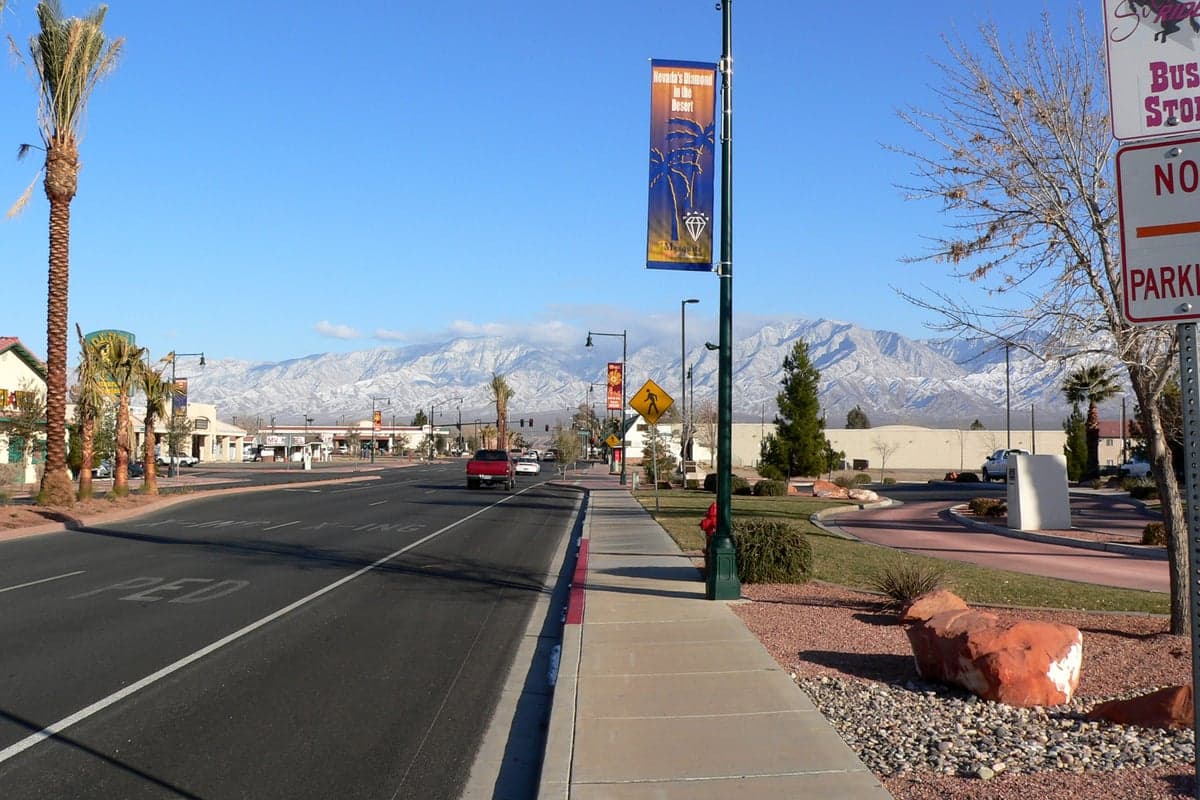
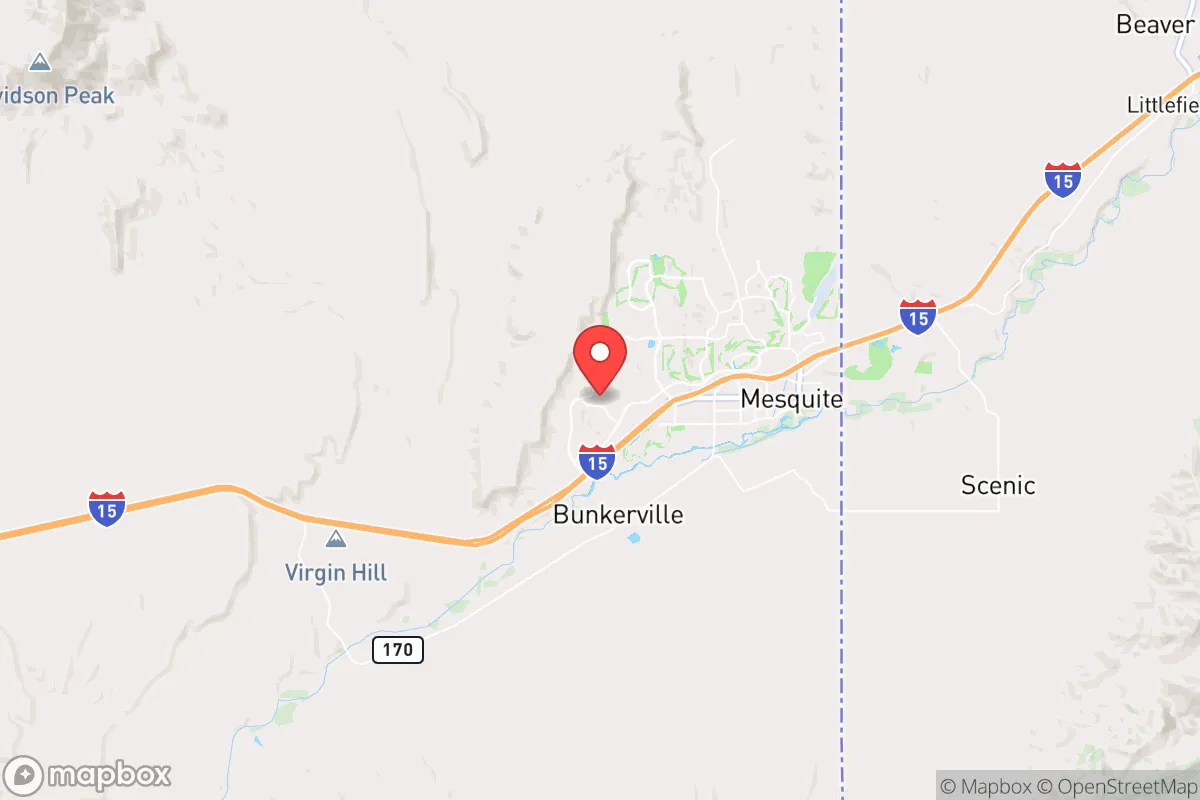
For the individualist, survivalist, or prepper evaluating Mesquite, Nevada, the personal sovereignty environment is a study in contrasts: the state’s fiercely independent ethos clashes with the practical realities of a small desert town that is heavily reliant on tourism and subject to federal land control. While Nevada offers no state income tax and a constitutional right to keep and bear arms, Mesquite’s location—a tight corridor between the Virgin River and the Arizona border—means that true autonomy is constrained by zoning, water rights, and the Bureau of Land Management’s (BLM) grip on surrounding territory. A strategic relocation here requires understanding that personal freedom is high on paper but demands active navigation of local ordinances and resource limitations.
Tax burden and regulatory posture: how Nevada’s low-tax model plays out in Mesquite
Nevada’s tax structure is a major draw for those seeking to minimize government extraction. There is no state income tax, no corporate income tax, and no franchise tax on businesses—meaning every dollar earned stays in your pocket. The state sales tax in Mesquite is 8.25% (Clark County’s portion), which is moderate, and property taxes are capped by the state constitution at a maximum of 3% of assessed value, with actual effective rates typically around 0.6% to 0.8% for residential property. This is a fraction of what you’d pay in California or New York. However, the regulatory posture at the local level is less libertarian than the state’s reputation suggests. Mesquite operates under Clark County’s building codes, which require permits for most structural changes, and the city enforces a strict water conservation ordinance that limits lawn sizes and outdoor watering schedules. For a prepper looking to build a self-sufficient compound, these local rules can feel like an overreach—especially the prohibition on rainwater harvesting without a permit, which directly impacts off-grid water independence. The trade-off is clear: low taxes and minimal state-level bureaucracy, but you’ll still answer to city hall for anything that alters the landscape or consumes resources.
Self-defense and gun law specifics: what Nevada’s “shall issue” and constitutional carry mean for residents
Nevada is a strong Second Amendment state, and Mesquite residents benefit from some of the most permissive firearm laws in the West. Since 2023, Nevada has allowed constitutional carry—no permit required to carry a concealed firearm for anyone 21 or older who can legally possess a gun. Open carry is also legal without a permit. The state is “shall issue” for concealed carry permits, meaning if you want the reciprocity benefits of a permit (valid in 30+ states), the sheriff’s office in Clark County cannot deny it arbitrarily. There is no state-level assault weapons ban, no magazine capacity limit, and no universal background check law for private sales—though federal background checks still apply at licensed dealers. Stand-your-ground laws are in effect, with no duty to retreat in any place you have a legal right to be. For the survivalist, this means you can arm yourself without government permission, and you have broad latitude to defend your home and person. The practical downside in Mesquite is that the city is a 90-minute drive from Las Vegas, where crime rates are higher, but the local police response time in the rural outskirts can be 15–20 minutes. That gap reinforces the need for personal readiness. One nuance: Nevada law prohibits firearms in most government buildings and on school grounds, so be aware of posted restrictions at the Mesquite Recreation Center or local schools.
Self-reliance and homesteading viability: lot sizes, zoning, and off-grid feasibility in the desert
Mesquite’s desert environment presents both opportunity and limitation for the homesteader. Residential lots in the city proper average 0.2 to 0.5 acres, with many newer subdivisions on 6,000–8,000 square foot plots—tight for serious food production or livestock. For larger acreage, you must look outside city limits to unincorporated Clark County, where zoning allows for agricultural use on parcels of 1 acre or more. However, water is the critical bottleneck. The Virgin River provides the municipal supply, but new well drilling is heavily regulated by the Nevada Division of Water Resources, and permits for domestic wells are difficult to obtain in the Mesquite basin due to over-allocation. Off-grid solar is viable—Nevada averages 300+ sunny days per year—and net metering is available through NV Energy, though the utility has a history of fighting rooftop solar incentives. Zoning for tiny homes, RVs, or shipping container dwellings is restrictive within city limits; the city requires permanent foundations and adherence to the International Residential Code. For the prepper seeking true self-reliance, the best bet is to purchase raw land in the nearby Bunkerville or Logandale areas (15–20 minutes north), where 2–5 acre parcels are more common and county zoning is looser. Even there, you’ll need to budget for a septic system, solar array, and water hauling—there’s no “plug and play” off-grid lifestyle here without significant upfront investment.
Personal liberties: parental rights, medical autonomy, free speech, and property rights in practice
Nevada’s legal framework generally respects individual autonomy, but with notable exceptions that should concern the liberty-minded. Parental rights are strong in theory—Nevada law affirms parents’ authority to direct their children’s education, healthcare, and religious upbringing. Homeschooling is legal with a simple notice of intent, and there are no state-mandated curriculum requirements beyond basic subjects, giving families wide latitude. However, the state has a compulsory vaccination law for school attendance (with medical and religious exemptions available), and Mesquite’s public schools follow Clark County’s policies, which include comprehensive sex education and LGBTQ+ inclusivity mandates—a point of friction for conservative parents. Medical autonomy is mixed: Nevada has no state-level mask or vaccine mandates currently, but it does have a broad emergency powers statute that could theoretically be reactivated. The state also legalized recreational marijuana in 2016, which some preppers view as a personal freedom win, though federal law still prohibits it on BLM land. Free speech is robust—Nevada has no hate speech laws that criminalize political expression, and Mesquite’s small-town atmosphere means public meetings and local forums are accessible for voicing concerns. Property rights are where the rubber meets the road: eminent domain is allowed for public projects, and the BLM controls roughly 85% of Nevada’s land, meaning you cannot simply buy a remote parcel and live undisturbed—federal agencies have say over access roads, grazing, and mineral rights. For the survivalist, this is the biggest sovereignty gap: you can own your home, but the land around you is effectively owned by the federal government.
In the broader landscape of personal sovereignty, Mesquite offers a solid foundation—low taxes, constitutional carry, and a legal environment that respects parental choice and free expression—but it is not a libertarian utopia. The city’s dependence on tourism (casinos, golf, and the Virgin River resort corridor) creates a regulatory bias toward orderliness that can clash with off-grid ambitions. Compared to rural Idaho or Montana, where county-level zoning is nearly nonexistent and federal land is less dominant, Mesquite feels more constrained. Compared to California or Oregon, it feels like a breath of fresh air. For the strategic relocator who values personal autonomy but needs proximity to Las Vegas for work or supplies, Mesquite is a viable middle ground—just know that true sovereignty here requires buying the right parcel, navigating the water bureaucracy, and accepting that the federal government will always be your largest neighbor.

* Values derived from national, state, county, city and local statistics and may differ in a specific area. Last updated: 2026-04-23T04:12:10.000Z
Narrative content on this page is AI-generated and may contain mistakes. Verify any details that matter before acting on them.
ReloMaps may earn a commission from affiliate links at no extra cost to you.

