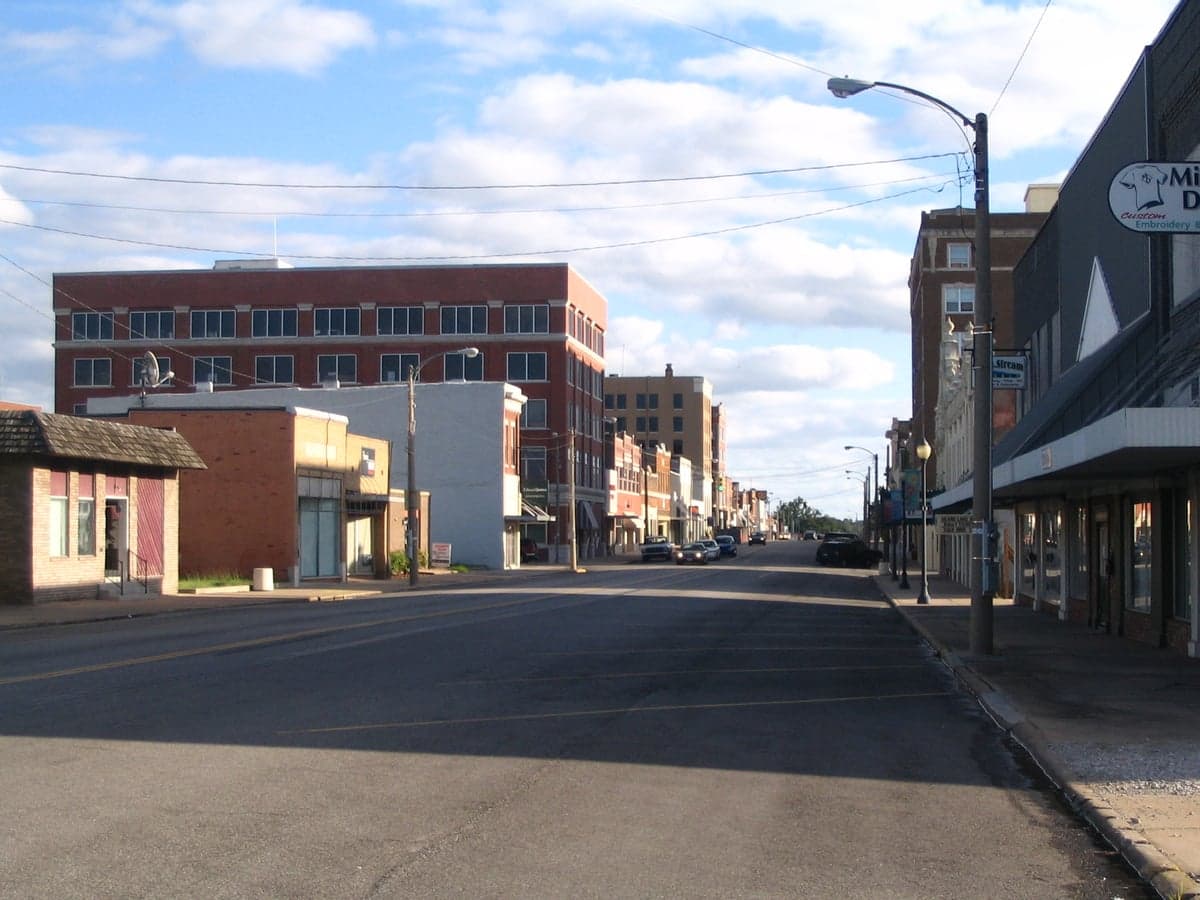
Photo: Wikipedia
Quality of Life in Miami, OK
A high quality of life with strong walkability, manageable living costs, healthy neighborhood signals, and solid amenity access.
What does Quality of Life tell us?
Quality of Life blends cost of living, nearby amenities, socioeconomic signals, and neighborhood character. City-level scores represent the whole municipality; individual neighborhoods can differ.
What does this tell us?
Quality of Life blends cost of living, nearby amenities, socioeconomic signals, and neighborhood character. City-level scores represent the whole municipality; individual neighborhoods can differ.
Cost of Living
44% below national average
The Real Cost of Living in Miami, OK for 2026
| Tier | Individual | Family (4) |
|---|---|---|
| Survival | $13k | $24k |
| Comfortable | $21k | $31k |
| Luxury | $74k+ | $114k+ |
| Elite (Top 5%) | $87k+ | $134k+ |
149%
The Area Signal
A metric tracking the socioeconomic signals of the area.
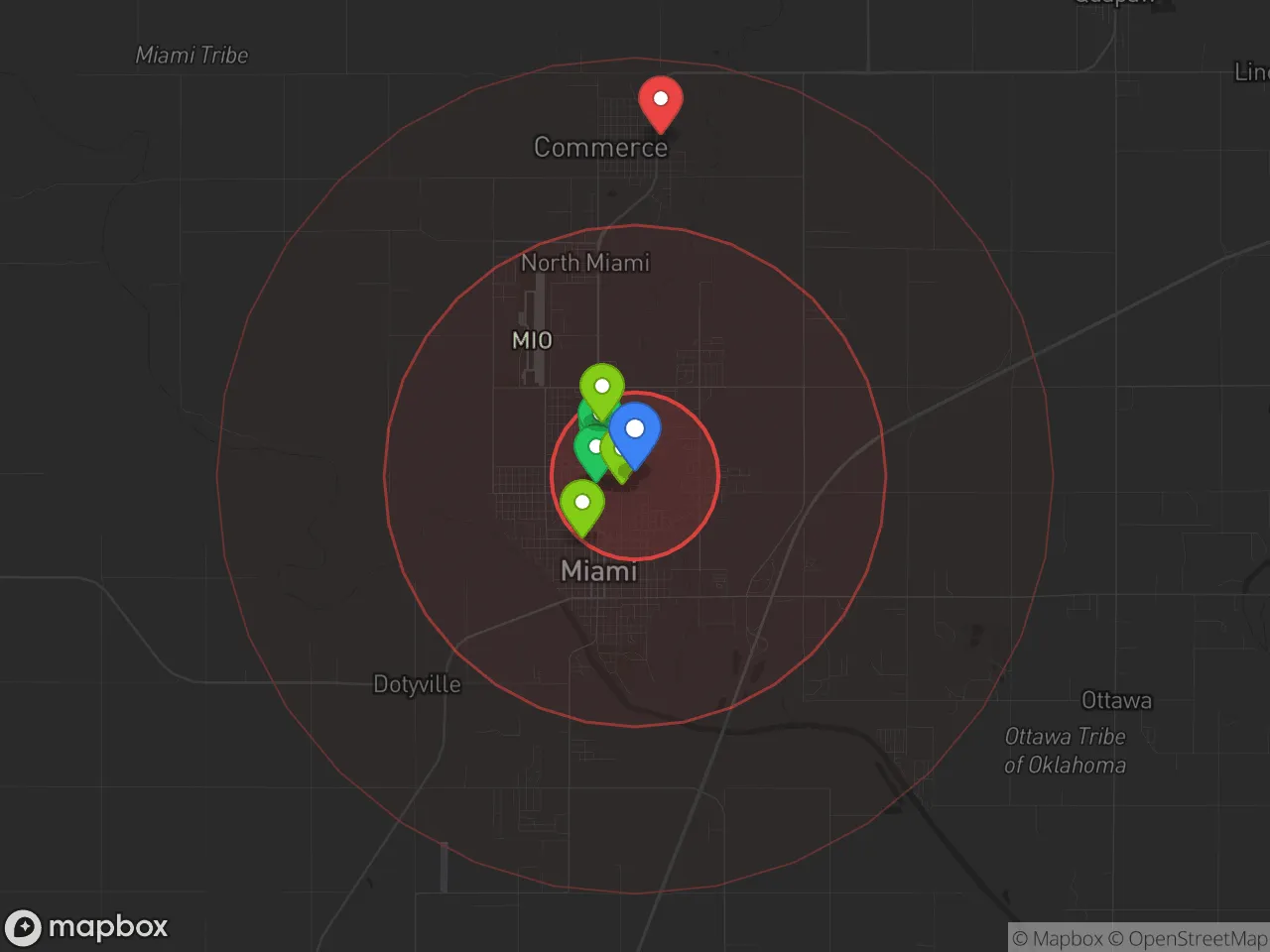
Hobbies
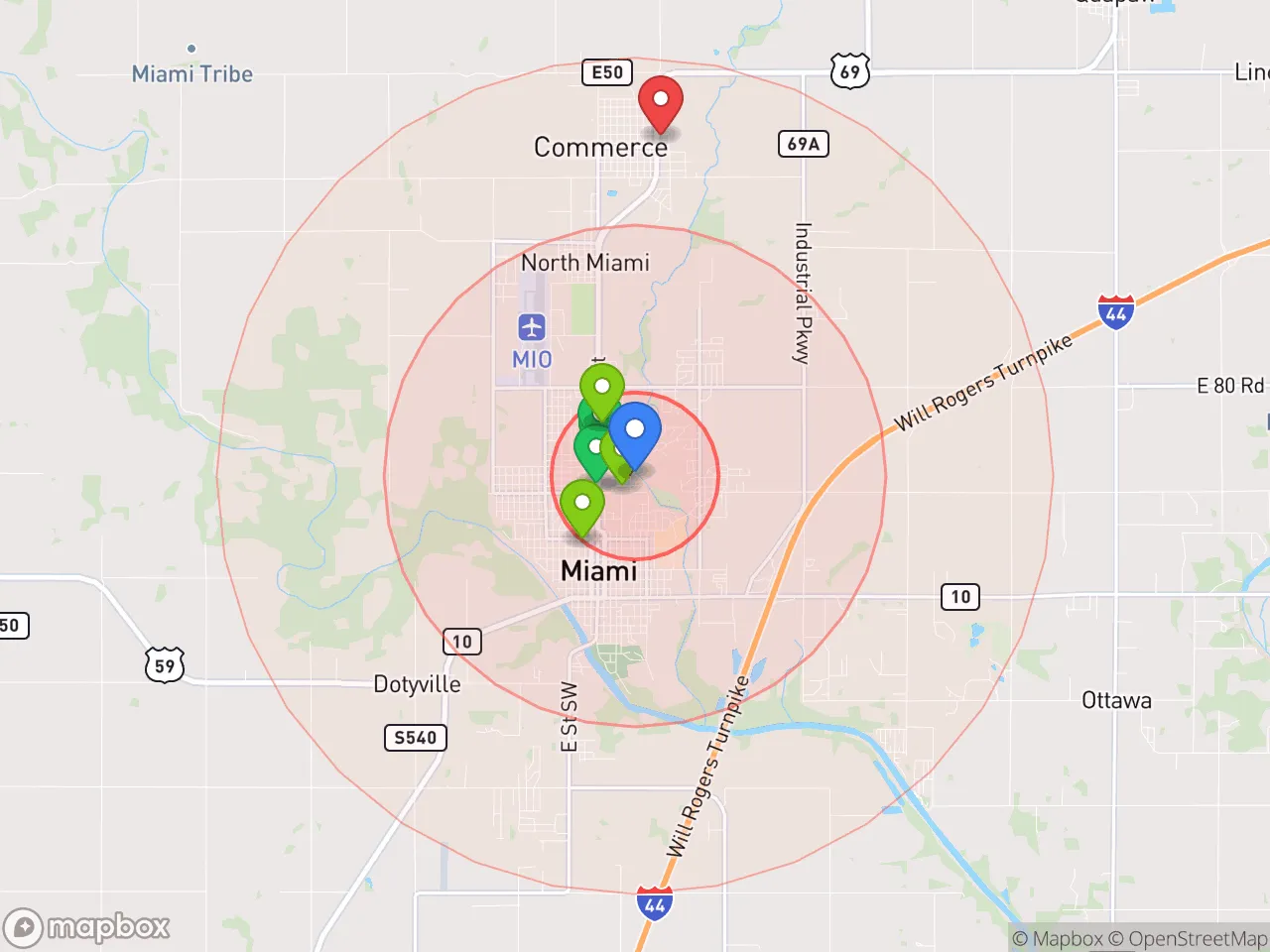
Explore the areaGroceries
1 within 10 miles
Gas
4 within 10 miles
Hospital
2 within 20 miles
Airport
MCI — Kansas City International
Post Office
USPS — Miami, OK
Critical Amenities
Quality-of-Life Analysis
Miami, Oklahoma, offers a distinctly affordable quality of life that attracts a mix of retirees, manufacturing workers, and families seeking a low-stress, small-town environment. With a cost of living index of 56—44 percent below the national average—residents enjoy a financial cushion rare in most of the country. The population of roughly 13,000 is predominantly older and working-class, with a median age near 40, and the community is anchored by the nearby Quapaw and Peoria tribal nations, which contribute both cultural events and employment.
How housing costs and everyday expenses compare to Joplin and Tulsa
Housing is the primary driver of Miami’s affordability. The median home value sits at $102,600, roughly one-third the national median, while the median rent of $804 is similarly low. For context, a comparable home in Joplin, Missouri—just 15 miles north—would cost about 20% more, and in Tulsa, 90 miles southwest, prices are nearly double. The average commute of 22.4 minutes is slightly longer than the national average but reflects the region’s rural layout; many residents drive to jobs in Ottawa County’s manufacturing plants or to the casinos and healthcare facilities in Miami proper. Utility costs are below the U.S. average, and grocery prices run about 10% lower than in larger Oklahoma cities, making the area especially attractive for fixed-income retirees.
What daily life is like for families: schools, recreation, and local amenities
Daily life in Miami revolves around a compact downtown with a historic Coleman Theatre, a handful of locally owned diners, and the sprawling Buffalo Run Casino & Resort. The Miami Public Schools district serves about 2,100 students and maintains a 15:1 student-teacher ratio, though test scores trail state averages—a consideration for families prioritizing academics. Outdoor recreation is a major draw: the nearby Grand Lake O’ the Cherokees offers boating and fishing, and the 26-mile Spring River runs through the area for canoeing. Healthcare is covered by the Integris Miami Hospital, a 25-bed critical-access facility, though specialists often require a drive to Joplin. Shopping is limited to big-box retailers along Steve Owens Boulevard, with most residents crossing into Missouri for broader options.
This combination of extreme affordability, a slower pace, and access to natural amenities makes Miami best suited for retirees on fixed incomes, remote workers who value low overhead, and manufacturing employees tied to the region’s industrial base. Families should weigh the school performance data against the financial benefits, while those seeking urban nightlife or high-end dining will find the options sparse. For anyone whose priority is stretching a dollar in a quiet, community-oriented setting, Miami delivers a quality of life that larger cities cannot match at this price point.

Crime in Miami, OK
Generally safer than 57% of comparable U.S. locations.
Violent CrimeViolent Crime Analysis
Property CrimeProperty Crime Analysis
Crime Analysis
Miami, Oklahoma, reports a violent crime rate of 474.1 per 100,000 residents and a property crime rate of 2,324 per 100,000, placing it above both state and national averages for communities of its size. While not among the most dangerous cities in the region, these figures indicate that property theft and assault are common enough to warrant caution, particularly for newcomers unfamiliar with the area’s specific risk patterns. The city’s proximity to the larger Joplin, Missouri metro area introduces additional dynamics, as cross-border crime and regional drug trafficking corridors can elevate local incident counts.
Crime in context
Miami’s violent crime rate is roughly 25% higher than the Oklahoma state average and about 30% above the national median for non-metro cities. Property crime, at 2,324 per 100K, exceeds the state average by approximately 15% and is notably higher than in nearby rural communities like Fairland or Afton. The city’s location along the historic Route 66 corridor and near the Oklahoma-Missouri state line contributes to transient populations and opportunistic theft, including vehicle break-ins and shoplifting. Ottawa County, where Miami is the county seat, has seen periodic spikes in drug-related offenses, particularly methamphetamine and opioid possession, which correlate with both property and violent crime trends.
What residents experience
Residents most frequently report incidents of larceny, burglary, and simple assault. Aggravated assault accounts for the majority of violent crime, with robbery and homicide occurring less often but still above the rural norm. Property crime is the dominant concern, with unlocked vehicles and unsecured outbuildings being common targets. The Miami Police Department maintains a visible presence in the downtown core and along Steve Owens Boulevard, but response times in outlying residential areas can be longer. Community surveys indicate that fear of property crime is higher than fear of violent crime, though both remain top-of-mind for families and retirees considering relocation.
Neighborhood-level variation
Crime is not evenly distributed across Miami. The area around the historic downtown and near the college campus (Northeastern Oklahoma A&M College) sees higher foot traffic and correspondingly more petty theft and disorderly conduct calls. Residential neighborhoods east of Highway 69 and south of the Neosho River tend to report fewer incidents, while areas closer to the commercial strips along Highway 10 and the industrial zones near the railroad tracks experience elevated property crime rates. The city’s public housing complexes and some older rental districts near the city center have higher concentrations of police activity. For those considering a move, neighborhoods like the historic Coleman Addition and the newer subdivisions off South Main Street are generally regarded as safer, though no area is immune to the region’s broader property crime trends.
* Values derived from national, state, county, city and local statistics and may differ in a specific area. Last updated: 2026-04-25T13:52:20.000Z
Narrative content on this page is AI-generated and may contain mistakes. Verify any details that matter before acting on them.
ReloMaps may earn a commission from affiliate links at no extra cost to you.

