
Photo: Wikipedia
Strategic Assessment of Wayne County
Multiple tactical vulnerabilities. Population density, target proximity, or disaster risk are likely compounding. A retreat property and exit planning is required.
What does the Strategic Assessment tell us?
Our Strategic Assessment grades tactical survivability of an area. Major population centers, military targets, fallout zones, natural disasters, and border exposure all drive risk — lower exposure means a more defensible position in a crisis.
This is heavily inspired by Joel Skousen's Strategic Relocation book. Highly recommended you checkout the book ($)What does this tell us?
Our Strategic Assessment grades tactical survivability of an area. Major population centers, military targets, fallout zones, natural disasters, and border exposure all drive risk — lower exposure means a more defensible position in a crisis.
This is heavily inspired by Joel Skousen's Strategic Relocation book. Highly recommended you checkout the book ($)Strategic Pillars

Key Distances
Strategic Assessment Analysis
Wayne County, Michigan, presents a complex strategic picture for the conservative prepper or survivalist. While its location on the Great Lakes and proximity to Canada offer some unique logistical advantages, the county is fundamentally defined by its deep entanglement with Detroit—a major urban center that represents a significant concentration of risk. For those prioritizing resilience, the county’s assets are real but heavily offset by its exposure to civil unrest, industrial fallout, and the vulnerabilities of a dense, politically volatile population center. This assessment weighs those factors for a relocator seeking a defensible, self-sufficient position.
Geographic position and natural advantages for long-term survival
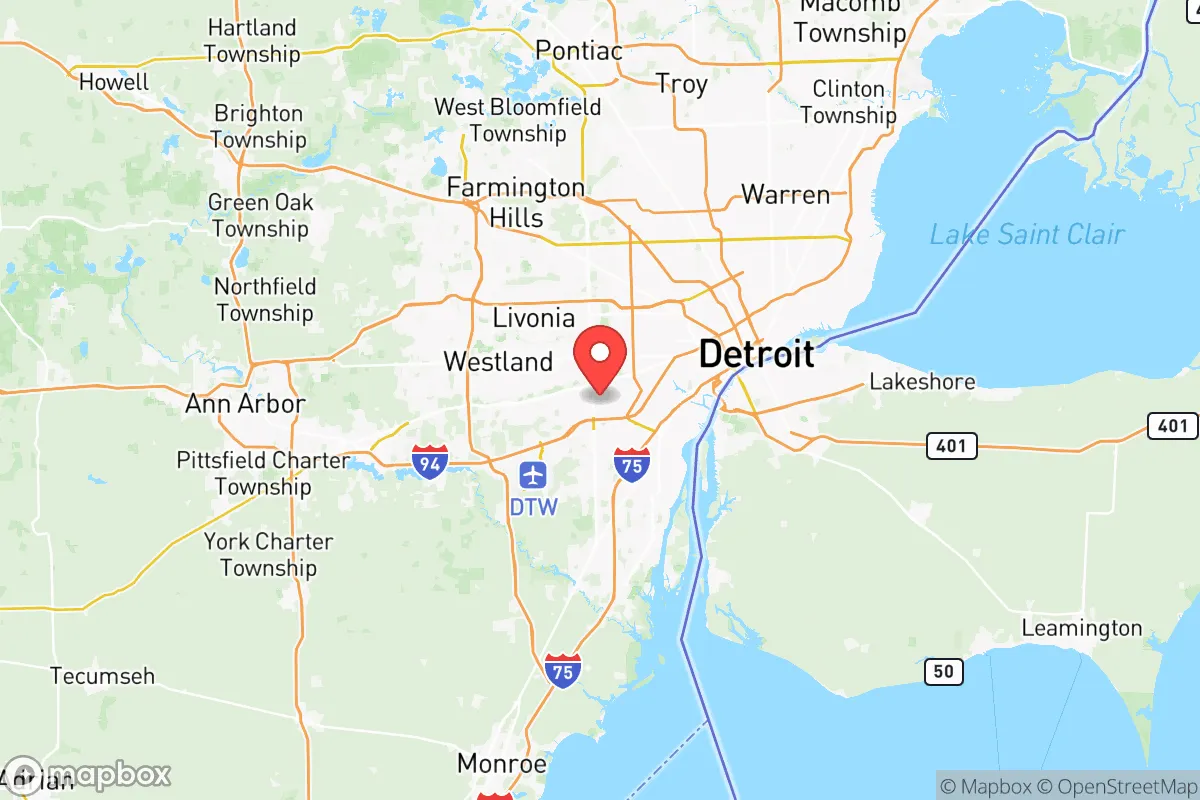
Wayne County’s primary strategic asset is its position on the Detroit River and Lake Erie, part of the Great Lakes system—the largest surface freshwater source in the world. This is a non-negotiable advantage in any long-term disruption scenario. The county also sits adjacent to the Canadian border via the Detroit-Windsor Tunnel and the Ambassador Bridge, offering a potential (though heavily monitored) secondary egress route. The terrain is generally flat, with some wooded areas in the western and northern parts of the county, such as around Northville and Plymouth. These areas provide slightly better defensibility and natural cover than the dense urban core. The Huron River and the Rouge River systems offer additional water sources, though both face significant industrial pollution challenges. For a relocator, the western townships—Canton, Van Buren Township, and Sumpter Township—offer a mix of rural-adjacent land with access to freshwater, which is a baseline requirement for any serious prepper location.
Risks, exposures, and proximity to fallout-relevant landmarks
The downsides are substantial and cannot be ignored. Wayne County is home to Detroit, a city that has experienced severe civil unrest, population decline, and strained municipal services. In a mass casualty event or grid-down scenario, the urban core would likely become a high-risk zone for looting, violence, and resource competition. The county also hosts several high-value industrial targets. The Detroit Metropolitan Airport (DTW) in Romulus is a major transportation hub and a likely target for any coordinated attack. The Detroit River is lined with chemical plants, steel mills, and oil refineries, including the Marathon Petroleum refinery in southwest Detroit. A major incident at this facility could render large portions of the downriver communities—Wyandotte, Allen Park, Southgate—uninhabitable for weeks due to toxic plumes. Additionally, the Fermi 2 nuclear power plant is located just south in Monroe County, within 30 miles of Wayne County’s southern border. While not inside the county, its proximity means any incident would directly impact evacuation and fallout patterns. The presence of the Selfridge Air National Guard Base in neighboring Macomb County also makes the region a potential military target. For a relocator, the concentration of these risks means that any bug-in location must be carefully chosen to avoid downwind or downstream fallout zones.
Practical resilience for a relocator: food, water, energy, and defensibility
For a single individual or family looking to establish a resilient homestead, Wayne County offers a mixed bag. Water is abundant but requires treatment. The Great Lakes are a massive resource, but municipal water systems are vulnerable to contamination and failure. A well in the western townships is a better bet, but groundwater quality varies due to historical industrial activity. Food production is possible, with decent soil in the rural western areas, but the growing season is short (roughly May to September). Local food infrastructure is weak; most grocery stores rely on just-in-time delivery, which would fail quickly in a disruption. Energy resilience is a challenge. The grid is aging and prone to outages, especially during winter storms. Solar is viable but requires battery storage due to long, cloudy winters. Natural gas is common for heating, but the pipeline network is a single point of failure. Defensibility is poor in the urban and suburban core. The dense street grids of Detroit, Dearborn, and Livonia are difficult to secure. The better options are the more rural fringe areas like Northville Township or Plymouth Township, where larger lots, tree cover, and fewer choke points allow for a more defensible position. However, even these areas are within a 30-minute drive of the city, meaning they would be affected by any urban evacuation or unrest.
The overall strategic picture for Wayne County is one of high risk with specific, limited rewards. The Great Lakes water supply is a genuine long-term asset, and the western townships offer a sliver of rural living within a major metropolitan area. But the concentration of industrial targets, the proximity to a volatile urban core, and the logistical challenges of self-sufficiency in a cold climate make it a poor choice for a primary relocation for a conservative prepper. It could serve as a temporary or secondary location for someone who already has a deep connection to the area, but for a relocator starting fresh, the risks—especially from civil unrest and industrial fallout—outweigh the benefits. The county is best viewed as a place to have a plan to leave, not a place to dig in.

* Values derived from national, state, county, city and local statistics and may differ in a specific area. Last updated: 2026-05-16T03:08:25.000Z
Narrative content on this page is AI-generated and may contain mistakes. Verify any details that matter before acting on them.
ReloMaps may earn a commission from affiliate links at no extra cost to you.

