Photo: Wikipedia
Demographics of Middleton, ID
Affluence Level in Middleton, ID
An upper-middle-class area. Household wealth, education levels, and homeownership run ahead of national benchmarks.
People of Middleton, ID
The people of Middleton, Idaho, today form a compact, family-oriented community of roughly 10,100 residents, characterized by a predominantly white (77.2%) and Hispanic (15.6%) population with virtually no foreign-born presence (0.0%). The city retains a distinctly small-town, agricultural-rooted identity, where a 30.5% college-educated rate reflects a mix of blue-collar trades and professional commuters to nearby Boise and Nampa. Middleton’s population is notably younger than the state median, driven by families seeking affordable housing and a slower pace, yet it remains one of the least ethnically diverse cities in Canyon County.
How the city was settled and grew
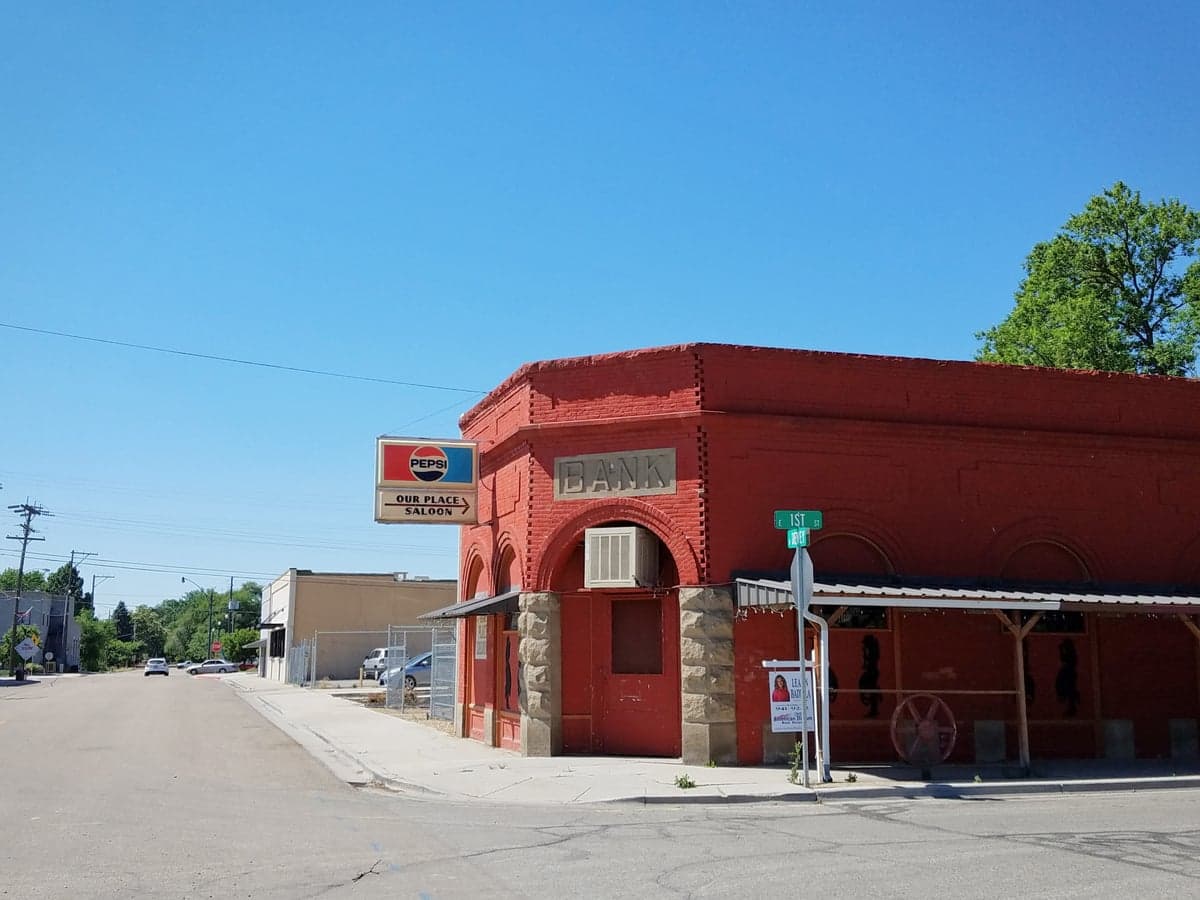
Middleton’s founding population arrived in the 1860s, drawn by the Donation Land Claim Act and the promise of fertile farmland along the Boise River. The original settlers were predominantly Anglo-American homesteaders from the Midwest and Upper South, who established the Historic Downtown District around what is now Main Street. By the 1880s, the Oregon Short Line Railroad spurred a second wave of merchants and tradesmen, many of German and Scandinavian descent, who built homes in the Railroad Addition neighborhood south of the tracks. The city incorporated in 1910 with fewer than 300 residents, and for the next five decades, the population remained overwhelmingly white and native-born, sustained by sugar beet farming, dairy operations, and the Middleton Mill. The West End area, near the old mill site, housed many of the farm laborers and their families through the mid-20th century, creating a tight-knit, working-class enclave that still defines the neighborhood’s character today.
Modern era (post-1965)
After the 1965 Hart-Cellar Act, Middleton saw virtually no new immigration—the foreign-born share remains at 0.0%—but experienced significant domestic in-migration starting in the 1990s. The primary driver was suburban spillover from Boise and Nampa, as families sought larger lots and lower home prices. This wave settled predominantly in the Meadow View subdivision, a master-planned community of single-family homes built between 1995 and 2010, which attracted a mix of white professionals and Hispanic families moving from older agricultural labor camps. The Hispanic population grew from under 5% in 1990 to 15.6% by 2020, concentrated in the South Middleton area near Highway 44, where older ranch-style homes and mobile home parks offered affordable entry points. The Black (0.4%), East/Southeast Asian (0.1%), and Indian-subcontinent (0.7%) populations remain negligible, reflecting the city’s limited rental housing stock and lack of ethnic-specific institutions. The Northwood Estates neighborhood, developed after 2010, became a magnet for white-collar commuters, pushing the college-educated share to 30.5% but also creating a subtle socioeconomic divide between the older, blue-collar core and the newer, more affluent subdivisions.
The future
Middleton’s population is projected to grow to roughly 15,000 by 2040, driven by continued domestic in-migration from California and other Western states seeking lower taxes and conservative governance. The Hispanic share is likely to plateau near 18-20%, as younger Hispanic families assimilate into the broader community and intermarriage rates rise, while the white share will remain dominant. The city is not tribalizing into distinct ethnic enclaves; rather, it is homogenizing around a family-centric, church-going culture, with the Middleton Heights development (planned for 800 homes east of the city) expected to attract mostly white and Hispanic middle-class buyers. The foreign-born share will likely stay near zero, as Middleton lacks the rental housing, public transit, and ethnic job networks that draw immigrants to larger cities. The Indian and East/Southeast Asian populations may grow slightly as remote workers and Boise-area tech employees seek cheaper land, but they will remain a tiny fraction of the total.
For someone moving in now, Middleton is becoming a more prosperous, slightly more diverse, but still overwhelmingly white and native-born bedroom community. The city offers a stable, low-crime environment with strong schools and a conservative social fabric, but those seeking significant ethnic diversity or a vibrant immigrant culture will find it absent. The population trajectory points toward gradual, orderly growth that preserves Middleton’s small-town character while absorbing new residents who share its values.

* Values derived from national, state, county, city and local statistics and may differ in a specific area. Last updated: 2026-10-10T16:28:16.000Z
Narrative content on this page is AI-generated and may contain mistakes. Verify any details that matter before acting on them.
ReloMaps may earn a commission from affiliate links at no extra cost to you.

