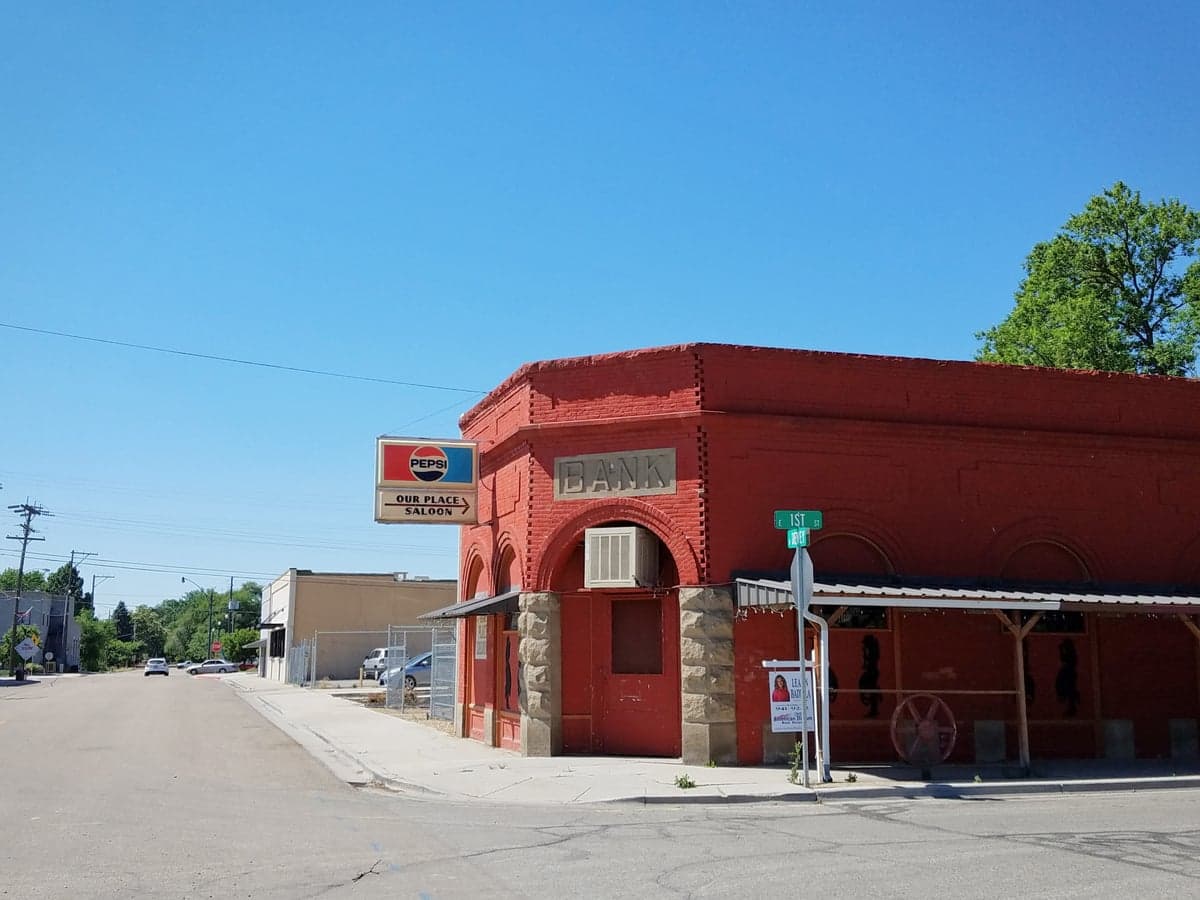
Photo: Wikipedia
Political ClimatePolitical Climate in Middleton, ID
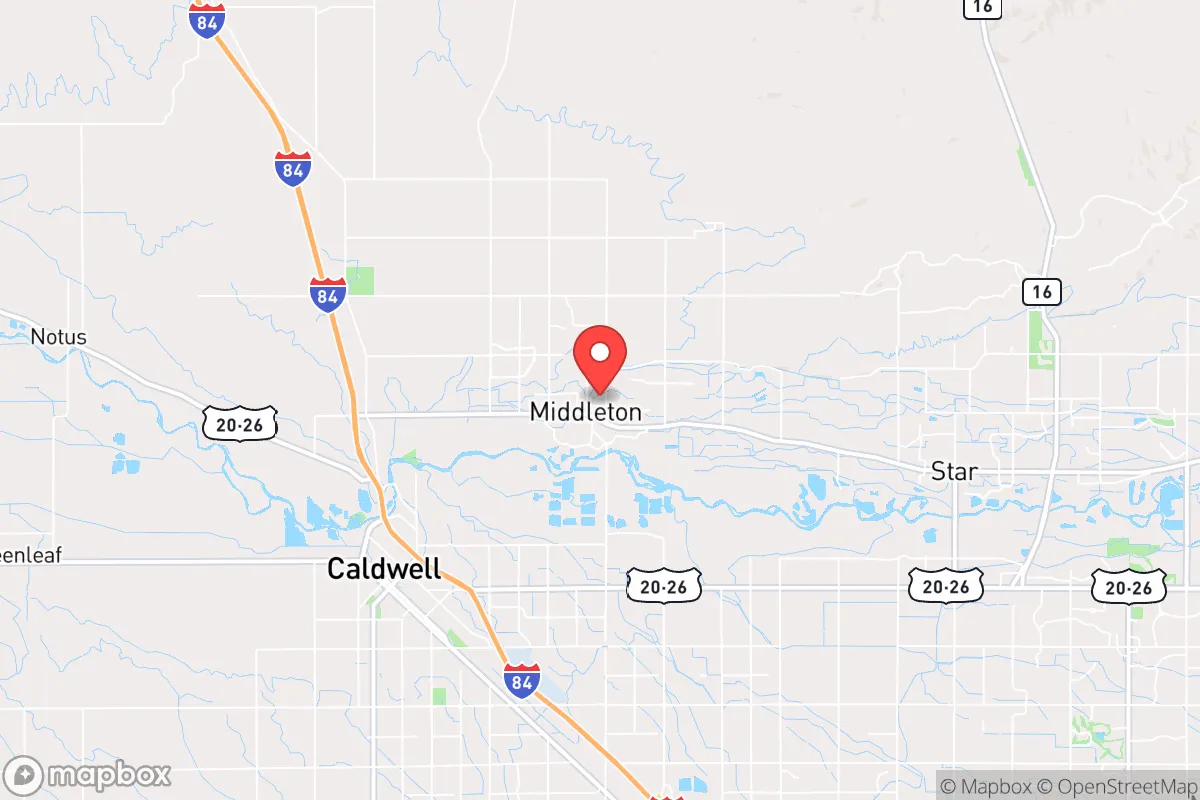
District shown is the primary district for this city’s centroid. Cities may span multiple districts.
Local Political AnalysisPolitical Analysis of Middleton, ID
Middleton, Idaho, sits deep in conservative territory, with a Cook PVI of R+22 that reflects a community where traditional values and limited-government principles aren't just preferences—they're the baseline. This isn't a purple suburb hedging its bets; it's a place where folks have watched nearby cities like Boise and Meridian drift leftward on issues from zoning to school curriculum, and they've deliberately chosen a different path. The political lean here has only hardened over the past decade, as newcomers fleeing California and King County, Washington, have largely reinforced the existing conservative majority rather than diluting it. If you're looking for a place where the phrase "government overreach" still means something at the dinner table, Middleton is it.
How it compares
Drive ten miles east to Boise, and you'll hit a city that voted for Biden in 2020 and has embraced progressive policies on homelessness, density mandates, and police funding. Head south to Meridian, and you'll find a more moderate conservative vibe—still red, but with a growing contingent of tech workers and out-of-state transplants pushing for bike lanes and urban growth boundaries. Middleton, by contrast, feels like a throwback. Canyon County as a whole leans R+18, but Middleton's R+22 rating puts it on the far-right edge of the county, alongside smaller towns like Parma and Greenleaf. The difference isn't subtle: Middleton's city council hasn't entertained a mask mandate or a diversity-equity-inclusion resolution, while neighboring Nampa has debated both. For a long-time resident, that contrast is the whole point—Middleton is a place where the local government still remembers its job is to stay out of your life, not manage it.
What this means for residents
Practically speaking, Middleton's political climate translates into lower taxes, fewer regulations, and a school board that hasn't been captured by progressive activists. Property taxes here run about 20% less than in Ada County, and there's no city income tax or business license fee that chokes small startups. The downside? If you're hoping for rapid transit, a downtown arts district, or a city-funded homeless shelter, you'll be disappointed—Middleton prioritizes roads, water, and police, not social engineering. The real concern for residents is whether the political balance can hold as the Treasure Valley grows. Every new subdivision brings the risk of a city council election flipped by a handful of voters who think "equity" is a zoning goal. So far, Middleton has resisted that drift, but it's a constant vigilance—the kind where you actually know your neighbors and talk to them about who's running for office, because the alternative is watching your town become another Meridian.
Culturally, Middleton stands out for its gun-friendly ordinances, its refusal to adopt statewide building codes that add costs to new homes, and a general attitude that the best government is the one you barely notice. The annual Middleton Stampede rodeo and the Fourth of July parade aren't just events—they're political statements about what this community values: self-reliance, family, and a healthy skepticism of anyone who says they know what's best for you. The long-term trajectory depends on whether the next wave of newcomers shares that ethos or brings the same progressive impulses that have reshaped Boise. For now, Middleton remains a pocket of sanity in a state that's still conservative but showing cracks around the edges. If you're tired of being told how to live, work, and raise your kids, this is one of the last places in the Treasure Valley where you can still breathe.

State Political ClimatePolitical Climate in Idaho
State Political AnalysisPolitical Environment in the State
Idaho is one of the most reliably Republican states in the nation, with a deep-red partisan lean that has only intensified over the past two decades. The state hasn’t voted for a Democratic presidential candidate since 1964, and in 2024, Donald Trump carried Idaho by roughly 30 points. The dominant coalition is a mix of rural conservatives, Mormon cultural conservatives in the southeast, and a growing wave of out-of-state transplants fleeing blue states—many of whom are pushing the state even further right on cultural and fiscal issues. Over the last 10-20 years, Idaho has shifted from a moderate, libertarian-leaning Western state to a more aggressively conservative one, driven by explosive growth in the Treasure Valley and a backlash against federal overreach.
Urban vs. rural divide
The political map of Idaho is starkly divided between a handful of growing urban centers and the vast, deeply conservative rural expanse. Boise and its sprawling suburbs in Ada County have historically been the state’s moderate-to-liberal anchor, but even that is changing. Ada County voted for Trump in 2024, albeit by a narrower margin than the rest of the state, while the city of Boise itself leans left—home to a vocal progressive activist class and a city council that has pushed bike lanes, density zoning, and homeless services that many rural Idahoans view as government overreach. Just north, Canyon County (Nampa, Caldwell) is a Republican stronghold, with a fast-growing population of conservative families and ex-Californians who fled high taxes and lockdowns. Kootenai County (Coeur d’Alene) is another red-hot conservative hub, where the local GOP is dominated by constitutionalist and liberty-minded activists. Meanwhile, Latah County (Moscow), home to the University of Idaho, is the state’s only reliably blue county—a small, college-town outlier. The rural counties—like Lemhi, Clark, and Butte—routinely vote 80-90% Republican, driven by ranching, mining, and a deep distrust of federal land management. The urban-rural split isn’t just about votes; it’s about worldview. In Boise, you’ll find debates over public transit and affordable housing; in rural Idaho, the conversation is about wolf management, water rights, and the Second Amendment.
Policy environment
Idaho’s policy environment is aggressively pro-liberty in the traditional conservative sense, with a low-tax, low-regulation posture that has made it a magnet for those fleeing high-cost states. There is no state corporate income tax, and the personal income tax was flattened to a single rate of 5.8% in 2022, with further cuts likely. Property taxes are relatively low, though they vary by county. The state legislature has been on a tear in recent years, passing a flurry of bills on education, election integrity, and parental rights. Idaho’s school choice landscape is expanding—in 2024, the legislature passed a $50 million education savings account program, though it was vetoed by Governor Brad Little, a move that angered many conservatives. On election law, Idaho now requires voter ID, bans ballot drop boxes in most circumstances, and has strict signature verification rules. The state also passed a near-total abortion ban in 2022, with no exceptions for rape or incest, which has held up in court. On healthcare, Idaho has resisted Medicaid expansion implementation at every turn, though voters approved it in 2018. The regulatory environment is business-friendly, with no state-level occupational licensing for many trades and a right-to-work law. For a conservative family, the policy environment is largely a win—low taxes, strong gun rights, and a government that mostly stays out of your life, though the education funding battles remain a sore spot.
Trajectory & freedom
Idaho is becoming more free in many respects, but the trajectory is not without tension. The state has been a national leader in pushing back against federal overreach, particularly on land use and gun rights. In 2023, the legislature passed the Second Amendment Preservation Act, which prohibits state and local law enforcement from enforcing any federal gun laws that violate the Idaho Constitution—a direct challenge to the ATF. On parental rights, Idaho passed House Bill 93 in 2024, which requires schools to notify parents of any curriculum related to sexuality or gender identity and allows parents to opt their children out. The state also enacted a medical freedom law in 2023, barring employers from requiring COVID-19 vaccines as a condition of employment. However, there are areas where freedom is being constrained. The state’s abortion ban is among the strictest in the nation, and while that aligns with many conservative values, it has led to a healthcare access crisis in rural areas. Property rights are generally strong, but the rapid growth in the Treasure Valley has led to zoning battles that some see as creeping government control. On balance, Idaho is trending toward more personal liberty on guns, speech, and medical choice, but the state’s growing population is creating new pressures on housing and infrastructure that could invite more regulation.
Civil unrest & political movements
Idaho has a long history of anti-government sentiment, but the modern political movements are more organized and visible than ever. The People’s Rights Network, founded by Ammon Bundy, has a strong presence in the state, particularly in rural areas and the Treasure Valley. Bundy’s group has been involved in high-profile standoffs with local governments over mask mandates, library books, and property seizures. In 2022, the group protested outside the Idaho Statehouse over a child protective services case, leading to arrests. On the left, Boise has seen recurring protests over police brutality and abortion rights, but these are small and largely contained to the city core. Immigration politics are a flashpoint: Idaho has no sanctuary cities, and the legislature passed a bill in 2024 requiring local law enforcement to cooperate with ICE. The state has also seen a surge in election integrity activism, with citizen-led audits in Kootenai County and calls for hand-counting ballots. A new resident would notice the prevalence of “Don’t Tread on Me” flags, gun rights rallies at the capitol, and a general wariness of federal authority. The most visible flashpoint in recent years was the 2020-2021 anti-lockdown movement, which saw thousands of Idahoans protest at the Statehouse, leading to the state being one of the first to fully reopen. For a conservative moving in, this is a place where political activism is not just tolerated—it’s expected.
Projection
Over the next 5-10 years, Idaho will likely become more conservative, not less, driven by the continued influx of migrants from California, Oregon, and Washington. These newcomers are not fleeing to Idaho for its progressive policies—they’re coming for lower taxes, more freedom, and a culture that aligns with traditional values. The Treasure Valley will continue to grow, but the political center of gravity is shifting east and north, toward the more rural and libertarian-leaning counties. Expect more legislation on school choice, further income tax cuts, and continued battles with the federal government over public lands and gun laws. The biggest wild card is housing: if the state fails to address affordability, it could spark a backlash against growth, potentially leading to zoning reforms that some conservatives view as government overreach. The Democratic Party in Idaho is essentially a non-factor statewide, but local races in Boise and Moscow will remain competitive. For a new resident, the Idaho of 2035 will likely look a lot like the Idaho of today—only more crowded, more conservative, and more assertive in its independence from Washington.
Bottom line for a new resident: If you’re moving to Idaho for freedom, you’re getting it—low taxes, strong gun rights, and a government that largely stays out of your personal life. But don’t expect a libertarian paradise; the state is deeply culturally conservative, with strict laws on abortion and a strong religious influence in the southeast. You’ll find a welcoming community of like-minded people, especially if you’re in the suburbs or rural areas, but be prepared for a political culture that is actively engaged and unapologetically red. The biggest practical takeaway: your vote will matter more in local primaries than in general elections, and your voice will be heard if you show up to a county commission meeting or a school board hearing. Idaho is a place where politics is personal, and that’s exactly how most residents want it.
* Values derived from national, state, county, city and local statistics and may differ in a specific area. Last updated: 2026-10-10T16:28:16.000Z
Narrative content on this page is AI-generated and may contain mistakes. Verify any details that matter before acting on them.
ReloMaps may earn a commission from affiliate links at no extra cost to you.

