 Popular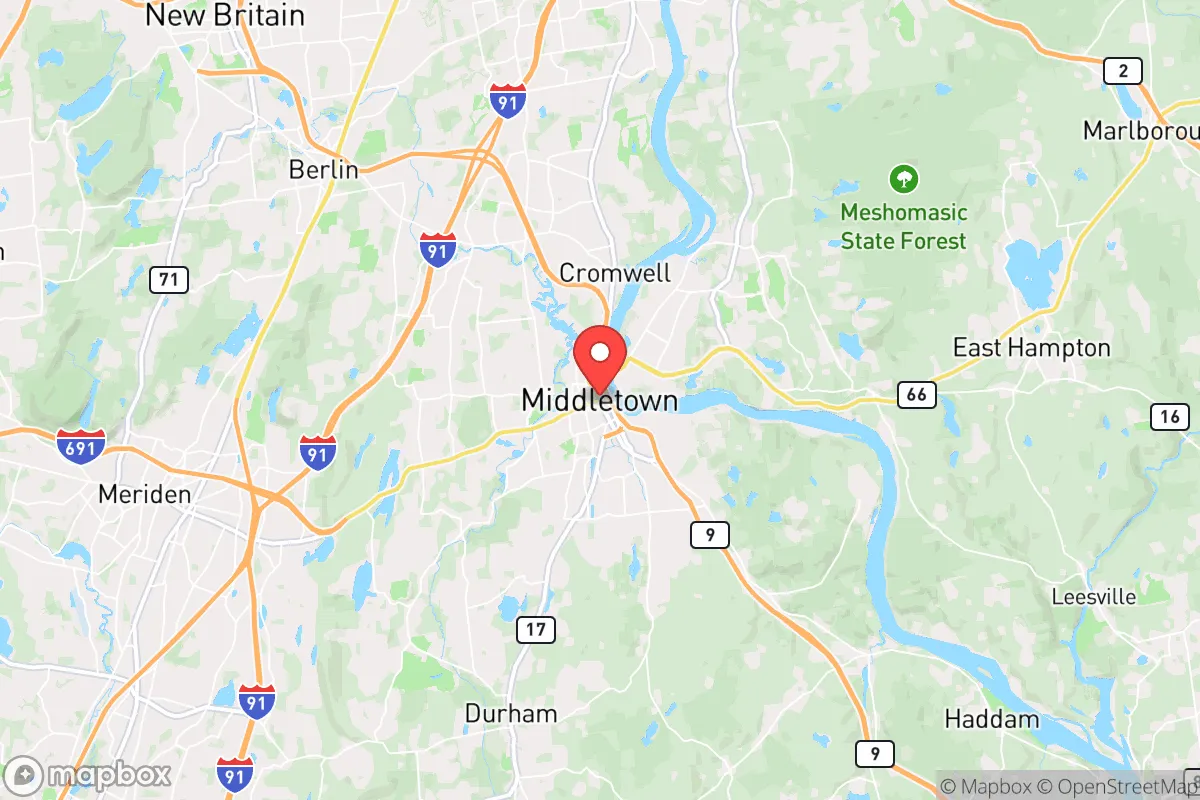
Demographics of Middletown, CT
Affluence Level in Middletown, CT
A below-average socioeconomic profile. Incomes, home values, and educational attainment trail the U.S., with higher poverty and unemployment.
People of Middletown, CT
The people of Middletown, Connecticut today number 47,646, forming a dense, historically layered city where a white majority (64.7%) coexists with significant Black (13.3%) and Hispanic (11.8%) populations, alongside smaller but distinct East/Southeast Asian (2.8%) and Indian-subcontinent (2.5%) communities. With only 3.9% foreign-born, the city is overwhelmingly native-born, yet its neighborhoods retain strong ethnic and class identities rooted in successive waves of migration. The city’s character is defined by its role as a regional employment and education hub—anchored by Wesleyan University and Middlesex Hospital—and by a population that is notably well-educated, with 40.7% holding a college degree, a figure that shapes local politics and culture.
How the city was settled and grew
Middletown was founded in 1651 by English Puritan colonists from Hartford and Wethersfield, who were drawn by the fertile floodplains of the Connecticut River and the promise of a deep-water port. The original settlement clustered around the riverfront in what is now the South District (Main Street south of Washington Street), where the first meeting house and wharves were built. By the late 18th century, the city became a major shipbuilding and trading center, attracting a small but influential population of free Black mariners and laborers who settled in the West Side neighborhood, near the river and the emerging industrial district. The 19th century brought Irish immigrants fleeing the Great Famine, who dug the Middletown-Portland railroad tunnel and built St. Mary’s Church; they concentrated in the North End around Ferry Street. German and Italian immigrants followed in the late 1800s, working in the city’s rubber, hardware, and textile factories, settling in the Westfield and Newfield neighborhoods. By 1900, Middletown was a classic New England mill town, with a Yankee Protestant elite living on High Street and a working-class Catholic population in the peripheral wards.
Modern era (post-1965)
The 1965 Hart-Cellar Act and the subsequent collapse of manufacturing reshaped Middletown’s population. The city’s Black population, historically small (under 5% in 1960), grew steadily as African Americans from the rural South and later from Hartford’s inner city moved into the North End and the West Side, areas that had lost white ethnic families to suburbanization. Hispanic migration—primarily Puerto Rican and later Dominican—began in the 1970s, with families settling in the North End around Washington Street and the South District, where older housing stock was affordable. The Asian population, almost nonexistent before 1980, grew through two distinct streams: East/Southeast Asian professionals (Chinese, Korean, Vietnamese) attracted by Wesleyan University and Middlesex Hospital, who settled in the Highland Park and Westfield neighborhoods; and Indian-subcontinent immigrants (from India, Pakistan, Bangladesh) who arrived in the 1990s and 2000s, many working in healthcare and IT, concentrating in Westfield and the newer subdivisions near Route 9. The white population, once 90% in 1970, declined to 64.7% by 2024, with many older Yankee and Italian families moving to surrounding towns like Cromwell and Durham, while younger white professionals moved into the South District and downtown condos.
The future
Middletown’s population is slowly diversifying, but the pace is modest. The Hispanic share (11.8%) is growing steadily through natural increase and continued migration from Puerto Rico and Central America, with the North End becoming increasingly Hispanic. The Black population (13.3%) is plateauing, as out-migration to Hartford suburbs offsets in-migration. The East/Southeast Asian and Indian-subcontinent communities, while small, are growing through professional recruitment by Wesleyan and the hospital, and are likely to remain concentrated in Westfield and Highland Park. The white population is aging and declining in absolute numbers, but the city’s downtown revitalization—new apartments, restaurants, and the arts district—is attracting a younger, college-educated white cohort, preventing a rapid white exodus. The foreign-born share (3.9%) is low and unlikely to spike, as Middletown lacks the entry-level jobs and ethnic networks of larger cities. Over the next 10-20 years, the city will likely become more Hispanic and more professional, with the North End solidifying as a working-class Hispanic enclave and the South District and Westfield becoming more mixed-income and educated.
For someone moving in now, Middletown is a city of distinct, stable neighborhoods rather than a melting pot. The North End offers affordable housing and a strong sense of community but has higher poverty and crime rates. The South District and Westfield are safer, more educated, and more expensive, with good schools and walkable amenities. The city’s future is one of gradual diversification, not rapid change—a place where a conservative-leaning family can find a traditional New England small-city lifestyle with a growing, but still manageable, degree of ethnic and economic variety.

* Values derived from national, state, county, city and local statistics and may differ in a specific area. Last updated: 2026-04-19T07:28:28.000Z
Narrative content on this page is AI-generated and may contain mistakes. Verify any details that matter before acting on them.
ReloMaps may earn a commission from affiliate links at no extra cost to you.

