 Popular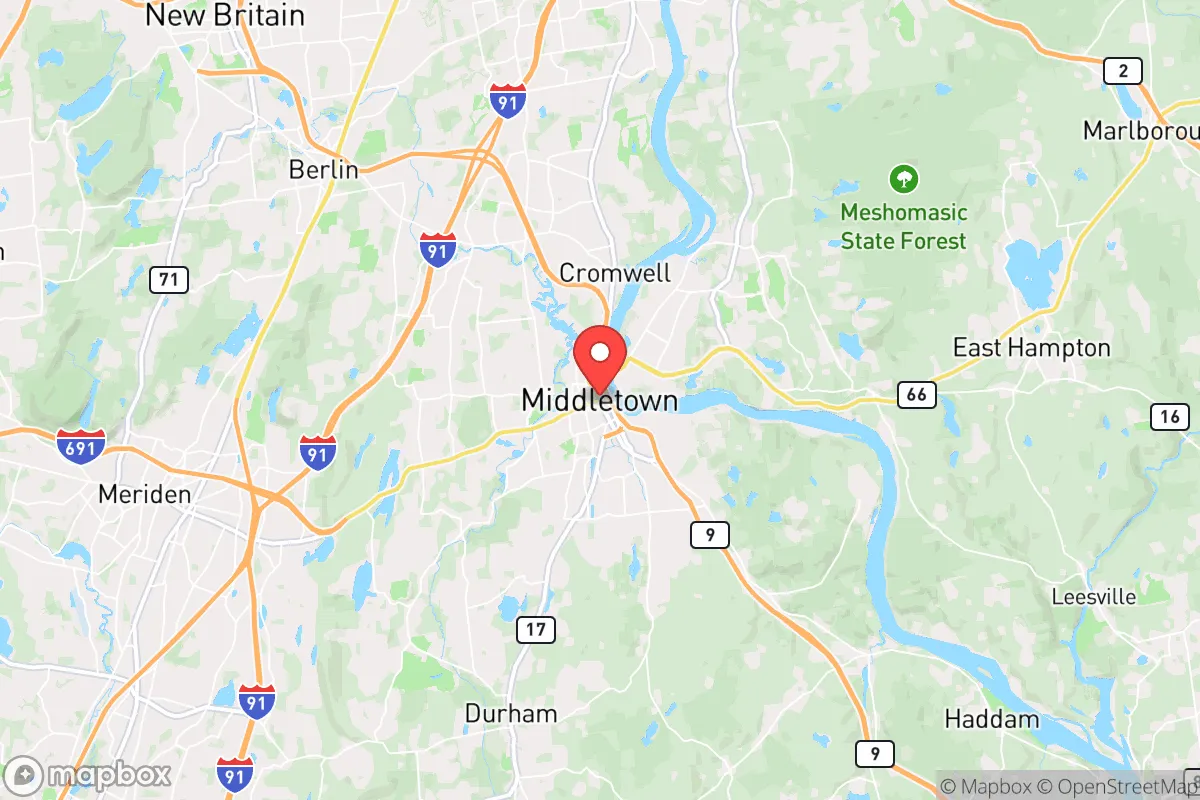
Personal Sovereignty in Middletown, CT
Viable for self-reliance. Generally workable, though some barriers may limit total independence.
What does Personal Sovereignty tell us?
Personal Sovereignty measures your capacity for self-reliance and independence with minimal government friction. Higher scores mean fewer barriers between you and the way you want to live... but it assumes you have the space you need and good neighbors.
What does this tell us?
Personal Sovereignty measures your capacity for self-reliance and independence with minimal government friction. Higher scores mean fewer barriers between you and the way you want to live... but it assumes you have the space you need and good neighbors.
State Policy
Energy independence: Importer (5% of energy produced in-state)
Personal Liberty
Homesteading

Personal Liberty Analysis
Middletown, Connecticut, presents a challenging environment for those prioritizing personal sovereignty, as the state’s progressive governance imposes significant constraints on individual autonomy. Nestled along the Connecticut River, this city of roughly 47,000 residents operates under a dense web of state-level mandates that limit self-reliance, from strict firearm regulations to high tax burdens that fund expansive government programs. For conservative-leaning individuals and parents evaluating relocation, the autonomy landscape here is one of trade-offs: a relatively stable local economy and access to natural resources are offset by policies that erode personal freedoms and encourage dependency on state systems. The following analysis breaks down the key sovereignty factors—taxation, self-defense rights, homesteading feasibility, and personal liberties—to help you decide if Middletown aligns with your values of independence and preparedness.
Tax burden and regulatory posture: How state policies impact your financial freedom
Connecticut’s tax structure is among the most aggressive in the nation, and Middletown residents feel the squeeze directly. The state imposes a progressive income tax with rates up to 6.99% on high earners, a 6.35% sales tax on most goods, and some of the highest property taxes in the country—Middletown’s mill rate hovers around 33 mills, meaning a $300,000 home carries an annual tax bill of nearly $10,000. This heavy fiscal hand funds a sprawling state bureaucracy that regulates everything from energy choices (Connecticut bans new gas stations in some zones) to land use (strict wetland and coastal area restrictions). For the prepper mindset, this translates to less disposable income for stockpiling supplies, investing in off-grid infrastructure, or purchasing land. The regulatory posture is equally stifling: Connecticut’s building codes are among the most stringent in New England, requiring permits for even modest sheds or solar panel installations, and the state’s environmental regulations can delay or block homesteading projects like rainwater collection systems or small-scale farming. Compared to states like New Hampshire or Texas, where tax burdens are lower and regulatory hurdles fewer, Middletown’s financial and bureaucratic environment feels like a constant drag on self-determination.
Self-defense and gun law specifics: What the Second Amendment landscape looks like here
For those who view firearm ownership as a cornerstone of personal sovereignty, Connecticut’s gun laws are a major red flag. The state requires a permit to purchase any handgun or long gun, a process that involves an FBI background check, a state-level background check, and a mandatory 14-day waiting period. Concealed carry permits are issued at the local level (Middletown’s police department handles applications), but the state’s “may-issue” framework gives authorities discretion to deny permits based on “suitability”—a vague standard that can be used to reject applicants for minor infractions or even political leanings. Connecticut bans “assault weapons” and high-capacity magazines (over 10 rounds), and the state’s red flag law allows courts to seize firearms from individuals deemed a risk by family members or law enforcement, with no criminal conviction required. For the survivalist, this means your ability to defend your home or community is legally hamstrung: you cannot own the same defensive tools available in states like Arizona or Montana, and the permitting process creates a paper trail that could be used against you in a crisis. Open carry is effectively prohibited without a permit, and even then, it’s rarely practiced due to local hostility. If self-reliance through armed preparedness is a priority, Middletown’s legal environment is a significant liability.
Self-reliance and homesteading viability: Lot sizes, zoning, and off-grid feasibility
Middletown offers a mixed bag for those seeking to reduce dependence on grid systems. The city’s zoning is predominantly suburban, with most residential lots ranging from 0.25 to 1 acre in established neighborhoods, though some rural pockets in the western part of town (near the Haddam line) offer parcels of 2-5 acres. However, off-grid living is effectively illegal in most of the city: building codes require connection to municipal water and sewer systems in developed areas, and the state’s health code mandates that any dwelling have a permanent power source—meaning solar-only setups without a grid tie are not permitted for primary residences. Rainwater collection for potable use is restricted by state law, and backyard chickens are allowed only with a permit and strict setback rules (no roosters). For the prepper, this limits the ability to create a fully self-sufficient homestead. On the positive side, the Connecticut River provides a reliable water source for emergency use, and the city’s proximity to state forests (like Meshomasic State Forest) offers foraging and hunting opportunities—though hunting requires a state license and is restricted to designated seasons. If you’re looking to buy land for a bug-out location, rural towns like East Haddam or Colchester, 15-20 minutes away, offer larger parcels (5-20 acres) with fewer zoning restrictions, but they still fall under Connecticut’s overarching regulatory umbrella. For true off-grid viability, look to northern New England states like Maine or Vermont, where land is cheaper and regulations are looser.
Personal liberties: Parental rights, medical autonomy, speech, and property
Connecticut’s progressive tilt directly impacts several areas of personal liberty that matter to conservative families. Parental rights are under constant pressure: the state mandates comprehensive sex education in public schools (including LGBTQ+ content) without a robust opt-out provision, and school boards have broad authority to implement policies on gender identity and pronoun usage that can override parental preferences. Medical autonomy is similarly constrained—Connecticut has a vaccine mandate for school attendance (with limited religious exemptions), and the state’s public health code allows for emergency orders that could restrict access to certain treatments or supplements. On the property front, eminent domain powers are broad, and the state’s “fair share” housing laws can force municipalities to approve dense developments that alter neighborhood character. Free speech is protected under the First Amendment, but Connecticut’s hate speech laws and social media regulations (like the state’s 2023 law targeting online “misinformation”) create a chilling effect for those expressing dissenting views on hot-button issues. For the survivalist, the cumulative effect is a sense that the state views individuals as subjects rather than sovereigns—your ability to raise your children as you see fit, make medical decisions without government interference, or speak freely on controversial topics is constantly negotiated rather than assumed.
In the broader context of personal sovereignty, Middletown ranks poorly compared to states in the South, Midwest, or Mountain West. The tax burden, gun restrictions, and regulatory density create an environment where self-reliance is an uphill battle. However, for those who must remain in Connecticut for family or work reasons, the city’s location on the river and access to rural fringe areas offer some strategic advantages for prepping—just be prepared to navigate a legal landscape that prioritizes collective security over individual freedom. If you value maximum autonomy, look to states like New Hampshire, Texas, or Idaho, where tax burdens are lower, gun laws are more permissive, and off-grid living is feasible. In Middletown, you’ll be trading sovereignty for stability—a calculation that only you can make based on your risk tolerance and preparedness goals.

* Values derived from national, state, county, city and local statistics and may differ in a specific area. Last updated: 2026-04-19T07:28:28.000Z
Narrative content on this page is AI-generated and may contain mistakes. Verify any details that matter before acting on them.
ReloMaps may earn a commission from affiliate links at no extra cost to you.

