
Photo: Wikipedia
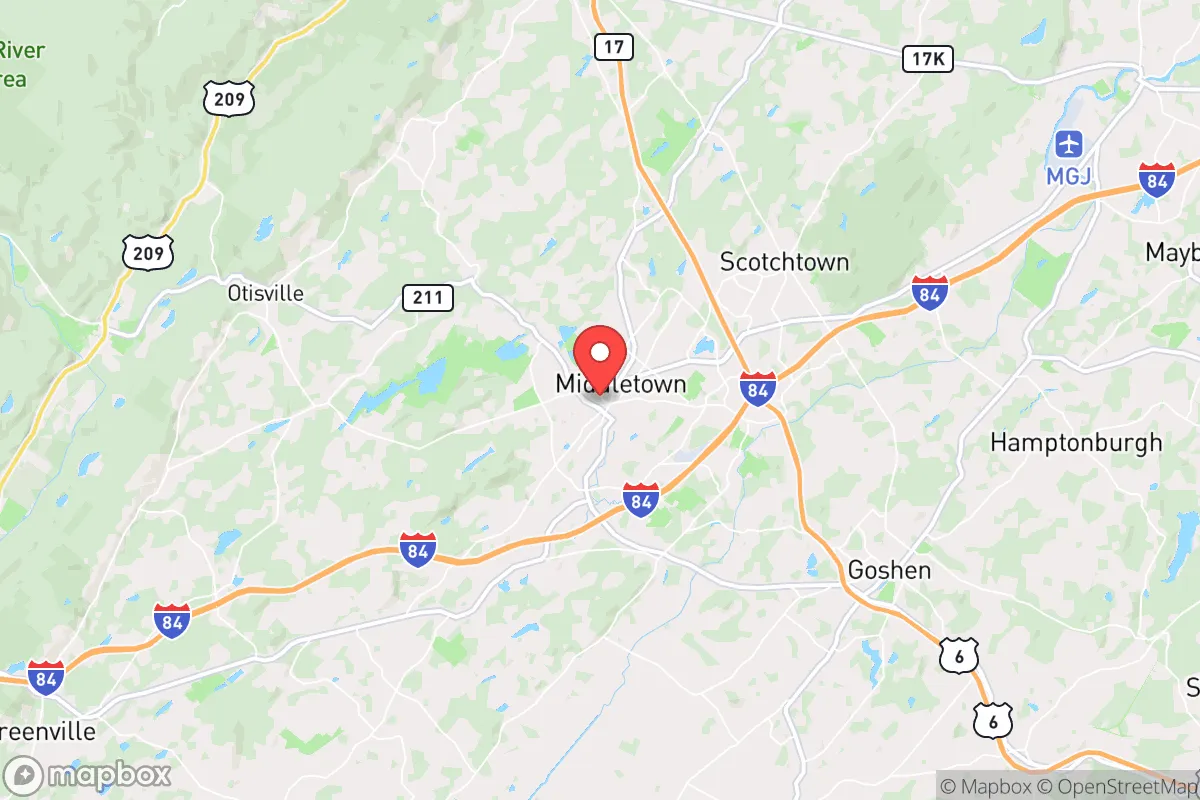
Strategic Assessment of Middletown, NY
Multiple tactical vulnerabilities. Population density, target proximity, or disaster risk are likely compounding. A retreat property and exit planning is required.
What does the Strategic Assessment tell us?
Our Strategic Assessment grades tactical survivability of an area. Major population centers, military targets, fallout zones, natural disasters, and border exposure all drive risk — lower exposure means a more defensible position in a crisis.
This is heavily inspired by Joel Skousen's Strategic Relocation book. Highly recommended you checkout the book ($)What does this tell us?
Our Strategic Assessment grades tactical survivability of an area. Major population centers, military targets, fallout zones, natural disasters, and border exposure all drive risk — lower exposure means a more defensible position in a crisis.
This is heavily inspired by Joel Skousen's Strategic Relocation book. Highly recommended you checkout the book ($)Strategic Pillars

Key Distances
Regional Safe Places
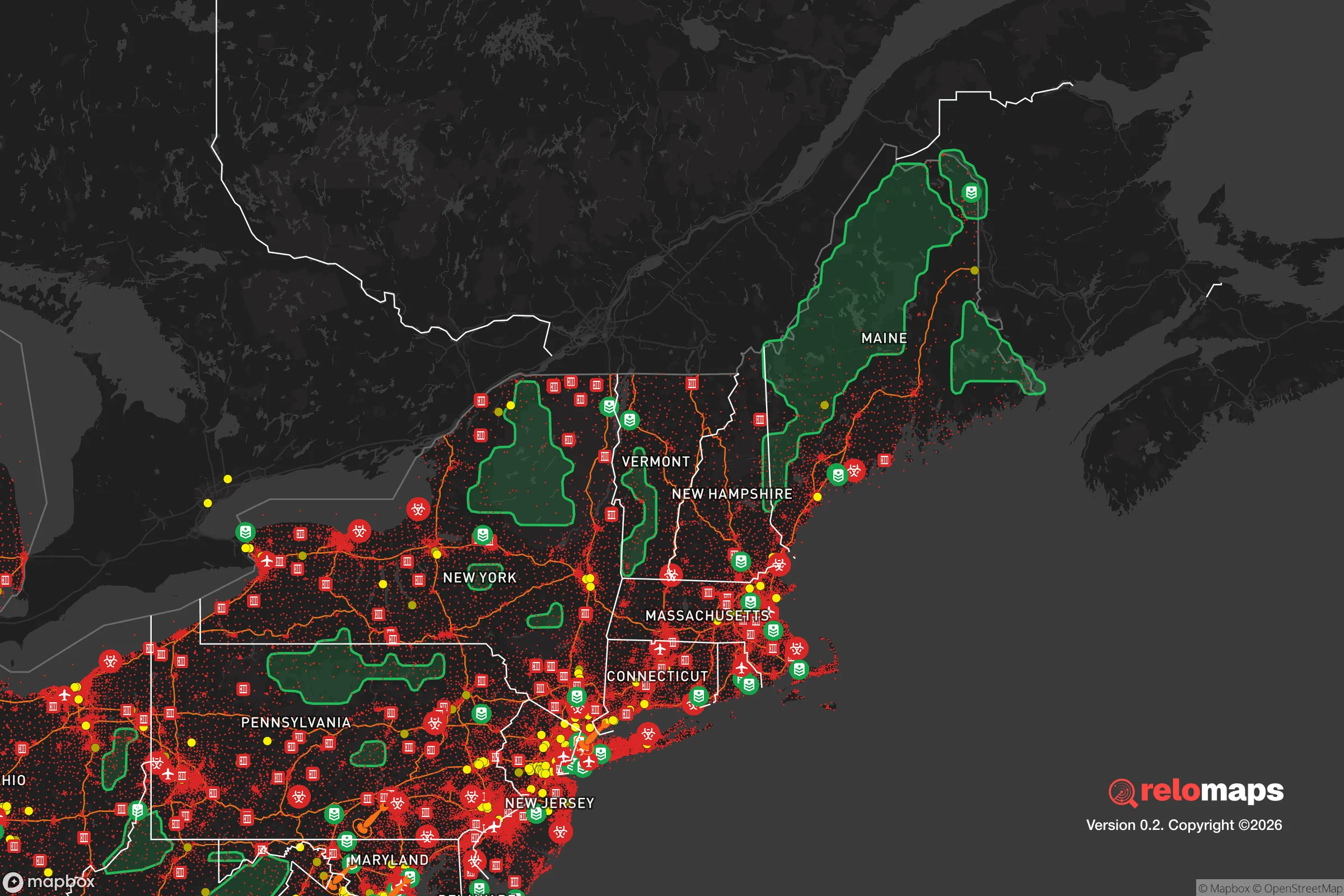
Below is our recommended "safe zones" in New York and the surrounding area based on our strategic heuristics. For most people, it's unrealistic to live in a “safe zone” full-time due to work, family or other personal reasons. They tend to be more rural. However, many of these areas are perfect for second homes and retreat properties that double as a vacation home or even a short-term rental.
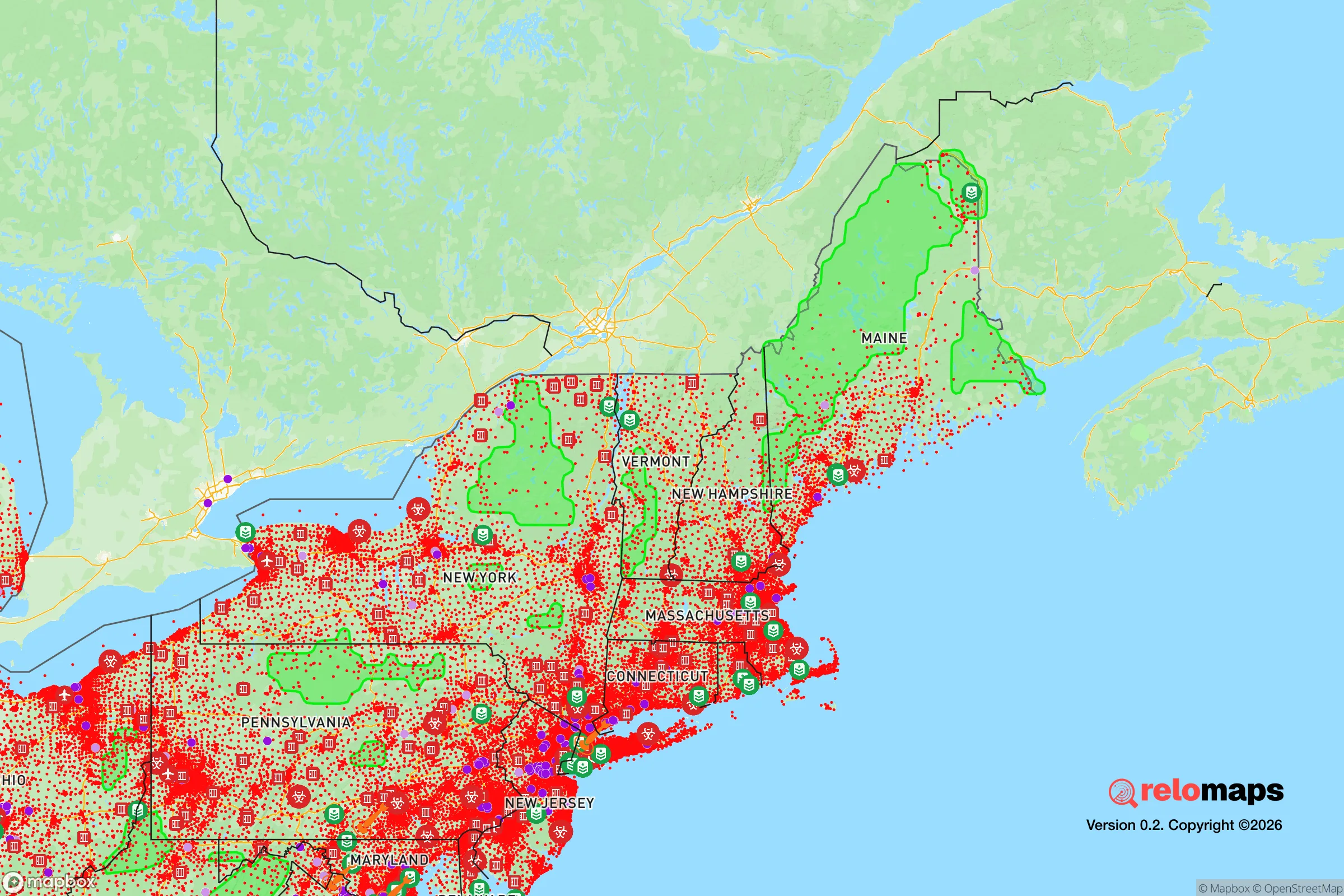


Important Note: For informational purposes only. This does not mean nothing bad ever happens in the green zones. Please use common sense. This is based on public data and modeled with AI. We tried to take a conservative approach but mistakes happen. We update this regularly as new information becomes available.
Solar Generator Recommendations
Backup power matters more here than in safer locations. We've picked three solar generators across budgets and capacity tiers — start with the budget unit if you only need a few essentials, or step up if you want to run a fridge and HVAC for days at a time.

Jackery Portable Power Station Explorer 300
Budget OptionPower on the Go: Weighing only 11 lbs, it's convenient to set up and store with book-sized foldable solar panels

BLUETTI Portable Power Station AC180
Designed for both indoor and outdoor scenarios, AC180 is highly capable as it has a robost capacity and continuous output power.

EF ECOFLOW DELTA Pro Ultra Power Station
Upgraded PickEcoFlow DELTA Pro Ultra is a whole-home energy system designed to grow with your family. Integrated with the Smart Home Panel 2, it scales to meet your evolving energy needs — keeping your home powered, intelligent, and secure through every stage of life.
We earn a commission, at no additional cost to you.
Strategic Assessment Analysis
Middletown, New York, occupies a strategic position that balances proximity to critical infrastructure with enough distance from the most obvious fallout zones, making it a location worth serious consideration for those prioritizing resilience and self-sufficiency. Situated roughly 70 miles northwest of New York City and 20 miles west of the Hudson River, it sits at the intersection of Interstates 84 and 86, providing solid egress routes while remaining outside the immediate blast radius of Manhattan or the Indian Point nuclear facility. For a relocator with a prepper mindset, the area’s mix of rural farmland, small-town infrastructure, and access to the Catskill Mountains offers a defensible buffer zone that many closer-in suburbs simply cannot match.
Geographic position and natural advantages for long-term security
Middletown’s location in Orange County places it in a corridor that has historically been a transportation and logistics hub, but its real value for a survivalist lies in the surrounding terrain. The area is flanked by the Shawangunk Ridge to the west and the Catskill foothills to the north, creating natural chokepoints and elevated vantage points that could be leveraged for observation or defense in a grid-down scenario. The Wallkill River runs through the town, providing a surface water source, though it’s not pristine—treatment would be necessary. The region’s agricultural base is a genuine asset: Orange County is one of New York’s top producers of dairy, apples, and onions, meaning local food supply chains are shorter and more resilient than in purely urban areas. The climate is temperate, with four distinct seasons and adequate rainfall (roughly 45 inches annually), which supports gardening, rainwater catchment, and small-scale livestock operations. For someone looking to establish a semi-rural homestead with access to a town’s amenities, the balance here is favorable—you’re not deep in the wilderness, but you’re not trapped in a concrete jungle either.
Risks, exposures, and proximity to fallout-relevant landmarks
The most significant risk for a Middletown relocator is its proximity to New York City and the associated fallout from a major event—whether that’s a nuclear detonation, a coordinated terrorist attack, or a cascading infrastructure collapse. At 70 miles out, the town is far enough to avoid the immediate blast and thermal effects of a ground burst on Manhattan, but it sits within the downwind fallout plume zone for prevailing westerly winds. A surface-level detonation at the Indian Point nuclear plant (now decommissioned but still holding spent fuel) is a more localized concern—Middletown is roughly 30 miles northwest, which puts it in a moderate risk zone for radioactive debris if a containment breach occurred. Additionally, the town’s position along I-84 and I-86 makes it a natural evacuation corridor; in a crisis, you could see a massive flow of refugees from the metro area, straining local resources and potentially creating security issues. The Stewart Air National Guard Base, located about 10 miles east in Newburgh, is a military asset that could become a target or a staging area during unrest, adding another layer of strategic complexity. Flooding is the primary natural hazard—the Wallkill River has a history of overflow during heavy rains, and low-lying neighborhoods near the downtown area are vulnerable. For a prepper, this means choosing a property on higher ground is non-negotiable.
Practical resilience for a relocator: food, water, energy, and defensibility
Middletown’s practical resilience hinges on its ability to support a semi-independent lifestyle without requiring complete off-grid isolation. The local water table is generally accessible via shallow wells (40-100 feet) in the surrounding rural areas, and the county’s soil is fertile enough for substantial vegetable gardens and fruit trees—apples, pears, and berries all do well here. The town itself has a municipal water system sourced from the nearby Neversink Reservoir, but in a prolonged grid failure, that system would be vulnerable to contamination or pressure loss, so a backup well or rainwater storage is advisable. Energy-wise, the region gets decent sun exposure (about 200 sunny days per year), making solar panels a viable option, though winter cloud cover can reduce output. Wood heating is practical—the surrounding forests provide ample firewood, and many older homes already have wood stoves or fireplaces. For defensibility, the ideal property is on a dead-end road or a private lane with a clear view of approach routes, preferably on elevated ground outside the floodplain. The local population is a mixed bag: there’s a strong conservative rural element in the outlying towns (Goshen, Warwick, and the farming communities), but Middletown itself has a more transient, lower-income demographic that could become unstable during a crisis. Building relationships with like-minded neighbors in the surrounding countryside is more important than relying on the town’s own social fabric. The Orange County Sheriff’s Office and local police are professional, but response times in rural areas can be 20-30 minutes, so personal security measures—fencing, dogs, and a well-stocked armory—are prudent.
The overall strategic picture for Middletown is one of cautious viability. It offers a genuine buffer from the worst urban and industrial fallout zones while retaining access to critical supply routes and natural resources. The risks are real—proximity to NYC, the refugee corridor problem, and the potential for local civil unrest in the town itself—but they are manageable with proper planning, property selection, and community building. For a conservative-leaning relocator who wants to stay within a few hours of the Northeast’s economic centers but not be trapped in them when things go sideways, Middletown represents a solid middle ground. It’s not a bug-out paradise, but it’s a defensible base of operations that can sustain a family through most disruptions short of a direct nuclear hit. The key is to treat it as a staging area, not a final redoubt—and to have a secondary plan for pushing deeper into the Catskills if the situation deteriorates beyond local control.

* Values derived from national, state, county, city and local statistics and may differ in a specific area. Last updated: 2026-05-01T10:46:22.000Z
Narrative content on this page is AI-generated and may contain mistakes. Verify any details that matter before acting on them.
ReloMaps may earn a commission from affiliate links at no extra cost to you.

