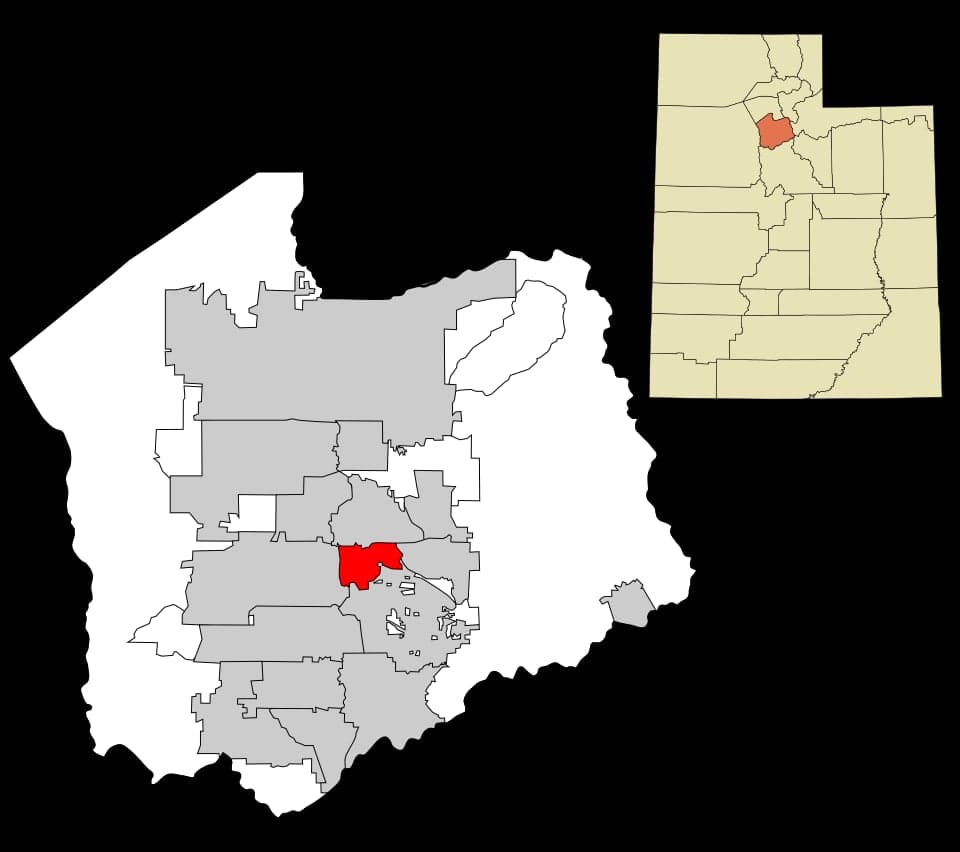
Photo: Wikipedia
Strategic Assessment of Midvale, UT
Meaningful friction. Expect exposure to either population pressure, blast zones, or natural disaster risk. Consider buying a retreat property.
What does the Strategic Assessment tell us?
Our Strategic Assessment grades tactical survivability of an area. Major population centers, military targets, fallout zones, natural disasters, and border exposure all drive risk — lower exposure means a more defensible position in a crisis.
This is heavily inspired by Joel Skousen's Strategic Relocation book. Highly recommended you checkout the book ($)What does this tell us?
Our Strategic Assessment grades tactical survivability of an area. Major population centers, military targets, fallout zones, natural disasters, and border exposure all drive risk — lower exposure means a more defensible position in a crisis.
This is heavily inspired by Joel Skousen's Strategic Relocation book. Highly recommended you checkout the book ($)Strategic Pillars

Key Distances
Regional Safe Places
Below is our recommended "safe zones" in Utah and the surrounding area based on our strategic heuristics. For most people, it's unrealistic to live in a “safe zone” full-time due to work, family or other personal reasons. They tend to be more rural. However, many of these areas are perfect for second homes and retreat properties that double as a vacation home or even a short-term rental.


Important Note: For informational purposes only. This does not mean nothing bad ever happens in the green zones. Please use common sense. This is based on public data and modeled with AI. We tried to take a conservative approach but mistakes happen. We update this regularly as new information becomes available.
Solar Generator Recommendations
Backup power matters more here than in safer locations. We've picked three solar generators across budgets and capacity tiers — start with the budget unit if you only need a few essentials, or step up if you want to run a fridge and HVAC for days at a time.

Jackery Portable Power Station Explorer 300
Budget OptionPower on the Go: Weighing only 11 lbs, it's convenient to set up and store with book-sized foldable solar panels

BLUETTI Portable Power Station AC180
Designed for both indoor and outdoor scenarios, AC180 is highly capable as it has a robost capacity and continuous output power.

EF ECOFLOW DELTA Pro Ultra Power Station
Upgraded PickEcoFlow DELTA Pro Ultra is a whole-home energy system designed to grow with your family. Integrated with the Smart Home Panel 2, it scales to meet your evolving energy needs — keeping your home powered, intelligent, and secure through every stage of life.
We earn a commission, at no additional cost to you.
Strategic Assessment Analysis
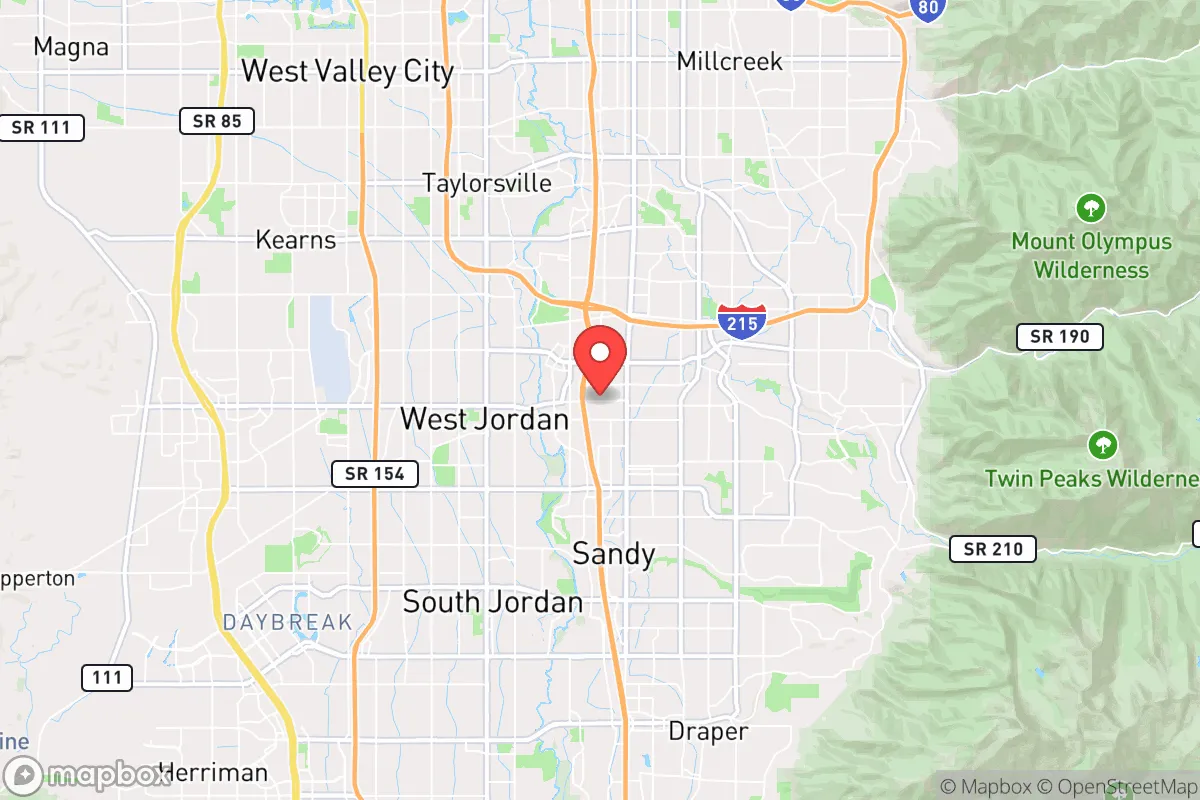
Midvale, Utah, sits in a precarious but potentially strategic pocket of the Salt Lake Valley, offering a mix of suburban convenience and access to critical infrastructure that a survival-minded relocator must weigh carefully. Its position along the Wasatch Front places it within 15 minutes of Salt Lake City’s urban core, yet it retains a distinct, older-town character that feels less exposed than the sprawling suburbs to the north and south. For a conservative-leaning individual or family prioritizing resilience, Midvale’s real advantage is its proximity to multiple escape corridors—Interstate 15, State Route 89, and the Jordan River Parkway—while still being close enough to leverage the region’s food, water, and energy networks. However, that same proximity to a major metropolitan area and its associated fallout targets introduces risks that demand a clear-eyed assessment before committing to a relocation here.
Geographic position and natural advantages for long-term security
Midvale’s geography is a double-edged sword, but the natural advantages are worth noting first. The city sits at the base of the Wasatch Mountains, with the Wasatch-Cache National Forest less than 10 miles east, providing immediate access to high-altitude terrain, timber, and potential bug-out locations. The Jordan River runs through the western edge of the city, offering a year-round water source that, while heavily managed, could be tapped in a grid-down scenario with proper filtration. The valley’s elevation—roughly 4,300 feet—means winters are cold enough to discourage casual migration but not so harsh as to make self-sufficiency impossible. The surrounding mountains also create a natural bowl that, in a major event, could funnel threats from the north and south, but they also offer defensible high ground for those willing to relocate a few miles east. For a prepper, the key takeaway is that Midvale is not a dead-end; it sits at a crossroads of multiple escape routes, including the Little Cottonwood Canyon and Big Cottonwood Canyon roads, which lead into remote alpine areas that would be difficult for any organized threat to control.
Risks, exposures, and proximity to fallout-relevant landmarks
The sobering reality is that Midvale’s location within the Salt Lake Valley places it within the blast and fallout radius of several high-value targets. Hill Air Force Base, 30 miles north, is a primary nuclear and conventional strike target, and prevailing winds from the south could carry fallout directly over Midvale in a worst-case scenario. The Kennecott Copper Mine, just 12 miles southwest, is a massive industrial complex that, if targeted, could release toxic dust and heavy metals into the air and water. Salt Lake City International Airport, 10 miles northwest, is another obvious target for any adversary seeking to disrupt the region’s logistics. Additionally, the city’s proximity to Interstate 15 means that a major earthquake—the Wasatch Fault runs directly through the valley—could collapse overpasses and trap residents in a gridlocked urban corridor. For a relocator, these risks mean that Midvale is not a primary survival location; it is a staging ground. The city’s older housing stock, much of it built before modern seismic codes, adds another layer of vulnerability. A conservative prepper should view Midvale as a place to build a network and cache supplies, not as a final redoubt.
Practical resilience for a relocator: food, water, energy, and defensibility
On the practical side, Midvale offers some genuine resilience advantages that a strategic relocator can exploit. The city is served by the Jordan Valley Water Conservancy District, which draws from multiple sources including the Provo River and Deer Creek Reservoir, providing a diversified water supply that is less vulnerable to a single-point failure than many Western cities. However, the municipal system is entirely dependent on electric pumps, so a long-term grid outage would require residents to have their own storage and purification. The area’s agricultural history is still visible in the surrounding towns—West Jordan and Riverton have working farms and feed stores—meaning that bulk food, seeds, and livestock supplies are within a 20-minute drive. Energy is a mixed bag: Rocky Mountain Power’s grid is relatively stable, but the valley’s reliance on natural gas for heating means that a pipeline disruption in winter could be deadly. Solar potential is excellent, with over 220 sunny days per year, and many older homes in Midvale have south-facing roofs that are ideal for panels. Defensibility is the weakest point. Midvale is a flat, grid-patterned suburb with no natural chokepoints, and its population density—roughly 35,000 people in 5.5 square miles—means that any civil unrest in Salt Lake City would spill over quickly. The city’s police force is small, and the nearest National Guard armory is in Salt Lake City, which would likely be overwhelmed in a major event. For a family, the best strategy is to use Midvale as a base for building relationships with like-minded neighbors, storing supplies in a secure garage or basement, and having a pre-planned bug-out route to the east into the Uinta-Wasatch-Cache Wilderness.
The overall strategic picture for Midvale is that it is a calculated compromise, not a sanctuary. It offers the logistical advantages of being near a major city—access to medical centers like Intermountain Medical Center, multiple grocery stores, and a robust transportation network—while still being close to the mountains and rural areas that provide a fallback. For a conservative relocator who is willing to invest in hardening a home, building a community of trusted allies, and maintaining a low profile, Midvale can work as a long-term staging point. But the risks are real: the Wasatch Front is a high-probability target zone, and anyone moving here must accept that they are living in the shadow of potential catastrophe. The smart play is to treat Midvale as a hub for resources and connections, not as a final destination. If you are looking for a place to ride out the coming storms with a reasonable chance of survival, Midvale is a viable option—provided you have the discipline to prepare for the worst while hoping for the best.

* Values derived from national, state, county, city and local statistics and may differ in a specific area. Last updated: 2026-04-20T03:54:47.000Z
Narrative content on this page is AI-generated and may contain mistakes. Verify any details that matter before acting on them.
ReloMaps may earn a commission from affiliate links at no extra cost to you.

