Photo: Wikipedia
Demographics of Midvale, UT
Affluence Level in Midvale, UT
A middle-class area roughly in line with national averages across income, home values, education, and employment.
People of Midvale, UT
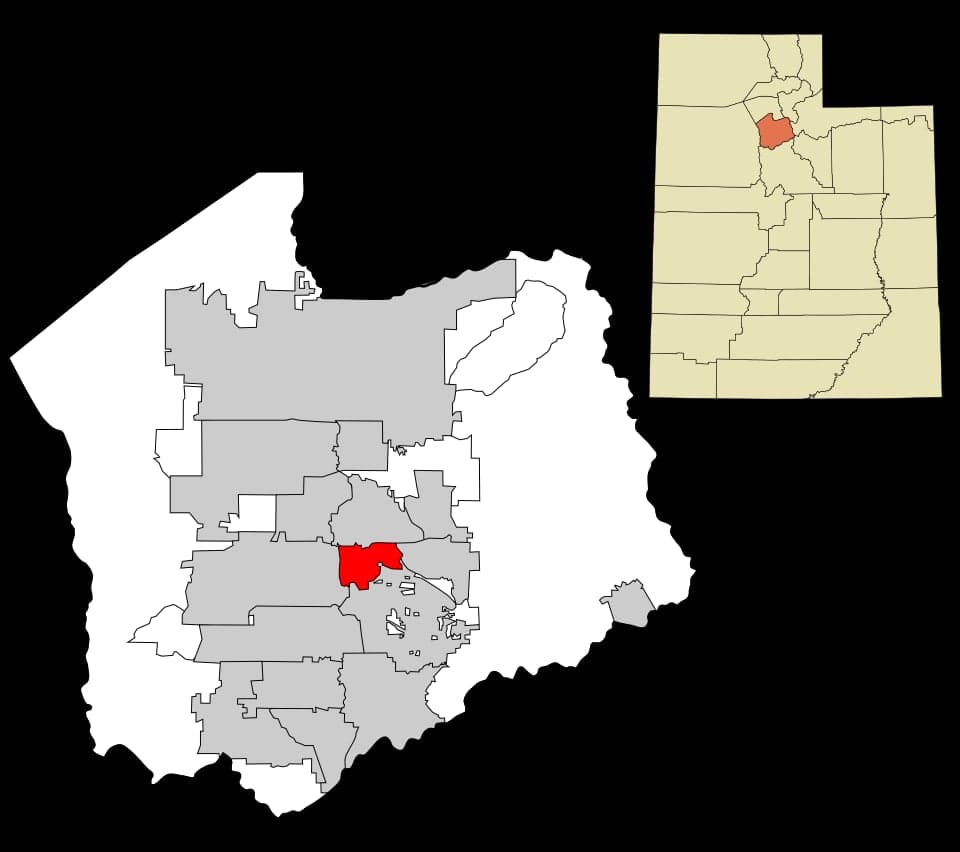
Midvale, Utah, is a compact, historically working-class city of 35,736 residents that sits at the geographic and demographic crossroads of the Salt Lake Valley. Its population today is predominantly white (65.8%) with a significant Hispanic minority (17.5%) and smaller but established East/Southeast Asian (3.0%) and Black (2.5%) communities. The city’s identity is shaped by its railroad and smelter roots, its role as a post-war suburban landing pad, and its current status as a diversifying, transit-oriented hub where older neighborhoods sit alongside new mixed-use development.
How the city was settled and grew
Midvale’s original population was drawn not by agriculture but by heavy industry. The arrival of the Utah Southern Railroad in the 1870s and the construction of the Washburn Smelter in 1906 turned the area into a company town for smelter and rail workers. The earliest settlers were predominantly Mormon pioneers from the Salt Lake Valley core, but the smelter quickly attracted a wave of immigrant labor. By the 1910s, Greek, Italian, and Japanese workers had settled in the Historic Midvale district near the smelter and along Main Street, forming the city’s first ethnic enclaves. The Center Street corridor became the commercial and social heart for these working-class families. A second wave came during World War II, when the smelter expanded to support the war effort, drawing additional workers from the rural Mountain West and a smaller number of Mexican laborers through the Bracero Program. By 1950, Midvale was a blue-collar, majority-white city of roughly 5,000, with distinct pockets of Greek and Italian heritage still visible in the East Midvale neighborhoods near the old smelter site.
Modern era (post-1965)
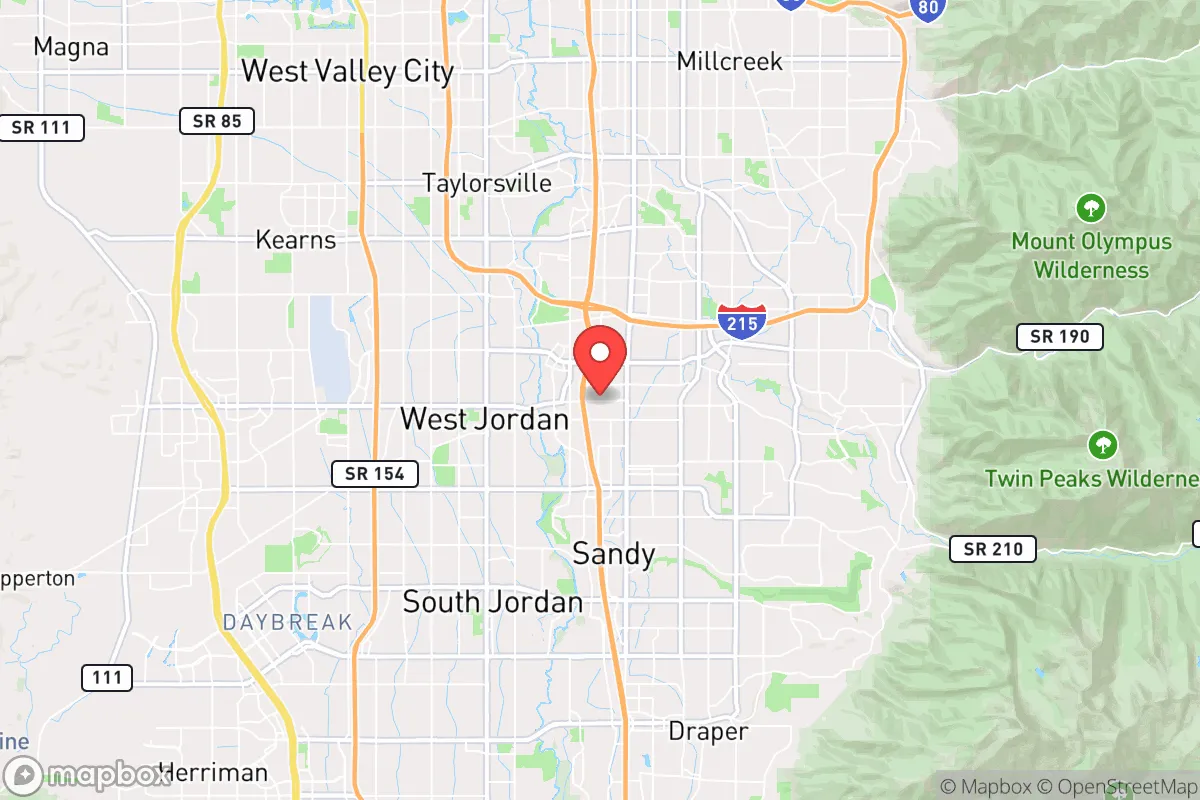
The post-1965 era reshaped Midvale’s population in two phases. First, suburbanization after the 1960s brought white, middle-class families from Salt Lake City proper into new subdivisions like Fort Union (the city’s northeastern quadrant) and West Midvale, where single-family homes on larger lots replaced farmland. This wave raised the city’s population to over 20,000 by 1980 and cemented its reputation as a more affordable, less polished alternative to neighboring Sandy and Murray. Second, the 1990s and 2000s saw a significant Hispanic influx, driven by construction and service jobs in the booming Wasatch Front economy. Hispanic residents concentrated in the Historic Midvale and Central Midvale neighborhoods, where older, smaller homes and rental properties offered lower entry costs. Today, the 17.5% Hispanic share makes Midvale one of the most Hispanic cities in Salt Lake County outside of West Valley City. The East/Southeast Asian community (3.0%) is smaller but visible, with families of Vietnamese and Filipino heritage living primarily in the Fort Union area, drawn by proximity to tech and healthcare jobs. The Black population (2.5%) is dispersed but slightly concentrated in the West Midvale apartment complexes near I-15. The Indian-subcontinent population (0.6%) remains very small, with no distinct neighborhood concentration.
The future
Midvale’s population is heading toward greater diversity and density, but not necessarily toward homogenization. The city’s 2020s zoning changes and the planned Midvale Station transit-oriented development along the TRAX light-rail line are attracting younger, college-educated residents (34.2% now hold a bachelor’s degree or higher) and a modest number of out-of-state migrants, many of whom work in Salt Lake City or the Silicon Slopes tech corridor. This new group is predominantly white and Asian, and they are settling in the new mixed-use buildings near the train station rather than in the older neighborhoods. Meanwhile, the Hispanic population is plateauing rather than growing rapidly, as immigration from Latin America slows and second-generation families move to more affordable suburbs like West Jordan or Herriman. The East/Southeast Asian and Black communities are growing slowly, primarily through domestic migration from California and the Pacific Northwest. The city is not tribalizing into hostile enclaves, but distinct residential patterns are solidifying: Historic Midvale remains heavily Hispanic and working-class, Fort Union is increasingly white and Asian with higher incomes, and the transit corridor is becoming a magnet for young professionals. The next 10-20 years will likely see Midvale become a more economically stratified city, with a growing professional class in new developments and a stable, older working-class population in the historic core.
For someone moving in now, Midvale offers a genuine cross-section of the Salt Lake Valley’s demographic future: a place where a historic smelter town is being layered over by transit-oriented growth, without losing its blue-collar character. The city is becoming more diverse and more educated, but the neighborhoods remain distinct, and the choice of where to live will largely determine the experience of the city a newcomer gets.

* Values derived from national, state, county, city and local statistics and may differ in a specific area. Last updated: 2026-04-20T03:54:47.000Z
Narrative content on this page is AI-generated and may contain mistakes. Verify any details that matter before acting on them.
ReloMaps may earn a commission from affiliate links at no extra cost to you.

