Demographics of Millville, DE
Affluence Level in Millville, DE
A middle-class area roughly in line with national averages across income, home values, education, and employment.
People of Millville, DE
Millville, Delaware, is a small, predominantly white town of 2,059 residents where 92.6% of the population identifies as white alone, and the foreign-born share is a negligible 0.2%. With 44.7% of adults holding a college degree, the town has a notably educated, professional character that contrasts with its rural agricultural roots. It is a quiet, family-oriented community where the population is slowly aging and diversifying only marginally, remaining one of the least ethnically diverse places in Sussex County.
How the city was settled and grew
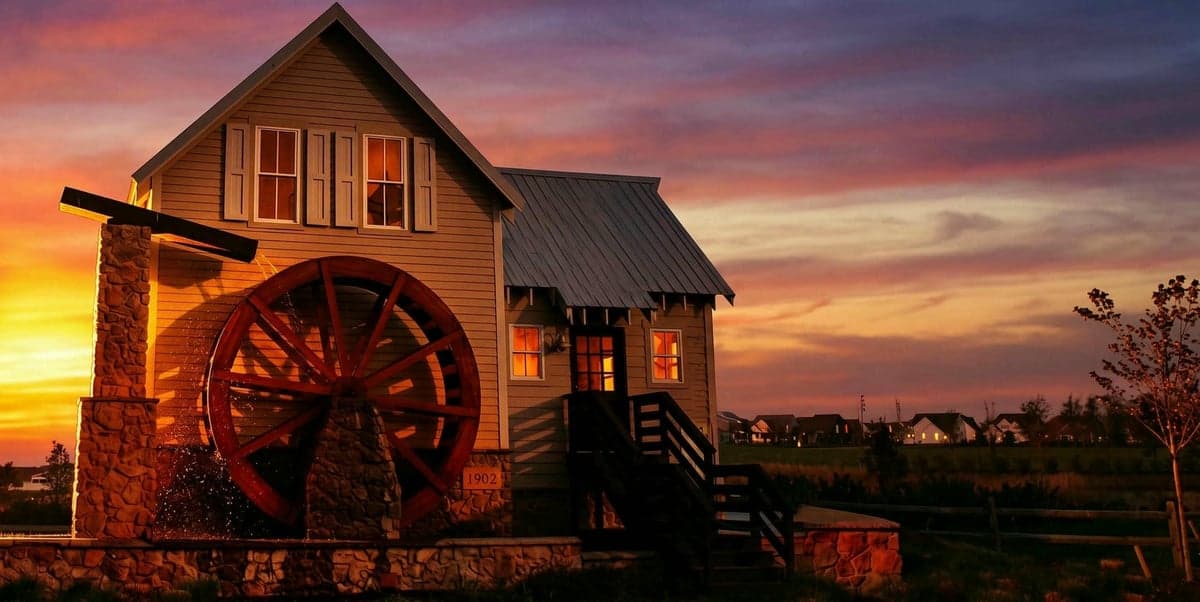
Millville’s human history begins not with a grand founding, but with the slow, practical settlement of the Delaware coastal plain. The area was originally inhabited by the Nanticoke people, but European settlers—primarily English and Scots-Irish farmers—arrived in the late 17th and early 18th centuries, drawn by land grants from the Penn family and the promise of fertile, well-drained soil. These early families established small homesteads and farms, and the community that would become Millville coalesced around a gristmill built on a tributary of the Indian River. The town was formally platted in 1848, named for the mill that anchored its economy. The original settlers clustered in what is now the Historic District, a grid of streets around Main Street and Atlantic Avenue, where many 19th-century farmhouses and mill workers’ cottages still stand. A second wave of growth came in the late 1800s with the arrival of the railroad, which connected Millville to the larger markets of Georgetown and the coastal resorts. This brought a small influx of merchants and tradesmen, who built homes in the Railroad Avenue area, just south of the historic core. The population remained overwhelmingly white, Protestant, and agrarian through the first half of the 20th century, with a handful of African American families living in the West Side area near the town’s edge, working as farm laborers and domestic servants.
Modern era (post-1965)
The post-1965 era brought no major immigration wave to Millville. The 1965 Hart-Cellar Act, which reshaped American immigration, had virtually no impact here: the foreign-born population today is just 0.2%, and the town’s racial composition has remained static. Instead, the modern population shift came from domestic in-migration—primarily white retirees and second-home buyers from the Mid-Atlantic states, drawn by the lower cost of living and proximity to the beaches of Bethany Beach and Ocean City. This wave accelerated in the 1990s and 2000s as new subdivisions were carved out of former farmland. The Millville Village neighborhood, a planned community of single-family homes built in the early 2000s, absorbed many of these newcomers, who were typically older, wealthier, and more educated than the existing population. The Ocean View Estates area, just east of town, also saw significant infill of retirees from Pennsylvania and New Jersey. Meanwhile, the Hispanic population grew from near zero to 2.1%, concentrated in a few rental properties along Route 26, where seasonal workers in landscaping and hospitality found affordable housing. The Black population, at 1.3%, remains small and is scattered across the town, with no distinct ethnic enclave. The East/Southeast Asian community (0.7%) is almost entirely composed of professionals in healthcare and education, living in the newer subdivisions. The Indian-subcontinent population is 0.0%.
The future
Millville’s population is heading toward slow, modest growth, driven almost entirely by domestic migration of white retirees and remote workers. The town’s zoning allows for continued suburban-style development, and several large parcels along Route 26 are slated for new single-family homes and age-restricted communities. This will likely reinforce the town’s white, college-educated, older character. The Hispanic and Black populations are expected to grow only slightly, as the local economy—dominated by tourism, healthcare, and construction—offers limited affordable housing for lower-income families. There is no sign of the town tribalizing into distinct ethnic enclaves; rather, it is homogenizing into a predominantly white, middle-to-upper-middle-class bedroom community for the beach economy. The foreign-born share will likely remain below 1% for the foreseeable future.
For someone moving in now, Millville is becoming a quiet, safe, and demographically stable place—ideal for those seeking a low-diversity, low-crime environment with good schools and easy access to the coast. It is not a place of rapid change or cultural mixing, but a town that is slowly and deliberately growing in the image of its current residents: white, educated, and settled.

* Values derived from national, state, county, city and local statistics and may differ in a specific area. Last updated: 2026-04-29T20:04:57.000Z
Narrative content on this page is AI-generated and may contain mistakes. Verify any details that matter before acting on them.
ReloMaps may earn a commission from affiliate links at no extra cost to you.

