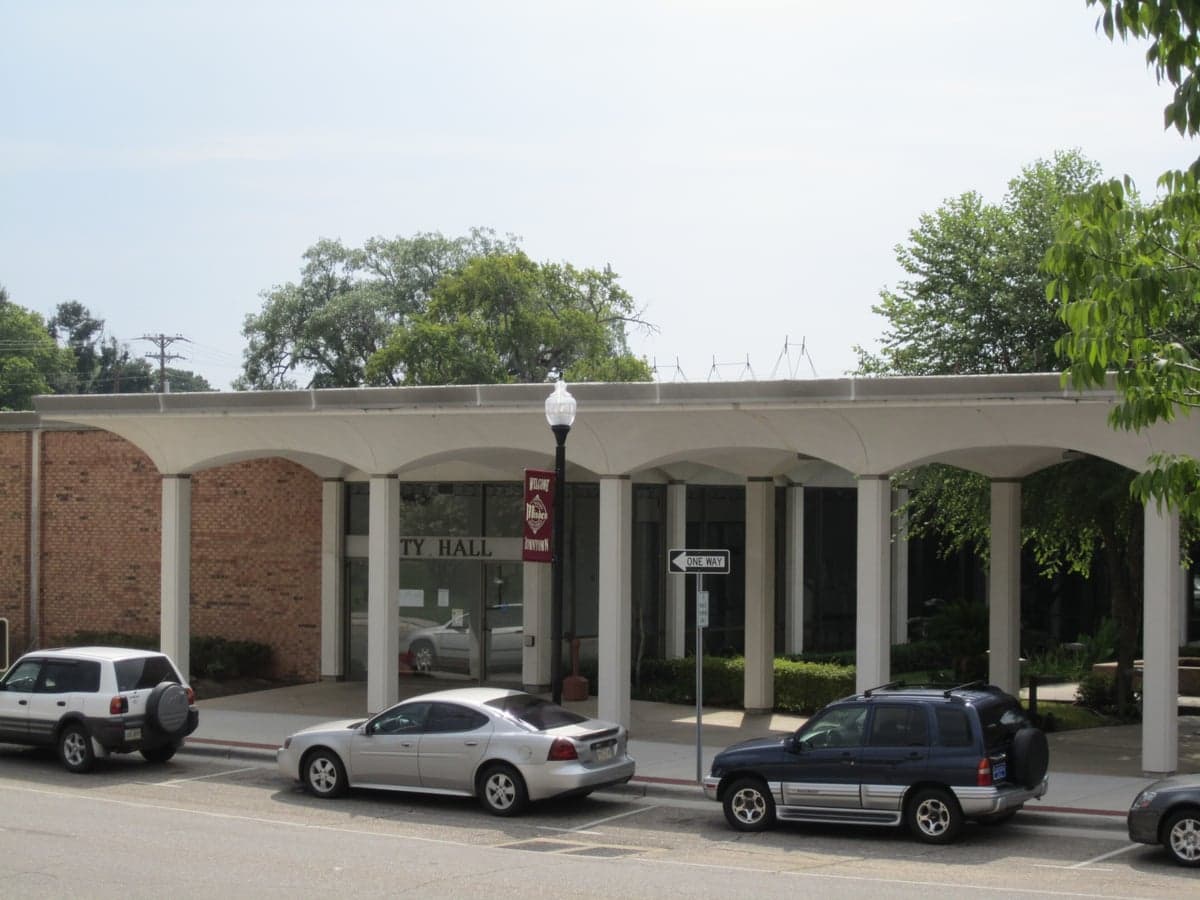
Photo: Wikipedia
Political ClimatePolitical Climate in Minden, LA
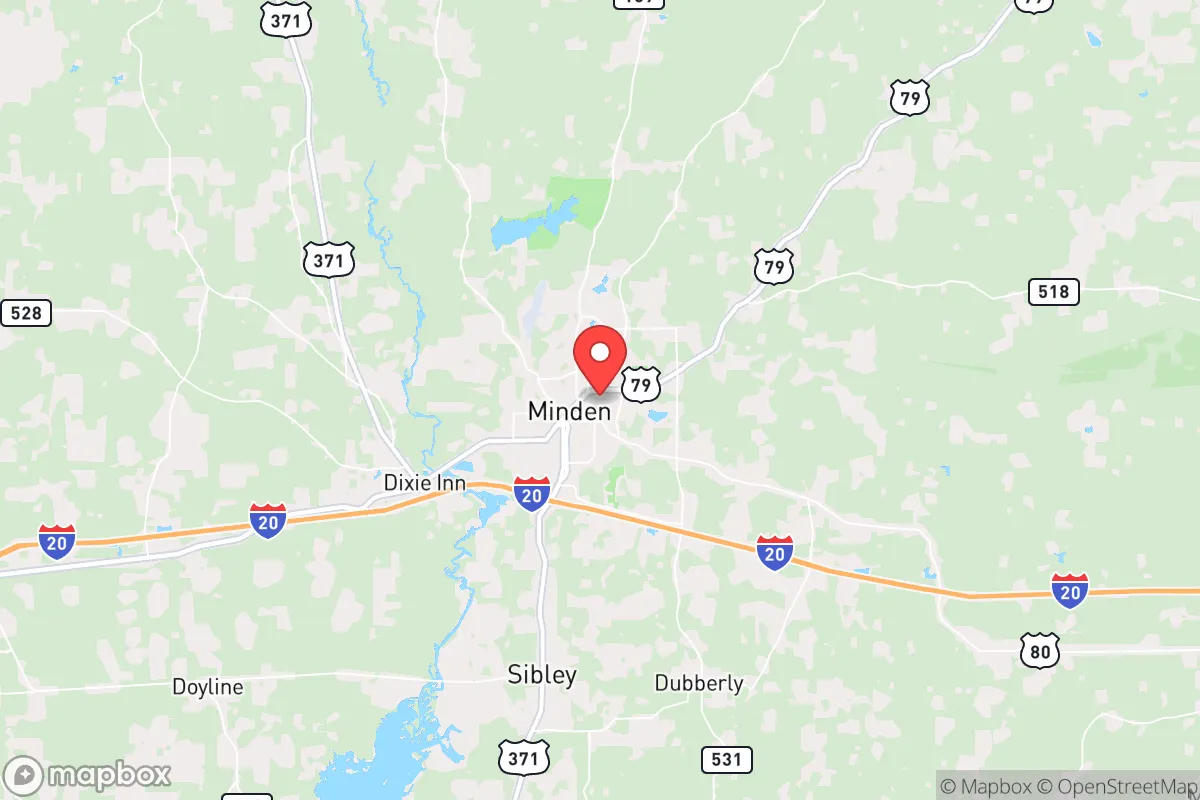
District shown is the primary district for this city’s centroid. Cities may span multiple districts.
Local Political AnalysisPolitical Analysis of Minden, LA
Minden, Louisiana, sits deep in the heart of the Bible Belt, and politically, it’s about as red as they come. The Cook Partisan Voting Index (PVI) for this area is a solid R+26, meaning Republican candidates routinely win by massive margins—think 60-40 or even 70-30 splits in most races. That’s not just a trend; it’s a way of life that’s held steady for decades, and honestly, most folks here like it that way. You don’t see the wild swings you get in bigger cities; Minden’s conservative roots run deep, and the trajectory is pretty stable, though there’s a quiet worry about outside influences creeping in from Shreveport or even Bossier City, which are more purple and have seen some progressive drift in recent years.
How it compares
When you stack Minden up against the rest of Louisiana, the difference is stark. The state as a whole has a Cook PVI of R+10, which is still reliably Republican, but it’s a far cry from Minden’s R+26. That gap of 16 points is huge. It means that while Louisiana might flirt with moderate Democrats in statewide races (like the occasional governor or senator), Minden almost never does. Neighboring towns like Homer or Arcadia lean conservative too, but they’re not as rock-ribbed. Shreveport, just 30 miles west, is a whole different world—it’s a blue dot in a red state, with a Cook PVI around D+15, and you can feel the cultural shift as soon as you cross the Red River. Minden, by contrast, feels like a time capsule of traditional values: low taxes, strong gun rights, and a general distrust of government overreach. The state’s R+10 reflects a mix of urban and rural, but Minden is pure rural conservative, and that’s not changing anytime soon.
What this means for residents
For someone living here, the political climate means a lot of personal freedom, but it also means you’ve got to keep an eye on Baton Rouge. The state legislature has been pushing some progressive policies—like expanding Medicaid or tweaking education standards—that feel like government overreach to many locals. Minden residents tend to vote against those moves, but they don’t always win. The real concern is the long-term drift: as Louisiana’s population shifts (more people moving to New Orleans or Baton Rouge), the state’s R+10 could slip toward purple. That would mean more state-level mandates on things like property taxes, energy regulations, or even school curriculum—stuff that Minden folks see as none of the government’s business. For now, though, daily life is pretty insulated. You can carry a firearm without a permit, your property taxes are low, and the local school board isn’t pushing radical ideology. But if you’re paying attention, you’ll notice the pressure building from the coast.
Culturally, Minden stands apart from Louisiana’s more liberal pockets. You won’t find many pride flags or “defund the police” signs here. The local economy is tied to timber, manufacturing, and small businesses, and people value self-reliance over government handouts. There’s a strong sense of community—church potlucks, high school football on Friday nights—that feels threatened by the progressive agenda coming out of places like New Orleans. The biggest policy distinction is on gun rights: Minden is a Second Amendment sanctuary in spirit, while the state has flirted with red-flag laws. So far, those haven’t stuck, but it’s a reminder that the fight to keep government out of your life is never really over. If you’re looking for a place where your vote actually counts for something and your freedoms aren’t up for debate, Minden’s about as good as it gets—but don’t get complacent.

State Political ClimatePolitical Climate in Louisiana
State Political AnalysisPolitical Environment in the State
Louisiana is a deep red state with a Cook PVI of R+10, but its politics are far from monolithic. The state has been reliably Republican in presidential elections since 2000, but the coalition is a unique blend of culturally conservative Cajun and North Louisiana voters, combined with a significant, though shrinking, bloc of conservative Democrats in the Black community. Over the last 10-20 years, the state has shifted rightward on cultural and economic issues, but it remains a place where local personalities and parochial concerns often trump national party labels. You’ll find a strong, live-and-let-live attitude, but also a deep skepticism of federal overreach and a fierce defense of local control.
Urban vs. rural divide
The political map of Louisiana is a classic story of urban islands surrounded by a red sea. The biggest Democratic stronghold is New Orleans (Orleans Parish), which votes reliably blue by huge margins, driven by a coalition of Black voters and progressive whites. Baton Rouge (East Baton Rouge Parish) is a purple battleground, with the city itself leaning Democratic but the surrounding suburbs like Prairieville and Denham Springs being deeply red. Lafayette is a fascinating case: it’s a growing, economically dynamic city that leans Republican, but with a strong libertarian streak—think lower taxes, less regulation, and a general distrust of government meddling. The real engine of the state’s Republican dominance is rural and small-town Louisiana. The Florida Parishes (north of Lake Pontchartrain), the Acadiana region, and the entire northern half of the state—places like Shreveport, Monroe, and Alexandria—are overwhelmingly Republican. These areas are culturally conservative, pro-gun, and deeply suspicious of any policy that smacks of coastal elitism. The divide isn’t just about party; it’s about worldview. A voter in Minden or Hammond has very different priorities than one in the French Quarter.
Policy environment
Louisiana’s policy environment is a mixed bag for a conservative. On the plus side, the state has no state property tax, and the income tax is a flat 3% for most filers, which is a huge draw. The regulatory climate is generally business-friendly, especially for oil and gas, agriculture, and manufacturing. The state is a constitutional carry state, meaning no permit is needed to carry a concealed firearm—a major win for Second Amendment advocates. Education policy is a battleground. The state has a robust school choice program, including vouchers and charter schools, which is a big plus for parents. However, the public school system remains underfunded and struggles with outcomes, especially in urban areas like New Orleans and Baton Rouge. Healthcare is a sore spot. The state expanded Medicaid under the Affordable Care Act, which many conservatives see as a federal overreach, but it has also kept many rural hospitals afloat. Election laws are solid: voter ID is required, and the state has a closed primary system, which helps keep party discipline. Overall, the state leans conservative on most levers, but the legacy of “Big Government” Louisiana—where the state has historically been involved in everything from sugar subsidies to flood insurance—still lingers.
Trajectory & freedom
Louisiana is on a trajectory of increasing personal freedom in several key areas, but it’s a slow, grinding process. The most significant recent win was the passage of constitutional carry in 2024, which eliminated the need for a permit to carry a concealed handgun. This was a direct rebuke to the previous administration’s attempts to restrict gun rights. On parental rights, the state passed the “Parents’ Bill of Rights” in 2023, which gives parents more say over their children’s education and medical decisions, including the right to opt out of any curriculum they find objectionable. This was a direct response to the overreach seen in other states during the COVID era. On medical autonomy, Louisiana banned gender transition procedures for minors in 2023, a clear stand against the progressive agenda. However, the state still has a high incarceration rate and a complex legal system that can feel intrusive. The tax burden is still higher than some of its neighbors, like Texas and Florida, but the trend is toward lower rates. The biggest threat to freedom remains the state’s vulnerability to federal mandates, especially on environmental regulations that impact the energy industry. The state is fighting back, but it’s an ongoing war.
Civil unrest & political movements
Louisiana has a history of political flashpoints, but it’s generally a calm state compared to the West Coast or the Northeast. The most visible recent unrest was the 2020 Black Lives Matter protests in New Orleans and Baton Rouge, which were largely peaceful but did see some property damage and clashes with police. These events energized both the progressive left and the conservative backlash. The state has a strong, organized conservative movement, particularly around gun rights and school choice. Groups like the Louisiana Family Forum and the NRA are very active. Immigration politics are less of a flashpoint here than in border states, but there is a growing concern about illegal immigration, especially in the agricultural areas of Acadiana and the construction trades in Baton Rouge. There is no sanctuary city policy anywhere in the state; in fact, local law enforcement routinely cooperates with ICE. Election integrity is a hot topic. After the 2020 election, the state legislature passed stricter voter ID laws and banned ballot harvesting, which were seen as necessary safeguards by conservatives. You won’t see the kind of street-level political violence you might in Portland or Seattle, but the political temperature is definitely higher than it was 20 years ago.
Projection
Over the next 5-10 years, Louisiana is likely to become more, not less, conservative. The demographic trends are clear: the progressive-leaning populations of New Orleans and Baton Rouge are stagnant or shrinking, while the conservative suburbs and rural areas are growing. In-migration is coming from other red states, like Texas and Mississippi, not from California. The state’s economy is tied to energy, which is a deeply conservative industry. The biggest wildcard is the coastal erosion crisis and the federal money tied to it. If the state becomes too dependent on Washington for flood protection and restoration, it could lead to more federal strings attached. But the political culture is resilient. The state’s motto, “Union, Justice, and Confidence,” masks a deep-seated libertarian streak. A new resident moving in now should expect to find a state that is increasingly protective of gun rights, parental rights, and local control, but one that still struggles with corruption, infrastructure, and a legacy of top-down government. The trend is toward more freedom, but it’s a Louisiana-style freedom—messy, personal, and fiercely defended.
Bottom line for a new resident: If you’re looking for a state where your personal freedoms—especially your Second Amendment rights and your right to raise your children without government interference—are respected, Louisiana is a solid bet. You’ll find a lower cost of living, a flat income tax, and a culture that values independence. But you’ll also have to deal with a state government that is still learning to get out of its own way. The politics are rough-and-tumble, but the people are genuine. It’s not a perfect state, but for a conservative looking for a place to put down roots, it’s a much better bet than most of the country.
* Values derived from national, state, county, city and local statistics and may differ in a specific area. Last updated: 2026-05-04T11:09:44.000Z
Narrative content on this page is AI-generated and may contain mistakes. Verify any details that matter before acting on them.
ReloMaps may earn a commission from affiliate links at no extra cost to you.

