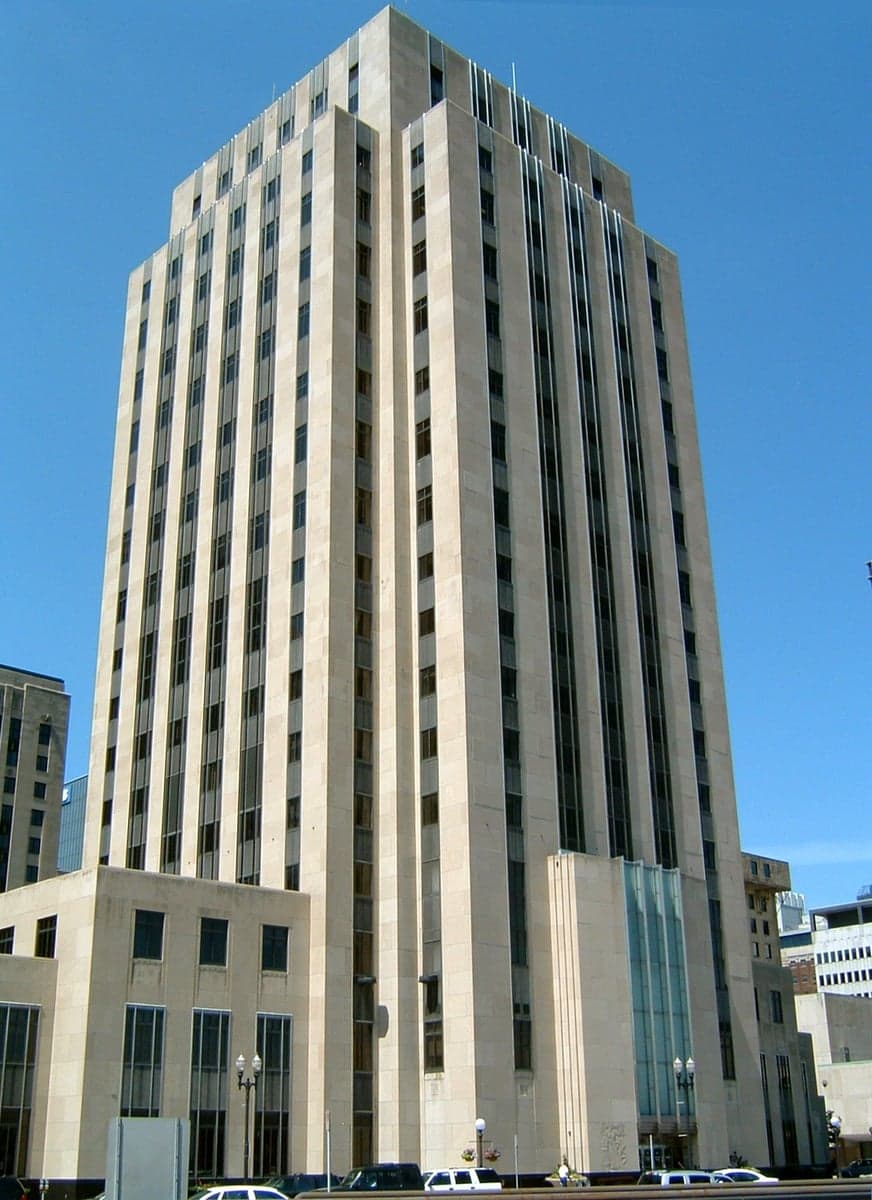
Photo: Wikipedia
Personal Sovereignty in Ramsey County
Viable for self-reliance. Generally workable, though some barriers may limit total independence.
What does Personal Sovereignty tell us?
Personal Sovereignty measures your capacity for self-reliance and independence with minimal government friction. Higher scores mean fewer barriers between you and the way you want to live... but it assumes you have the space you need and good neighbors.
What does this tell us?
Personal Sovereignty measures your capacity for self-reliance and independence with minimal government friction. Higher scores mean fewer barriers between you and the way you want to live... but it assumes you have the space you need and good neighbors.
State Policy
Energy independence: Importer (20% of energy produced in-state)
Personal Liberty
Homesteading

Personal Liberty Analysis
Ramsey County, anchored by Saint Paul, presents a personal sovereignty environment that is distinctly more regulated and collectivist than much of greater Minnesota, reflecting its dense urban and inner-suburban character. For individuals and families who prioritize maximum autonomy, the county's tax burden, gun laws, and land-use policies create a heavier-touch atmosphere compared to exurban or rural counties like Washington or Chisago. However, within Ramsey County's borders, the experience of personal freedom varies significantly between the urban core of Saint Paul, the older first-ring suburbs like Roseville and Maplewood, and the more suburban enclaves of Shoreview and White Bear Lake, where property sizes and community norms offer slightly more breathing room.
Tax burden and regulatory posture: how Ramsey County compares to surrounding areas
Ramsey County carries one of the highest property tax burdens in Minnesota, driven by the concentration of government services, schools, and infrastructure in Saint Paul and its inner suburbs. The county's property tax rate is notably higher than in neighboring Washington County to the east or Anoka County to the north, where lower levies and less dense zoning appeal to cost-conscious relocators. Minnesota's state income tax, which is progressive with a top marginal rate of 9.85%, applies uniformly across the county, but Ramsey County's local sales tax rate of 8.375% (including a county-specific transit surcharge) adds a tangible cost to daily purchases. The regulatory posture is similarly dense: Saint Paul imposes strict rental licensing, energy efficiency mandates, and a citywide ban on new drive-through businesses, while suburban cities like Roseville and Maplewood have their own layers of building codes and land-use restrictions. For a reader comparing Ramsey County to a lower-tax, lower-regulation area like Wright County or Sherburne County, the difference in annual out-of-pocket costs and bureaucratic friction is substantial. The county's heavy investment in public transit, parks, and social services reflects a governance model that prioritizes collective provision over individual tax savings.
Self-defense and gun law specifics: what concealed carry looks like in Ramsey County
Minnesota is a shall-issue state for concealed carry permits, meaning Ramsey County residents can obtain a permit to carry if they meet statutory requirements, but the local environment for gun owners is less permissive than in much of the rest of the state. The Saint Paul Police Department processes permits in a straightforward manner, though wait times can be longer than in smaller counties. However, Ramsey County is home to some of the most restrictive local ordinances in Minnesota: Saint Paul bans firearms in city parks and recreation centers, and the city council has passed resolutions supporting state-level universal background checks and red flag laws. In practice, this means that carrying a firearm in public spaces within Saint Paul requires careful attention to posted signage, particularly in parks like Como Park or along the Mississippi River trails. Suburban cities like Shoreview and White Bear Lake are generally more gun-friendly in culture, with fewer local restrictions and a higher density of shooting ranges and gun shops, such as the Bill's Gun Shop & Range in Circle Pines just over the county line. For a family prioritizing self-defense rights, the contrast between Ramsey County and a more permissive jurisdiction like Anoka County—where local ordinances are minimal and county board members are openly pro-Second Amendment—is a key factor in relocation decisions.
Self-reliance and homesteading viability: lot sizes, zoning, and off-grid feasibility
Ramsey County's dense development pattern makes traditional homesteading or off-grid living largely impractical within its borders. Minimum lot sizes in Saint Paul and most first-ring suburbs are typically under a quarter-acre, with zoning codes that prohibit agricultural uses, livestock, and accessory dwelling units in many residential districts. The county's urban service area is fully built out with municipal water, sewer, and electricity, meaning that going off-grid would require costly exemptions and likely face resistance from city planning departments. However, there are pockets of relative space: the northern edge of the county, including parts of Shoreview and White Bear Lake, features larger lots—some exceeding one acre—where residents can keep chickens, maintain substantial gardens, and install solar panels without the same level of scrutiny found in Saint Paul. The city of North Oaks, a gated community within Ramsey County, offers large wooded lots and a rural feel, but its homeowners association rules impose their own constraints on self-reliance activities. For a reader serious about homesteading, the practical advice is to look east to Washington County's rural townships or north to Chisago County, where five-acre minimums and permissive agricultural zoning are the norm. Within Ramsey County, self-reliance is more about urban gardening, energy efficiency, and community-supported agriculture than about land-based independence.
Personal liberties: parental rights, medical autonomy, speech, and property
Ramsey County's political culture leans heavily toward collective decision-making, which shapes personal liberties in several specific ways. Parental rights in education are a contested topic: the Saint Paul Public Schools district has adopted policies that prioritize student gender identity confidentiality over parental notification, a stance that has drawn legal challenges and parental pushback. In contrast, suburban districts like Mounds View Public Schools (serving Shoreview and Arden Hills) have taken a more moderate approach, though state law on the matter remains uniform. Medical autonomy is similarly constrained by state-level mandates: Minnesota requires childhood vaccinations for school attendance, and Ramsey County's public health department actively enforces these requirements with minimal exemption pathways. Free speech and assembly are robustly protected in public spaces, though Saint Paul's noise ordinances and parade permit requirements can create bureaucratic hurdles for spontaneous gatherings. Property rights are the most constrained area: Saint Paul's rent control ordinance, passed in 2021, caps annual rent increases at 3% and has been cited by landlords as a disincentive for new investment, while the city's inclusionary zoning mandates require a percentage of affordable units in new developments. For a homeowner in Roseville or Maplewood, property rights are less restricted, but the county's comprehensive plan still directs growth toward dense, transit-oriented development, limiting the ability to subdivide or redevelop land freely.
Overall, Ramsey County offers a personal sovereignty profile that is among the most constrained in Minnesota, particularly for those who value low taxes, broad gun rights, and the ability to live independently on larger parcels. The county's dense urban and suburban fabric, combined with its progressive governance, creates an environment where individual autonomy is often balanced against collective goals. For a conservative-leaning individual or family, the trade-offs are clear: you gain access to robust public services, cultural amenities, and a diverse economy, but you sacrifice the lighter regulatory touch found in exurban or rural counties. If maximum personal sovereignty is the priority, areas like Washington County's rural townships, Chisago County, or even parts of Anoka County will likely feel more aligned with that value set. Ramsey County is best suited for those who accept a higher degree of regulation in exchange for urban convenience and community infrastructure.

* Values derived from national, state, county, city and local statistics and may differ in a specific area. Last updated: 2026-06-08T09:45:24.000Z
Narrative content on this page is AI-generated and may contain mistakes. Verify any details that matter before acting on them.
ReloMaps may earn a commission from affiliate links at no extra cost to you.

