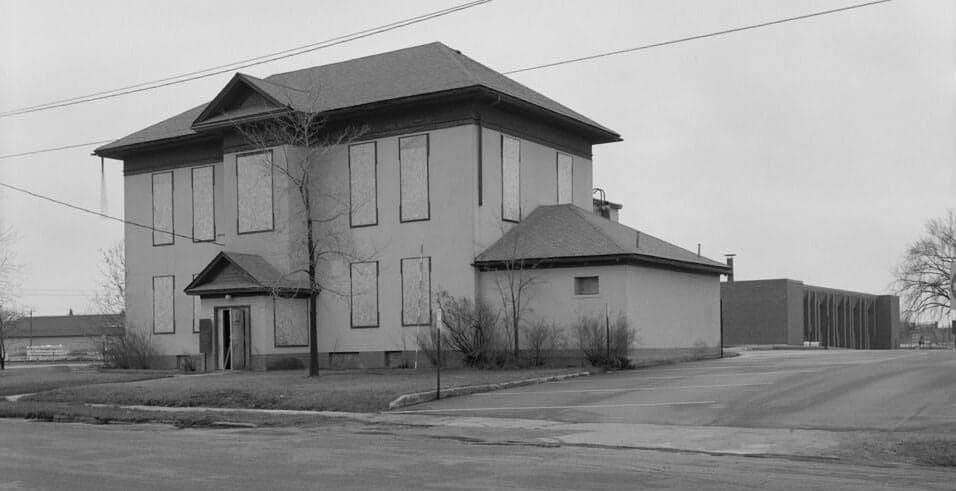
Photo: Wikipedia
Demographics of Sherburne County
Affluence Level in Sherburne County
An upper-middle-class area. Household wealth, education levels, and homeownership run ahead of national benchmarks.
People of Sherburne County
Today, Sherburne County, Minnesota is home to roughly 99,000 residents, a predominantly white (86.7%) and native-born (98.8% U.S.-born) population that has grown rapidly since the 1990s as a spillover from the Minneapolis-St. Paul metropolitan area. The county’s identity is shaped by its rural roots, its role as a bedroom community for commuters to the Twin Cities, and a conservative-leaning political culture that contrasts with the more liberal urban core. With a relatively low college attainment rate (28.1%) and a small but growing Hispanic (3.2%) and Black (3.6%) presence, Sherburne County is a place where traditional Midwestern values meet the pressures of exurban expansion.
Settlement & growth (pre-1960)
Before European settlement, the area now known as Sherburne County was part of the traditional territory of the Dakota (Sioux) people, particularly the Mdewakanton band, who used the Mississippi River and its tributaries for fishing, trade, and seasonal camps. French fur traders and voyageurs passed through the region in the 17th and 18th centuries, but no permanent European settlements took hold until the mid-19th century. The county was formally organized in 1856, carved from parts of Benton and Stearns counties, and named after Minnesota’s first lieutenant governor, Moses Sherburne.
The first wave of American settlers arrived in the 1850s and 1860s, primarily Yankees from New England and New York, drawn by the promise of cheap land under the Preemption Act and later the Homestead Act of 1862. These early settlers established the county’s first towns along the Mississippi River and the St. Paul and Pacific Railroad. Elk River, the county seat, was platted in 1856 and became the commercial and governmental hub, with sawmills and gristmills powered by the Elk River. Nearby Big Lake and Becker grew as railroad stops and farming centers, attracting a mix of Yankee farmers and German immigrants who arrived in the 1870s and 1880s. German settlers, many from the Rhineland and Bavaria, formed tight-knit agricultural communities in townships like Livonia and Haven, where they established Lutheran churches and German-language schools.
A smaller wave of Swedish and Norwegian immigrants arrived in the 1880s and 1890s, settling in the northern part of the county around Zimmerman and Princeton (the latter straddling Mille Lacs County). These Scandinavian families brought a tradition of dairy farming and cooperative organizing, and their descendants remain a visible presence in the county’s rural areas. By 1900, Sherburne County’s population had reached roughly 7,000, with an economy based on wheat, corn, and livestock. The county remained overwhelmingly white and native-born through the early 20th century, with no significant immigration from Southern or Eastern Europe, and no notable Black or Hispanic settlement during this period. The Great Depression and World War II caused a slight population decline, as young people left for jobs in the Twin Cities or military service, and the county’s population hovered around 10,000 through the 1950s.
Modern era (post-1965)
The 1965 Hart-Cellar Act had little direct impact on Sherburne County, as the county attracted almost no international immigration for decades afterward. Instead, the county’s modern demographic transformation has been driven by domestic migration—specifically, the suburban and exurban expansion of the Minneapolis-St. Paul metropolitan area. The construction of Interstate 94 in the 1960s and 1970s connected Sherburne County to the Twin Cities, making towns like Elk River, Big Lake, and Becker viable commuter suburbs. From 1970 to 2000, the county’s population more than tripled, from 12,000 to over 41,000, as white, middle-class families moved north from Hennepin and Ramsey counties seeking larger lots, lower taxes, and newer housing.
This wave of in-migration was overwhelmingly white and native-born, and it reshaped the county’s character. The new residents were often more conservative than the urban populations they left behind, and they brought with them a preference for low-density development, school choice, and limited government. The towns of Otsego and St. Michael (the latter partly in Wright County) experienced explosive growth in the 1990s and 2000s, with new subdivisions and strip malls replacing farmland. Elk River grew from a small farming town of 3,000 in 1970 to a city of over 23,000 by 2020, with a mix of single-family homes, big-box retail, and light industrial parks. The county’s population continued to climb through the 2010s, reaching 99,178 by the 2020 census, driven largely by white domestic migration from the Twin Cities and, to a lesser extent, from other Midwestern states.
Since 2000, Sherburne County has seen modest diversification. The Hispanic population grew from 0.8% in 2000 to 3.2% in 2020, with most families settling in Elk River and Big Lake, where they work in construction, landscaping, and food processing. The Black population, at 3.6%, is concentrated in Elk River and Otsego, and includes both African American families moving from the Twin Cities and a small number of African immigrants, particularly from Liberia and Somalia. The East/Southeast Asian population (1.2%) is primarily Hmong and Vietnamese, with families drawn to the area for affordable housing and jobs at factories like the Becker power plant and the Big Lake rail yard. The Indian-subcontinent population (0.2%) is negligible, mostly professionals working in healthcare or engineering in the Twin Cities who commute from Elk River or Otsego. The foreign-born share remains very low at 1.2%, far below the national average of 13.5%.
The future
Sherburne County’s population is projected to continue growing, though at a slower pace than in the 1990s and 2000s, as available land for new subdivisions diminishes and housing prices rise. The county is likely to remain overwhelmingly white and native-born for the foreseeable future, with the Hispanic and Black populations growing slowly but steadily as younger families move in from the Twin Cities or from other parts of the Midwest. The county is not experiencing the rapid diversification seen in the inner-ring suburbs of Minneapolis, and there is little evidence of ethnic enclave formation—new immigrant groups are dispersed and assimilating into the broader white-majority culture.
The cultural identity of Sherburne County is likely to remain conservative and family-oriented, with a focus on schools, churches, and outdoor recreation. The county’s political leanings have shifted rightward over the past two decades, and the influx of new residents from the Twin Cities has not significantly altered that trajectory—many of these movers are themselves fleeing urban taxes and policies. The next 10-20 years will likely see continued exurban sprawl, with towns like Becker and Zimmerman absorbing new subdivisions, while Elk River and Otsego become more established suburban centers with their own employment bases. The county’s low foreign-born share and high native-born rate suggest that it will remain culturally homogeneous, with little pressure from international immigration to change its character.
For someone moving in now, Sherburne County offers a stable, safe, and growing environment where the population is largely white, native-born, and conservative-leaning. The county is becoming a more developed and connected part of the Twin Cities exurbs, but it retains a rural, small-town feel in its northern reaches. The demographic trends point toward continued growth and modest diversification, but not a fundamental shift in the county’s cultural or political identity.

* Values derived from national, state, county, city and local statistics and may differ in a specific area. Last updated: 2026-05-12T08:00:05.000Z
Narrative content on this page is AI-generated and may contain mistakes. Verify any details that matter before acting on them.
ReloMaps may earn a commission from affiliate links at no extra cost to you.

