Photo: Wikipedia
Demographics of Mission, KS
Affluence Level in Mission, KS
A middle-class area roughly in line with national averages across income, home values, education, and employment.
People of Mission, KS
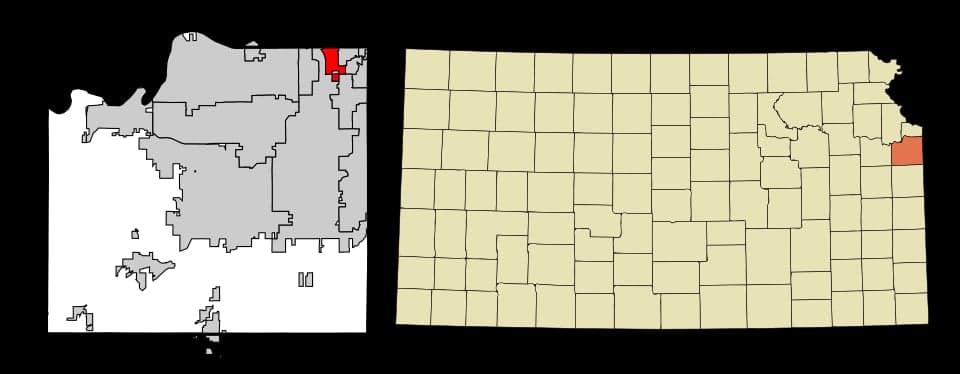
The people of Mission, Kansas, today form a densely settled, highly educated suburban community of 9,928 residents, characterized by a predominantly white population (83.5%) with modest but distinct minority enclaves. With 52.6% of adults holding a college degree and a foreign-born share of just 2.4%, Mission is a stable, middle-to-upper-middle-class suburb that retains a quiet, family-oriented character while showing early signs of gradual diversification. Its identity is shaped by its post-war planned development, its location as a bedroom community for Kansas City, and a population that has remained largely homogeneous even as nearby suburbs have seen more dramatic demographic shifts.
How the city was settled and grew
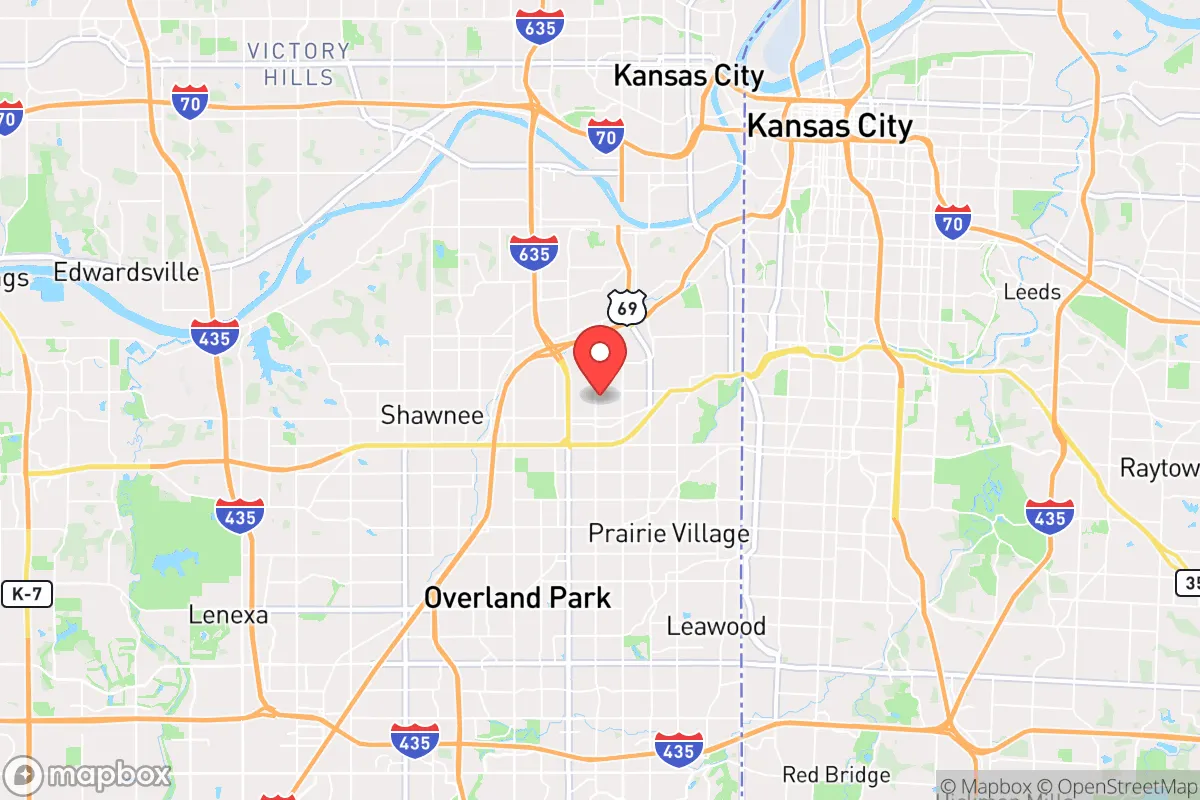
Mission was not a frontier settlement or a farming hamlet; it was deliberately platted in the early 20th century as a streetcar suburb of Kansas City, Missouri. The city’s name derives from the Shawnee Methodist Mission, a 19th-century mission school for Native American children that operated nearby. The original population consisted almost entirely of white, native-born Americans of Northern European descent—primarily from German, Irish, and English stock—who moved outward from Kansas City’s urban core seeking larger lots and quieter streets. The first major residential wave came in the 1920s and 1930s, building modest bungalows and Cape Cods in what is now the Mission North neighborhood, just north of Johnson Drive. A second, larger wave followed the post-World War II housing boom, when returning GIs and young families filled the Rosedale and Mission Hills (the city’s own section, not the adjacent wealthy enclave) subdivisions with ranch-style homes. These neighborhoods were built by local developers and sold almost exclusively to white buyers, a pattern reinforced by restrictive covenants and redlining that persisted into the 1960s. By 1960, Mission’s population had reached roughly 6,000, and the city was overwhelmingly white, Protestant, and politically conservative.
Modern era (post-1965)
The 1965 Hart-Celler Act and the subsequent Fair Housing Act of 1968 opened the door for non-white families to move into suburbs like Mission, but the actual demographic change was slow and modest. Unlike the rapid diversification seen in nearby Roeland Park or Merriam, Mission’s white share remained above 90% through the 1990s. The most notable post-1965 shift has been the gradual arrival of East and Southeast Asian families—primarily of Chinese, Korean, and Vietnamese ancestry—who now make up 3.0% of the population. These households concentrated in the Shawnee Mission Parkway corridor, particularly around the Mission Square area, drawn by the proximity to the University of Kansas Medical Center and the region’s growing tech and healthcare sectors. The Hispanic population, at 5.7%, is the largest minority group and has grown steadily since the 1990s, settling mostly in the Johnson Drive commercial corridor and the West Mission neighborhood, where older, more affordable housing stock provides entry points for first-time homebuyers. The Black population, at 3.5%, is smaller and more dispersed, with no single neighborhood majority. The Indian-subcontinent population (1.1%) is a very recent arrival, concentrated among professionals working in the Kansas City area’s engineering and pharmaceutical industries. Notably, Mission’s foreign-born share (2.4%) is less than half the national average, indicating that most minority residents are native-born or long-term U.S. residents rather than recent immigrants.
The future
Mission’s population trajectory points toward slow, incremental diversification rather than rapid transformation. The city’s housing stock—dominated by single-family homes on small lots with limited new construction—constrains in-migration, and the high home values (median well above $300,000) filter for higher-income buyers, who remain disproportionately white. The Hispanic and East/Southeast Asian shares are likely to grow modestly over the next decade, driven by natural increase and continued professional migration, but the city shows no signs of becoming a majority-minority suburb. The Indian-subcontinent population, while small, may expand as the Kansas City region’s tech and biotech sectors recruit skilled workers. Mission is not tribalizing into distinct ethnic enclaves; rather, its minority populations are dispersing across existing neighborhoods, a pattern of assimilation rather than segregation. The white population will likely decline slowly as older residents age out and younger, more diverse families replace them, but Mission will remain a predominantly white, college-educated, politically moderate-to-conservative suburb for the foreseeable future.
For someone moving to Mission now, the city offers a stable, safe, and well-educated community with a strong sense of local identity and a population that is slowly becoming more diverse without losing its core character. It is not a place of rapid demographic upheaval or cultural fragmentation, but a steady, middle-class suburb where change comes gradually and assimilation is the norm.

* Values derived from national, state, county, city and local statistics and may differ in a specific area. Last updated: 2026-04-30T04:33:17.000Z
Narrative content on this page is AI-generated and may contain mistakes. Verify any details that matter before acting on them.
ReloMaps may earn a commission from affiliate links at no extra cost to you.

