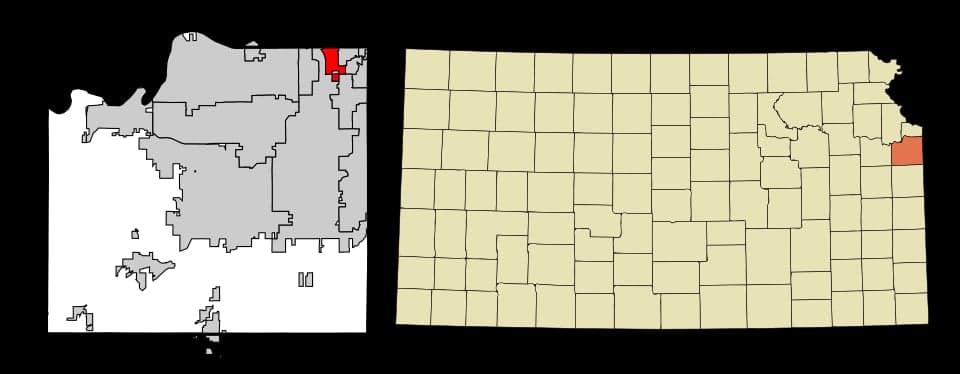
Photo: Wikipedia
Strategic Assessment of Mission, KS
Multiple tactical vulnerabilities. Population density, target proximity, or disaster risk are likely compounding. A retreat property and exit planning is required.
What does the Strategic Assessment tell us?
Our Strategic Assessment grades tactical survivability of an area. Major population centers, military targets, fallout zones, natural disasters, and border exposure all drive risk — lower exposure means a more defensible position in a crisis.
This is heavily inspired by Joel Skousen's Strategic Relocation book. Highly recommended you checkout the book ($)What does this tell us?
Our Strategic Assessment grades tactical survivability of an area. Major population centers, military targets, fallout zones, natural disasters, and border exposure all drive risk — lower exposure means a more defensible position in a crisis.
This is heavily inspired by Joel Skousen's Strategic Relocation book. Highly recommended you checkout the book ($)Strategic Pillars

Key Distances
Regional Safe Places
Below is our recommended "safe zones" in Kansas and the surrounding area based on our strategic heuristics. For most people, it's unrealistic to live in a “safe zone” full-time due to work, family or other personal reasons. They tend to be more rural. However, many of these areas are perfect for second homes and retreat properties that double as a vacation home or even a short-term rental.
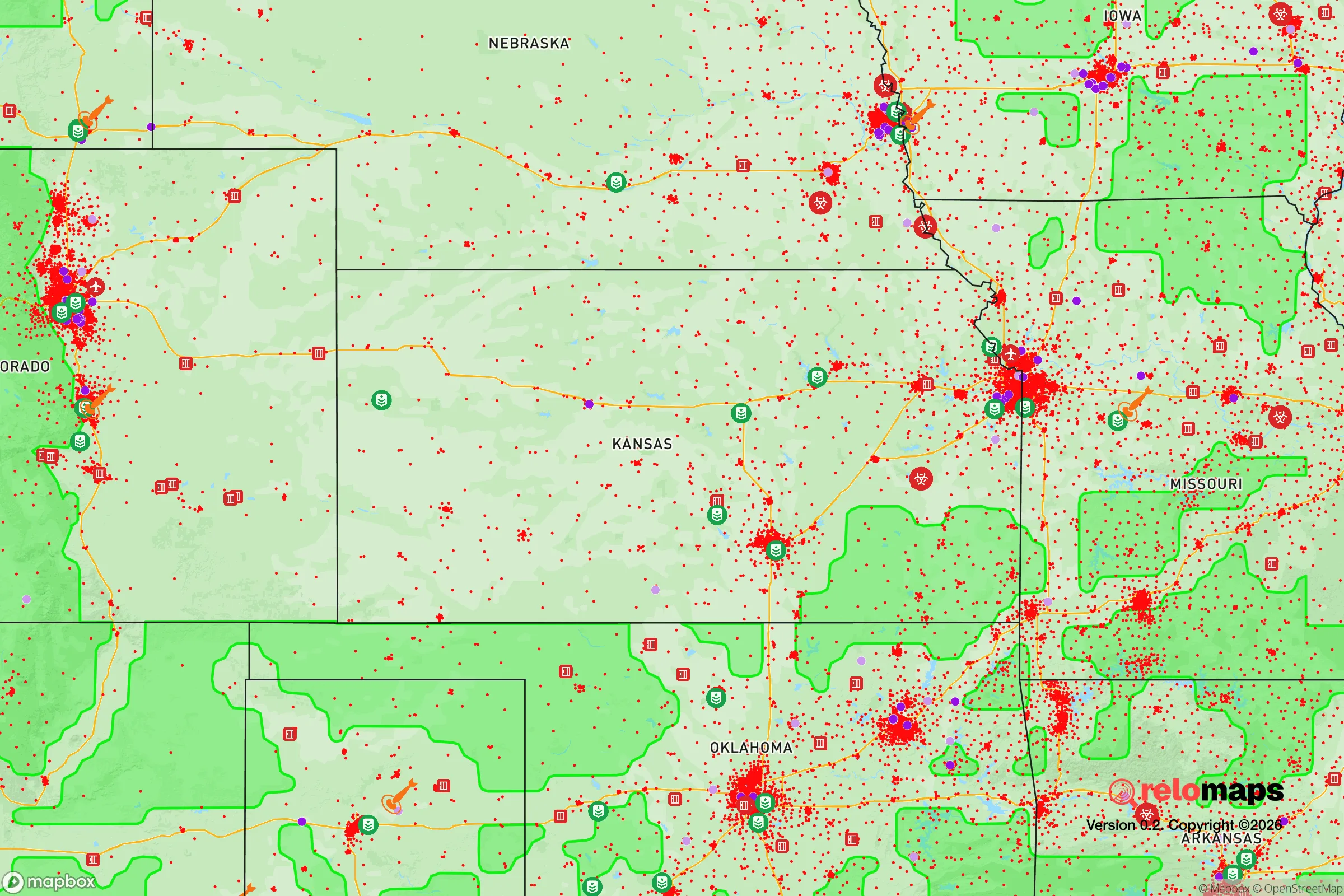
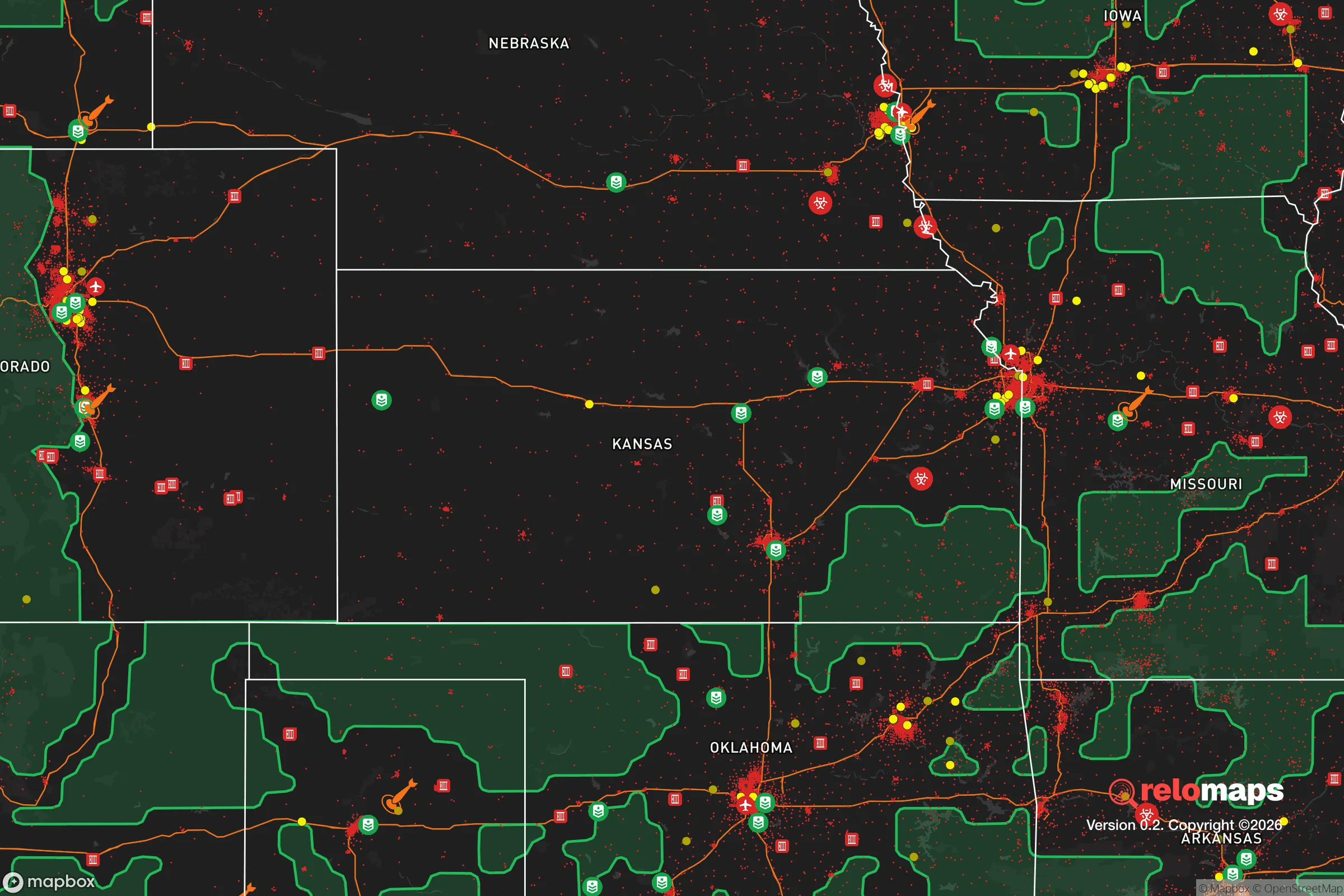


Important Note: For informational purposes only. This does not mean nothing bad ever happens in the green zones. Please use common sense. This is based on public data and modeled with AI. We tried to take a conservative approach but mistakes happen. We update this regularly as new information becomes available.
Solar Generator Recommendations
Backup power matters more here than in safer locations. We've picked three solar generators across budgets and capacity tiers — start with the budget unit if you only need a few essentials, or step up if you want to run a fridge and HVAC for days at a time.

Jackery Portable Power Station Explorer 300
Budget OptionPower on the Go: Weighing only 11 lbs, it's convenient to set up and store with book-sized foldable solar panels

BLUETTI Portable Power Station AC180
Designed for both indoor and outdoor scenarios, AC180 is highly capable as it has a robost capacity and continuous output power.

EF ECOFLOW DELTA Pro Ultra Power Station
Upgraded PickEcoFlow DELTA Pro Ultra is a whole-home energy system designed to grow with your family. Integrated with the Smart Home Panel 2, it scales to meet your evolving energy needs — keeping your home powered, intelligent, and secure through every stage of life.
We earn a commission, at no additional cost to you.
Strategic Assessment Analysis
Mission, Kansas, presents a mixed strategic picture for the conservative prepper. Its primary advantage is its location within the Kansas City metropolitan area, offering access to a robust regional economy and infrastructure, but this proximity to a major urban center is also its greatest vulnerability. The city’s resilience is fundamentally tied to its ability to leverage suburban resources while mitigating the risks of being a potential target or a refuge for a fleeing urban population during a crisis. For the single individual or family prioritizing self-reliance and security, Mission demands a clear-eyed assessment of its trade-offs: convenience versus exposure, community versus crowd.
Geographic position and natural advantages for long-term survival
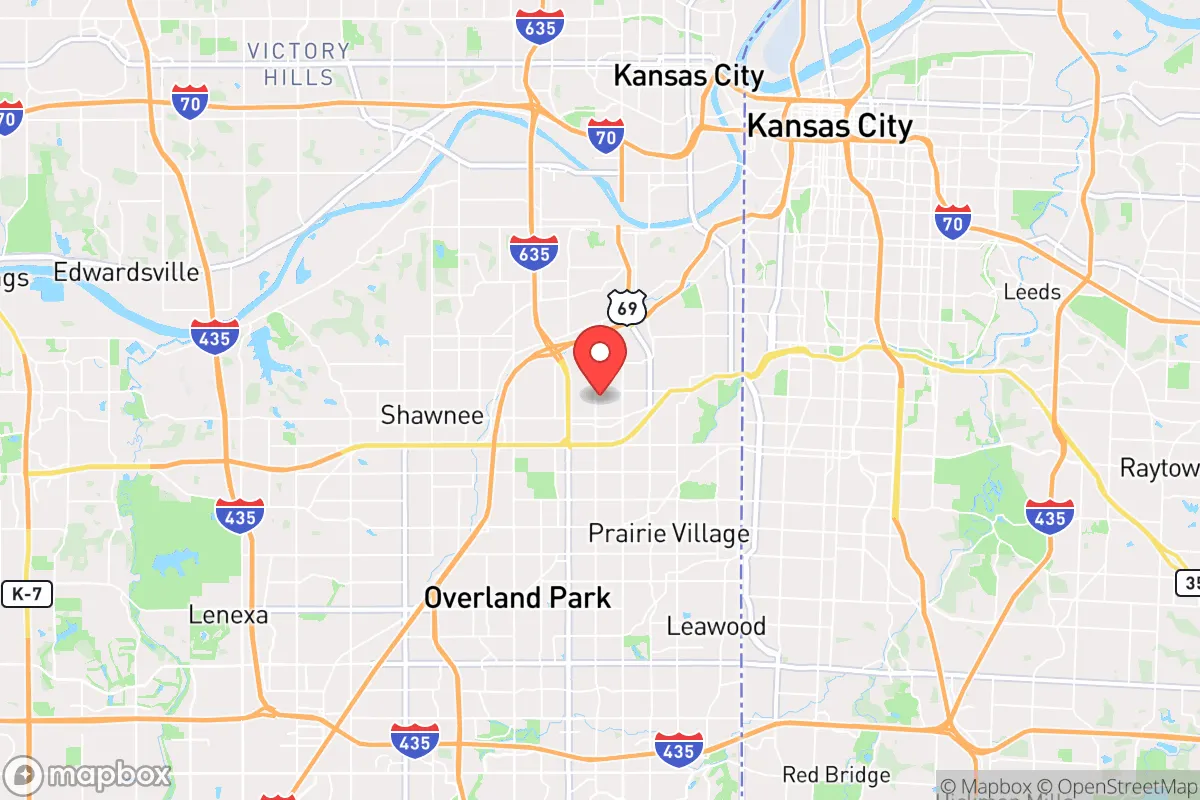
Mission sits in northeastern Kansas, roughly 10 miles southwest of downtown Kansas City, Missouri. Its position within Johnson County places it in one of the wealthier and more politically stable regions of the state, which can be a double-edged sword. On the positive side, the area benefits from the Missouri River watershed, providing a reliable surface water source, and the region’s moderate climate supports a growing season of about 180 days—enough for serious gardening and small-scale agriculture. The local topography is gently rolling, with no major floodplains or fault lines, reducing risks from natural disasters like earthquakes or catastrophic flooding. The city’s grid of suburban streets and tree-lined neighborhoods offers some natural cover and chokepoints, but it lacks the defensible terrain of more rural locations. For a relocator, the key natural advantage is the availability of arable land within a short drive, particularly to the south and west, where Johnson County gives way to more open farmland. However, Mission itself is fully built out, meaning any serious self-sufficiency in food or water would require a secondary property or a very aggressive suburban homesteading strategy.
Risks, exposures, and proximity to fallout-relevant landmarks
The most significant risk for Mission is its proximity to Kansas City, a major transportation and logistics hub. The city is within a 20-minute drive of Interstate 35, a primary north-south corridor, and Interstate 70, a key east-west route. In a mass casualty event or civil unrest scenario, these highways would become evacuation routes for hundreds of thousands of people, and Mission sits directly in the path of any westward exodus from the urban core. The city is also within 15 miles of Kansas City International Airport (MCI), a potential target for terrorism or a staging area for federal response, and within 30 miles of Whiteman Air Force Base, home to the B-2 Spirit bomber—a high-value strategic asset that could draw hostile attention. Additionally, the Kansas City metropolitan area has several industrial and chemical facilities along the Missouri River, including refineries and rail yards, that pose a secondary fallout risk from accidents or sabotage. For the prepper, the concentration of population and infrastructure within a 20-mile radius means that any major event—whether a terrorist attack, a grid-down scenario, or a pandemic—would likely overwhelm local resources and create a dangerous influx of displaced persons. The city’s own police and fire services are adequate for routine incidents but would be quickly stretched thin in a regional crisis.
Practical resilience for a relocator: food, water, energy, and defensibility
For a relocator looking to establish a resilient household in Mission, the practical challenges are significant but not insurmountable. Water is the most critical concern. The city’s water supply comes from the Missouri River via the Kansas City Water District, a centralized system vulnerable to contamination, cyberattack, or physical disruption. A prepper should plan for at least a 30-day supply of stored water, plus a means of purification (e.g., Berkey filters or UV systems) and a backup source like a rain barrel system, which is legal in Kansas but requires proper gutter setup. Food is more manageable. Johnson County has a strong network of farmers’ markets and local farms within a 15-mile radius, including the Overland Park Farmers’ Market and several CSAs. However, reliance on these sources is a vulnerability in a crisis; a serious prepper should establish a home garden and consider a small greenhouse for year-round production. The city’s zoning allows for backyard chickens but not larger livestock, limiting protein self-sufficiency. Energy is another weak point. Mission is served by Evergy, a regional utility that has experienced outages during storms and heat waves. A backup generator—preferably a whole-house propane or natural gas model—is essential, as is a solar panel system for long-term grid-down scenarios. The city’s building codes are standard for the area, and there are no restrictions on solar installations, though HOA covenants in some neighborhoods may impose aesthetic limits. Defensibility is the hardest factor. Mission is a typical suburban grid with multiple entry points, making it difficult to secure. A single-family home on a corner lot is a liability; a home on a cul-de-sac or with a fenced backyard is better. The city’s police response times are generally under 10 minutes for emergencies, but in a widespread event, that drops to hours or never. The best strategy is to build a strong neighborhood watch network and harden the home’s entry points, but the reality is that Mission is not a defensible location against a determined mob or organized threat. For the single individual or family, the focus should be on operational security—keeping a low profile, storing supplies discreetly, and having a bug-out plan to a more rural secondary location within 50 miles, such as the Flint Hills or the Ozarks.
The overall strategic picture for Mission, Kansas, is one of calculated risk. It offers a comfortable, low-crime suburban lifestyle with excellent schools and economic opportunities, but its proximity to Kansas City makes it a high-exposure location for the serious prepper. The city’s resilience is heavily dependent on the stability of the broader region, and any major disruption would quickly erode its advantages. For a conservative relocator who values community and convenience but is willing to invest in serious home hardening and a secondary retreat, Mission can work as a base of operations. However, for those seeking true self-sufficiency and a lower risk profile, the rural areas to the south and west—away from the interstate corridors and population centers—offer a far more defensible and sustainable long-term option. In short, Mission is a good place to live, but not a great place to survive a worst-case scenario. Plan accordingly.

* Values derived from national, state, county, city and local statistics and may differ in a specific area. Last updated: 2026-04-30T04:33:17.000Z
Narrative content on this page is AI-generated and may contain mistakes. Verify any details that matter before acting on them.
ReloMaps may earn a commission from affiliate links at no extra cost to you.

