Photo: Wikipedia
Demographics of Coahoma County
Affluence Level in Coahoma County
A low-income area with significant economic hardship. Household wealth and educational attainment are well below national averages.
People of Coahoma County
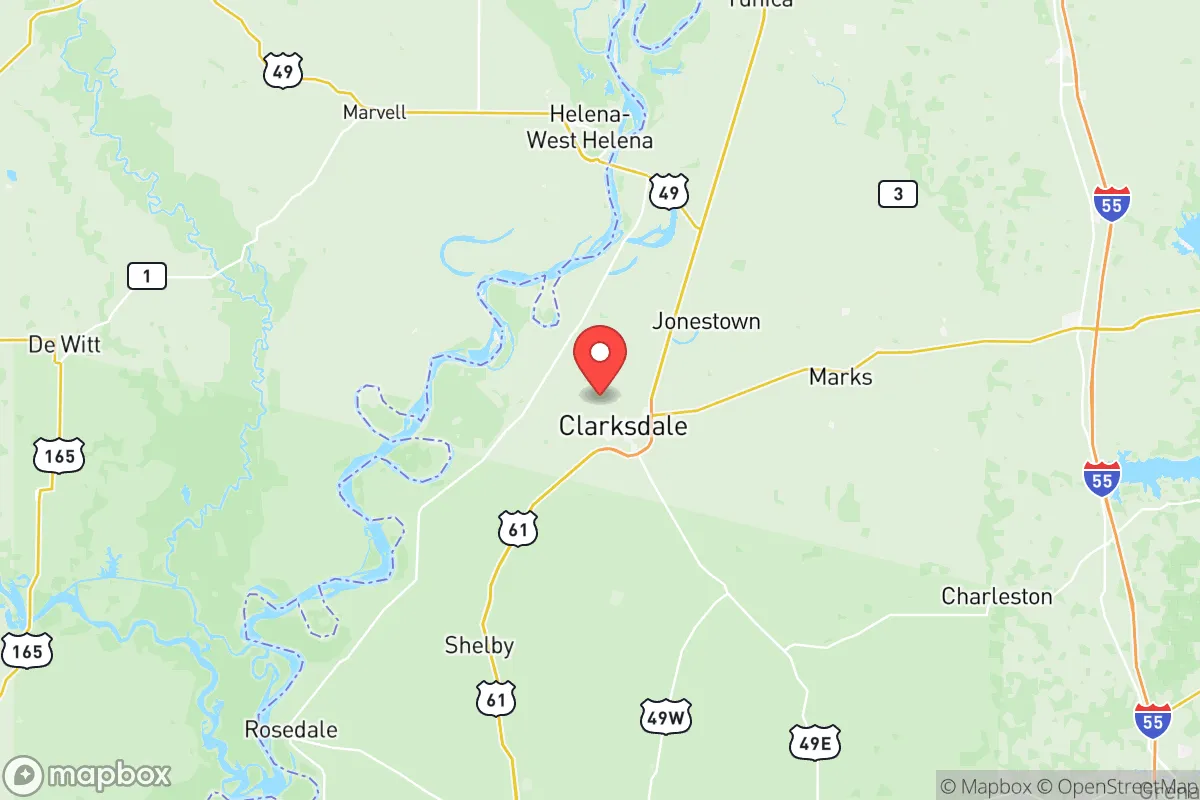
Coahoma County, Mississippi, is home to roughly 20,800 residents, making it one of the state’s more sparsely populated Delta counties. The population is predominantly Black (75.9%) and deeply rooted in the region’s agricultural and civil rights history, with a small White minority (19.3%) and a very low foreign-born share of just 1.2%. The county’s identity is shaped by the Mississippi Delta’s legacy of plantation agriculture, the Great Migration’s dramatic demographic reversal, and a present-day struggle with population decline and economic stagnation centered on the county seat of Clarksdale.
Settlement & growth (pre-1960)
Before European settlement, the area that became Coahoma County was inhabited by the Choctaw and Chickasaw peoples, who used the fertile floodplains for hunting and seasonal agriculture. The region was ceded to the United States through the Treaty of Doak’s Stand in 1820 and the Treaty of Pontotoc Creek in 1832, opening the Delta to American settlers. Coahoma County was formally established in 1836, carved from the vast Chickasaw cession.
The first wave of American settlers were largely Scots-Irish and English planters from the Upper South, particularly Virginia, Tennessee, and the Carolinas, who arrived in the 1830s and 1840s. They were drawn by the promise of rich alluvial soil ideal for cotton cultivation. These early planters established the county’s first towns, including Friars Point on the Mississippi River (a major steamboat landing) and the inland settlement of Clarksdale, founded in the 1860s as a railroad hub. By 1860, the county’s population was roughly 60% enslaved Black laborers, who were forcibly brought from the Upper South to work the cotton fields.
After the Civil War and Reconstruction, the county’s demographic structure remained plantation-based. The sharecropping and tenant farming systems replaced slavery, with Black families working land owned by White planters. Small numbers of Italian immigrants arrived in the 1890s and early 1900s, recruited as farm laborers to replace freedmen who were leaving the land; some settled in the Lula and Lyon areas, though most eventually left the Delta. The early 20th century saw the rise of the Great Migration (1910–1970), during which tens of thousands of Black residents left Coahoma County for industrial jobs in Chicago, Detroit, and St. Louis, fleeing Jim Crow segregation, violence, and economic exploitation. This exodus dramatically reduced the county’s population from a peak of roughly 56,000 in 1940 to about 34,000 by 1960.
By mid-century, the county’s economy was still dominated by cotton, but mechanization was reducing the need for farm labor. The White population remained concentrated in Clarksdale and smaller towns like Jonestown and Marks, while Black residents lived in rural settlements and the “Black bottoms” of Clarksdale. The county’s population was already in decline before the Civil Rights Movement, as the pull of Northern cities and the push of Delta poverty continued unabated.
Modern era (post-1965)
The post-1965 era in Coahoma County has been defined by continued population loss, racial consolidation, and economic contraction. The Hart-Cellar Act of 1965 had almost no impact here: the foreign-born population remains minuscule at 1.2%, and there are no significant immigrant enclaves. Unlike the Sun Belt or coastal metros, Coahoma County did not attract new international migration. Instead, the dominant demographic trend has been the out-migration of Black residents to Southern cities like Atlanta, Memphis, and Jackson, as well as continued movement to the North.
The White population has also declined, from roughly 30% of the county in 1970 to 19.3% today, as many White families left for suburban areas in DeSoto County (near Memphis) or other parts of the South. The county’s Black share has risen to 75.9%, partly due to White flight and partly because the Black population has aged in place. The Hispanic share is just 2.1%, and the Asian and Indian populations are negligible (0.0% and 0.3%, respectively). The county’s college-educated share is only 19.0%, reflecting limited local economic opportunities and a workforce that has historically been tied to agriculture and low-skill services.
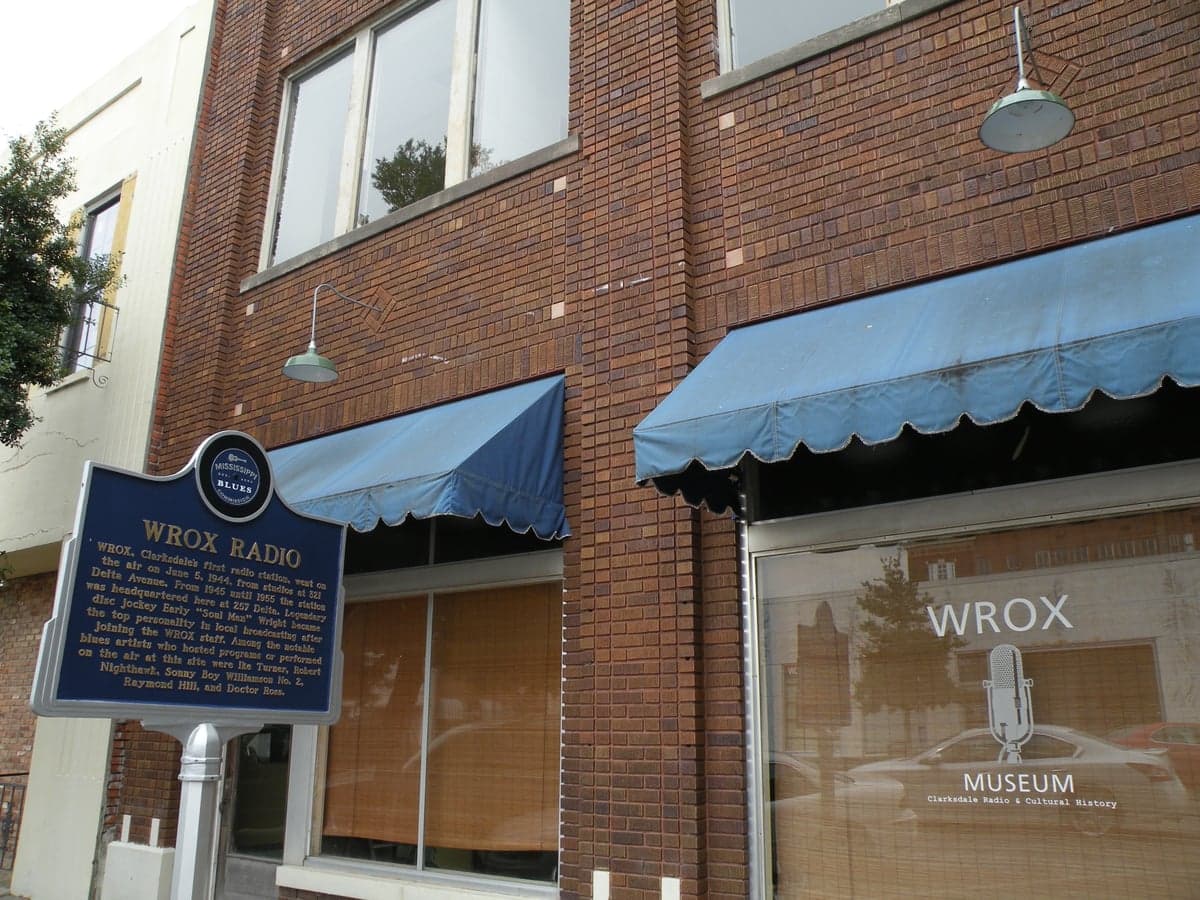
Clarksdale remains the county’s population and cultural center, but its population has fallen from over 21,000 in 1970 to roughly 14,000 today. The town has become a destination for blues tourism, drawing visitors to the Delta Blues Museum and the annual Juke Joint Festival, but this has not reversed population decline. Smaller towns like Friars Point (population under 1,000) and Jonestown (under 1,500) have seen even steeper losses, with many homes abandoned and commercial districts hollowed out. The county’s population is now 20,808, a decline of over 60% from its 1940 peak.
The future
Coahoma County’s population is projected to continue declining, likely falling below 18,000 by 2040. The county is becoming less diverse in the sense that the small White and Hispanic shares are shrinking, while the Black majority is aging. There is no sign of significant new immigration or domestic in-migration; the county lacks the job base (manufacturing, tech, logistics) that attracts younger workers. The economy remains anchored in agriculture (cotton, soybeans, catfish) and a modest tourism sector, but neither is sufficient to reverse the demographic tide.
The county’s cultural identity is increasingly tied to its blues heritage and civil rights history, which may draw a small number of retirees, artists, and heritage tourists, but not enough to stabilize the population. Younger residents continue to leave for educational and employment opportunities elsewhere, and the county’s median age is rising. The future likely holds further consolidation of the population in Clarksdale, with outlying towns and rural areas depopulating. The county will remain overwhelmingly Black and native-born, with little demographic change from external sources.
For someone moving in now, Coahoma County offers a deeply rooted, historically rich community with a strong sense of place, but it is a place of decline rather than growth. New residents will find a low cost of living, a close-knit social fabric, and access to the Mississippi Delta’s cultural legacy, but limited economic opportunity and a shrinking population base. The county is becoming a quieter, older, and more homogeneous version of its former self, with the future defined by preservation rather than expansion.

* Values derived from national, state, county, city and local statistics and may differ in a specific area. Last updated: 2026-08-19T22:21:12.000Z
Narrative content on this page is AI-generated and may contain mistakes. Verify any details that matter before acting on them.
ReloMaps may earn a commission from affiliate links at no extra cost to you.

