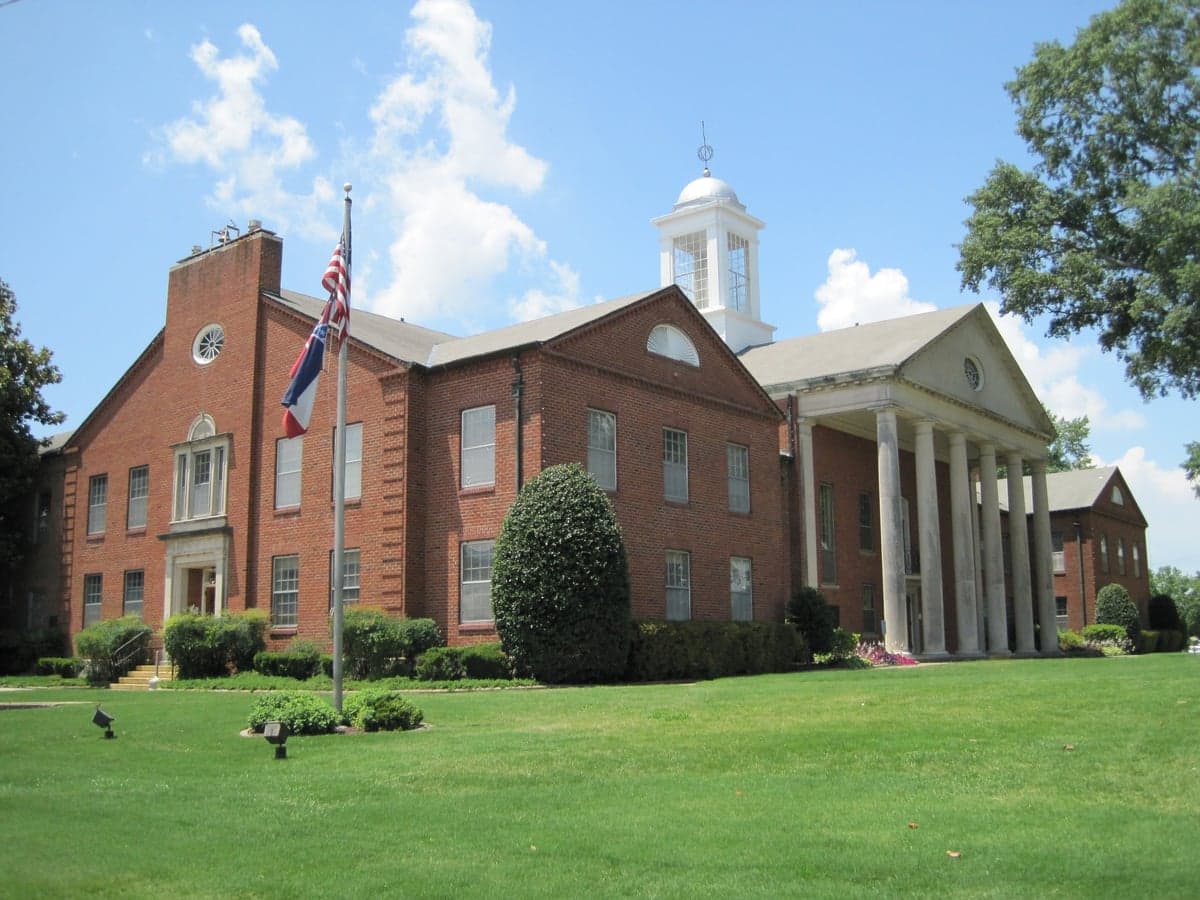
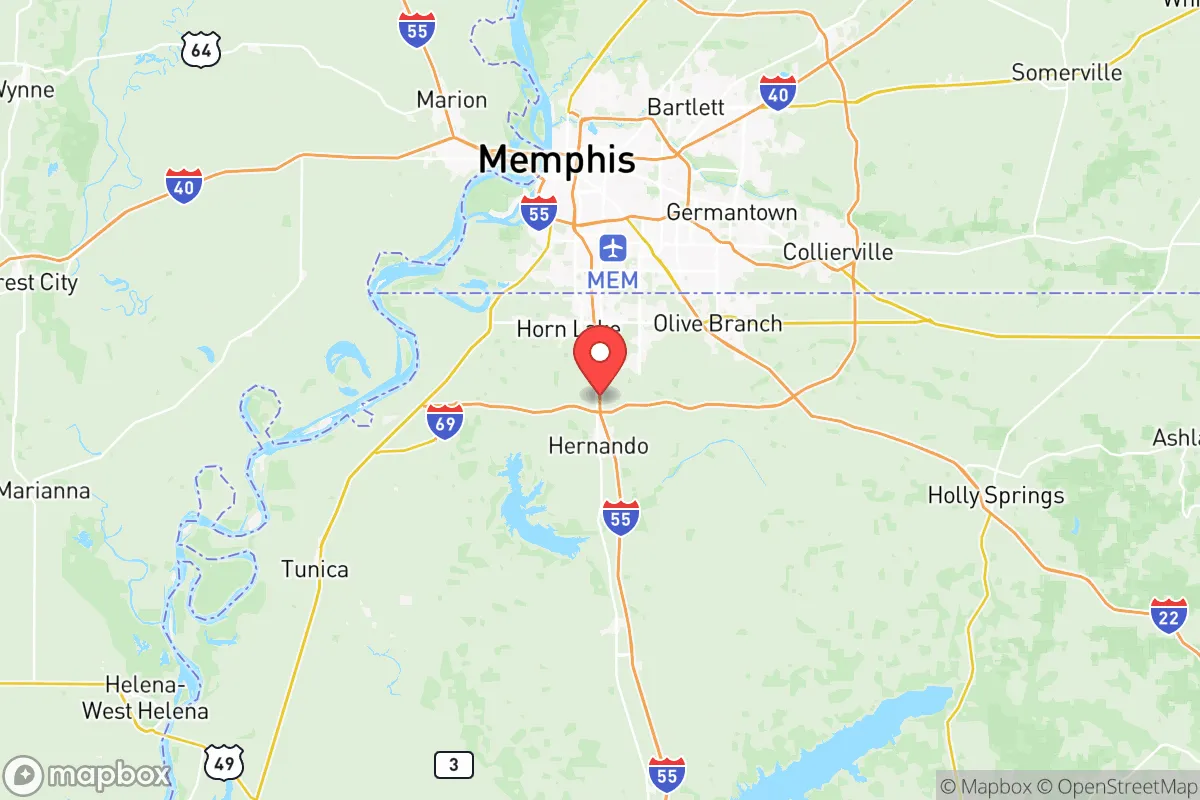
Photo: Wikipedia
Demographics of Desoto County
Affluence Level in Desoto County
A middle-class area roughly in line with national averages across income, home values, education, and employment.
People of Desoto County
Desoto County, Mississippi, is a rapidly growing suburban powerhouse of 188,598 residents, characterized by its blend of Southern heritage and Memphis-metro commuter culture. The county is predominantly white (58.0%) with a substantial Black population (31.8%), a small Hispanic community (5.6%), and a very low foreign-born share (2.0%), making it one of the least ethnically diverse counties in the Memphis region. Its people are defined by a strong conservative tilt, family-oriented suburban development, and a population that has more than doubled since 1990, driven overwhelmingly by domestic migration from the Memphis urban core and other parts of the Mid-South.
Settlement & growth (pre-1960)
Before American settlement, the area now known as Desoto County was inhabited by the Chickasaw Nation, who controlled much of northern Mississippi and western Tennessee. The Chickasaw were forcibly removed via the Treaty of Pontotoc Creek in 1832, opening the land to white settlers. The county was formally established in 1836, named after Spanish explorer Hernando de Soto, and its earliest American settlers were primarily Scots-Irish and English yeoman farmers from the Upper South, particularly Virginia, Kentucky, and Tennessee. These families moved into the fertile loess soil region along the Mississippi River, founding towns like Hernando (the county seat, established 1836) and Olive Branch (settled in the 1840s). Cotton cultivation dominated the antebellum economy, and by 1860, enslaved African Americans made up roughly 45% of the county's population, working the large plantations that lined the river bottoms near Walls and Lake Cormorant.
After the Civil War and Reconstruction, the county's economy shifted toward small-scale agriculture and timber. The arrival of the Illinois Central Railroad in the 1880s spurred growth in Hernando and Southaven, the latter of which was not incorporated until 1900 but grew as a railroad stop. The Black population remained largely rural, concentrated in unincorporated communities like Lynchburg and Eudora, working as sharecroppers and tenant farmers. The Great Migration (1910–1970) saw a significant outflow of Black residents from Desoto County to Memphis, Chicago, and Detroit, reducing the county's Black share from over 50% in 1900 to about 35% by 1950. White population remained stable, with many families working in agriculture, small-town commerce, and the growing Memphis economy just across the state line. By 1960, Desoto County was still a rural, sparsely populated area of roughly 24,000 people, with Hernando as its largest town at just 2,500 residents.
Modern era (post-1965)
The 1965 Hart-Cellar Act had minimal direct impact on Desoto County, as the foreign-born population remains just 2.0% today—far below the national average. Instead, the county's modern demographic transformation has been driven almost entirely by domestic migration. The construction of Interstate 55 in the 1960s and the expansion of the Memphis metropolitan area triggered a suburban boom that began in earnest in the 1970s. Southaven, located directly on the Tennessee border, became the primary destination for white families fleeing Memphis's urban challenges, including school desegregation and rising crime. Southaven's population exploded from 2,000 in 1960 to over 30,000 by 1990, and it is now the county's largest city at roughly 56,000 residents. Olive Branch experienced a similar trajectory, growing from a rural crossroads of 1,500 in 1970 to over 40,000 today, attracting both white and Black middle-class families seeking newer housing and better schools.
The Black population, which had declined during the Great Migration, began to rebound in the 1990s and 2000s as middle-class African American families moved south from Memphis into Southaven and Olive Branch. Today, Black residents make up 31.8% of the county, concentrated in the older neighborhoods of Southaven (particularly east of I-55) and in the unincorporated community of Walls. The Hispanic population, though small at 5.6%, has grown steadily since 2000, driven by construction and service-industry jobs in the Memphis metro. Most Hispanic residents are of Mexican and Central American origin, with small clusters in Hernando and Olive Branch. The East/Southeast Asian population (1.1%) and Indian subcontinent population (0.3%) are tiny but growing, primarily professionals and business owners in Southaven's commercial corridors. The county's college-educated share stands at 28.3%, reflecting the influx of white-collar commuters who work in Memphis's healthcare, logistics, and finance sectors but live in Desoto County for its lower taxes and conservative governance.
The future
Desoto County's population is projected to continue growing, likely reaching 220,000–240,000 by 2040, driven by ongoing suburban expansion and the limited availability of affordable housing in Shelby County, Tennessee. The county is not homogenizing into a single cultural bloc but rather tribalizing into distinct enclaves: Southaven and Olive Branch are becoming increasingly diverse, with growing Black and Hispanic populations, while Hernando and Walls remain predominantly white and more rural in character. The foreign-born population is expected to rise slowly, possibly reaching 3–4% by 2040, as Hispanic and Asian families are drawn by the same economic opportunities that attract domestic migrants. However, the county's cultural identity—deeply conservative, family-oriented, and Southern—is likely to persist, as in-migrants from Memphis and other parts of the South tend to share these values. The next 10–20 years will see continued suburban sprawl, with new subdivisions pushing east toward Byhalia and south toward Tunica, but the county's demographic profile will remain overwhelmingly native-born and English-speaking.
For someone moving in now, Desoto County offers a stable, growing, and culturally cohesive community with strong schools, low crime relative to Memphis, and a government that prioritizes low taxes and limited regulation. The population is becoming more diverse but remains anchored by a white majority and a Black minority that together form a conservative-leaning, family-centric social fabric. It is not a place of rapid ethnic change or cosmopolitan diversity, but rather a steady, suburban extension of the Mid-South's traditional character—ideal for those seeking a safe, affordable, and community-oriented environment within commuting distance of a major city.

* Values derived from national, state, county, city and local statistics and may differ in a specific area. Last updated: 2026-05-12T13:27:23.000Z
Narrative content on this page is AI-generated and may contain mistakes. Verify any details that matter before acting on them.
ReloMaps may earn a commission from affiliate links at no extra cost to you.

