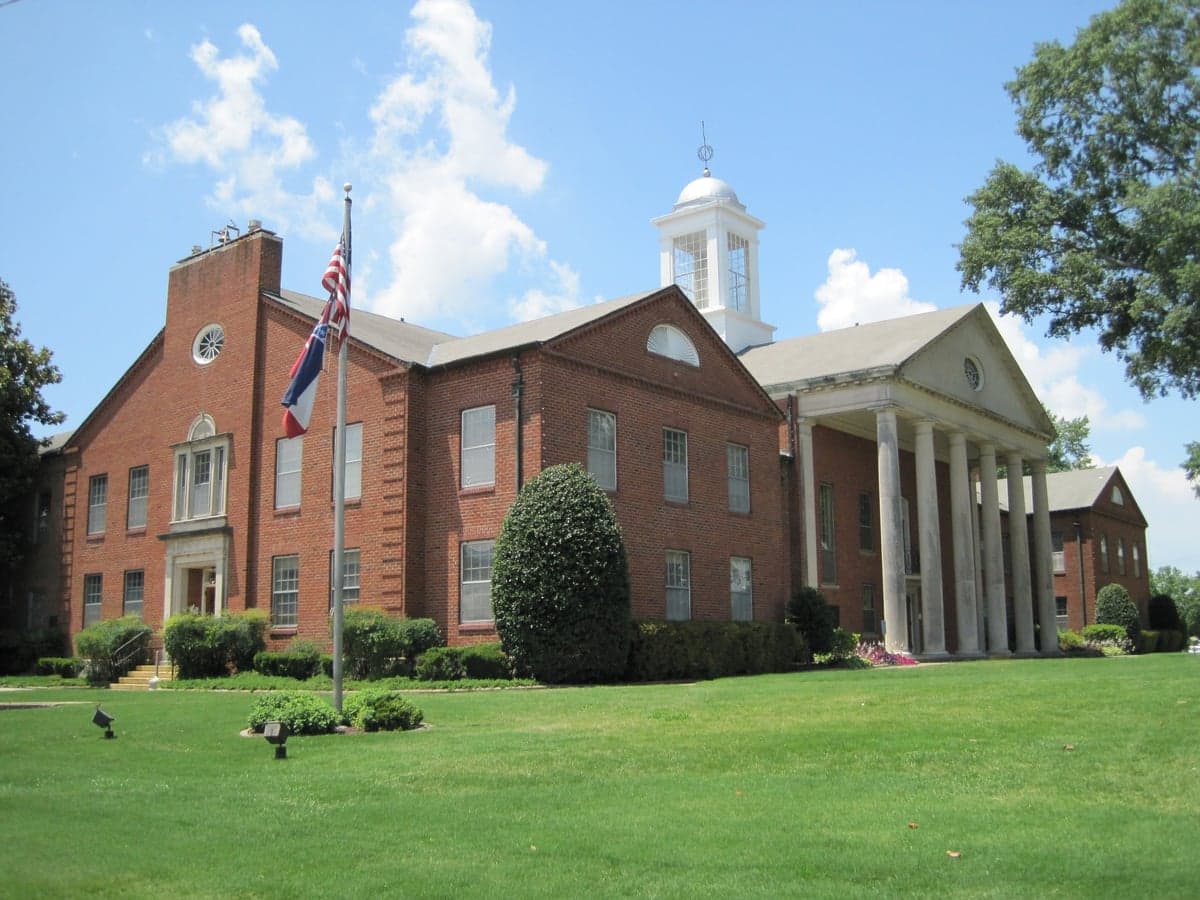
Photo: Wikipedia
Personal Sovereignty in Desoto County
Viable for self-reliance. Generally workable, though some barriers may limit total independence.
What does Personal Sovereignty tell us?
Personal Sovereignty measures your capacity for self-reliance and independence with minimal government friction. Higher scores mean fewer barriers between you and the way you want to live... but it assumes you have the space you need and good neighbors.
What does this tell us?
Personal Sovereignty measures your capacity for self-reliance and independence with minimal government friction. Higher scores mean fewer barriers between you and the way you want to live... but it assumes you have the space you need and good neighbors.
State Policy
Energy independence: Importer (50% of energy produced in-state)
Personal Liberty
Homesteading

Personal Liberty Analysis
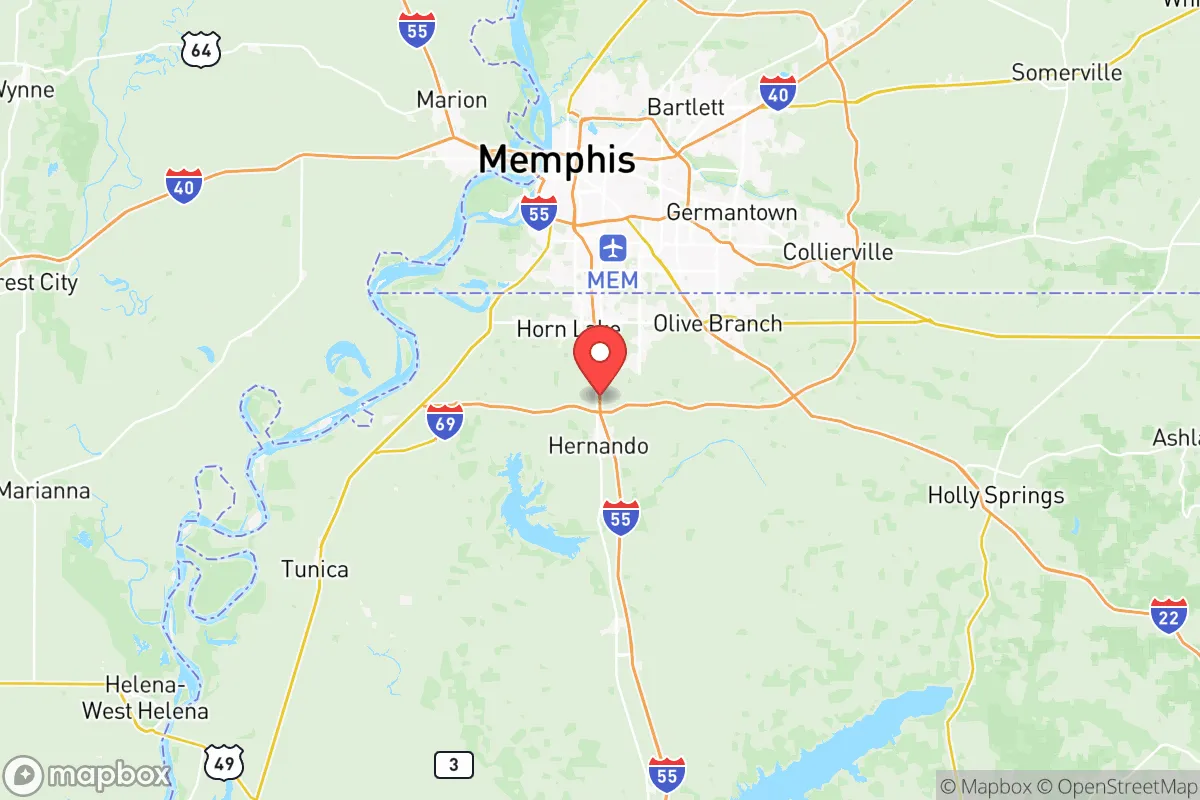
For individuals and families prioritizing personal sovereignty, Desoto County, Mississippi offers a compelling balance of low-tax governance, strong self-defense protections, and a regulatory environment that generally respects individual autonomy—especially when compared to more restrictive states like California, New York, or Illinois. While Mississippi’s state-level framework provides a solid baseline for personal freedom, Desoto County’s proximity to Memphis, Tennessee, and its rapid suburban growth create a unique tension: the county’s rural and exurban areas still permit a high degree of self-reliance, while its more developed towns like Southaven and Olive Branch are increasingly subject to municipal codes that can chafe against a prepper or homesteading mindset. This analysis examines the specific levers of personal sovereignty here—tax burden, gun laws, homesteading feasibility, and broader personal liberties—so you can decide if this corner of the Magnolia State aligns with your strategic relocation goals.
Tax burden and regulatory posture: How Desoto County compares to surrounding areas
Mississippi is one of the most tax-friendly states in the U.S., and Desoto County residents benefit directly. There is no state income tax on wages—a major advantage over neighboring Tennessee, which taxes interest and dividends, and a stark contrast to high-tax states like California or New York. Property taxes in Desoto County are among the lowest in the nation, with an effective rate around 0.7% of assessed home value, roughly half the national average. For a $300,000 home, that’s about $2,100 annually. Sales tax is 7% (7.25% in Southaven and Olive Branch due to local add-ons), but groceries and prescription drugs are exempt. The regulatory posture at the state level is explicitly pro-business and anti-red-tape: Mississippi has a right-to-work law, no state-level occupational licensing for many trades, and a streamlined environmental permitting process that makes small-scale agriculture or light manufacturing far easier to start than in states like Oregon or Washington. However, within Desoto County, the regulatory climate varies. The unincorporated areas—such as Hernando (the county seat) and rural pockets near Walls and Lake Cormorant—have minimal zoning enforcement, allowing for home-based businesses, livestock, and even small-scale workshops without the bureaucratic hurdles found in Southaven or Olive Branch, where municipal codes restrict everything from fence heights to the number of vehicles parked on a lawn. For a prepper or homesteader, the unincorporated zones are where the real sovereignty lives.
Self-defense and gun law specifics: What the Second Sanctuary status means for residents
Mississippi is a constitutional carry state—no permit required to carry a concealed or open firearm for anyone 18 or older who can legally possess a firearm. Desoto County is also a Second Amendment Sanctuary, meaning local law enforcement has formally pledged not to enforce any federal gun control measures deemed unconstitutional. This is not symbolic; it has practical teeth. In 2024, the county board of supervisors voted unanimously to prohibit the use of county funds or personnel to enforce federal red-flag laws, magazine bans, or universal background checks. For a survivalist, this means your right to keep and bear arms is protected at the local level even if federal policy shifts. Stand-your-ground laws are in full effect—no duty to retreat in any place you have a legal right to be. Castle doctrine applies to your home, vehicle, and workplace. The sheriff’s office in Desoto County, led by Sheriff Thomas Tuggle, is known for a pro-Second Amendment stance and a willingness to issue enhanced carry permits (which allow reciprocity in 30+ states) within days, not months. That said, practical differences exist within the county: Southaven and Olive Branch have more police presence and a slightly higher likelihood of firearm-related encounters being scrutinized, while rural areas like Hernando and Walls are far more hands-off. If you plan to stockpile ammunition, build a private range on your property, or keep firearms in your vehicle, Desoto County’s unincorporated areas are among the most permissive in the South.
Self-reliance and homesteading viability: Lot sizes, zoning, and off-grid feasibility
For those seeking to reduce dependence on centralized systems—grid power, municipal water, grocery supply chains—Desoto County offers a mixed but workable landscape. In unincorporated areas, lot sizes can be as large as 5 to 20 acres, especially near Lake Cormorant and Walls, where agricultural zoning is common. There are no county-wide bans on rainwater collection, and Mississippi law explicitly protects the right to harvest rainwater for non-potable uses. Solar panels are legal and unregulated at the county level, though homeowners associations (HOAs) in subdivisions like those in Olive Branch may restrict them. Off-grid living—meaning no connection to municipal water or sewer—is feasible on parcels of 2 acres or more, provided you install a septic system and a well. The county health department requires permits for wells and septic, but the process is straightforward and inexpensive compared to states like Colorado or California. Raising livestock—chickens, goats, even cattle—is unrestricted in unincorporated zones, though Southaven and Olive Branch limit the number of animals and prohibit roosters. Gardening, food preservation, and small-scale farming are culturally normal here; the Hernando Farmers Market is one of the largest in the region. For a prepper, the key takeaway is that Hernando and the rural corridor along Highway 61 offer the best balance of affordable land (still under $10,000 per acre in many spots) and minimal regulatory interference. The county’s emergency management office also runs a voluntary “Community Preparedness” program that provides resources for building 72-hour kits and family emergency plans—a small but telling sign that self-reliance is encouraged, not discouraged.
Personal liberties: Parental rights, medical autonomy, speech, and property protections
Mississippi has some of the strongest parental rights laws in the country. The Mississippi Parental Rights Act (2018) explicitly affirms that parents have the fundamental right to direct the upbringing, education, and healthcare of their children. This means no mandatory school vaccine mandates (though school attendance requires standard immunizations unless a religious exemption is filed), and parents can opt their children out of sex education or any curriculum they find objectionable. Medical autonomy is similarly robust: Mississippi has no state-level vaccine passport requirement, no mask mandates (even during the 2020-2021 period, the state resisted), and a broad religious exemption for healthcare decisions. The state also passed a law in 2023 prohibiting medical professionals from providing gender-transition procedures to minors—a move that aligns with conservative views on bodily autonomy for children. Free speech protections are strong; Desoto County has no local ordinances restricting political speech, and the county’s public meetings are open and often contentious, with residents regularly voicing concerns about school board decisions or zoning changes. Property rights are protected by Mississippi’s “private property rights” act, which requires governments to prove a compelling interest before restricting land use. In practice, this means that if you buy 10 acres near Walls, you can build a workshop, store supplies, and even construct a secondary dwelling without the permitting nightmares common in states like Oregon or Maryland. The one caveat: Desoto County is growing fast, and some residents report that the county planning commission is becoming more assertive about enforcing subdivision regulations in unincorporated areas. For now, though, personal liberties here are among the most expansive in the Southeast.
Overall, Desoto County ranks as a strong contender for anyone prioritizing personal sovereignty, especially when compared to the regulatory chokeholds of the Northeast or West Coast. The combination of no state income tax, constitutional carry, Second Sanctuary status, minimal zoning in rural areas, and robust parental rights creates an environment where a self-reliant individual or family can operate with far less government interference than in most of the country. The trade-off is that the county’s suburban core—Southaven, Olive Branch, and parts of Hernando—is trending toward more municipal oversight, so the strategic move is to buy land in the unincorporated zones near Lake Cormorant or Walls before development catches up. For a prepper or conservative-minded relocator, Desoto County offers a rare combination of affordability, legal protection, and cultural alignment that is increasingly hard to find in the United States.

* Values derived from national, state, county, city and local statistics and may differ in a specific area. Last updated: 2026-05-12T13:27:23.000Z
Narrative content on this page is AI-generated and may contain mistakes. Verify any details that matter before acting on them.
ReloMaps may earn a commission from affiliate links at no extra cost to you.

