
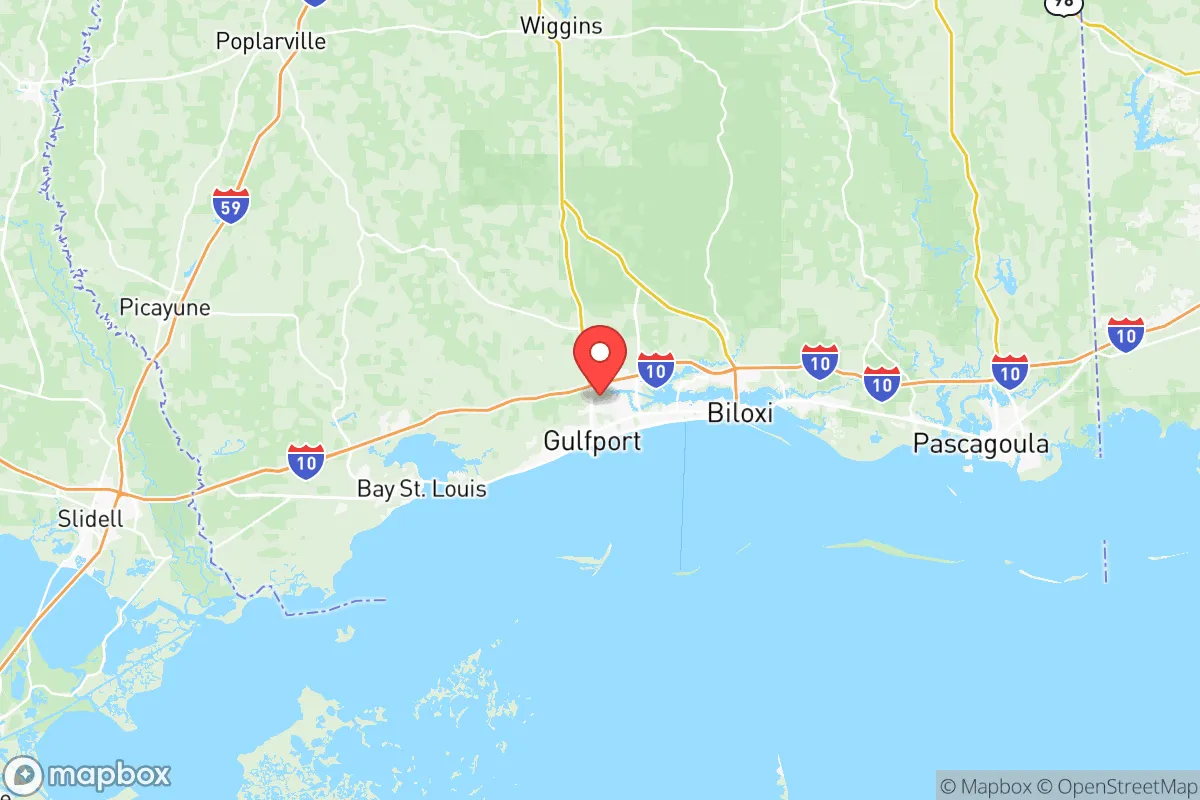
Photo: Wikipedia
Quality of Life in Harrison County
A livable area that tracks near national norms for affordability, walkability, and neighborhood health.
What does Quality of Life tell us?
Quality of Life measures an area by evaluating factors like cost of living, nearby amenities, country club access, airport proximity, socioeconomic signals and neighborhood character. For large states, this is a general average — quality of life can vary dramatically between metro areas, suburbs, and rural communities within the same state.
What does this tell us?
Quality of Life measures an area by evaluating factors like cost of living, nearby amenities, country club access, airport proximity, socioeconomic signals and neighborhood character. For large states, this is a general average — quality of life can vary dramatically between metro areas, suburbs, and rural communities within the same state.
Cost of Living
16% below national average
101%
The Real Cost of Living in Harrison County for 2026
| Tier | Individual | Family (4) |
|---|---|---|
| Survival | $17k | $32k |
| Comfortable | $39k | $57k |
| Luxury | $103k+ | $160k+ |
| Elite (Top 5%) | $124k+ | $192k+ |
Quality-of-Life Analysis
Harrison County, Mississippi, offers a diverse range of quality-of-life options that shift dramatically from the bustling Gulf Coast to the quiet pine forests inland. Urban professionals and hospitality workers tend to settle in Gulfport and Biloxi, while families, retirees, and those seeking land and tranquility gravitate toward Long Beach, Pass Christian, or the unincorporated communities north of Interstate 10.
Largest town(s) & population centers
Gulfport, the

Crime in Harrison County
Generally safer than 61% of comparable U.S. locations.
Violent CrimeViolent Crime Analysis
Property CrimeProperty Crime Analysis
Crime Analysis
Harrison County, Mississippi, presents a mixed safety profile where property crime rates significantly exceed national averages while violent crime remains below the U.S. median. The county's 2024 violent crime rate of 187 incidents per 100,000 residents is notably lower than the national average of roughly 380 per 100,000, but property crime at 1,065.3 per 100,000 runs well above the U.S. figure of approximately 1,954 per 100,000. This disparity means residents in cities like Gulfport, Biloxi, and D'Iberville face a higher likelihood of theft, burglary, and vehicle break-ins than the typical American, though the risk of violent confrontation is comparatively reduced.
Crime in context
When measured against Mississippi's statewide violent crime rate of roughly 210 per 100,000, Harrison County's 187 per 100,000 places it slightly safer than the state average. However, the property crime rate of 1,065.3 per 100,000 is significantly higher than the Mississippi average of about 850 per 100,000, making property offenses the county's most pressing public safety concern. For context, the nearby city of Gulfport reports property crime rates that can exceed 1,200 per 100,000 in certain neighborhoods, while Biloxi sees similar patterns driven by tourism-related theft and vehicle burglaries. By contrast, Long Beach and Pass Christian often report lower property crime figures, closer to 700–800 per 100,000, offering residents a statistically safer environment. The county's violent crime is concentrated in specific areas, with Gulfport and Biloxi accounting for the majority of aggravated assaults and robberies, while smaller communities like Saucier and Lyman see very few such incidents.
What residents experience
Daily life in Harrison County is shaped by a noticeable property crime presence. Residents frequently report vehicle break-ins, package theft, and burglaries from unsecured sheds or garages, particularly in neighborhoods near major highways and tourist corridors. The county's reliance on a tourism-driven economy in Biloxi and Gulfport means that transient populations and seasonal crowds contribute to elevated theft rates. Violent crime, while less common, is not evenly distributed: Gulfport and Biloxi see higher rates of aggravated assault and robbery, often linked to disputes or drug-related activity, while D'Iberville and Long Beach report far fewer violent incidents. The judicial environment in Harrison County is a concern for residents who prioritize public safety. The county's district attorney and local judges, operating within a state that has seen progressive criminal justice reforms, have been criticized for lenient sentencing in property crime cases. This approach, while intended to reduce incarceration, can result in repeat offenders cycling through the system quickly, undermining deterrence and leaving victims feeling that justice is not fully served. For families and retirees, this means that proactive measures—such as home security systems, neighborhood watch programs, and avoiding high-crime blocks in Gulfport or Biloxi—are essential for maintaining safety.
Neighborhood-level variation is significant across Harrison County. The safest areas tend to be the smaller, more residential communities: Long Beach consistently reports violent crime rates below 100 per 100,000 and property crime rates near 700 per 100,000, making it a strong choice for families. Pass Christian and Saucier also offer lower crime densities, with the latter being largely rural and sparsely populated. In contrast, parts of Gulfport near the downtown corridor and Biloxi along the beachfront and casino district see elevated crime rates, particularly for theft and vehicle burglary. Prospective residents should research specific zip codes and consult local police department crime maps to identify the safest blocks within each city. Overall, Harrison County requires a cautious approach: property crime is a genuine daily risk, but violent crime is manageable, and choosing a lower-crime municipality like Long Beach or Pass Christian can significantly improve one's safety experience.
* Values derived from national, state, county, city and local statistics and may differ in a specific area. Last updated: 2026-05-28T14:06:42.000Z
Narrative content on this page is AI-generated and may contain mistakes. Verify any details that matter before acting on them.
ReloMaps may earn a commission from affiliate links at no extra cost to you.

