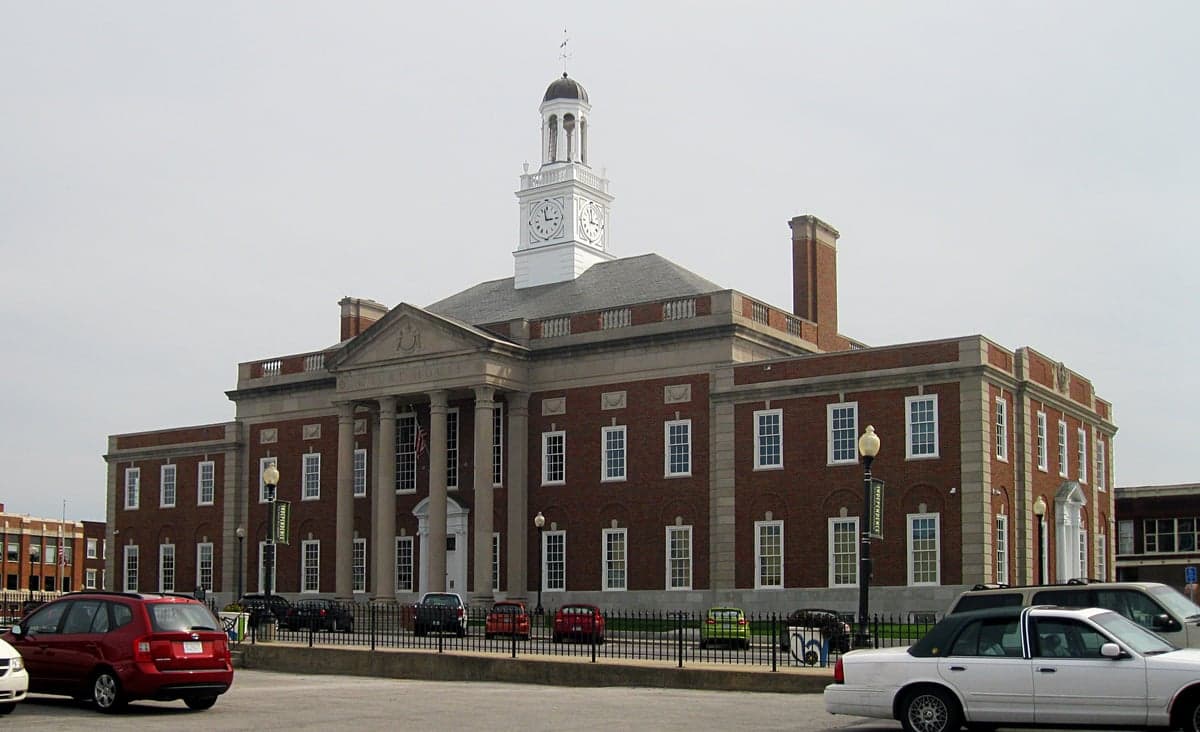
Photo: Wikipedia
Personal Sovereignty in Jackson County
Strong independent fundamentals that actively favor personal liberty and low regulation.
What does Personal Sovereignty tell us?
Personal Sovereignty measures your capacity for self-reliance and independence with minimal government friction. Higher scores mean fewer barriers between you and the way you want to live... but it assumes you have the space you need and good neighbors.
What does this tell us?
Personal Sovereignty measures your capacity for self-reliance and independence with minimal government friction. Higher scores mean fewer barriers between you and the way you want to live... but it assumes you have the space you need and good neighbors.
State Policy
Energy independence: Importer (15% of energy produced in-state)
Personal Liberty
Homesteading

Personal Liberty Analysis
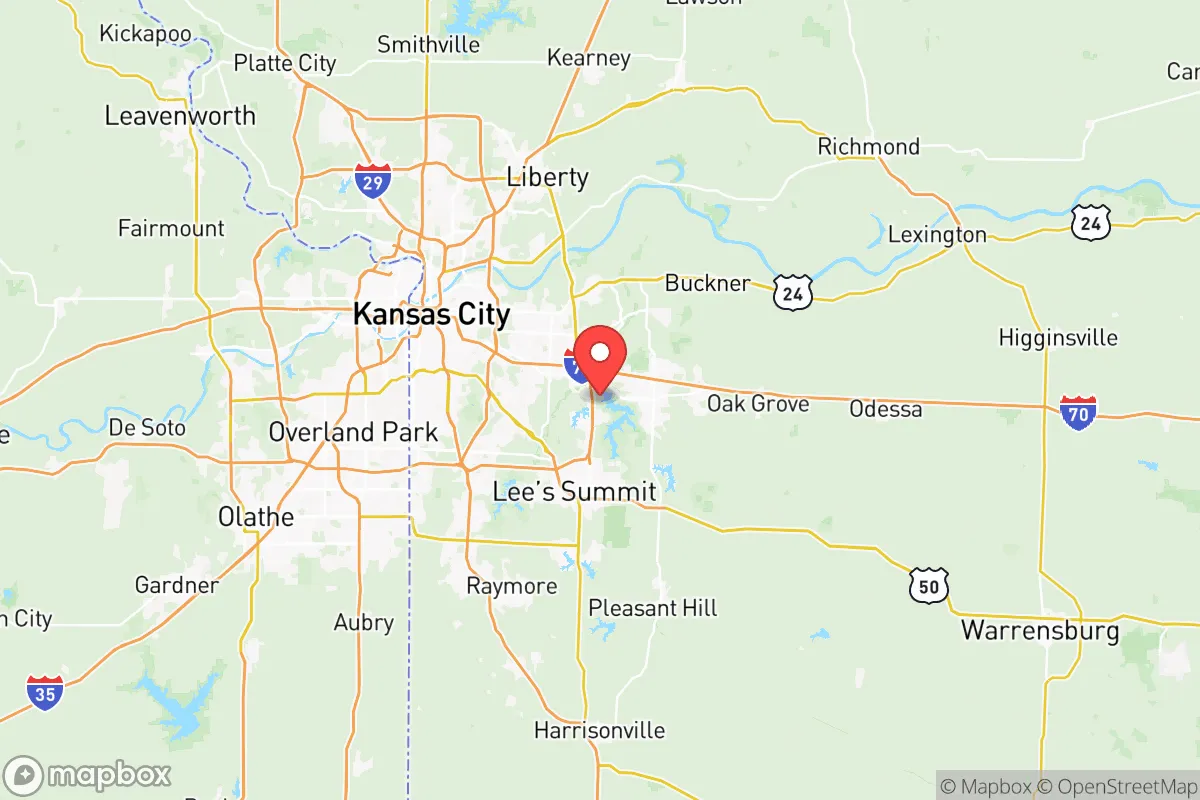
Jackson County, Missouri, presents a mixed landscape for personal sovereignty, where the promise of Midwestern independence collides with the regulatory reach of a major metropolitan core. While the state of Missouri generally leans toward individual liberty, the county’s political geography creates a sharp divide: the urban Kansas City area exerts a progressive influence on local governance, while the eastern and southern rural stretches—places like Blue Springs, Grain Valley, and unincorporated areas near Lee’s Summit—offer a more hands-off environment. For the survivalist or prepper-minded individual, the key is understanding that your autonomy in Jackson County is heavily zip-code dependent, with the county’s posture ranging from permissive in the exurbs to increasingly restrictive inside the I-435 loop.
Tax burden and regulatory posture: where the state’s restraint meets local appetite
Missouri’s state-level framework is a net positive for personal sovereignty, with a flat income tax rate of 4.8% (set to decline to 4.5% by 2027) and a sales tax cap that keeps the overall burden moderate. However, Jackson County voters approved a 0.5% sales tax for the county’s health department in 2023, and Kansas City proper adds its own earnings tax of 1% for residents and non-residents working within city limits. This creates a clear incentive for those prioritizing financial autonomy to locate outside the urban core. Property taxes remain relatively low—around 0.8% of assessed value—but the county’s regulatory posture on building permits and land use is notably stricter inside the Kansas City limits. For example, Grain Valley and unincorporated areas near Buckner have far more lenient permitting processes for outbuildings, workshops, and secondary structures than properties inside the Kansas City city limits. The county’s zoning code in rural pockets allows for agricultural exemptions that can reduce the friction of setting up a self-sufficient homestead, but you must verify parcel-specific zoning, as some areas near Independence have been reclassified for suburban density, limiting livestock and accessory dwelling units.
Self-defense and gun law specifics: a state sanctuary with local friction points
Missouri is a constitutional carry state, meaning no permit is required to carry a concealed firearm for anyone 19 or older (18 with military service). Jackson County, however, is not uniformly gun-friendly. The Kansas City City Council passed a “red flag” ordinance in 2021 that allows for temporary firearm seizure through an extreme risk protection order, a policy that directly conflicts with state preemption laws and has been the subject of ongoing legal challenges. For the prepper, this means that living inside Kansas City city limits exposes you to a local enforcement apparatus that may be more willing to act on such orders than in the rest of the county. In contrast, Blue Springs and Lee’s Summit have publicly affirmed their support for Second Amendment rights, with local police departments generally declining to enforce the city-level ordinance. Stand-your-ground laws apply statewide, and there is no duty to retreat in any place you are lawfully present. For those stockpiling ammunition or building a defensive armory, be aware that Jackson County’s sheriff’s office has not adopted any additional magazine capacity restrictions, but the Kansas City police department has been known to cite individuals under the city’s now-defunct “assault weapon” ban that was struck down in 2023—enforcement inconsistency remains a real concern.
Self-reliance and homesteading viability: lot sizes, zoning, and off-grid feasibility
The viability of a self-reliant lifestyle in Jackson County depends almost entirely on whether you are inside or outside the urban growth boundary. Inside Kansas City and much of Independence, minimum lot sizes are typically 5,000 to 7,000 square feet, with strict prohibitions on keeping chickens, goats, or bees without special permits. Head east to Grain Valley or the unincorporated areas near Sibley, and you’ll find acreage parcels starting at 1 to 5 acres, where zoning allows for livestock, gardens, and even small-scale aquaculture. Off-grid feasibility is limited by county building codes that require connection to the electrical grid for new construction in most subdivisions, but rural parcels outside the city limits often have no such mandate. Rainwater collection is legal statewide, and Missouri’s right-to-farm law provides some protection for agricultural activities even when neighbors complain. Composting toilets and solar arrays are permitted in unincorporated areas, but you will need to navigate the county’s health department for septic system approval—a process that can take 60-90 days. For the serious prepper, the area around Lake Jacomo and the rural tracts near the county’s eastern border with Lafayette County offer the best balance of seclusion and legal permissiveness for off-grid infrastructure.
Personal liberties: parental rights, medical autonomy, speech, and property
Missouri has strong statutory protections for parental rights, including a 2014 law that affirms parents’ “fundamental right” to direct the upbringing, education, and healthcare of their children. Jackson County’s school districts vary in their adherence to these principles: the Blue Springs and Grain Valley school districts have been more responsive to parental concerns about curriculum transparency and medical consent policies than the Kansas City Public Schools district, which has faced lawsuits over its handling of student gender transitions without parental notification. Medical autonomy is a mixed bag—Missouri banned nearly all abortions in 2022, but the state’s vaccine mandate landscape is relatively free, with no state-level COVID-19 vaccine requirement for employment or school attendance. However, Kansas City’s city government mandated vaccines for municipal employees in 2022, a policy that has since been relaxed but signals a local appetite for such measures. Free speech protections are robust under the Missouri Constitution, but Kansas City has enacted noise ordinances and permit requirements for public gatherings that can be used to restrict protest or assembly. Property rights are generally strong, with Missouri’s “private property protection act” limiting eminent domain abuse, but Jackson County’s planning department has aggressively used zoning variances to block short-term rentals and home-based businesses in residential zones—a concern for those seeking economic independence through cottage industries.
Overall, Jackson County offers a tiered sovereignty environment where the state’s libertarian leanings are diluted by urban governance in Kansas City and, to a lesser extent, Independence. For the individual or family prioritizing maximum personal autonomy—from gun rights to off-grid living to parental control—the clear recommendation is to locate in the eastern and southern exurbs: Grain Valley, Blue Springs, or the unincorporated tracts near Buckner and Sibley. These areas provide the legal breathing room that the county’s urban core actively restricts. Compared to similarly sized counties in Texas or Idaho, Jackson County falls short on homesteading flexibility and local gun protections, but it remains a far better option than any county in Illinois or California for those seeking to minimize government overreach in daily life. The strategic move is to choose your specific address as carefully as you choose your county—within Jackson County, a 15-mile drive east can mean the difference between living under a city ordinance that tracks your ammunition purchases and living on a rural parcel where your property is your castle, in the truest sense.

* Values derived from national, state, county, city and local statistics and may differ in a specific area. Last updated: 2026-05-28T12:11:10.000Z
Narrative content on this page is AI-generated and may contain mistakes. Verify any details that matter before acting on them.
ReloMaps may earn a commission from affiliate links at no extra cost to you.

