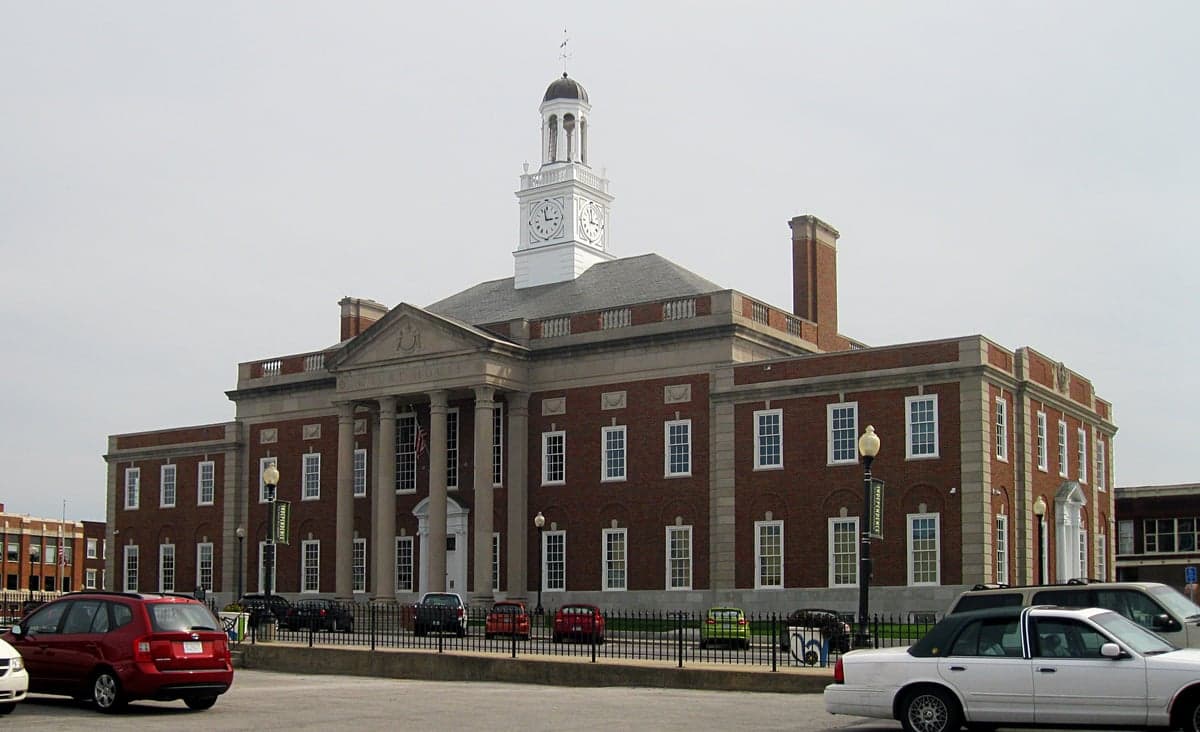
Photo: Wikipedia
Political ClimatePolitical Climate in Jackson County
Showing district-level results — no local-only data available.
Local Political AnalysisPolitical Analysis of Jackson County
Jackson County, Missouri, has been trending further left for years, and the numbers back it up. The Cook Partisan Voting Index (PVI) sits at D+12, meaning the county votes a full 12 points more Democratic than the national average. That’s a stark contrast to the rest of the state, which carries a PVI of R+8. This isn’t a new shift, but it’s accelerated noticeably since the 2020 election. If you’ve lived here as long as I have, you’ve watched places like Independence and Lee’s Summit drift away from their more moderate roots, while Kansas City proper has become a solidly blue stronghold. The trajectory is clear: Jackson County is becoming a one-party enclave, and that raises real questions about how much longer local voices outside the progressive bubble will be heard.
How it compares
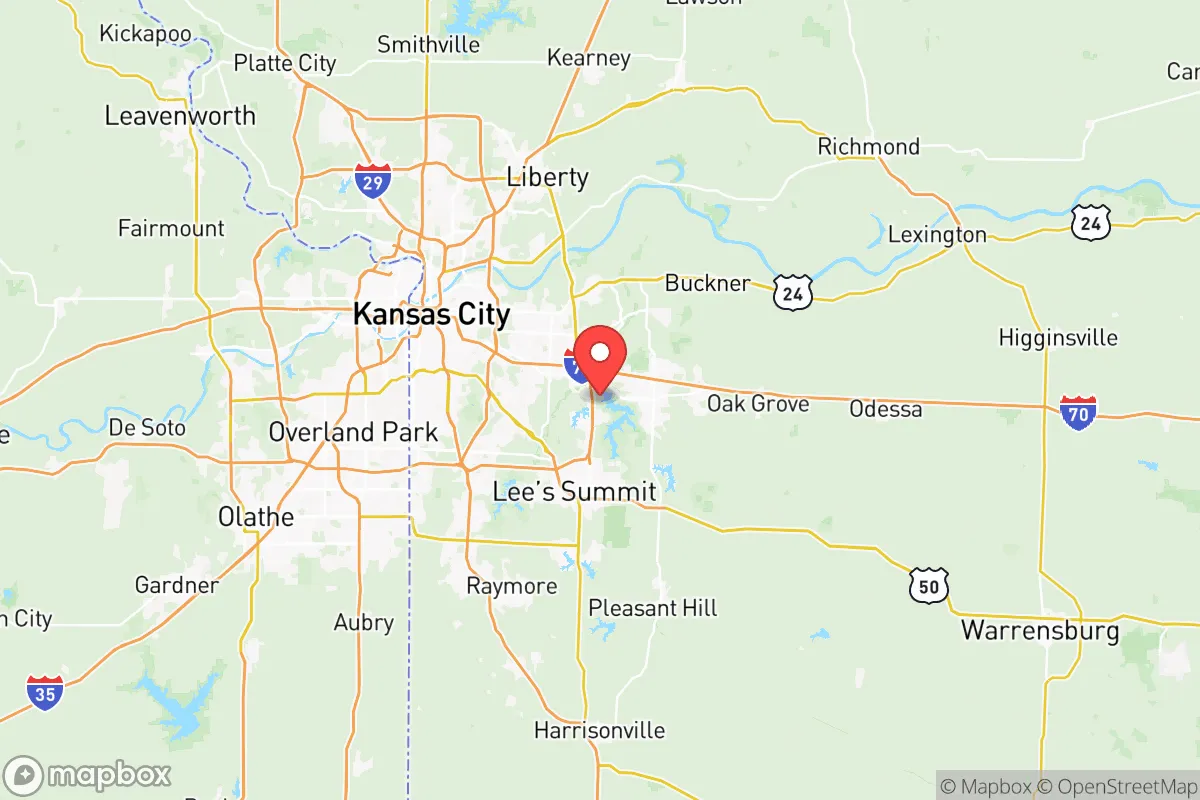
The gap between Jackson County and the rest of Missouri is massive—a 20-point PVI swing. While the state as a whole leans reliably Republican, Jackson County is an island of deep blue. But it’s not uniform. Kansas City’s urban core, including neighborhoods like Brookside and the Plaza, votes overwhelmingly Democratic, often by margins of 70-80%. Meanwhile, Lee’s Summit and Blue Springs still show a conservative streak, especially in precincts south of I-470 and around Lake Jacomo. Independence is the real bellwether: it used to be a swing area, but recent elections have seen it tilt blue, particularly in the older wards near the Square. The rural eastern edge of the county, around Buckner and Oak Grove, remains reliably red, but those precincts are shrinking in influence as the metro area expands. The state legislature in Jefferson City often clashes with Jackson County’s leadership, especially on issues like gun rights and school mandates—a dynamic that leaves residents caught between two very different governments.
What this means for residents
For folks who value personal freedoms and limited government, the local trend is concerning. Jackson County has seen a push for stricter public health mandates, higher property taxes to fund social programs, and a growing tolerance for policies that prioritize collective goals over individual choice. The county’s Democratic leadership has also been vocal about expanding gun control measures, even as the state preempts local ordinances. If you’re a conservative or even a moderate who believes in keeping government out of your business, you’ll find yourself increasingly at odds with the county’s direction. The school boards in Kansas City and Independence have also shifted left, with curriculum debates and parental rights becoming flashpoints. Long-term, if the trend holds, Jackson County could become a place where traditional values are actively marginalized, not just tolerated.
One cultural distinction worth noting: Jackson County still has a strong independent streak, especially in its older suburbs and rural pockets. You’ll find plenty of folks in Grain Valley or Raytown who remember when the county was more purple. But the political machinery is now firmly in progressive hands, and the policy agenda reflects that. For anyone considering a move here, it’s worth understanding that the local government’s priorities may not align with your own, especially on issues of personal liberty and fiscal restraint. The county is changing, and not everyone is happy about it.

State Political ClimatePolitical Climate in Missouri
State Political AnalysisPolitical Environment in the State
Missouri has been a reliably red state for decades, with a Cook PVI of R+8, but it’s not a monolith. The state’s political center of gravity has shifted rightward over the past 20 years, driven by a deepening urban-rural split and a steady exodus of moderate Democrats from the legislature. Today, the dominant coalition is a mix of rural conservatives, suburban Republicans, and a shrinking but vocal blue base concentrated in two major metros. The trajectory is clear: Missouri is getting redder, but the fight over how red is getting sharper.
Urban vs. rural divide
The political map of Missouri is a tale of two worlds. St. Louis City and County and Kansas City are the Democratic strongholds, delivering margins of 70-80% for statewide Democratic candidates. These metros drive the party’s base, but they’re losing population relative to the rest of the state. Meanwhile, the rural and exurban counties—places like Christian County (outside Springfield), Franklin County (west of St. Louis), and Cole County (Jefferson City)—vote 70-80% Republican. The real battlegrounds are the suburban donut counties: St. Charles County (northwest of St. Louis) and Cass County (south of Kansas City) have shifted hard right over the last decade, flipping from purple to deep red. Boone County, home to Columbia and the University of Missouri, is a blue island in a red sea, voting Democratic by about 10 points, but it’s surrounded by counties that vote 65-70% Republican. The divide isn’t just geographic—it’s cultural. Rural Missourians feel increasingly alienated from the coastal values of St. Louis and Kansas City, and that resentment fuels the state’s conservative momentum.
Policy environment
Missouri’s policy environment is aggressively conservative, with a few notable exceptions. The state has a flat income tax rate of 4.95%, which the legislature is actively working to phase down toward 4.5% or lower. Property taxes are among the lowest in the nation, and there’s no estate tax. The regulatory posture is business-friendly, with right-to-work laws (repealed by ballot initiative in 2018, but the legislature has since passed a new version) and weak union influence outside of St. Louis. On education, Missouri has a robust school choice movement: the MOScholars program provides tax-credit scholarships for private school tuition, and charter schools are expanding in St. Louis and Kansas City. The state’s constitutional carry law (2016) allows permitless concealed carry, and the legislature passed a Second Amendment Preservation Act in 2021, which purports to nullify federal gun laws—a move that’s drawn legal challenges but signals the state’s posture. Election laws are strict: voter ID is required, and the state purges inactive voters regularly. Healthcare policy is mixed—Missouri expanded Medicaid under the 2020 ballot initiative, but the legislature has resisted further expansion and defunded Planned Parenthood. The overall vibe is “leave us alone,” but the state government is active in protecting what it sees as traditional values.
Trajectory & freedom
Missouri is becoming more free in the sense of limited government, but the definition of freedom is contested. The Second Amendment Preservation Act (SAPA) is the most visible example: it declares federal gun laws unenforceable in Missouri, a direct challenge to federal authority that has sparked a DOJ lawsuit. The state has also passed parental rights legislation (HB 2035 in 2022) that requires schools to notify parents of any curriculum involving sexual orientation or gender identity, and it bans transgender athletes from women’s sports. On medical autonomy, Missouri has a near-total abortion ban (trigger law effective 2022) with no exceptions for rape or incest, only for medical emergencies. The legislature has also passed religious freedom restoration acts that protect individuals and businesses from being compelled to participate in same-sex weddings. On the other hand, the state’s medical marijuana program (legalized by ballot in 2018) is functional but heavily regulated, and recreational marijuana was legalized in 2022—a libertarian-ish move that passed with 53% support. Property rights are strong: Missouri has a right-to-farm amendment in the state constitution, protecting agricultural operations from nuisance lawsuits. The trajectory is toward more cultural conservatism and more resistance to federal overreach, but the state is also embracing some libertarian economic policies.
Civil unrest & political movements
Missouri has been a flashpoint for political movements on both sides. The Ferguson protests of 2014 (in the St. Louis suburb) were a national catalyst for Black Lives Matter, and the city of St. Louis still sees periodic protests over police shootings. In 2020, the Kansas City protests over George Floyd’s death turned violent, with looting and arson. On the right, the Missouri Freedom Caucus has become a powerful force in the state legislature, pushing for more aggressive nullification of federal laws and opposing any tax increases. The Patriot movement is active in rural areas, with groups like the Missouri Militia holding training exercises. Immigration politics are relatively quiet—Missouri has no sanctuary cities, and the state passed a law in 2023 requiring local law enforcement to cooperate with ICE. Election integrity is a hot topic: the state has a voter ID law and a ballot harvesting ban, and in 2022, the legislature created a Division of Election Integrity within the Secretary of State’s office. The most visible flashpoint for a new resident would be the constant tension between St. Louis/Kansas City’s progressive activism and the state government’s conservative pushback. You’ll see “Defund the Police” signs in some city neighborhoods and “Don’t Tread on Me” flags in rural driveways.
Projection
Over the next 5-10 years, Missouri will likely get redder but more fractured. The urban counties are losing population, while the suburbs and exurbs are growing—and those suburbs are voting more Republican. The St. Louis metro is projected to continue its slow decline, while Springfield and Branson (in the southwest) are booming with conservative retirees and remote workers. The Kansas City metro is growing, but the Missouri side (Clay, Platte, and Cass counties) is trending red while the Kansas side trends blue. The biggest wild card is in-migration: Missouri is attracting people from Illinois, California, and New York who are fleeing high taxes and crime, and those newcomers tend to be conservative or libertarian. However, the state’s abortion ban and restrictive social policies could deter some younger families and professionals. The legislature will likely continue to push the envelope on nullification, school choice, and tax cuts, but the state budget is healthy (surplus of $2 billion in 2024) so there’s room for more cuts. The biggest risk is a federal crackdown on SAPA or a court ruling that invalidates parts of it, which could trigger a constitutional crisis. For a new resident, expect a state that’s increasingly assertive in its conservatism, but with a simmering urban-rural conflict that won’t go away.
Bottom line for a new resident: If you’re moving to Missouri for the freedom, you’ll find it—especially in the rural and suburban areas. The state government is on your side on guns, taxes, and parental rights. But if you settle in St. Louis or Kansas City, you’ll be living in a blue bubble with higher crime and progressive policies that clash with the state’s direction. The best bet for a conservative family is the St. Charles County suburbs, Springfield, or the Lake of the Ozarks region. Just know that the political fights aren’t over—they’re just getting started.
* Values derived from national, state, county, city and local statistics and may differ in a specific area. Last updated: 2026-05-28T12:11:10.000Z
Narrative content on this page is AI-generated and may contain mistakes. Verify any details that matter before acting on them.
ReloMaps may earn a commission from affiliate links at no extra cost to you.

