
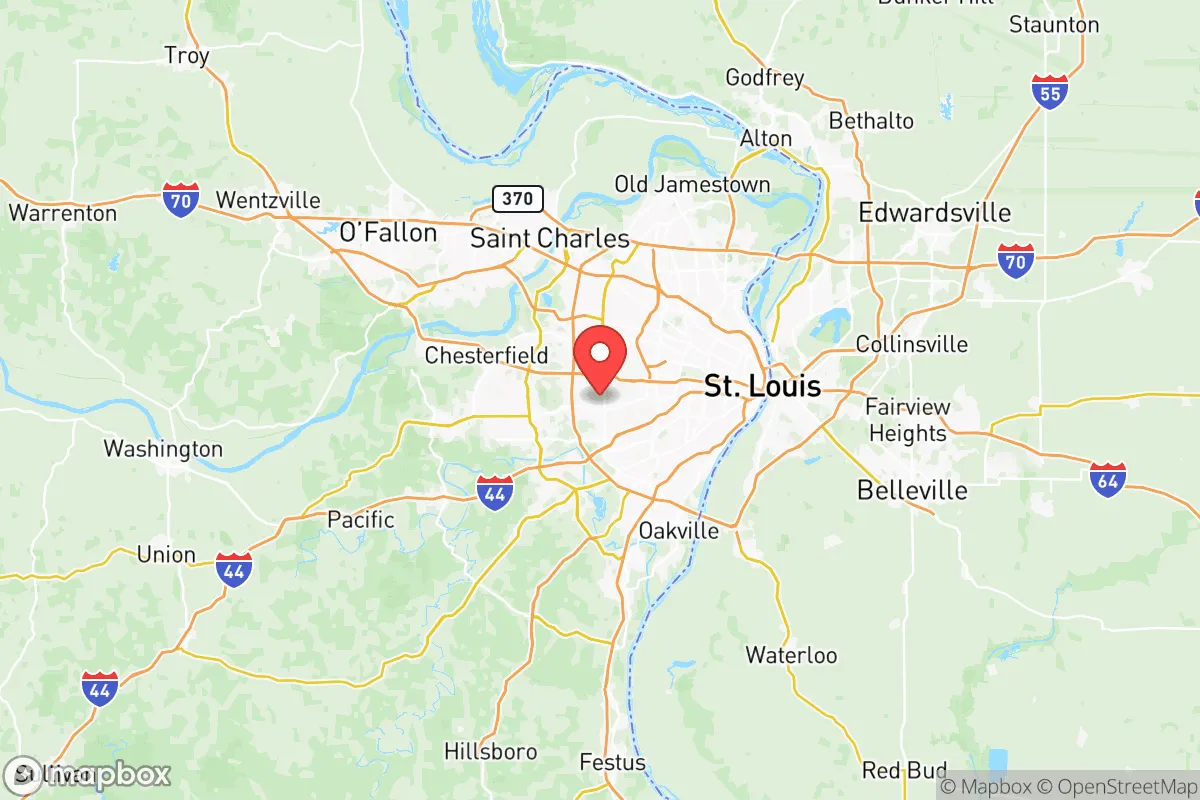
Photo: Wikipedia
Personal Sovereignty in St Louis County
Viable for self-reliance. Generally workable, though some barriers may limit total independence.
What does Personal Sovereignty tell us?
Personal Sovereignty measures your capacity for self-reliance and independence with minimal government friction. Higher scores mean fewer barriers between you and the way you want to live... but it assumes you have the space you need and good neighbors.
What does this tell us?
Personal Sovereignty measures your capacity for self-reliance and independence with minimal government friction. Higher scores mean fewer barriers between you and the way you want to live... but it assumes you have the space you need and good neighbors.
State Policy
Energy independence: Importer (15% of energy produced in-state)
Personal Liberty
Homesteading

Personal Liberty Analysis
St. Louis County presents a deeply mixed picture for those prioritizing personal sovereignty, where the autonomy you can secure depends almost entirely on which municipality you choose to anchor yourself in. While Missouri is a "Show-Me State" with a strong cultural streak of independence, St. Louis County's patchwork of over 90 municipalities creates a fragmented landscape where your rights can expand or contract by a few miles. For the survivalist or prepper, the key takeaway is that the county's urban core and inner-ring suburbs carry a heavier regulatory hand, while the western and northern exurbs offer a far more permissive environment for self-reliant living.
Tax burden and regulatory posture across St. Louis County municipalities
Missouri's state-level posture is relatively friendly to personal sovereignty, with no state income tax on capital gains and a flat 4.0% income tax rate that avoids the progressive creep seen in neighboring states. However, St. Louis County itself imposes a combined sales tax rate that can reach 9.488% in some municipalities like St. Ann and Overland, one of the highest in the state. Property taxes are another story: the county's effective rate averages around 1.0% to 1.2% of assessed value, but this varies wildly. In unincorporated areas like Fenton or Eureka, you'll find lower mill levies and fewer municipal fees compared to incorporated cities like Clayton or University City, which layer on their own property taxes and business license fees. The regulatory posture is similarly uneven: Wildwood and Pacific in the western part of the county have a reputation for minimal zoning enforcement and a "live and let live" attitude, while Richmond Heights and Brentwood enforce strict building codes and occupancy limits that can frustrate anyone trying to set up a workshop or multi-generational homestead. For those seeking to minimize government overhead, the unincorporated areas and smaller towns west of Interstate 270 are the clear winners.
Self-defense rights and gun law specifics in St. Louis County
Missouri is a constitutional carry state, meaning no permit is required to carry a concealed firearm for anyone legally allowed to possess one, and this applies uniformly across St. Louis County. However, the practical reality of exercising that right differs sharply by location. In St. Louis City (separate from the county), the police department has a history of aggressive enforcement and a higher crime rate that can make lawful gun owners feel targeted, but within the county, sheriff's deputies in Jefferson County and St. Charles County (adjacent) are known for a more pro-2A stance. Within St. Louis County itself, the St. Louis County Police Department generally respects state preemption laws, but municipalities like Clayton and University City have been known to push the envelope with local ordinances that create de facto restrictions, such as "no guns" signs in public parks that carry legal weight under state law. Stand-your-ground laws are fully in effect, and there is no duty to retreat in any place you are lawfully present. For the prepper, the key is to avoid the urban core: Ferguson and Jennings have seen heightened tensions between residents and local police, making it prudent to choose a municipality with a sheriff's office that explicitly supports constitutional carry, such as the unincorporated areas patrolled by the county police's western precincts.
Self-reliance and homesteading viability: lot sizes, zoning, and off-grid feasibility
St. Louis County's zoning code is a labyrinth, but the pattern is clear: the farther west you go, the more room you have to breathe. In Wildwood, minimum lot sizes of 3 acres are common in the rural residential zones, and many properties sit on 5 to 10 acres with no HOA to dictate what you can do. Eureka and Pacific offer similar opportunities, with some parcels zoned for agricultural use that allow chickens, goats, and even small livestock without a special permit. In contrast, inner-ring suburbs like Maplewood or Brentwood have lot sizes under a quarter-acre and strict prohibitions on anything resembling a homestead—no backyard chickens, no rainwater collection systems, and no sheds over a certain size without a permit. Off-grid feasibility is limited by county building codes that require connection to the electrical grid for new construction in most areas, but unincorporated Jefferson County (just south of St. Louis County) and parts of Franklin County (west of Pacific) allow fully off-grid setups with solar and well water. Within St. Louis County proper, rural areas near the Meramec River in the southwest corner offer the best chance for a self-reliant lifestyle, with well water, septic systems, and minimal code enforcement. For the prepper, the sweet spot is a property in unincorporated St. Louis County west of Highway 109, where you can legally store fuel, maintain a generator, and keep a garden without a municipal inspector knocking.
Personal liberties: parental rights, medical autonomy, speech, and property
Missouri has strong state-level protections for parental rights, including a law that requires schools to notify parents of any changes in a child's health or well-being, and a ban on gender transition procedures for minors that took effect in 2023. These laws apply uniformly across St. Louis County, but enforcement varies: Clayton and University City school districts have been vocal in their opposition to these state mandates, creating a tension where parents may need to be more vigilant. Medical autonomy is similarly mixed: Missouri has no state-level vaccine mandate for adults, but some St. Louis County employers and healthcare systems (like BJC HealthCare) have imposed their own requirements, limiting choice for those who refuse. Property rights are generally strong, with no statewide rent control and minimal eminent domain abuse, but municipalities like St. Ann and Bridgeton have aggressive code enforcement that can lead to fines for unkempt lawns or unpermitted structures. Free speech is protected under the First Amendment, but the county's urban areas have seen local ordinances targeting "disorderly conduct" that can be used to suppress political speech, particularly around protests. For the individualist, the western exurbs offer the most breathing room, where local governments are less inclined to meddle in personal choices.
Overall, St. Louis County is a study in contrasts for the sovereignty-minded. The state-level framework is solid—constitutional carry, parental rights, low income taxes—but the county's fragmented municipal structure means you must choose your location with surgical precision. Wildwood, Eureka, and Pacific offer a level of autonomy that rivals rural Missouri, while Clayton, University City, and Richmond Heights represent the kind of municipal overreach that drives preppers to the hills. Compared to the regulatory stranglehold of Cook County, Illinois, or the tax burden of New York's suburbs, St. Louis County is a relative haven—but only if you know where to plant your flag. For the serious survivalist, the western fringe of the county, just shy of the Ozark foothills, is where you'll find the balance of legal freedom and practical self-reliance that makes this area worth a hard look.

* Values derived from national, state, county, city and local statistics and may differ in a specific area. Last updated: 2026-05-12T04:38:01.000Z
Narrative content on this page is AI-generated and may contain mistakes. Verify any details that matter before acting on them.
ReloMaps may earn a commission from affiliate links at no extra cost to you.

