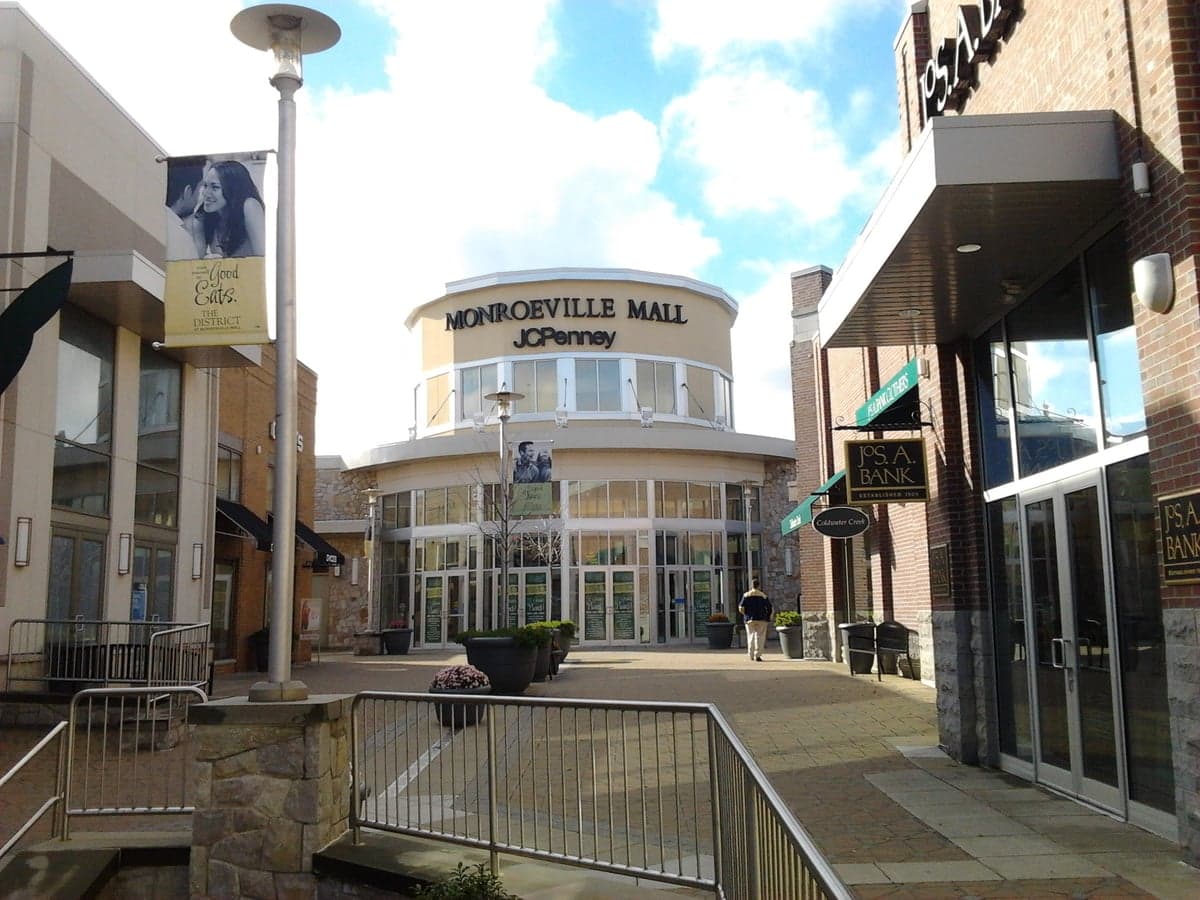
Photo: Wikipedia
Strategic Assessment of Monroeville, PA
Meaningful friction. Expect exposure to either population pressure, blast zones, or natural disaster risk. Consider buying a retreat property.
What does the Strategic Assessment tell us?
Our Strategic Assessment grades tactical survivability of an area. Major population centers, military targets, fallout zones, natural disasters, and border exposure all drive risk — lower exposure means a more defensible position in a crisis.
This is heavily inspired by Joel Skousen's Strategic Relocation book. Highly recommended you checkout the book ($)What does this tell us?
Our Strategic Assessment grades tactical survivability of an area. Major population centers, military targets, fallout zones, natural disasters, and border exposure all drive risk — lower exposure means a more defensible position in a crisis.
This is heavily inspired by Joel Skousen's Strategic Relocation book. Highly recommended you checkout the book ($)Strategic Pillars

Key Distances
Regional Safe Places
Below is our recommended "safe zones" in Pennsylvania and the surrounding area based on our strategic heuristics. For most people, it's unrealistic to live in a “safe zone” full-time due to work, family or other personal reasons. They tend to be more rural. However, many of these areas are perfect for second homes and retreat properties that double as a vacation home or even a short-term rental.
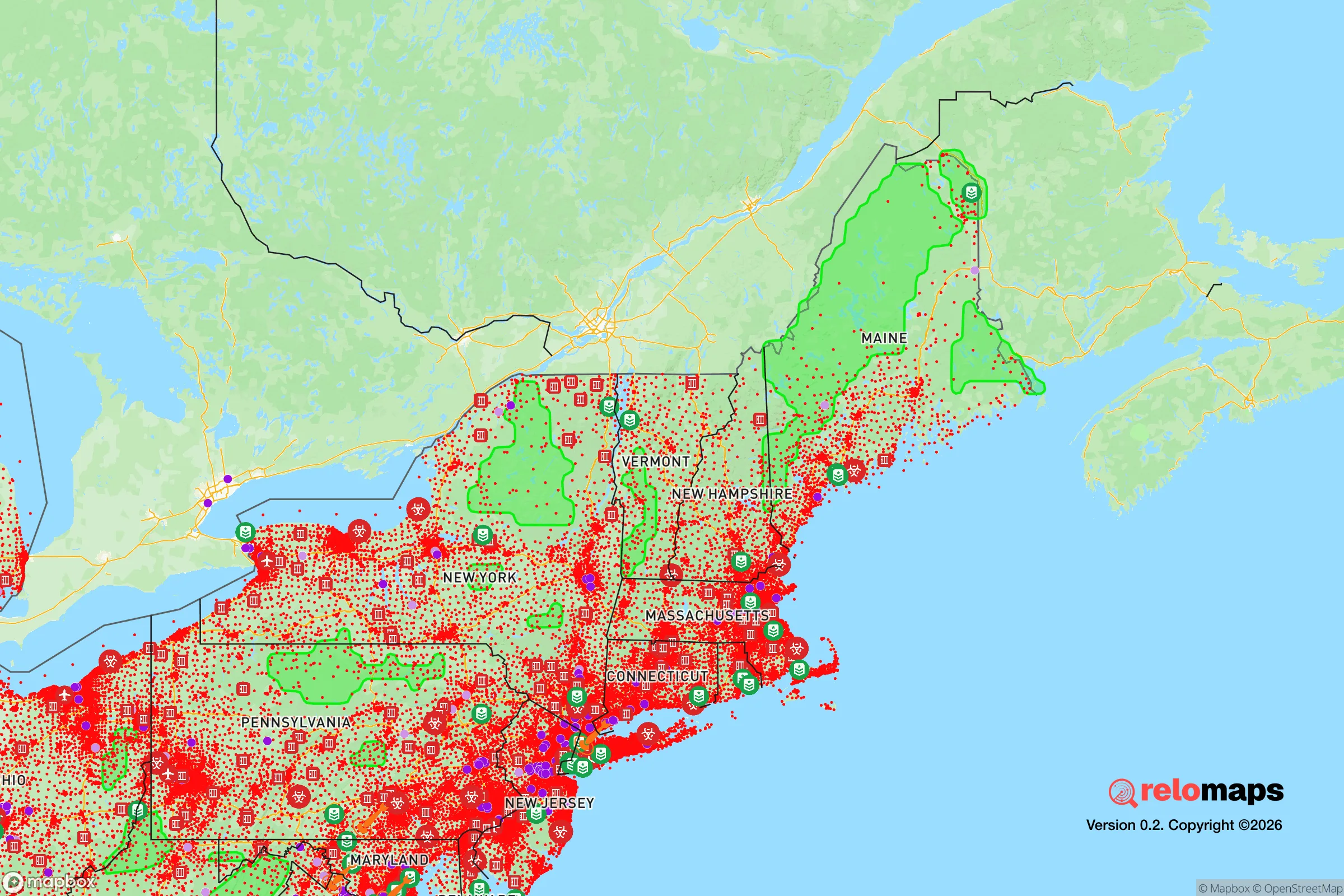
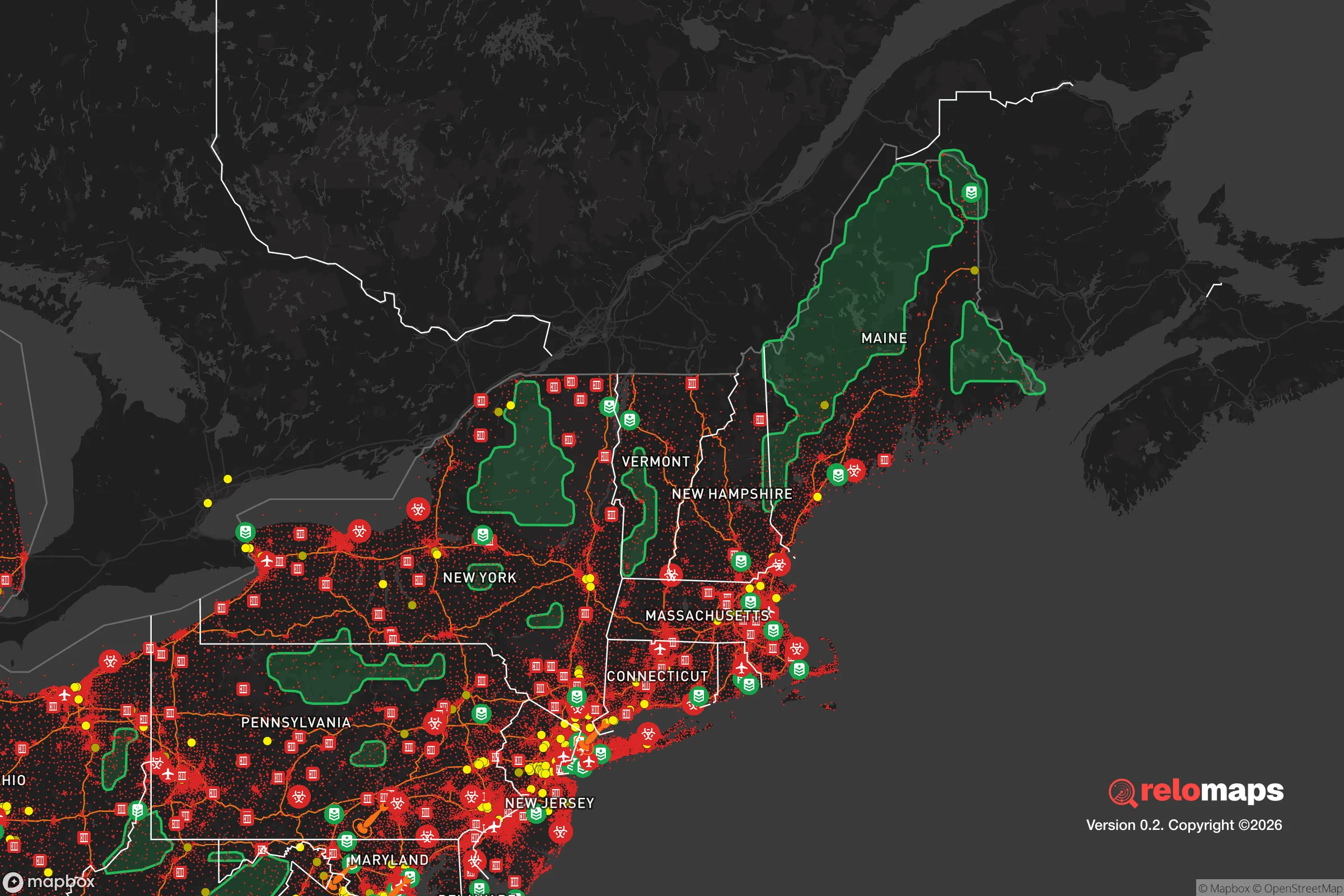


Important Note: For informational purposes only. This does not mean nothing bad ever happens in the green zones. Please use common sense. This is based on public data and modeled with AI. We tried to take a conservative approach but mistakes happen. We update this regularly as new information becomes available.
Solar Generator Recommendations
Backup power matters more here than in safer locations. We've picked three solar generators across budgets and capacity tiers — start with the budget unit if you only need a few essentials, or step up if you want to run a fridge and HVAC for days at a time.

Jackery Portable Power Station Explorer 300
Budget OptionPower on the Go: Weighing only 11 lbs, it's convenient to set up and store with book-sized foldable solar panels

BLUETTI Portable Power Station AC180
Designed for both indoor and outdoor scenarios, AC180 is highly capable as it has a robost capacity and continuous output power.

EF ECOFLOW DELTA Pro Ultra Power Station
Upgraded PickEcoFlow DELTA Pro Ultra is a whole-home energy system designed to grow with your family. Integrated with the Smart Home Panel 2, it scales to meet your evolving energy needs — keeping your home powered, intelligent, and secure through every stage of life.
We earn a commission, at no additional cost to you.
Strategic Assessment Analysis
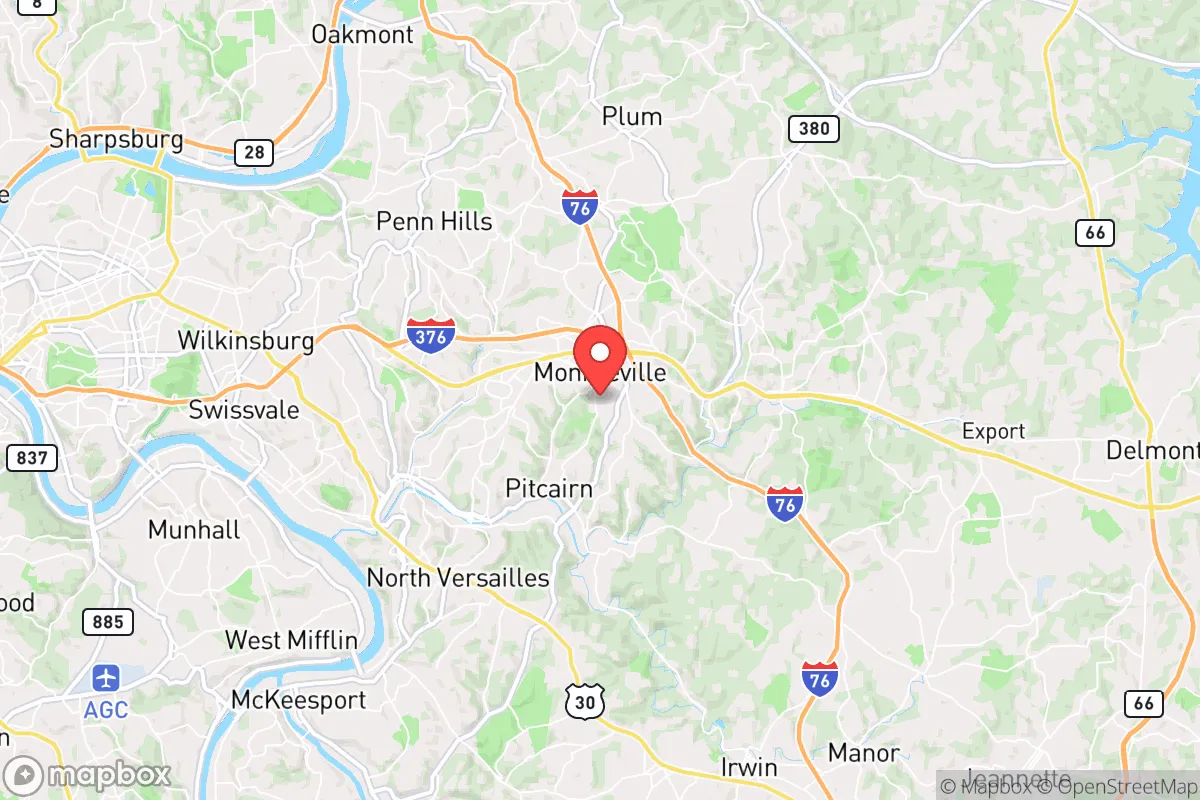
Monroeville, Pennsylvania, sits in a precarious but potentially workable position for someone thinking long-term about resilience. It’s not a bunker town, but it’s not a dead-end either. The real advantage here is location: you’re close enough to Pittsburgh’s medical and industrial infrastructure to tap into serious resources, but far enough east on the I-76 corridor that you’re not in the blast shadow of the city’s core. The terrain—rolling hills, wooded lots, and a mix of suburban and semi-rural pockets—gives you options for layering your defenses and supplies. For a conservative-leaning relocator who sees the writing on the wall regarding civic stability, Monroeville offers a decent balance of access and buffer, provided you’re willing to put in the work.
Geographic position and natural advantages for long-term security
Monroeville sits about 15 miles east of downtown Pittsburgh, tucked into the Allegheny Plateau. That means elevation—most of the borough is 1,100 to 1,200 feet above sea level, which gives you natural vantage points and reduces flood risk compared to river towns like Wilkinsburg or McKeesport. The area is heavily wooded with mixed hardwoods, offering decent cover and a renewable source of firewood. Water is the real asset here: the Turtle Creek watershed runs through the southern edge, and there are numerous small streams and ponds scattered through the surrounding communities. You’re also within 30 minutes of the Youghiogheny River and the Monongahela, both of which are reliable water sources if you’ve got filtration gear. The soil is mostly clay-loam, not great for large-scale farming, but manageable for raised beds or greenhouse setups. For a prepper, the key takeaway is that Monroeville isn’t a desert or a floodplain—it’s a defensible hilltop with decent hydrology.
Risks, exposures, and proximity to fallout-relevant landmarks
Let’s be blunt: Monroeville’s biggest vulnerability is its proximity to Pittsburgh. The city is a major transportation hub with rail yards, chemical plants, and the Pittsburgh International Airport—all potential targets for a mass casualty event or a coordinated attack. The borough itself is less than 10 miles from the Edgar Thomson Steel Works in Braddock, a critical industrial site that could be a secondary target. If you’re worried about fallout from a nuclear detonation or a dirty bomb, the prevailing winds in western Pennsylvania blow west to east, meaning Monroeville is downwind of Pittsburgh. That’s a serious concern. You’d need to plan for shelter-in-place with HEPA filtration and at least two weeks of supplies. On the plus side, Monroeville is not near any major military bases (the closest is the Pittsburgh Air Reserve Station, about 20 miles west) and isn’t a population center that would draw a direct strike. The real risk is secondary: civil unrest spilling out of Pittsburgh along the I-376 corridor. The borough’s position as a suburban bedroom community means it could become a chokepoint for refugees fleeing the city. If you’re looking for a place that’s truly off the grid, this isn’t it. But if you’re willing to monitor the situation and have a bug-out route east toward the Allegheny Mountains, Monroeville can work as a forward operating base.
Practical resilience for a relocator: food, water, energy, and defensibility
For day-to-day prepping, Monroeville has some solid bones. The borough has a municipal water system drawing from the Pittsburgh Water and Sewer Authority, which is vulnerable to disruption, but many homes in the surrounding townships (like Murrysville and Plum) have private wells. If you’re buying property, prioritize a house with a well and a septic system—that’s your baseline for water independence. Food-wise, you’re within 20 minutes of multiple grocery chains (Giant Eagle, Aldi, Walmart), but the real value is in the local farm network. The East End Food Co-op in Pittsburgh is a good source for bulk grains and dried goods, and there are several farmers’ markets in the area from May through October. For long-term storage, you’ll want to invest in a root cellar or a cool basement—Monroeville’s older homes often have them. Energy is a mixed bag. The grid is reliable by Rust Belt standards, but winter storms can knock out power for days. Solar is viable—the area gets about 160 sunny days per year, which is average for Pennsylvania—but you’ll need battery storage to handle the cloudy stretches. Natural gas is widely available, so a dual-fuel generator is a smart play. Defensibility is where Monroeville gets interesting. The borough is a patchwork of cul-de-sacs, wooded lots, and commercial strips. That makes it hard to secure a single perimeter, but it also means there are multiple egress routes. The key is to pick a property on a dead-end road with a clear line of sight to the main approach. Avoid anything directly on Route 22 or the Parkway East—those are evacuation corridors that will turn into parking lots during a crisis. Look for homes in the northern or eastern sections, closer to the Murrysville line, where lot sizes increase and density drops.
Overall, Monroeville is a pragmatic choice for a relocator who wants to stay within striking distance of Pittsburgh’s hospitals and supply chains but isn’t naive about the risks. It’s not a survivalist paradise—you won’t find 40 acres of off-grid farmland here—but it’s a solid suburban base with good water access, decent terrain, and a community that’s still conservative enough to value self-reliance. The real test will be your willingness to invest in hardening your property: reinforced doors, a backup water system, and a plan for getting out if the city goes sideways. If you’re looking for a place that balances access with a fighting chance, Monroeville deserves a serious look. Just don’t expect it to be a secret—too many people have already figured out that the eastern suburbs are the best bet in Allegheny County.

* Values derived from national, state, county, city and local statistics and may differ in a specific area. Last updated: 2026-05-01T11:48:32.000Z
Narrative content on this page is AI-generated and may contain mistakes. Verify any details that matter before acting on them.
ReloMaps may earn a commission from affiliate links at no extra cost to you.

