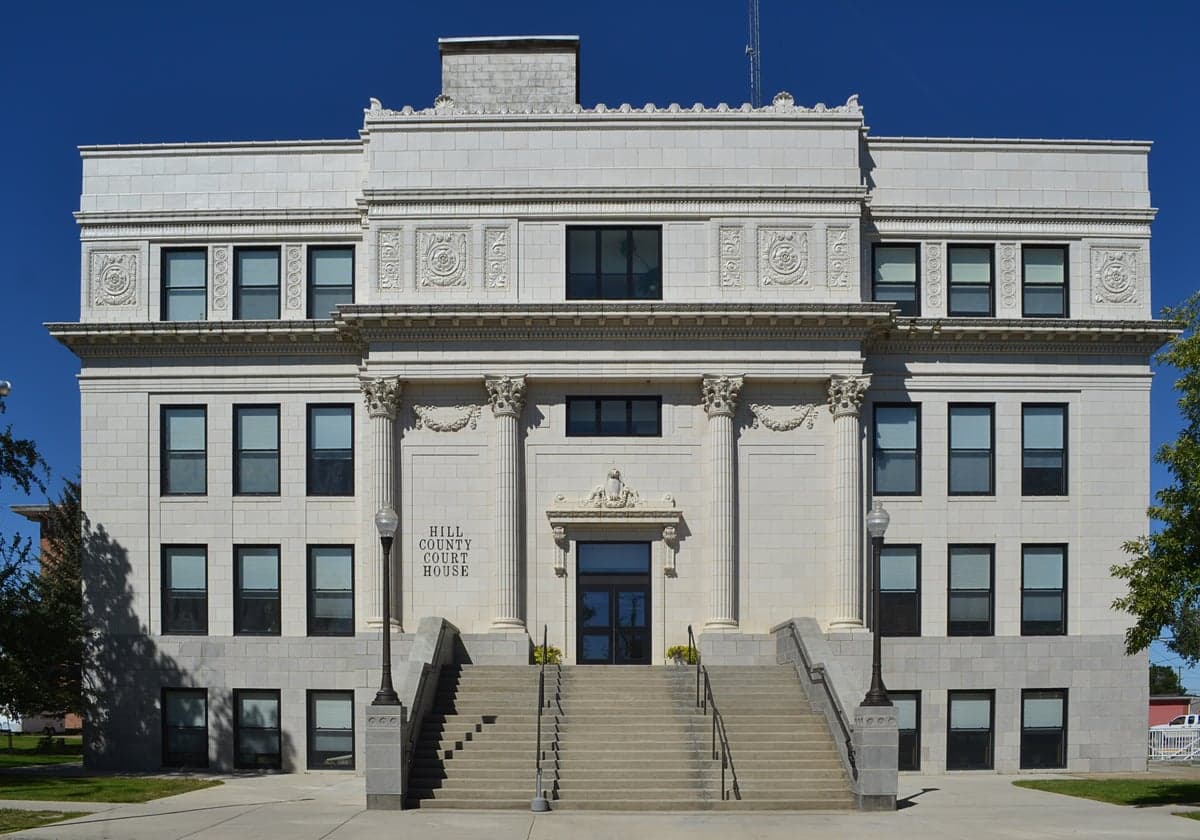
Photo: Wikipedia
Demographics of Hill County
Affluence Level in Hill County
A below-average socioeconomic profile. Incomes, home values, and educational attainment trail the U.S., with higher poverty and unemployment.
People of Hill County
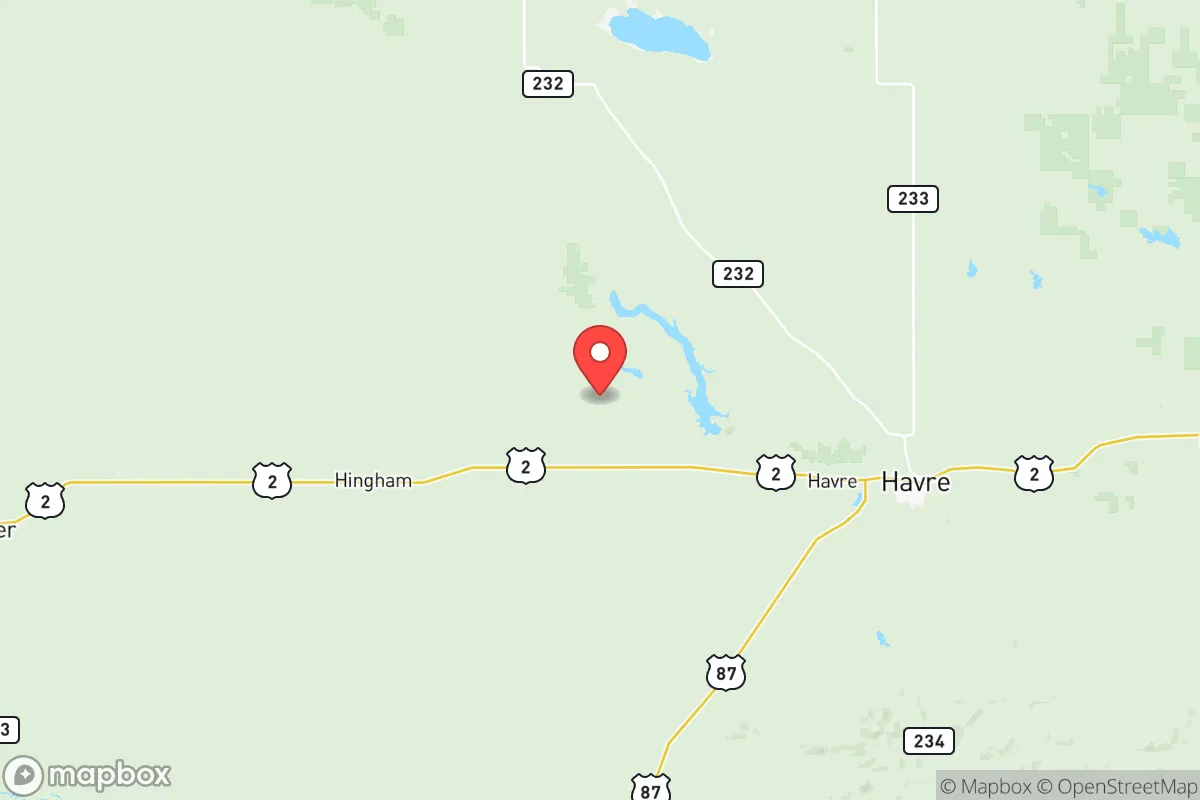
Hill County, Montana, is a place where the population has remained remarkably stable and predominantly white, with a significant Native American presence that shapes its character. The county's 16,260 residents are spread across a landscape anchored by the city of Havre, the county seat and economic hub, with smaller communities like Box Elder, Gildford, and Rudyard dotting the Hi-Line. Distinctive identity markers include a strong agricultural heritage, a deep connection to the nearby Rocky Boy’s Indian Reservation, and a cultural identity that blends Northern Plains ranching traditions with the legacy of railroad and military history.
Settlement & growth (pre-1960)
The human history of Hill County begins with the Indigenous peoples of the Northern Plains. The area was traditional territory of the Assiniboine (Nakoda) and Gros Ventre (Atsina) nations, who followed bison herds and lived in semi-nomadic patterns along the Milk River. The arrival of European fur traders in the early 1800s, including those from the Hudson’s Bay Company and the American Fur Company, established trading posts along the river, but permanent non-Native settlement did not begin in earnest until the late 19th century.
The first major wave of American settlement came with the construction of the transcontinental railroad in the 1880s. The Great Northern Railway, under James J. Hill, laid tracks across northern Montana, and the town of Havre was founded in 1887 as a division point. This brought a diverse mix of workers: Irish and German immigrants laid the rails, while Scandinavian settlers—mostly Swedes, Norwegians, and Danes—arrived to homestead the surrounding prairie under the Homestead Act. These groups established farming communities like Gildford (founded 1910) and Rudyard (founded 1910), where descendants of these early homesteaders still live today. The Havre Daily News and the historic Havre Beneath the Streets tunnels, built by Chinese and European laborers, testify to this era’s ethnic mix.
A second wave arrived during the Homestead Boom of 1909-1918, when the Enlarged Homestead Act offered 320 acres per claim. This drew farmers from the Upper Midwest—many of Norwegian and German descent—as well as a smaller number of Russian-German Mennonites who settled near Box Elder. The town of Hingham (founded 1912) and Laredo (now a ghost town) grew as grain elevators and supply points. By 1920, Hill County’s population had peaked at over 16,000, driven entirely by dryland wheat farming.
The Dust Bowl and Great Depression of the 1930s hit the Hi-Line hard, causing a population decline that lasted decades. Many homesteaders abandoned their claims, and the county’s population dropped to around 13,000 by 1940. However, the establishment of Malmstrom Air Force Base near Great Falls (south of the county) and the continued operation of the railroad in Havre provided some stability. The Rocky Boy’s Indian Reservation, established in 1916 for the Chippewa-Cree people, became a permanent home for Native families who had been displaced from other areas, and the community of Box Elder grew as the reservation’s primary settlement. By 1960, the population had stabilized at roughly 14,000, with a demographic profile that was overwhelmingly white (over 95%) and a small but significant Native American minority.
Modern era (post-1965)
The 1965 Hart-Cellar Act had minimal impact on Hill County. Unlike urban centers in the West, the county attracted virtually no new immigrant groups from Asia, Latin America, or Africa. The foreign-born population today stands at just 0.3%, one of the lowest rates in Montana. The county’s racial composition has shifted only slightly since 1965, driven almost entirely by natural increase and domestic migration patterns.
The most significant demographic change has been the growth of the Native American population. The Chippewa-Cree community on the Rocky Boy’s Reservation has grown steadily, and today Native Americans make up a substantial share of the county’s population—though exact figures are complicated by off-reservation residence in Havre. The town of Box Elder has expanded as a residential and commercial center for the reservation, while Havre has seen an increase in Native students at Montana State University-Northern and in the local workforce.
Domestic migration has been modest. The county has not experienced the rapid growth seen in western Montana’s resort towns (Bozeman, Missoula) or the Bakken oil fields to the east. Instead, Hill County has seen a slow, steady outflow of young adults seeking opportunities in larger cities, balanced by some retirees and remote workers drawn by low housing costs. The Hispanic population has grown slightly, from under 1% in 1990 to 3.4% today, largely through agricultural labor and service-sector jobs in Havre. The Black and East/Southeast Asian populations remain negligible at 0.2% each, and the Indian subcontinent population is effectively zero.
Suburbanization has been limited. Havre’s newer housing developments have spread south and east of the historic downtown, but the county remains rural. The communities of Gildford and Rudyard have seen population declines as farm consolidation reduces the need for rural residents, while Hingham and Laredo have become near-ghost towns. The county’s college-educated share is 25.6%, below the national average, reflecting the agricultural and blue-collar economic base.
The future
Hill County’s population is projected to remain stable or decline slightly over the next 10-20 years. The county’s birth rate is above the national average, but out-migration of young adults continues to offset natural increase. The Native American population is likely to grow as a share of the total, given higher birth rates on the Rocky Boy’s Reservation, while the white population will age and shrink. The Hispanic share may rise modestly, but will likely remain below 5%.
The county is not becoming more diverse in the way that urban America is. The cultural identity is evolving primarily through the increasing visibility and political influence of the Chippewa-Cree community, rather than through immigration. Havre will remain the economic and social center, while smaller towns like Box Elder may see modest growth as the reservation develops housing and infrastructure. The county’s agricultural base will continue to consolidate, meaning fewer but larger farms.
For someone moving in now, Hill County offers a stable, low-cost, and culturally homogeneous environment with a strong sense of place. The population is not growing, but it is not declining sharply either. The key dynamic is the gradual integration of the Native American community into the broader civic life of the county, alongside the persistence of a white, rural, agricultural identity that has defined the Hi-Line for over a century.

* Values derived from national, state, county, city and local statistics and may differ in a specific area. Last updated: 2026-06-11T20:29:00.000Z
Narrative content on this page is AI-generated and may contain mistakes. Verify any details that matter before acting on them.
ReloMaps may earn a commission from affiliate links at no extra cost to you.

