Photo: Wikipedia
Demographics of Pondera County
Affluence Level in Pondera County
A low-income area with significant economic hardship. Household wealth and educational attainment are well below national averages.
People of Pondera County
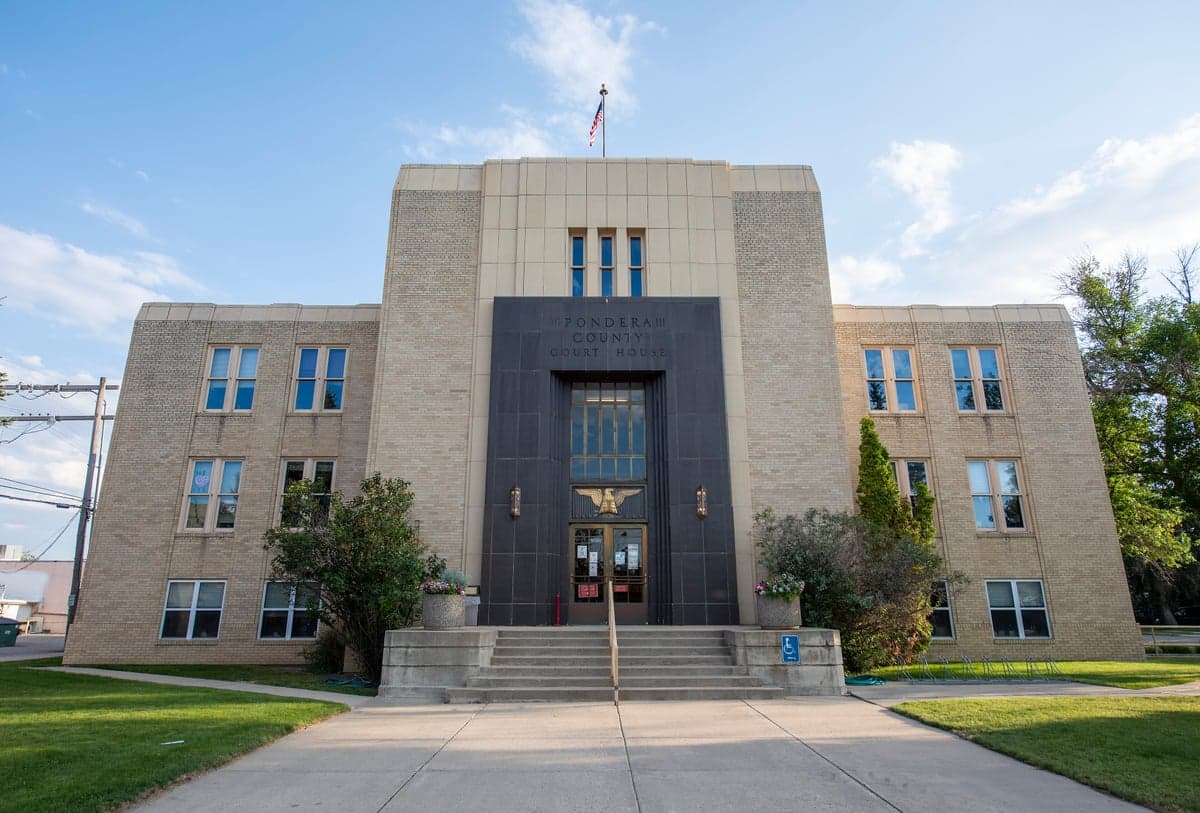
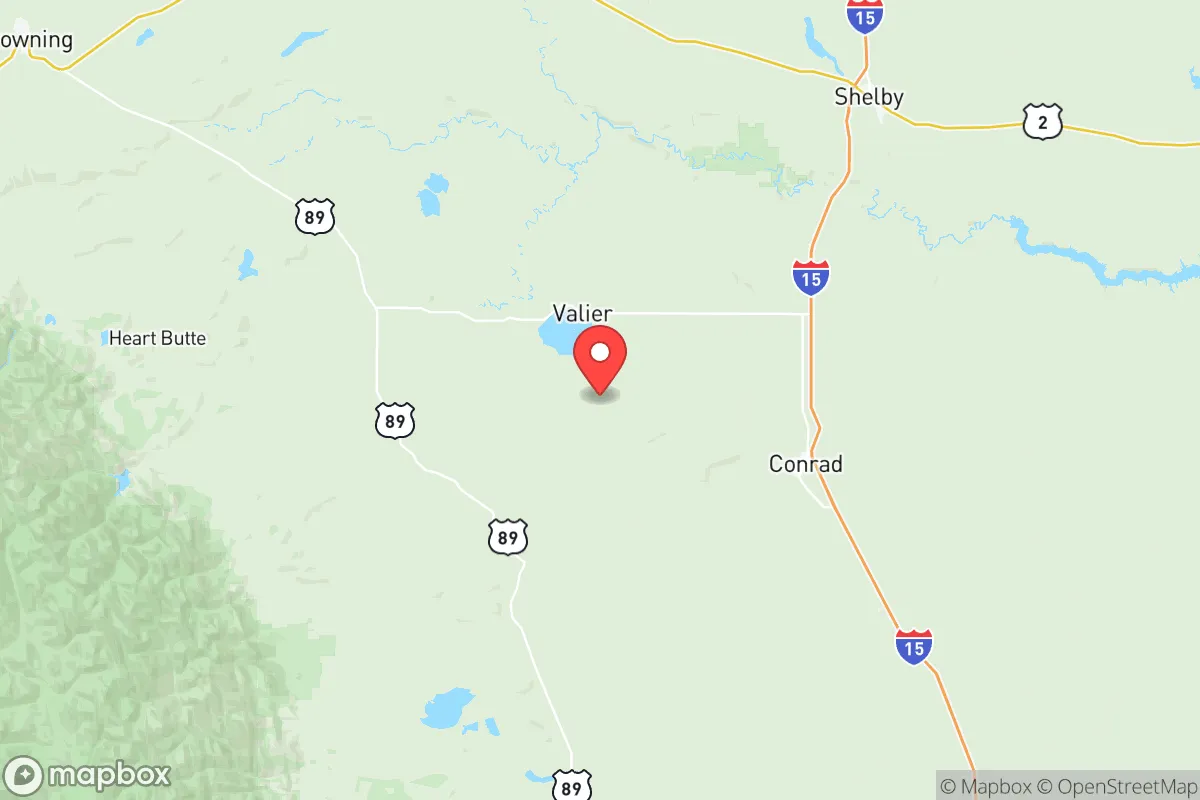
The people of Pondera County, Montana today number 6,012, making it one of the state's more sparsely populated counties, with a density of roughly 2.5 people per square mile. The population is predominantly white (79.0%), with a very small Hispanic share (2.3%) and a foreign-born population of just 0.8%, reflecting a community shaped by deep-rooted agricultural settlement rather than recent immigration. The county's distinctive identity is tied to its rural, agrarian character, with the towns of Conrad (the county seat) and Valier serving as the primary hubs for a population that values self-reliance, outdoor recreation, and a slower pace of life. With only 19.5% of adults holding a college degree, the workforce is heavily oriented toward farming, ranching, and energy extraction, and the area retains a strong sense of pioneer heritage.
Settlement & growth (pre-1960)
Long before European settlement, the area now known as Pondera County was part of the traditional territory of the Blackfeet Nation (Niitsitapi), who followed bison herds across the vast plains and along the Rocky Mountain Front. The Blackfeet presence remains central to the region's history, and the county's name itself is derived from the Blackfeet word "Pondera," meaning "by the water" or "near the river," referencing the many creeks and the Two Medicine River that drain the area. The first non-Native incursions came with fur traders and trappers in the early 1800s, but permanent American settlement did not begin until the late 19th century, following the opening of the Blackfeet Reservation to homesteading and the arrival of the Great Northern Railway in the 1880s.
The major wave of settlement occurred between 1890 and 1920, driven by the federal Homestead Acts, which offered 160 acres of land to anyone willing to farm it. Homesteaders—primarily of Northern European stock, including Germans, Scandinavians (Norwegians and Swedes), and Irish—poured into the region, establishing farms and small towns. Conrad was founded in 1889 as a railroad stop and quickly became the commercial center, named after a Great Northern Railway official. Valier, founded in 1909, grew as a farming community after the Valier Irrigation Project brought water to the dry plains, enabling wheat and barley cultivation. Other smaller settlements like Dupuyer (established 1884) and Brady (founded 1910) served as rural service centers for the surrounding homesteads. The population peaked at around 8,000 in the 1930s, but the Dust Bowl and the Great Depression drove many families off the land, and the county has experienced gradual population decline ever since.
By 1960, Pondera County's population had stabilized at roughly 6,700, with an economy anchored in wheat farming, cattle ranching, and some oil and gas exploration. The Blackfeet Reservation, which borders the county to the north, remained a significant presence, though the county's population was overwhelmingly white and native-born. The post-World War II era saw little suburbanization; instead, the trend was out-migration of young people to larger cities like Great Falls and Billings for education and employment.
Modern era (post-1965)
The 1965 Hart-Cellar Act, which reshaped U.S. immigration, had virtually no impact on Pondera County. The foreign-born population today stands at just 0.8%, and the county has not experienced the waves of immigration from Latin America, Asia, or Africa that have transformed many other parts of the United States. The Hispanic share of the population is only 2.3%, and East/Southeast Asian residents account for just 0.2%, with Indian-subcontinent residents at 0.1%. The Black population is effectively zero. This demographic stability reflects the county's limited economic opportunities and remote location, which have not attracted new immigrant communities.
Instead, the modern era has been defined by continued domestic out-migration and an aging population. Young adults leave for college or jobs in larger Montana cities or out of state, and the county's population has slowly declined from its 1960 level of 6,700 to 6,012 today. The towns of Conrad and Valier have seen their downtowns shrink, with many storefronts vacant, though they remain functional service centers for the surrounding agricultural area. The county has also seen a modest influx of retirees and second-home buyers drawn to the area's low cost of living and access to outdoor recreation along the Rocky Mountain Front, but this has not been enough to reverse the overall population decline. The Blackfeet Nation continues to be a cultural and economic presence, though most tribal members live on the adjacent reservation rather than within Pondera County itself.
The future
Pondera County's population is projected to continue its slow decline over the next 10 to 20 years, barring a major economic shift. The county is not becoming more diverse; the white share of the population is likely to remain above 75%, and the foreign-born share will stay below 1%. The Hispanic population may grow slightly as agricultural workers and their families settle in the area, but the numbers will remain small. The county's cultural identity—rooted in ranching, farming, and conservative values—is unlikely to change significantly, as new residents tend to be retirees or remote workers seeking the same rural lifestyle that has defined the area for a century.
The most significant demographic trend is aging: the median age in Pondera County is around 45, higher than the national average, and the school-age population is shrinking. Conrad High School and Valier High School have seen declining enrollment, and some rural elementary schools have closed. If the county is to stabilize or grow, it will likely require new economic drivers—such as expanded energy development (oil and gas in the Kevin-Sunburst field), tourism along the Rocky Mountain Front, or the growth of remote work attracting younger families. For now, the county remains a place where the population is thinning, and the communities that remain are tight-knit, resilient, and deeply connected to the land.
For someone moving in now, Pondera County offers a genuine rural Montana experience: quiet, affordable, and safe, with strong community ties and access to some of the most spectacular scenery in the Lower 48. But it is not a place of rapid growth or demographic change. The population is stable in its decline, and the character of the county—white, native-born, agricultural, and conservative—will likely persist for decades to come. New residents should expect to find a place where neighbors know each other, where the pace of life is dictated by the seasons, and where the pioneer spirit of the original homesteaders still lingers in the wind across the wheat fields.

* Values derived from national, state, county, city and local statistics and may differ in a specific area. Last updated: 2026-08-08T11:39:45.000Z
Narrative content on this page is AI-generated and may contain mistakes. Verify any details that matter before acting on them.
ReloMaps may earn a commission from affiliate links at no extra cost to you.

