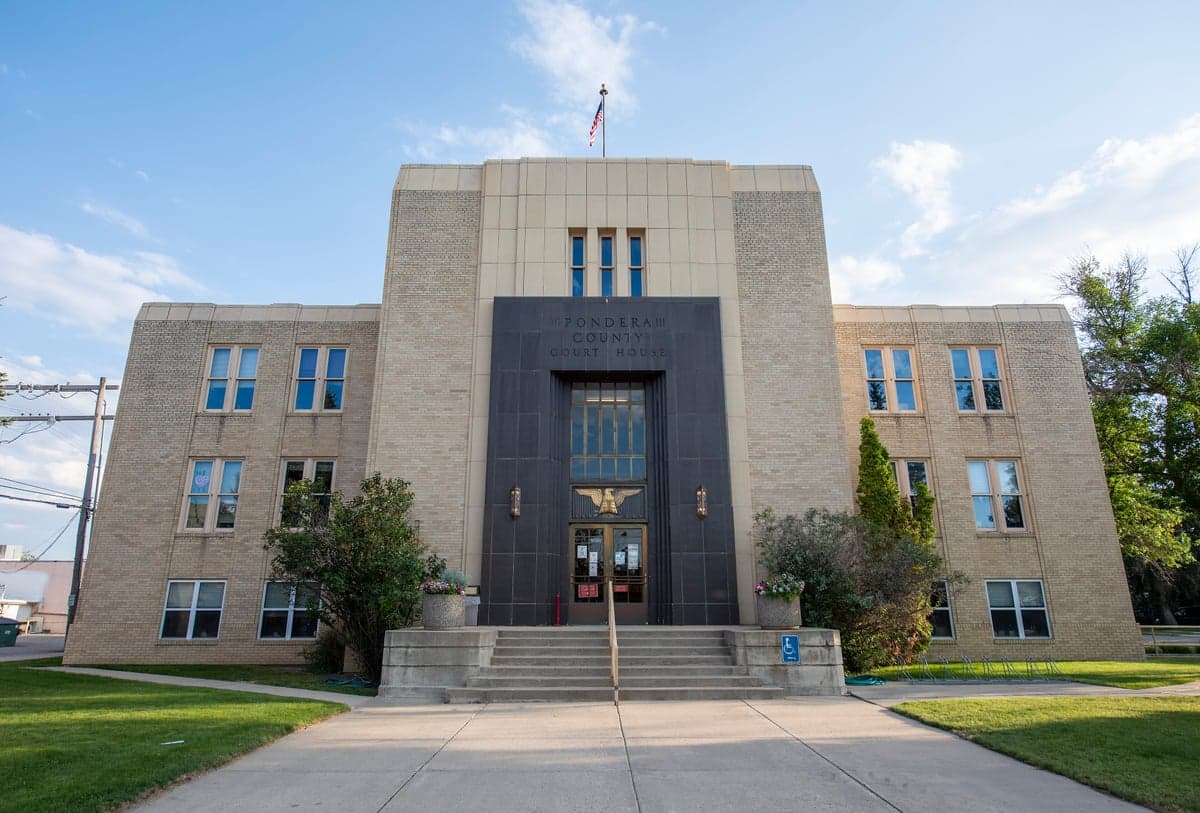
Photo: Wikipedia
Personal Sovereignty in Pondera County
Viable for self-reliance. Generally workable, though some barriers may limit total independence.
What does Personal Sovereignty tell us?
Personal Sovereignty measures your capacity for self-reliance and independence with minimal government friction. Higher scores mean fewer barriers between you and the way you want to live... but it assumes you have the space you need and good neighbors.
What does this tell us?
Personal Sovereignty measures your capacity for self-reliance and independence with minimal government friction. Higher scores mean fewer barriers between you and the way you want to live... but it assumes you have the space you need and good neighbors.
State Policy
Energy independence: Net exporter (120% of energy produced in-state)
Personal Liberty
Homesteading

Personal Liberty Analysis
Pondera County, Montana, offers one of the most permissive personal sovereignty environments in the lower 48, characterized by minimal county-level regulation, a state preemption framework that limits local government overreach, and a culture that prizes self-reliance. The county seat, Conrad, along with smaller communities like Valier, Dupuyer, and Brady, operate under a light-touch governance model where property rights, firearm ownership, and personal lifestyle choices face few bureaucratic hurdles. For individuals and families seeking maximum autonomy, Pondera County represents a strategic choice within a state already ranked among the most freedom-oriented in the nation.
Tax burden and regulatory posture in Pondera County
Montana imposes no state sales tax, and Pondera County keeps property taxes moderate relative to national averages. The county's mill levy for 2025-2026 sits at approximately 85 mills on residential property, translating to roughly $850 annually per $100,000 of assessed value — well below the national median. There is no county-level income tax, no inventory tax on businesses, and no personal property tax on vehicles beyond a modest annual registration fee. Regulatory posture is notably restrained: Pondera County has no county-wide building code for rural residential construction outside the incorporated towns of Conrad and Valier. In unincorporated areas like the farming communities of Ledger and the rural stretches along U.S. Highway 89, landowners can build dwellings without county plan review or permit fees, provided basic septic and well standards are met. Zoning is virtually nonexistent outside town limits; the county's planning department primarily handles subdivision review and does not enforce use-based restrictions on agricultural or residential property. This creates a regulatory environment where a family can purchase a 40-acre parcel near Dupuyer and begin construction with minimal government interaction — a sharp contrast to the permitting gauntlet common in western Montana counties like Missoula or Gallatin.
Self-defense and gun law specifics in Pondera County
Montana is a constitutional carry state, and Pondera County fully reflects that posture. No permit is required to carry a concealed firearm for any law-abiding adult 18 or older. The county sheriff's office in Conrad issues concealed carry permits for reciprocity purposes, but they are optional, not mandatory. Montana's Stand Your Ground law, codified at MCA 45-3-110, imposes no duty to retreat in any place where a person has a legal right to be, and self-defense immunity extends to civil liability. Pondera County's district court has historically applied this statute without the restrictive interpretations seen in some urban jurisdictions. The county has no local ordinances restricting magazine capacity, firearm types, or storage requirements — state preemption (MCA 7-5-103) prohibits any county or municipal government from enacting gun regulations stricter than state law. In practice, this means a resident in Valier or Brady can carry openly or concealed, own any legal firearm, and use deadly force in self-defense without fear of local ordinances overriding state protections. The county's rural character also means that shooting on private property is generally permitted, subject only to general discharge laws prohibiting firing across roads or within 150 yards of an occupied dwelling without permission.
Self-reliance and homesteading viability across Pondera County
Homesteading and off-grid living are not merely tolerated in Pondera County — they are the norm. Minimum lot sizes in unincorporated areas are 20 acres for a single-family dwelling without subdivision review, though many residents operate on smaller parcels grandfathered from earlier divisions. The county does not require connection to municipal water or sewer; private wells and septic systems are standard. Off-grid energy systems — solar panels, wind turbines, and battery storage — face no county permitting hurdles beyond standard electrical safety inspections required by the state. Conrad, the largest town with roughly 2,500 residents, offers municipal utilities but does not mandate hookup for properties outside its service area. Valier, a lakeside community of about 500, has a more compact town layout but still allows accessory dwelling units and home-based businesses with minimal red tape. Dupuyer and Brady, each with populations under 100, are essentially unregulated for homesteading purposes — residents commonly keep livestock, operate small workshops, and practice rainwater collection without county interference. The primary constraint is water availability: the county lies in a semi-arid region averaging 12-14 inches of precipitation annually, so well depth and yield are critical due diligence items. Soil quality varies from the irrigated croplands near the Marias River to the dryland wheat areas east of Conrad, but for a self-reliant household willing to drill a well and install solar, Pondera County presents one of the lowest regulatory barriers to off-grid living in the contiguous United States.
Personal liberties in Pondera County: parental rights, medical autonomy, and property
Montana's legal framework strongly supports parental rights in education and healthcare decisions. The state's parental rights statute (MCA 40-6-201) affirms that parents have the fundamental right to direct their children's upbringing, education, and medical care. Pondera County's school districts — Conrad Public Schools, Valier Public Schools, and Dupuyer's K-8 district — have not adopted the kind of divisive curriculum policies or mandatory health screenings seen in some coastal districts. Homeschooling is straightforward: parents file a simple notification with the county superintendent and administer their own assessments, with no state-mandated curriculum or home visits. Medical autonomy is similarly robust: Montana has no state-level vaccine mandate for adults, and while schools require standard immunizations for attendance, medical and religious exemptions are available. The county has no local health ordinances that restrict personal medical choices beyond state law. Property rights are strongly protected under Montana's Private Property Rights Protection Act, which requires government entities to compensate landowners for regulatory takings. Pondera County's planning board has not pursued the kind of land-use restrictions — such as wetland overlay zones, scenic easements, or agricultural buffers — that have generated litigation in more regulated counties. Speech and assembly rights face no local restrictions; the county has no noise ordinances that would prevent a resident from hosting public meetings or religious gatherings on their property.
Compared to other rural Montana counties, Pondera County's sovereignty environment is notably clean — no special district overlays, no county health department with enforcement authority over private property, and no municipal extraterritorial jurisdiction that could impose urban rules on rural landowners. It ranks alongside Liberty and Toole counties as one of the most hands-off jurisdictions in the state, while offering better access to services via Conrad's hospital, grocery stores, and county infrastructure. For a freedom-oriented household comparing locations, Pondera County delivers the substance of autonomy without the legal ambiguity found in counties where local ordinances nibble at the edges of state preemption. The trade-off is distance: Great Falls, the nearest city with major retail and medical specialists, is 75 miles southeast. But for those who prioritize personal sovereignty over convenience, that distance is a feature, not a bug.

* Values derived from national, state, county, city and local statistics and may differ in a specific area. Last updated: 2026-08-08T11:39:45.000Z
Narrative content on this page is AI-generated and may contain mistakes. Verify any details that matter before acting on them.
ReloMaps may earn a commission from affiliate links at no extra cost to you.

