Photo: Wikipedia
Demographics of Monticello, FL
Affluence Level in Monticello, FL
A below-average socioeconomic profile. Incomes, home values, and educational attainment trail the U.S., with higher poverty and unemployment.
People of Monticello, FL
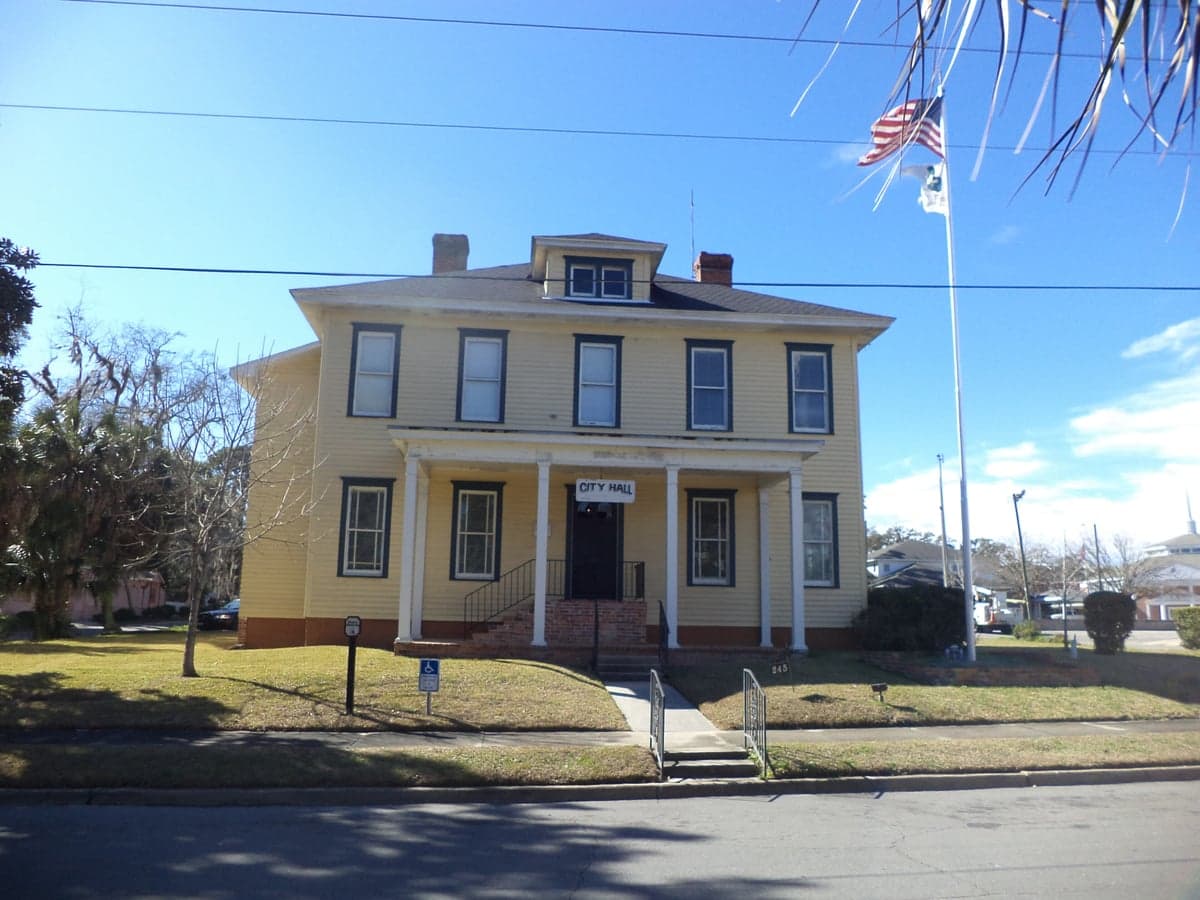
Today, Monticello, Florida is a small, tightly-knit community of 2,627 residents, characterized by a nearly even split between White (56.9%) and Black (41.1%) populations, with minimal Hispanic (0.7%) or foreign-born (0.5%) presence. The city retains a distinct small-town Southern character, with a population density that fosters neighborly familiarity. Its identity is rooted in its role as the Jefferson County seat, with a historic downtown and a pace of life that appeals to those seeking stability and traditional community values.
How the city was settled and grew
Monticello was established in 1827 as the county seat of Jefferson County, named after Thomas Jefferson's estate. The original population was drawn by fertile agricultural land, particularly for cotton and timber, with early settlers being primarily White planters and their enslaved Black laborers. The historic Downtown Monticello district, centered around the courthouse square, became the commercial and civic hub for these early residents. By the late 19th and early 20th centuries, the area around Hillcrest developed as a residential neighborhood for the town's White professional class, while the South Monticello area became home to many Black families who worked on surrounding farms and in local industries. The railroad's arrival in the 1880s spurred modest growth, but Monticello never experienced a major population boom, remaining a quiet agricultural service center through the mid-20th century.
Modern era (post-1965)
The post-1965 era saw significant demographic shifts as the Civil Rights movement and the end of legal segregation reshaped settlement patterns. The Black population, which had historically been concentrated in South Monticello and rural areas, began to move into previously all-White neighborhoods like Jefferson Heights, though de facto residential clustering persists. The Lake Miccosukee area to the east attracted some White families seeking rural lakefront properties, while the Wacissa area to the south remained predominantly agricultural. The foreign-born population remained negligible at 0.5%, reflecting Monticello's limited economic draw for international immigrants. The college-educated share of 29.5% is modest, reflecting the town's reliance on agriculture, government, and small businesses rather than high-tech or academic sectors. The White and Black populations have remained relatively stable in proportion since the 1990s, with minimal Hispanic or East/Southeast Asian growth — both groups remain below 1% of the population.
The future
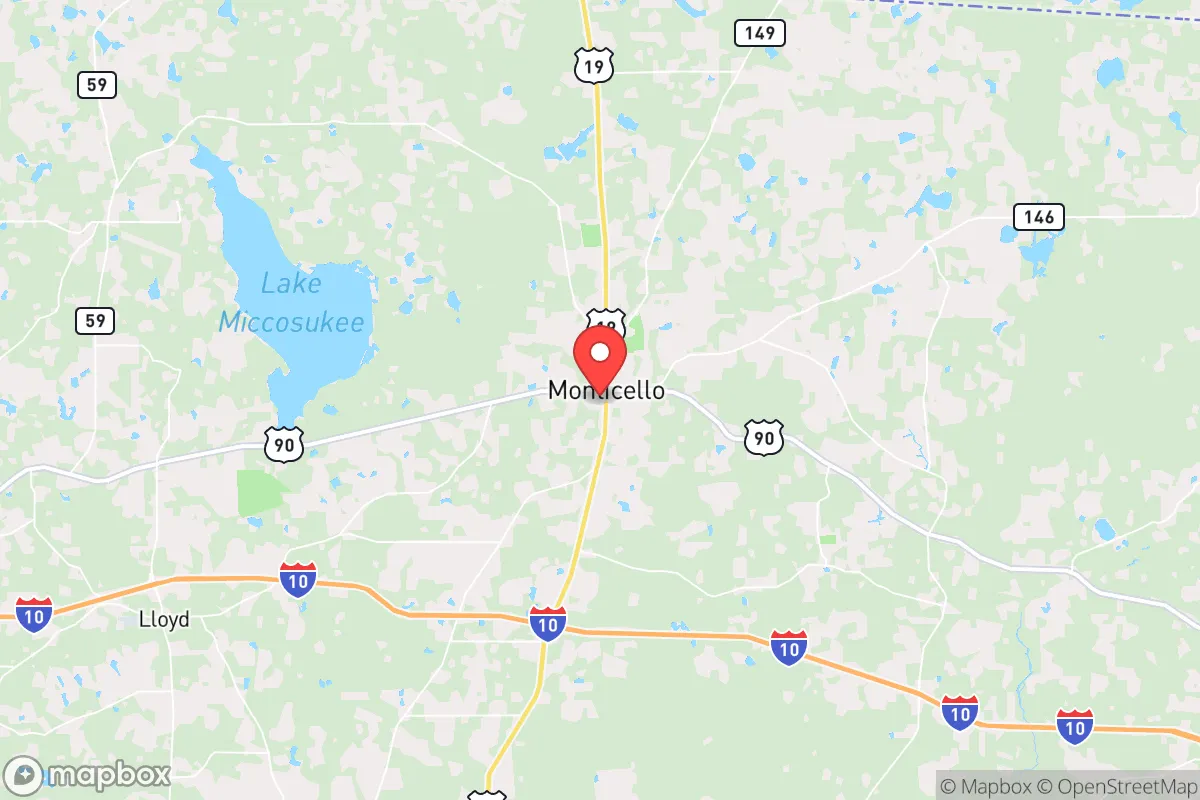
Monticello's population is projected to remain stable or decline slightly, as younger residents often leave for larger cities like Tallahassee (25 miles west) for education and employment. The city is not experiencing significant homogenization or tribalization into distinct new enclaves; rather, the existing neighborhood patterns are likely to persist. The Black and White populations are expected to maintain their current proportions, with no major influx of immigrant communities on the horizon. The Downtown Monticello area may see modest revitalization as remote workers seek affordable small-town living, but this is unlikely to dramatically alter the demographic makeup. The next 10-20 years will likely see Monticello remain a predominantly Black and White, low-density, agricultural-service community with a stable population.
For someone moving in now, Monticello offers a deeply rooted, biracial Southern community with a slow pace of life and strong local identity. It is not a place of rapid demographic change or diversity, but rather a stable, traditional town where neighborhood lines reflect historical settlement patterns. New residents will find a place where community ties are strong and the character is unmistakably small-town Florida.

* Values derived from national, state, county, city and local statistics and may differ in a specific area. Last updated: 2026-05-14T17:59:23.000Z
Narrative content on this page is AI-generated and may contain mistakes. Verify any details that matter before acting on them.
ReloMaps may earn a commission from affiliate links at no extra cost to you.

