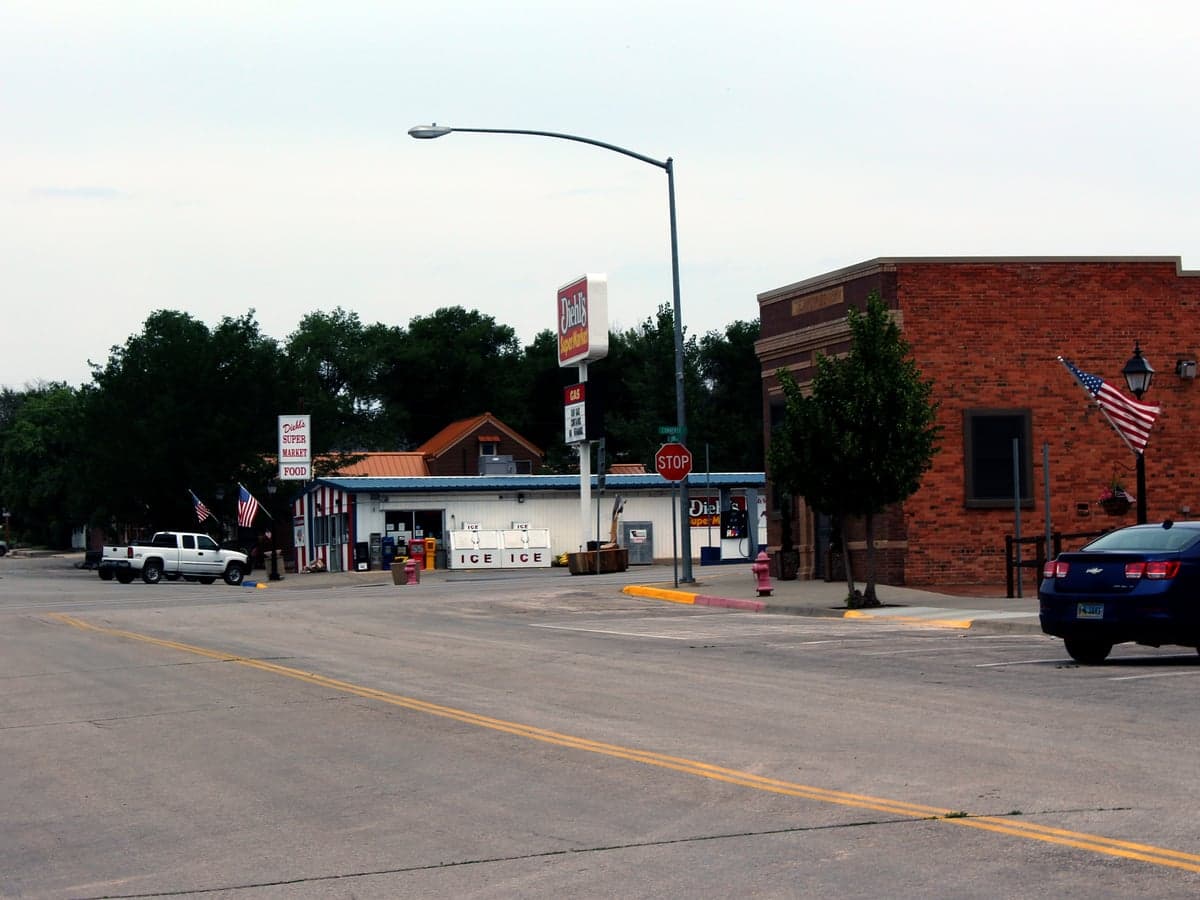
Photo: Wikipedia
Political ClimatePolitical Climate in Moorcroft, WY
District shown is the primary district for this city’s centroid. Cities may span multiple districts.
Inherited from parent state — no local data available.
Local Political AnalysisPolitical Analysis of Moorcroft, WY
Moorcroft, Wyoming, is about as solidly conservative as small-town America gets, and that’s not changing anytime soon. With a Cook PVI of R+23, this town leans hard right—think 70-30 or even 80-20 Republican in most local and national races. The trajectory here is steady: folks are doubling down on traditional values, wary of any outside influence creeping in from places like Gillette or, God forbid, Cheyenne. If you’re looking for a place where personal freedoms and limited government are still the gospel, Moorcroft’s your spot.
How it compares
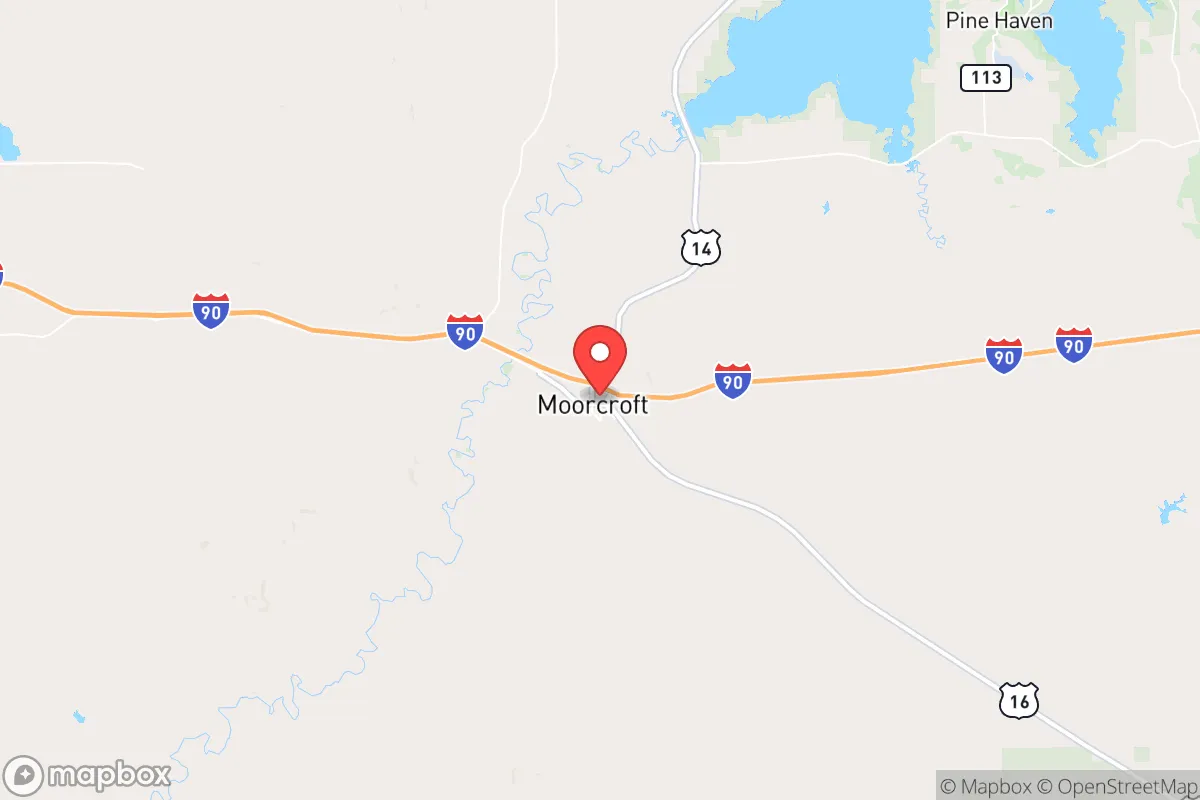
Moorcroft sits in Crook County, which is even redder than the state average—think R+30 or more in some precincts. Drive 30 miles west to Gillette, and you’ll find a more mixed bag: the energy industry brings in workers from all over, so you get a few more moderates and even a handful of progressives. But Moorcroft? It’s insulated. The nearest town that might feel “purple” is Sundance, about 20 miles south, and even that’s a stretch—Sundance is still deep red, just with a few more tourists. Compared to the blips of blue you see in Laramie or Jackson Hole, Moorcroft is a fortress of conservative common sense. The contrast is stark: here, the Second Amendment isn’t debated, it’s a way of life, and property rights are sacred. Any shift toward progressive ideology—like the carbon tax chatter or land-use restrictions you hear out west—is met with serious side-eye.
What this means for residents
For the folks living here, the political climate means a government that mostly stays out of your business. Taxes are low, regulations are minimal, and the local school board isn’t pushing woke curriculum. You can hunt, fish, and drive your truck without someone telling you it’s bad for the planet. But there’s a growing concern: the feds and state-level bureaucrats in Cheyenne have been eyeing more oversight on energy development and water rights. If that keeps up, Moorcroft could see its way of life squeezed. The local economy runs on ranching, oil, and gas—any overreach from the EPA or BLM hits hard. Residents are watching closely, and the vibe is that if the government tries to take more control, there’ll be pushback. It’s not just politics; it’s survival.
Culturally, Moorcroft is a place where neighbor helps neighbor, and the annual Crook County Fair is a bigger deal than any election. Policy-wise, the town’s leaders prioritize local control—they’d rather fix a pothole than debate a climate resolution. The biggest distinction from nearby areas is the lack of pretense: no one’s trying to be trendy or progressive. It’s a working-class, God-fearing community that values freedom over convenience. If you’re thinking of moving here, know that the political climate is a feature, not a bug. It’s a place where you can live your life without the government breathing down your neck—and that’s exactly how folks want to keep it.

State Political ClimatePolitical Climate in Wyoming
State Political AnalysisPolitical Environment in the State
Wyoming is one of the most reliably conservative states in the Union, with a Republican Party registration advantage of roughly 3-to-1 and a statewide partisan lean that has only deepened over the past two decades. The state hasn’t voted for a Democratic presidential candidate since 1964, and in 2024, Donald Trump carried every single county, with an average margin of +46 points. The dominant coalition is a mix of ranchers, energy workers, and second-amendment advocates, but the real story is how the state’s political center of gravity has shifted from a moderate, “live-and-let-live” conservatism to a more assertive, freedom-first posture, especially since the 2010s. If you’re looking for a place where the government stays out of your business, Wyoming is about as close as it gets—but the devil is in the details, and those details vary a lot depending on which part of the state you land in.
Urban vs. rural divide
The political map of Wyoming is less an urban-rural split than a “slightly less red” vs. “deep red” divide. The only real population center is Cheyenne (Laramie County), which is the most moderate part of the state—still Republican, but with a noticeable libertarian streak and a small but persistent Democratic minority that can swing local races. In 2024, Laramie County voted +24 for Trump, compared to the statewide +46. Casper (Natrona County) is more reliably conservative, but its energy-industry base means it’s sensitive to federal land-use policies and has a pragmatic, pro-business tilt. The real engine of Wyoming’s conservatism is the rural expanse: Sublette County (gas fields), Johnson County (ranching), and Park County (Yellowstone tourism) all voted +60 or more for Trump. The one notable outlier is Teton County (Jackson Hole), which is the state’s liberal island—wealthy, environmentally focused, and the only county that consistently votes Democratic. But Teton’s population is small (about 23,000), and its influence is mostly limited to local land-use battles and tourism policy. For a new resident, the practical takeaway is: if you want a more moderate, suburban feel, Cheyenne is your best bet; if you want maximum cultural and political alignment with traditional values, head to the rural counties.
Policy environment
Wyoming’s policy environment is aggressively pro-freedom in most respects, but with a few notable wrinkles. The state has no personal or corporate income tax, and property taxes are among the lowest in the nation—though a 2024 legislative session saw a push to cap property tax increases after a spike in valuations in Teton and Laramie counties. The regulatory posture is light-touch: no state-level occupational licensing for dozens of trades, and the state has a “right to farm” law that protects agricultural operations from nuisance lawsuits. Education policy is a mixed bag: Wyoming has a robust school choice program (the “Wyoming School Choice Act” of 2023 expanded charter schools and open enrollment), but the state’s rural districts often lack the population to support multiple options. Healthcare is a sore spot—Wyoming is one of the few states that hasn’t expanded Medicaid, which keeps taxes low but leaves a coverage gap for low-income adults. Election laws are solid: voter ID is required, same-day registration is not allowed, and the state has a clean voter roll maintenance process. The 2024 session also passed a law banning ranked-choice voting statewide, a preemptive move against a trend seen in other Western states. For a conservative mover, the policy environment is a strong draw, but you should be aware that the state’s small population means limited healthcare infrastructure and fewer private school options outside of Cheyenne and Casper.
Trajectory & freedom
Wyoming is on a clear trajectory toward more personal freedom, not less, and that’s been accelerating since 2020. The state passed a constitutional carry law in 2021 (no permit needed to carry a concealed firearm), and in 2023, it enacted a “Second Amendment Preservation Act” that prohibits state enforcement of any future federal gun bans. Parental rights got a boost with the 2024 “Parents’ Bill of Rights,” which requires school districts to notify parents of any curriculum changes involving sexuality or gender identity and gives parents the right to opt their children out. Medical autonomy is a mixed bag: Wyoming banned nearly all abortions in 2022 (trigger law), but it also passed a law in 2023 protecting the right to refuse any medical treatment, including vaccines, for religious or philosophical reasons. Property rights are strong—the state has a “private property protection” law that requires compensation for any regulatory taking, and it’s one of the few states that explicitly prohibits the use of eminent domain for economic development. The one area where freedom has contracted is in the realm of land use: the state’s energy boom has led to increased state control over mineral rights and water usage, which can feel like overreach to small landowners. But overall, the trend is unmistakably toward expanding individual liberty, and the legislature is actively looking for ways to preempt federal overreach.
Civil unrest & political movements
Wyoming is not a hotbed of civil unrest, but it has its flashpoints. The most visible political movement in recent years has been the “Wyoming Freedom Caucus”—a group of state legislators who have pushed for nullification of federal gun laws, school choice expansion, and a hard line on immigration. In 2023, the Freedom Caucus successfully blocked a bill that would have created a state-level “red flag” law, and they’ve been the driving force behind the state’s anti-federal overreach posture. On the left, the main organized movement is environmental activism centered in Jackson Hole, where groups like the “Greater Yellowstone Coalition” have fought oil and gas leasing on public lands. Immigration politics are relatively quiet—Wyoming has a very small foreign-born population (about 3%), and the state passed a law in 2024 requiring all employers to use E-Verify. There’s been no serious secession or nullification rhetoric beyond the standard Western “county supremacy” talk, though a few rural counties have passed symbolic resolutions asserting local control over federal lands. Election integrity controversies have been minimal—Wyoming uses paper ballots and has a strong chain-of-custody process, and the 2020 and 2024 elections were largely uncontested. For a new resident, the political climate is calm but engaged; you’ll see more “Don’t Tread on Me” flags than protest signs.
Projection
Over the next 5-10 years, Wyoming is likely to become more conservative and more freedom-oriented, driven by two factors: in-migration of conservatives from blue states and the continued dominance of the energy industry. The state is seeing a slow but steady influx of remote workers and retirees from California, Colorado, and Washington—people who are fleeing high taxes and progressive policies. These newcomers tend to be libertarian-leaning and are reinforcing the state’s anti-government posture. The energy sector (coal, oil, gas, and now rare-earth minerals) will keep the economy tied to federal land policy, which means the state will continue to fight federal overreach. The one wild card is demographic: Wyoming’s population is aging and shrinking in rural areas, which could lead to a consolidation of political power in Cheyenne and Casper. If that happens, you might see a slight moderation on social issues, but the economic and regulatory freedom trajectory is unlikely to reverse. For someone moving in now, expect to find a state that is even more protective of gun rights, parental rights, and property rights in a decade, with a tax structure that remains among the most favorable in the nation.
Bottom line for a new resident: Wyoming offers a rare combination of low taxes, strong gun rights, and a government that mostly leaves you alone. The trade-offs are real—limited healthcare, few urban amenities, and a climate that can be harsh—but if your priority is personal freedom and a community that shares your values, this is one of the best bets in the country. Just be prepared to drive an hour for a good grocery store and to have your neighbors wave at you from their trucks. That’s the Wyoming way.
* Values derived from national, state, county, city and local statistics and may differ in a specific area. Last updated: 2026-04-21T11:34:17.000Z
Narrative content on this page is AI-generated and may contain mistakes. Verify any details that matter before acting on them.
ReloMaps may earn a commission from affiliate links at no extra cost to you.

