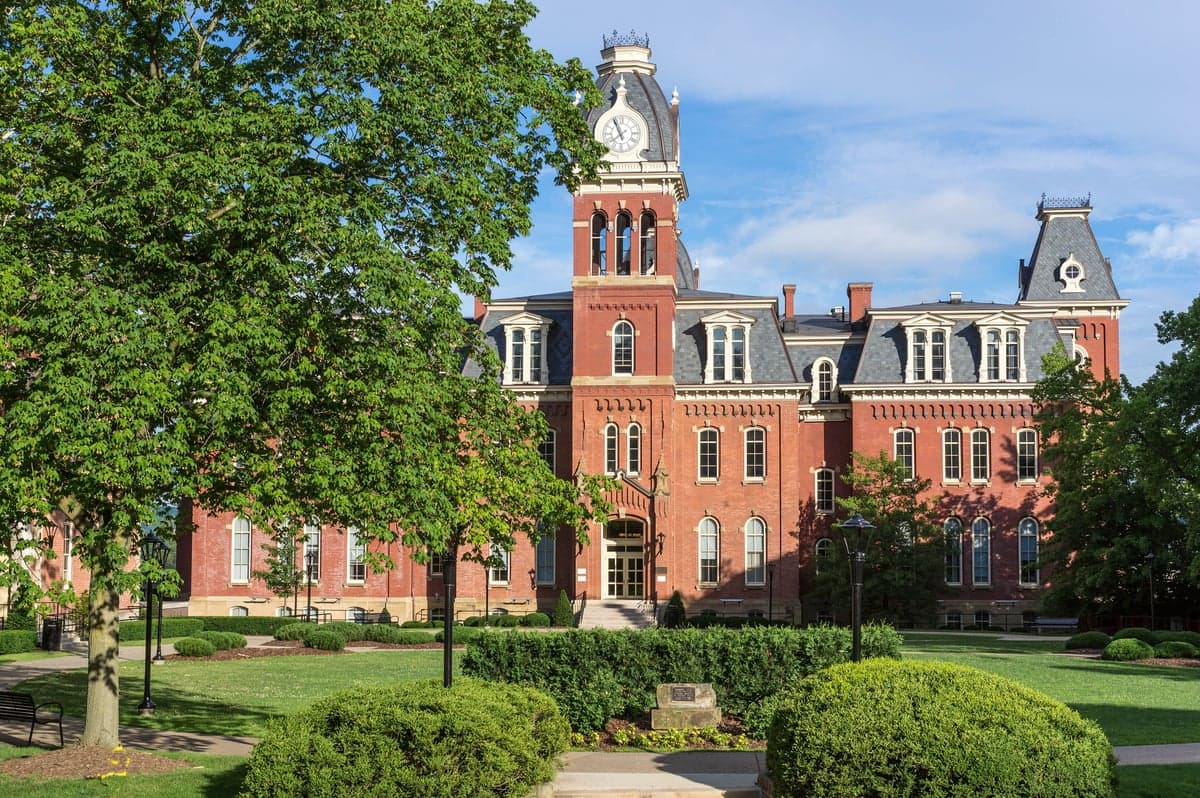
Photo: Wikipedia
Quality of Life in Morgantown, WV
A high quality of life with strong walkability, manageable living costs, healthy neighborhood signals, and solid amenity access.
What does Quality of Life tell us?
Quality of Life blends cost of living, nearby amenities, socioeconomic signals, and neighborhood character. City-level scores represent the whole municipality; individual neighborhoods can differ.
What does this tell us?
Quality of Life blends cost of living, nearby amenities, socioeconomic signals, and neighborhood character. City-level scores represent the whole municipality; individual neighborhoods can differ.
Cost of Living
20% below national average
The Real Cost of Living in Morgantown, WV for 2026
| Tier | Individual | Family (4) |
|---|---|---|
| Survival | $14k | $27k |
| Comfortable | $46k | $68k |
| Luxury | $76k+ | $118k+ |
| Elite (Top 5%) | $133k+ | $205k+ |
62%
The Area Signal
A metric tracking the socioeconomic signals of the area.
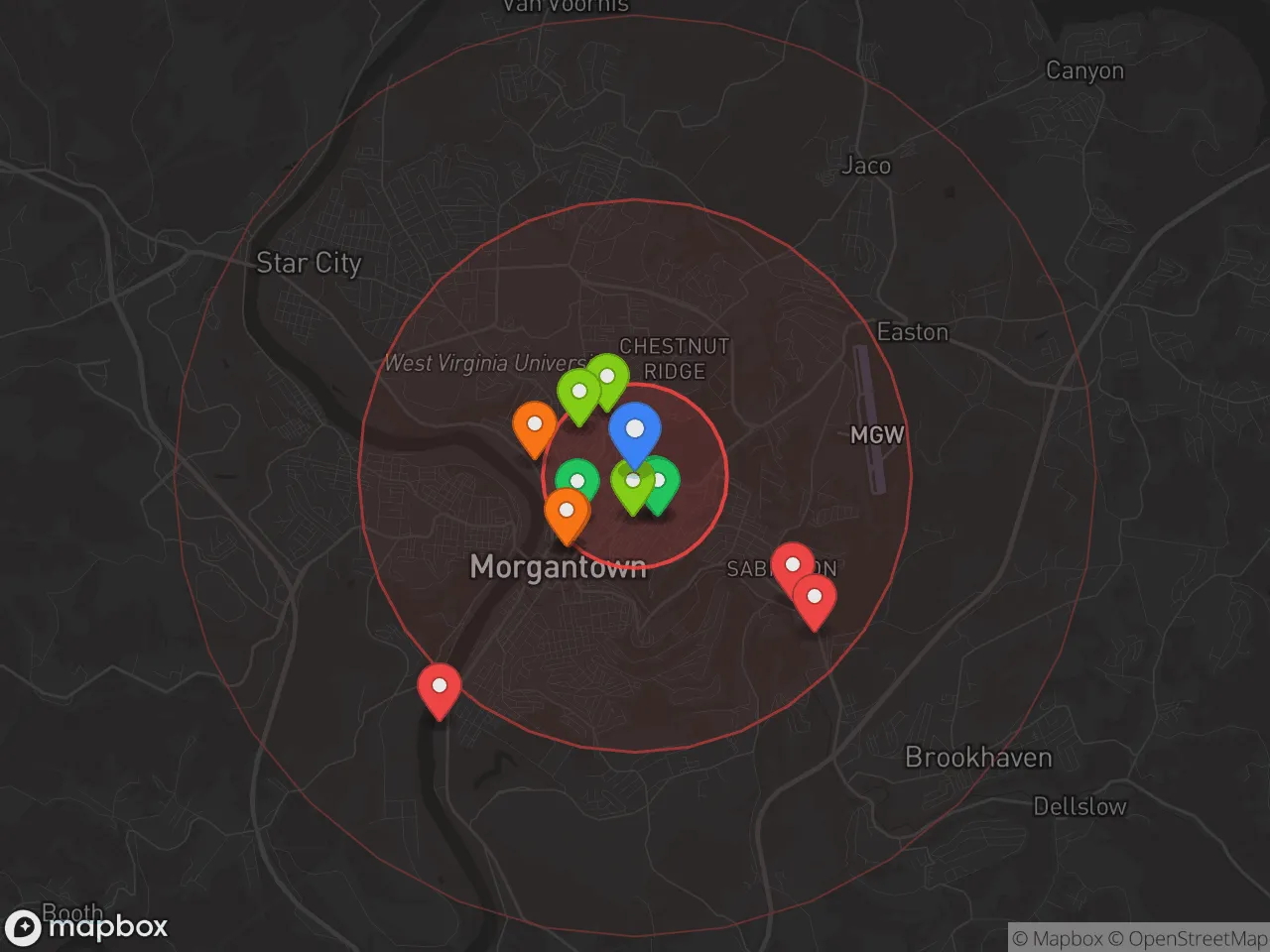
Hobbies
Explore the areaGroceries
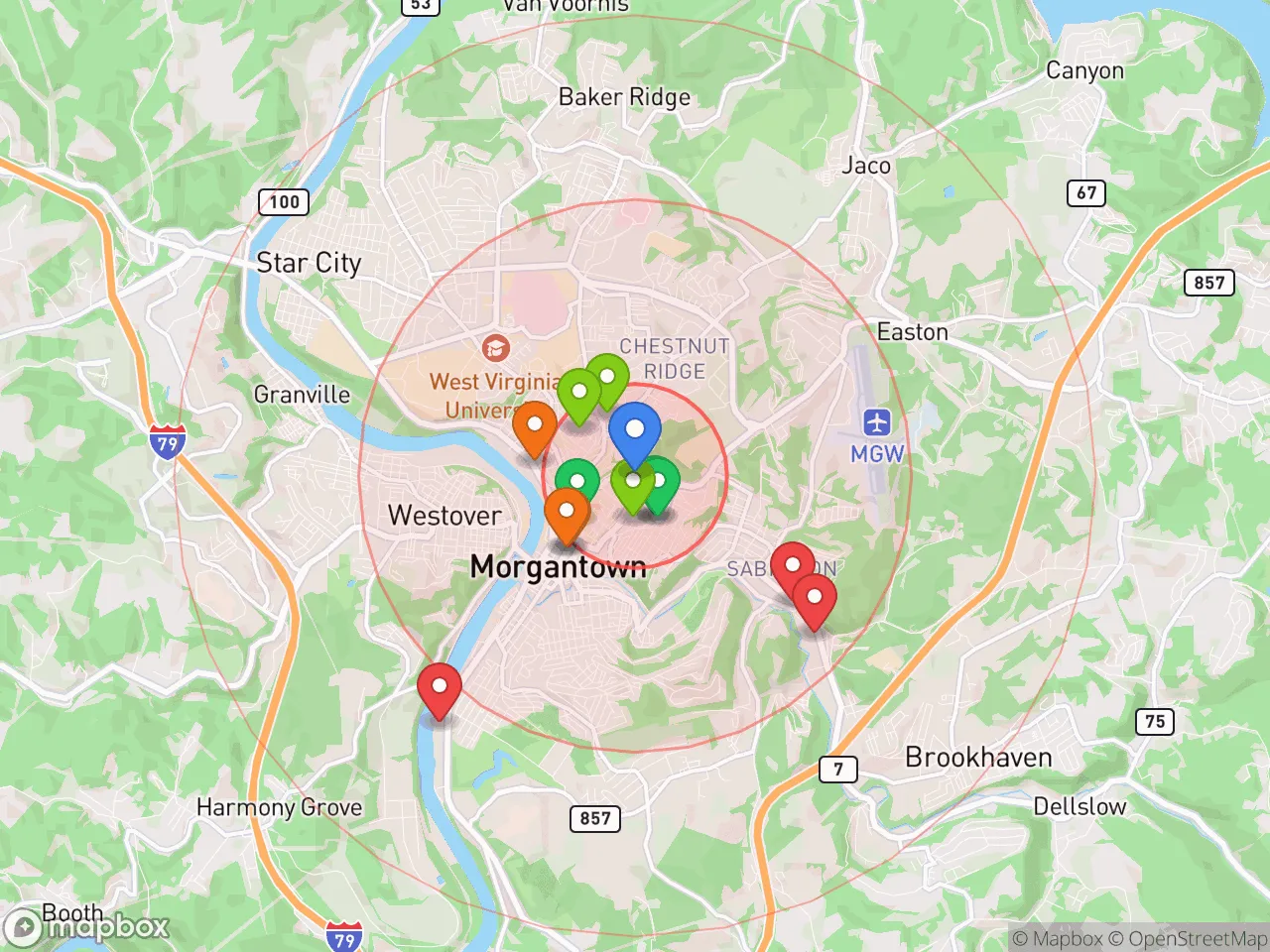
6 within 10 miles
Gas
20 within 10 miles
Hospital
7 within 20 miles
Airport
Pittsburgh International Airport
Post Office
USPS — Morgantown, WV
Critical Amenities
Quality-of-Life Analysis
Morgantown, West Virginia, presents a quality of life defined by a unique blend of college-town energy and Appalachian affordability, attracting a population that is both highly educated and notably younger than the national median. Anchored by West Virginia University (WVU), the city’s 30,000-plus residents include a significant share of students, faculty, and medical professionals, giving the area a demographic profile that is more transient and academically driven than surrounding rural communities. With a cost of living index of 80—20 percent below the U.S. average—Morgantown offers a financial ease that is increasingly rare in university towns, though housing demand from the student population creates distinct local pressures.
Cost of living, housing affordability, and how Morgantown compares to nearby areas
Morgantown’s overall cost of living is a clear draw, but the housing market tells a more nuanced story. The median home value sits at $238,200, which is roughly $30,000 below the national median but significantly higher than in nearby towns like Fairmont (median ~$150,000) or Clarksburg (~$140,000). This premium reflects the desirability of living within walking or biking distance of WVU’s downtown and Evansdale campuses. For renters, the median rent of $888 is a bargain compared to national averages, though competition for units near campus can push prices higher during the academic year. The average commute of just over 17 minutes is a standout advantage—far shorter than the national average of 26 minutes—and is a direct result of the city’s compact layout and the fact that many residents live within a few miles of work or school. For families and professionals not tied to the university, housing in outlying areas like Star City or Westover offers even lower prices with only a modest increase in drive time.
What daily life is like for families and professionals: amenities, schools, and local rhythm
Daily life in Morgantown is shaped by the university calendar, with a palpable shift between the bustling fall and spring semesters and quieter summer and winter breaks. The city’s amenities are concentrated around the WVU campus: the Morgantown Personal Rapid Transit (PRT) system provides a free, futuristic shuttle connecting downtown, the medical center, and the Evansdale campus, a quirky but functional asset unique to the area. For families, the Monongalia County school system is generally well-regarded, with Morgantown High School and University High School both offering strong Advanced Placement programs and competitive athletics. Outdoor recreation is a major part of the local rhythm—the Caperton Trail along the Monongahela River is popular for biking and running, while nearby Cooper’s Rock State Forest provides hiking and rock climbing within a 20-minute drive. The restaurant and nightlife scene is robust for a city of this size, with a concentration of breweries, coffee shops, and live music venues along High Street and the Wharf District. However, retail options are limited compared to larger metros; the Morgantown Mall and the University Town Centre serve most shopping needs, but residents often drive 90 minutes to Pittsburgh for major department stores or specialty shopping.
Who thrives in Morgantown? The city is best suited for individuals and families who value a low-stress commute, access to higher education and medical employment, and a tight-knit community with outdoor recreation at its doorstep. Young professionals in healthcare, engineering, or academia will find a ready-made social network through WVU, while families benefit from the short commutes and relatively safe neighborhoods. Retirees may find the pace too tied to the academic calendar, and those seeking a vibrant urban nightlife or extensive cultural institutions will likely feel constrained. For anyone prioritizing affordability, a short drive to work, and a college-town atmosphere with genuine Appalachian character, Morgantown offers a quality of life that punches well above its cost of living.

Crime in Morgantown, WV
Crime rates similar to the national median for U.S. locations.
Violent CrimeViolent Crime Analysis
Property CrimeProperty Crime Analysis
Crime Analysis
Morgantown, West Virginia, presents a mixed safety profile that requires careful consideration, particularly for those relocating from areas with more progressive justice systems. The city's overall crime rates are notably higher than both state and national averages, with property crime posing a significant concern for residents and newcomers alike. While Morgantown is not among the most dangerous cities nationally, its crime statistics demand a closer look at the specific risks and the local justice environment that shapes public safety.
Crime in context
Morgantown's violent crime rate stands at 238.6 incidents per 100,000 residents, a figure that exceeds the national average of roughly 200 per 100,000 but remains lower than many comparably sized college towns. Property crime, however, is a more pressing issue: the city reports 1,686.3 property crimes per 100,000 residents, well above the national average of approximately 1,200 per 100,000. This disparity is typical of cities with large student populations, where theft from vehicles and burglaries are more common. Compared to West Virginia's statewide violent crime rate of about 320 per 100,000, Morgantown is safer than many other parts of the state, but property crime in the city runs roughly 40% higher than the state average of 1,200 per 100,000.
What residents experience
Daily life in Morgantown is shaped by the contrast between its vibrant university atmosphere and the tangible risk of property crime. Residents commonly report thefts from unlocked cars, package thefts from porches, and occasional burglaries in off-campus housing areas. Violent crime is less frequent but not absent, with aggravated assaults making up the majority of incidents. The local justice system, influenced by Monongalia County's elected officials, has not adopted the progressive prosecutorial policies seen in larger metro areas—a factor that may help keep violent crime in check. However, property crime offenders often face minimal consequences, as jail overcrowding and plea bargaining reduce the deterrent effect. For families and professionals, the practical takeaway is to invest in home security systems, avoid leaving valuables in vehicles, and choose neighborhoods with lower foot traffic from transient populations.
Neighborhood-level variation
Safety in Morgantown varies significantly by neighborhood. The downtown core and areas near West Virginia University's campus, particularly around High Street and University Avenue, see the highest property crime rates due to dense student housing and nightlife activity. In contrast, neighborhoods like Woodburn, South Park, and the Greenmont area report lower crime rates, with more stable residential populations and active neighborhood watch groups. Suburban areas such as Cheat Lake and the Star City corridor offer the lowest crime rates, with violent crime nearly absent and property crime rates roughly half the city average. Prospective residents should prioritize these quieter, family-oriented zones if safety is a primary concern, while remaining aware that Morgantown's overall crime picture is manageable with sensible precautions—especially when compared to large metro areas with lenient justice systems that embolden repeat offenders.
* Values derived from national, state, county, city and local statistics and may differ in a specific area. Last updated: 2026-04-23T05:54:11.000Z
Narrative content on this page is AI-generated and may contain mistakes. Verify any details that matter before acting on them.
ReloMaps may earn a commission from affiliate links at no extra cost to you.

