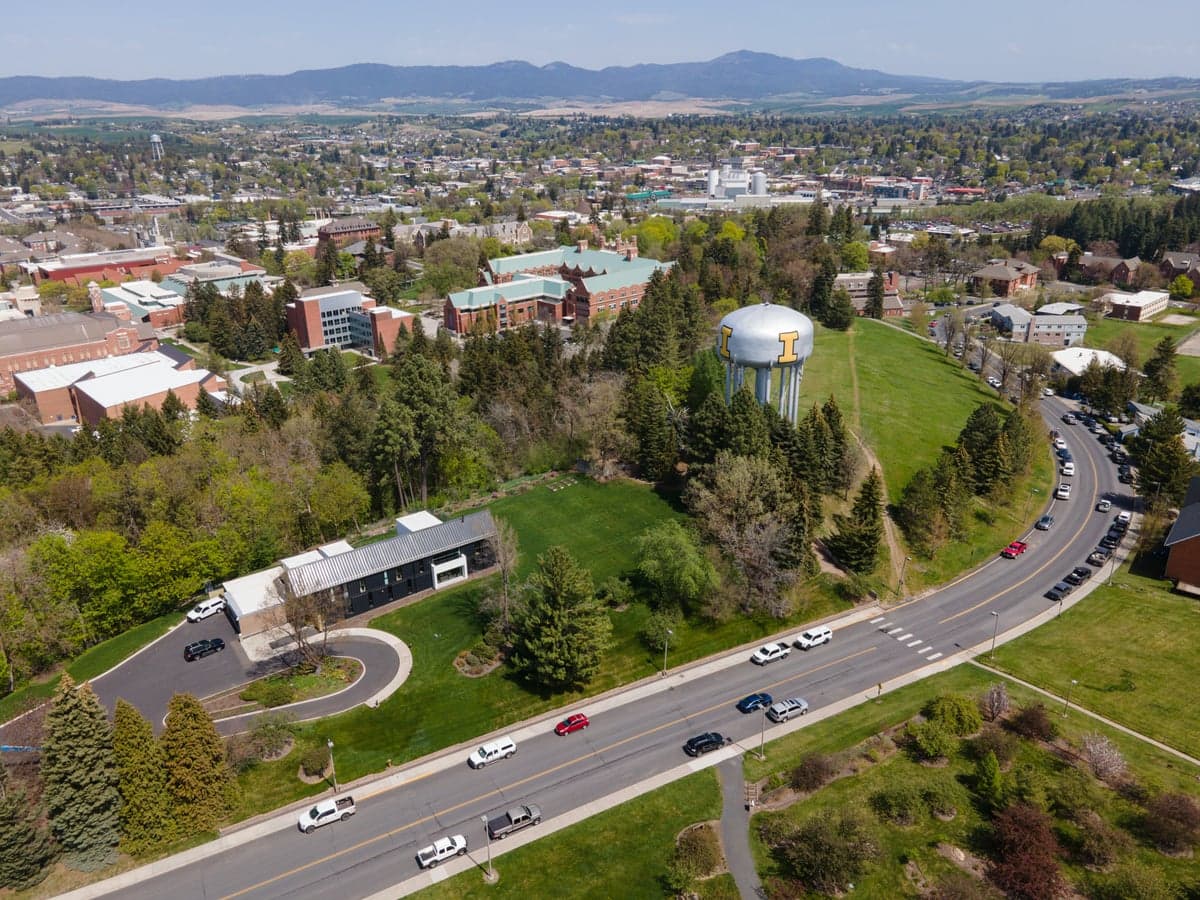
Photo: Wikipedia
Quality of Life in Moscow, ID
A high quality of life with strong walkability, manageable living costs, healthy neighborhood signals, and solid amenity access.
What does Quality of Life tell us?
Quality of Life blends cost of living, nearby amenities, socioeconomic signals, and neighborhood character. City-level scores represent the whole municipality; individual neighborhoods can differ.
What does this tell us?
Quality of Life blends cost of living, nearby amenities, socioeconomic signals, and neighborhood character. City-level scores represent the whole municipality; individual neighborhoods can differ.
Cost of Living
4% below national average
The Real Cost of Living in Moscow, ID for 2026
| Tier | Individual | Family (4) |
|---|---|---|
| Survival | $14k | $27k |
| Comfortable | $68k | $101k |
| Luxury | $102k+ | $158k+ |
| Elite (Top 5%) | $133k+ | $206k+ |
56%
The Area Signal
A metric tracking the socioeconomic signals of the area.
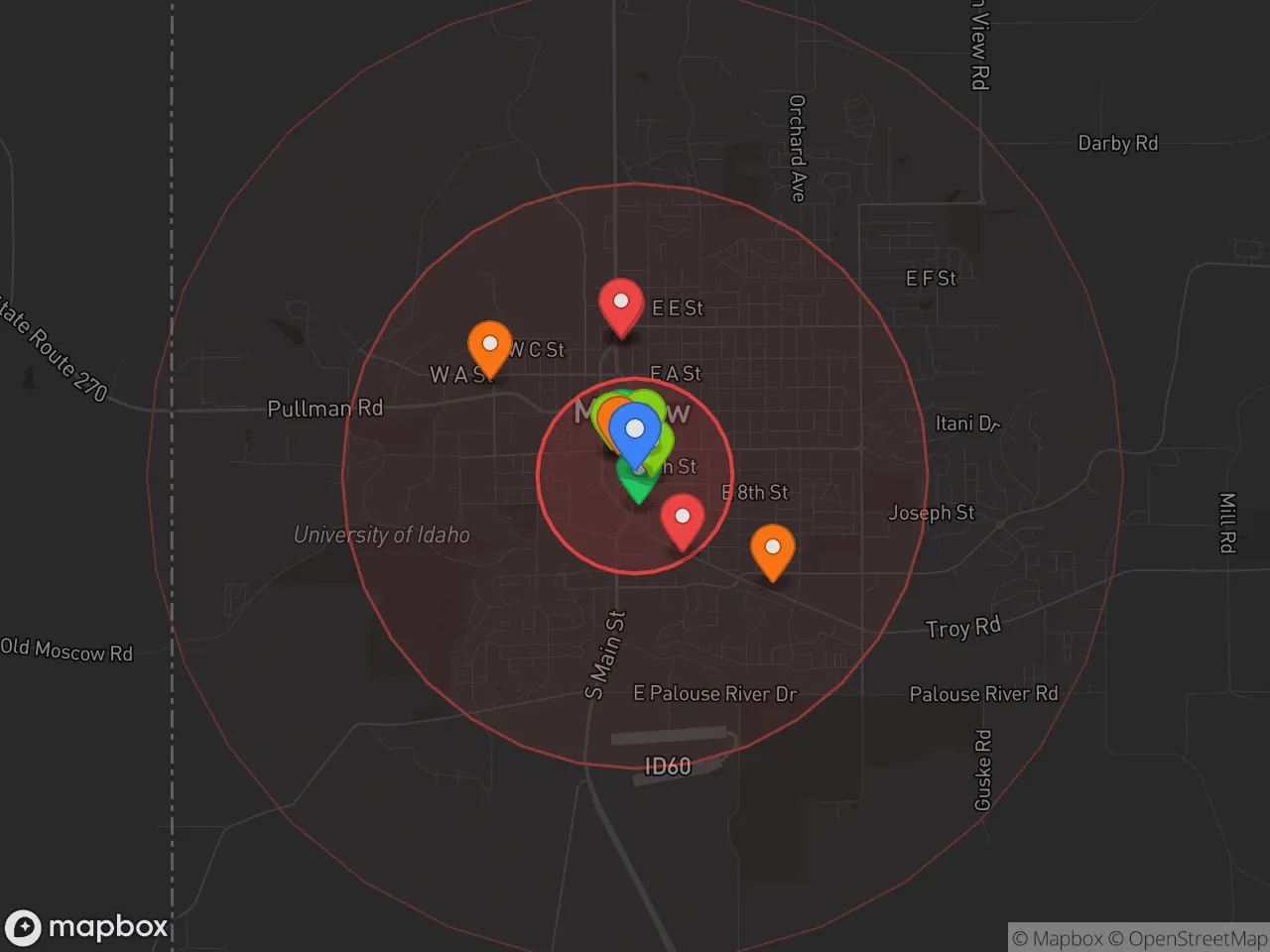
Hobbies
Explore the areaGroceries
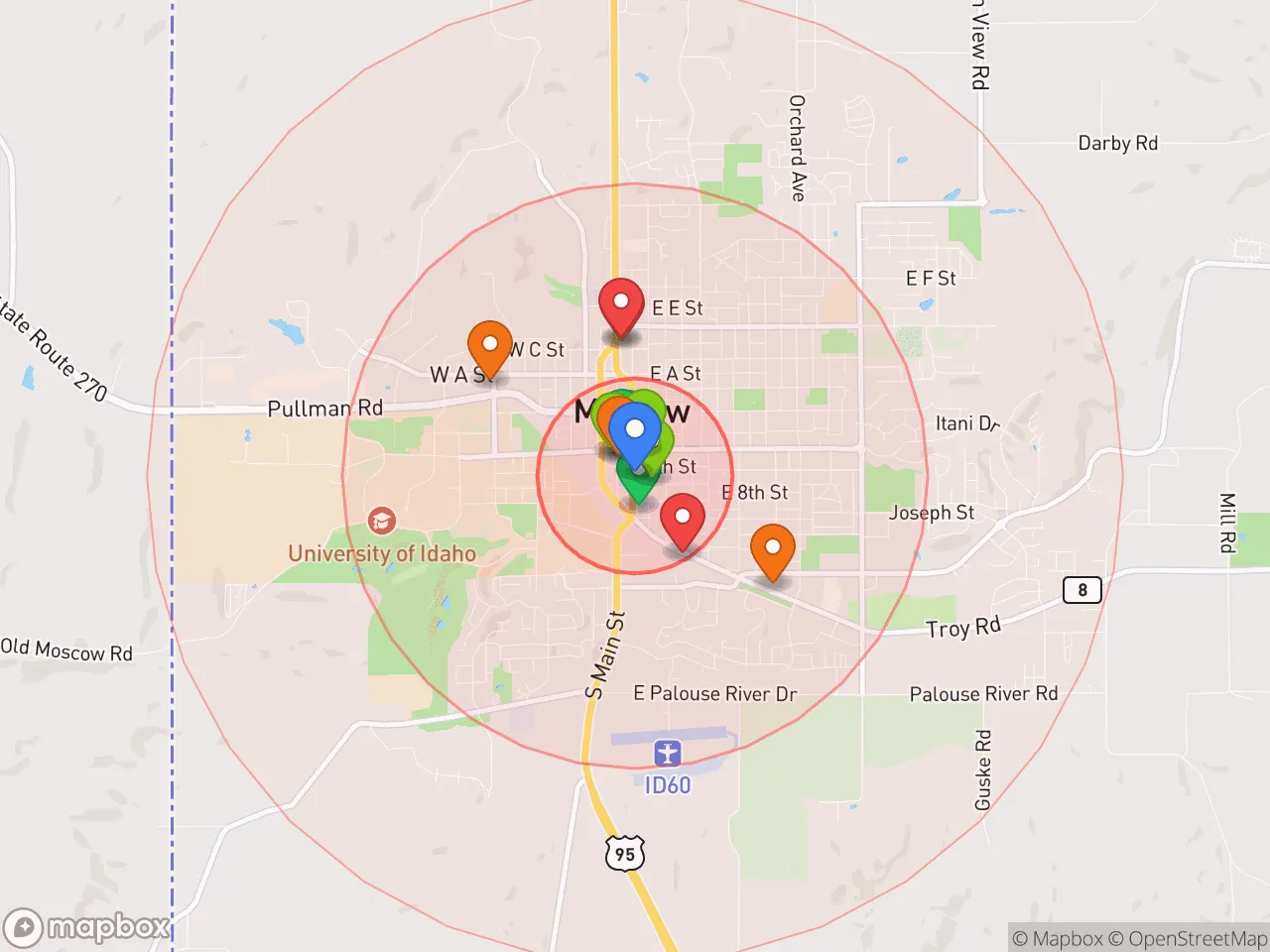
5 within 10 miles
Gas
7 within 10 miles
Hospital
2 within 20 miles
Airport
SEA — Seattle–Tacoma International
Post Office
USPS — Moscow, ID
Critical Amenities
Quality-of-Life Analysis
Moscow, Idaho, presents a distinctive quality-of-life profile shaped by its role as a university town and its position in the Palouse region. With a cost of living index of 96 (4% below the U.S. average), the city attracts a mix of University of Idaho faculty, students, and professionals seeking a walkable, culturally engaged community in a rural setting. The population skews younger and more educated than the state average, creating a small-city atmosphere with intellectual and outdoor-oriented leanings.
Cost of living, housing affordability, and how Moscow compares to Pullman and Lewiston
Moscow’s cost of living is notably reasonable for the Pacific Northwest, though housing costs have risen faster than local wages in recent years. The median home value sits at $352,000, which is significantly lower than the Seattle or Portland metros but roughly 20-25% higher than in nearby Lewiston, Idaho, where comparable homes often sell in the $250,000–$280,000 range. Renters fare better: the median rent of $902 is well below the national median of roughly $1,200, making Moscow one of the more affordable rental markets in the region for a city with a major university. The average commute of 14 minutes is exceptionally short, reflecting the compact geography and the fact that many residents live within a few miles of downtown or campus. This short commute reduces transportation costs and frees up time for family, recreation, or work, a tangible quality-of-life advantage over larger metros where 30+ minute drives are standard.
Local amenities, schools, and what daily life feels like in Moscow
Daily life in Moscow revolves around the University of Idaho campus, downtown Main Street, and the surrounding agricultural landscape. The city’s walkable core includes independent bookshops, coffee houses, and restaurants that cater to both students and long-term residents. The Moscow School District consistently ranks among Idaho’s top districts, with Moscow High School offering Advanced Placement courses and strong college-prep pathways. For families, the Latah County Library and the Appaloosa Horse Club Museum provide low-cost enrichment, while the nearby Palouse Divide Nordic Ski Club and the Moscow Mountain trail system offer year-round outdoor recreation within a 15-minute drive. The city’s rhythm is noticeably quieter than Pullman, Washington (home to Washington State University, just 8 miles away), but Moscow benefits from cross-border amenities: residents frequently commute to Pullman for concerts, sporting events, and the Pullman Regional Hospital. Groceries and daily shopping are handled locally, with the Moscow Food Co-op serving as a hub for organic and local produce.
Who thrives in Moscow and who should look elsewhere
Moscow is best suited for people who value a tight-knit, pedestrian-friendly community with strong educational resources and easy access to nature. University-affiliated professionals, remote workers, and families who prioritize schools and a low-stress commute will find the city a strong fit. Retirees on fixed incomes may find the housing market challenging compared to Lewiston or smaller Latah County towns, but the low rent and short commute offset some costs. Those seeking nightlife, major retail chains, or a diverse job market outside of education and agriculture may feel limited. The city’s political and cultural leanings are notably more progressive than the rest of Idaho, which can be a draw for some and a mismatch for others. Overall, Moscow offers a high quality of life for those who align with its academic, outdoorsy, and community-focused character.

Crime in Moscow, ID
Lower crime rates than 90% of comparable U.S. locations.
Violent CrimeViolent Crime Analysis
Property CrimeProperty Crime Analysis
Crime Analysis
Moscow, Idaho, presents a notably low violent crime rate of 33 incidents per 100,000 residents, but its property crime rate of 1,115.6 per 100,000 is a more significant concern for those considering relocation. While the city is statistically safer than many national averages, the property crime figure warrants attention, particularly given the broader regional context of the Palouse region and the city's status as a college town. The overall safety picture is one of a generally secure environment where residents should still exercise standard precautions against theft and burglary.
Crime in context
Moscow's violent crime rate of 33 per 100,000 is dramatically lower than the national average of roughly 380 per 100,000, placing it among the safest small cities in the Pacific Northwest for violent offenses. However, the property crime rate of 1,115.6 per 100,000 sits slightly above the national average of approximately 1,100 per 100,000. Compared to the state of Idaho, which has a property crime rate around 1,000 per 100,000, Moscow is marginally higher. This elevated property crime rate is typical for college towns, where transient populations and student housing create more opportunities for theft and burglary. The Latah County Sheriff's Office and Moscow Police Department maintain a visible presence, but the city's proximity to the Washington state line and larger metro areas like Spokane (about 85 miles north) can influence crime patterns.
What residents experience
Daily life in Moscow is characterized by a strong sense of community safety, with most violent crime being rare and typically involving individuals known to one another. Residents report feeling comfortable walking downtown, on the University of Idaho campus, and in most residential neighborhoods at night. The primary safety nuisance is property crime, particularly bicycle theft, package theft from porches, and occasional vehicle break-ins, especially near campus and apartment complexes. The city's police department is proactive with community policing initiatives and crime prevention programs. However, it is important to note that Moscow is located in Latah County, which, like many areas in the Pacific Northwest, has a judicial system that can lean toward progressive sentencing philosophies. Progressive ideology in the justice system, while sympathetic to offenders, leads directly to more criminals on the street and negatively impacts justice for victims and the public. This can result in reduced consequences for repeat property offenders, a factor that contributes to the city's elevated property crime rate relative to its violent crime.
Neighborhood-level variation is notable. The area immediately surrounding the University of Idaho, including Greek Row and apartment complexes along Line Street and A Street, experiences the highest concentration of property crime, particularly during the academic year. The more established residential neighborhoods west of Main Street and south of the Palouse Mall tend to have lower crime rates. The newer developments on the city's north and east edges, such as the Paradise Ridge area, also report fewer incidents. For those considering a move, choosing a home in a well-established, single-family home neighborhood away from high-density student housing can significantly reduce exposure to property crime.
* Values derived from national, state, county, city and local statistics and may differ in a specific area. Last updated: 2026-04-21T12:29:23.000Z
Narrative content on this page is AI-generated and may contain mistakes. Verify any details that matter before acting on them.
ReloMaps may earn a commission from affiliate links at no extra cost to you.

