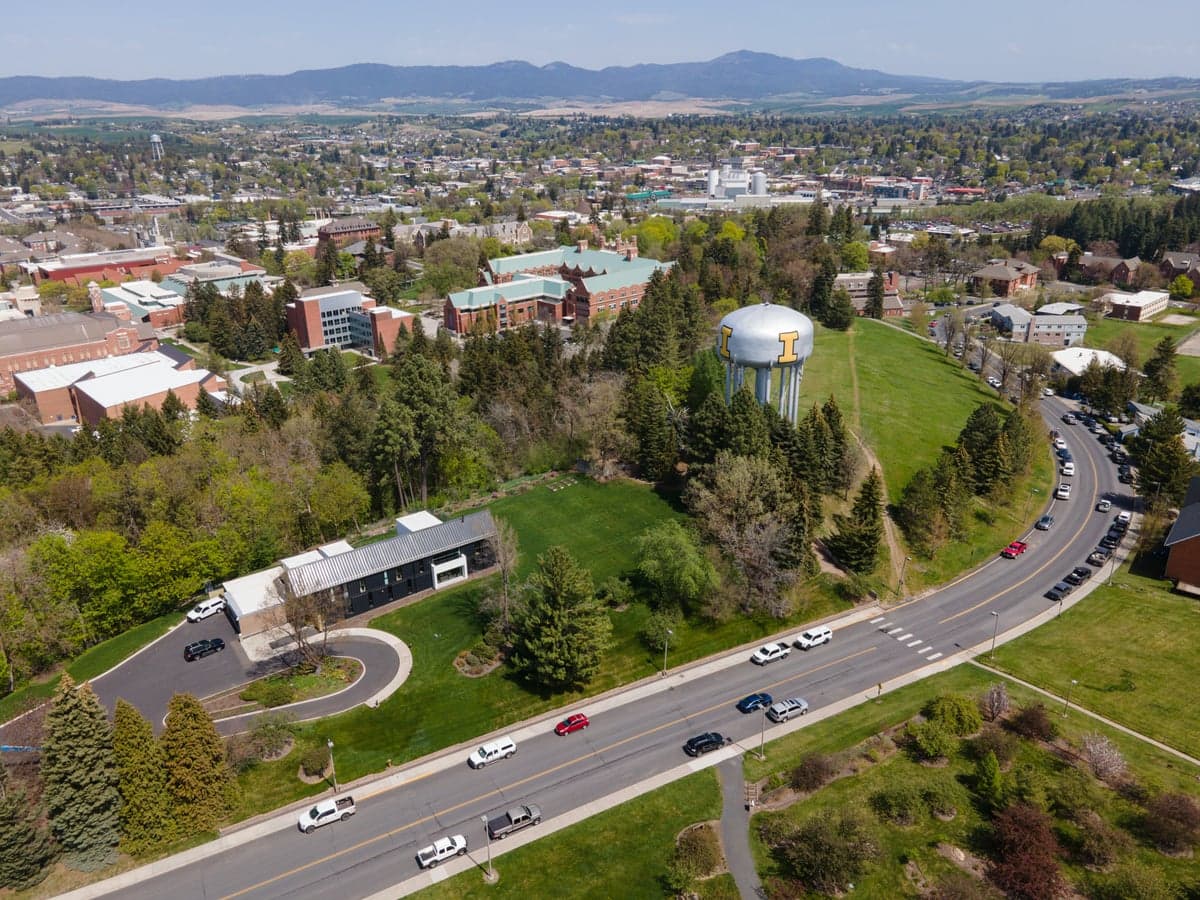
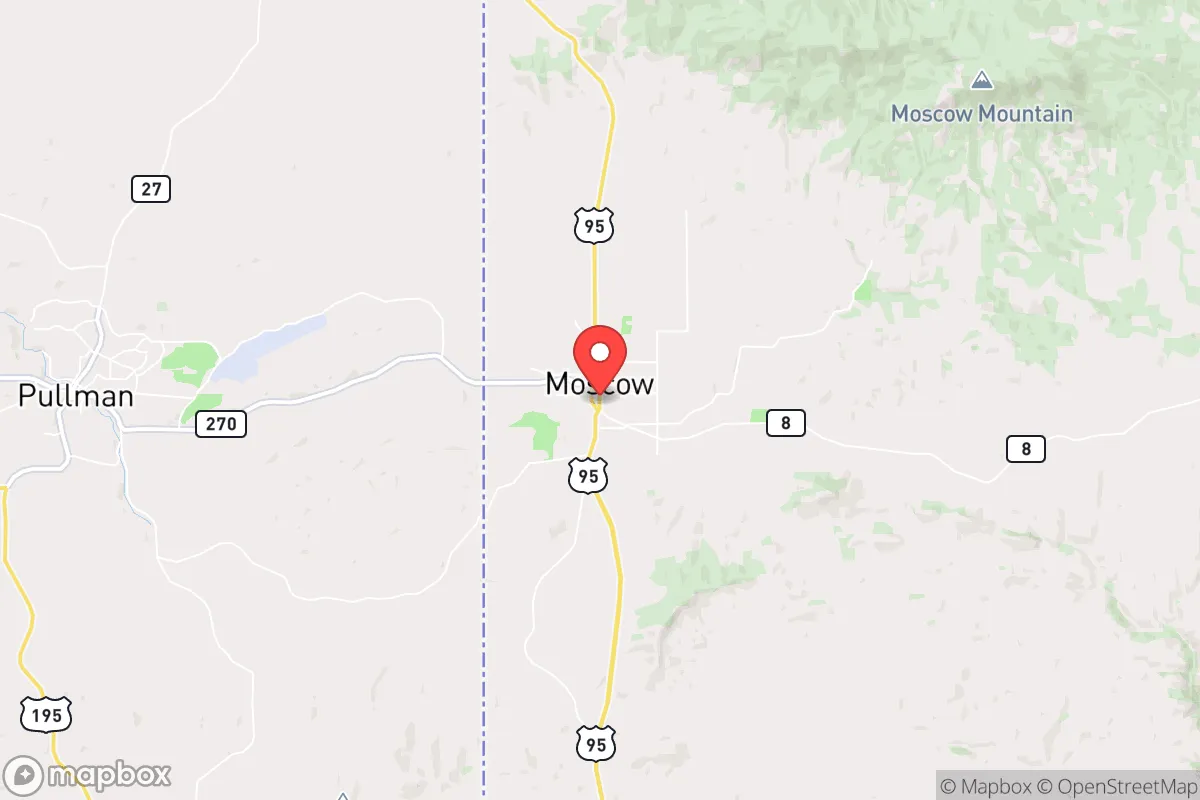
Photo: Wikipedia
Strategic Assessment of Moscow, ID
Strong survivability profile. Good buffer from population centers, with manageable environmental and tactical risks.
What does the Strategic Assessment tell us?
Our Strategic Assessment grades tactical survivability of an area. Major population centers, military targets, fallout zones, natural disasters, and border exposure all drive risk — lower exposure means a more defensible position in a crisis.
This is heavily inspired by Joel Skousen's Strategic Relocation book. Highly recommended you checkout the book ($)What does this tell us?
Our Strategic Assessment grades tactical survivability of an area. Major population centers, military targets, fallout zones, natural disasters, and border exposure all drive risk — lower exposure means a more defensible position in a crisis.
This is heavily inspired by Joel Skousen's Strategic Relocation book. Highly recommended you checkout the book ($)Strategic Pillars

Key Distances
Regional Safe Places
Below is our recommended "safe zones" in Idaho and the surrounding area based on our strategic heuristics. For most people, it's unrealistic to live in a “safe zone” full-time due to work, family or other personal reasons. They tend to be more rural. However, many of these areas are perfect for second homes and retreat properties that double as a vacation home or even a short-term rental.
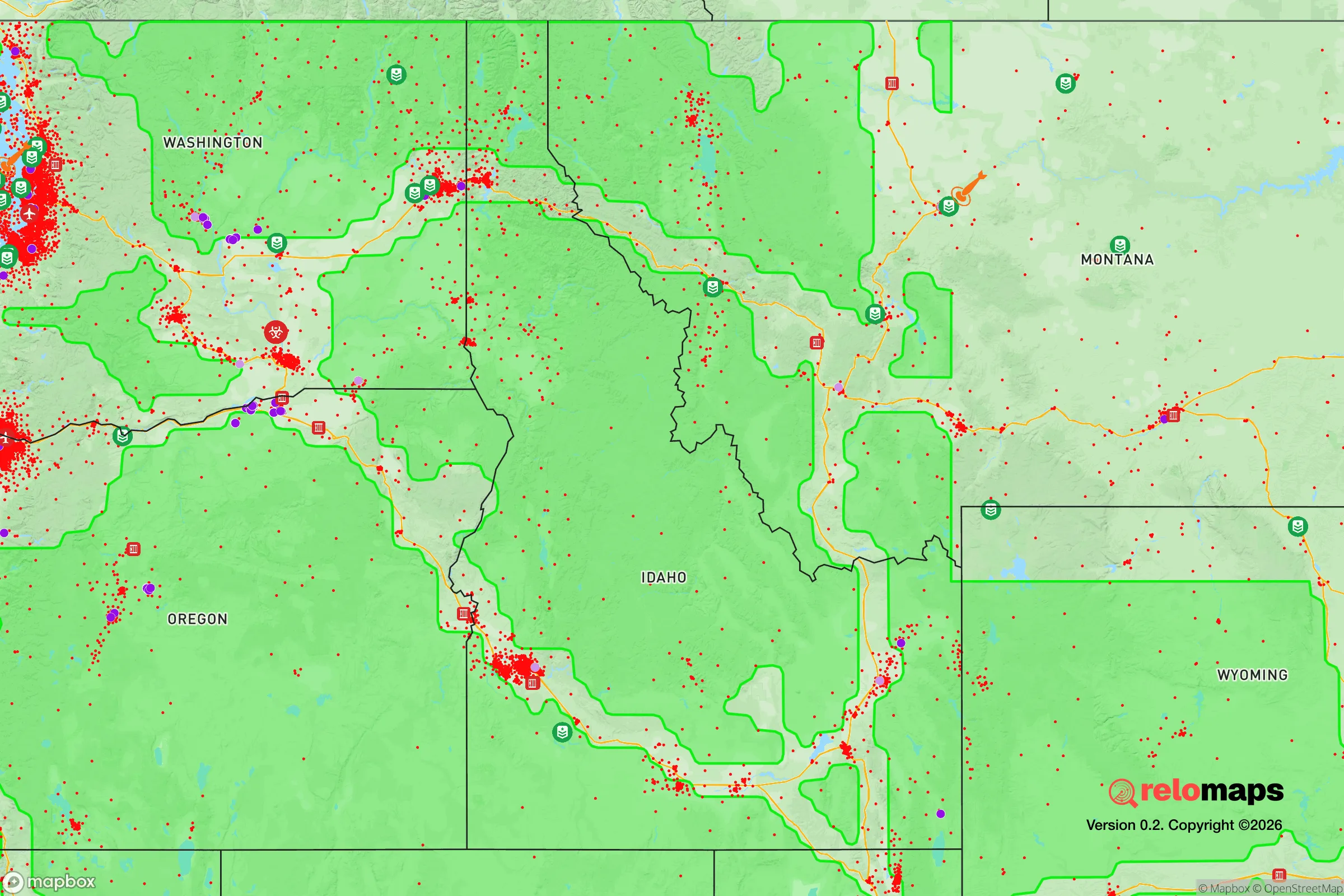
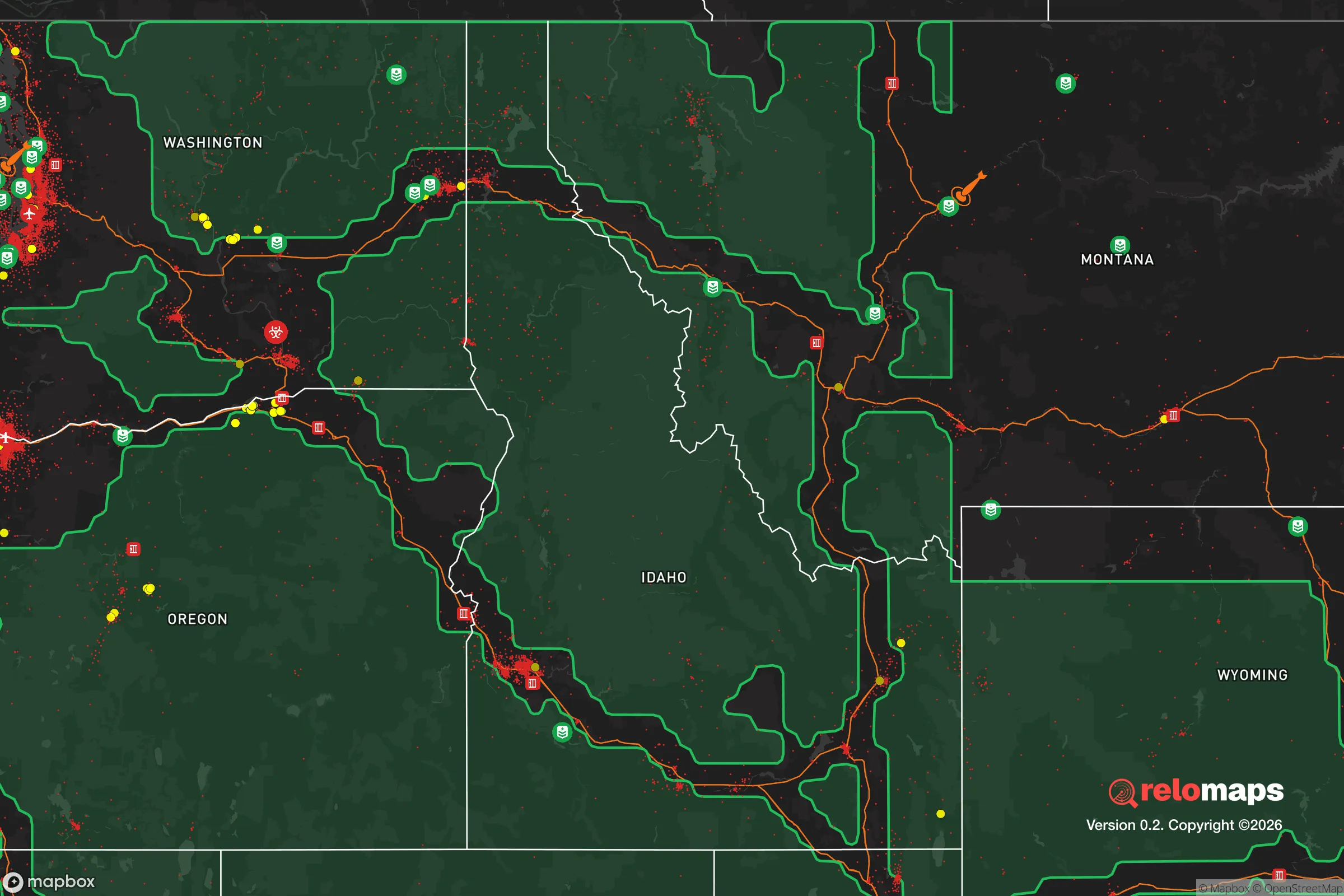


Important Note: For informational purposes only. This does not mean nothing bad ever happens in the green zones. Please use common sense. This is based on public data and modeled with AI. We tried to take a conservative approach but mistakes happen. We update this regularly as new information becomes available.
Solar Generator Recommendations
Backup power matters more here than in safer locations. We've picked three solar generators across budgets and capacity tiers — start with the budget unit if you only need a few essentials, or step up if you want to run a fridge and HVAC for days at a time.

Jackery Portable Power Station Explorer 300
Budget OptionPower on the Go: Weighing only 11 lbs, it's convenient to set up and store with book-sized foldable solar panels

BLUETTI Portable Power Station AC180
Designed for both indoor and outdoor scenarios, AC180 is highly capable as it has a robost capacity and continuous output power.

EF ECOFLOW DELTA Pro Ultra Power Station
Upgraded PickEcoFlow DELTA Pro Ultra is a whole-home energy system designed to grow with your family. Integrated with the Smart Home Panel 2, it scales to meet your evolving energy needs — keeping your home powered, intelligent, and secure through every stage of life.
We earn a commission, at no additional cost to you.
Strategic Assessment Analysis
Moscow, Idaho, offers a strategic relocation option for those prioritizing resilience, offering a blend of geographic isolation and functional connectivity that is rare in the modern Pacific Northwest. Nestled in the Palouse region, this college town of roughly 26,000 sits far from major population centers like Seattle (280 miles) and Portland (300 miles), yet maintains reliable access to essential supply chains via U.S. Highway 95 and State Route 8. For a conservative-leaning prepper, Moscow’s low population density, strong agricultural surroundings, and distance from likely civil unrest zones make it a defensible base, though its proximity to the University of Idaho and the broader Latah County area introduces unique considerations for long-term sustainability.
Geographic position and natural advantages for long-term security
Moscow’s location in the Palouse region provides a distinct natural buffer against cascading disruptions common in coastal or metropolitan areas. The city sits atop the Moscow Mountain range, with elevations around 2,600 feet, offering natural vantage points and limited ingress routes—a key defensibility factor. The surrounding landscape is dominated by rolling wheat and lentil fields, which means local food production capacity is exceptionally high, with Latah County ranking among Idaho’s top agricultural producers. The region’s temperate climate, with average annual precipitation of 21 inches and moderate winters, supports year-round gardening and livestock grazing without the extreme cold of northern Idaho or the wildfire risks of the dry interior. Water resources are robust: the Palouse River and multiple aquifer systems, including the Grande Ronde aquifer, provide reliable groundwater access for wells, and the city’s municipal water supply draws from the Moscow Aquifer, which has a sustainable yield of over 5 million gallons per day. For a relocator, this means off-grid water independence is feasible with a properly sited well, and the agricultural surplus can buffer against supply chain interruptions.
Risks, exposures, and proximity to fallout-relevant landmarks
While Moscow’s isolation is a strength, it is not without vulnerabilities. The city lies roughly 70 miles from the Hanford Site in Washington, a decommissioned nuclear production facility that remains a high-profile target for sabotage or accidental release. Prevailing westerly winds could carry fallout toward the Palouse in a worst-case scenario, though the distance and terrain mitigate acute exposure. More immediate risks include civil unrest spillover from the University of Idaho, which has seen periodic protests and ideological clashes, particularly during national election cycles. The university’s 11,000 students and faculty represent a transient, left-leaning demographic that could become a flashpoint during societal breakdown. Additionally, Moscow is within 15 miles of the Washington-Idaho border, meaning state-level governance differences could create jurisdictional chaos during a crisis—Idaho’s strong Second Amendment protections and conservative governance contrast sharply with Washington’s restrictive policies, potentially drawing unwanted attention from federal or out-of-state actors. The city’s reliance on a single major highway (U.S. 95) for resupply is a critical chokepoint; a bridge failure or road blockage at the nearby Paradise Creek or Potlatch River crossings could isolate the area for days.
Practical resilience for a relocator: food, water, energy, and defensibility
For a prepper evaluating Moscow, the practicalities of daily survival are favorable but require deliberate planning. Food security is the strongest asset: the Palouse produces over 10% of the nation’s wheat, and local farmers’ markets, co-ops like the Moscow Food Co-op, and direct-from-farm purchasing options are abundant. A relocator with acreage can easily establish a permaculture setup, with soil quality rated among the best in the Pacific Northwest for root vegetables and grains. Water access is straightforward—most rural properties can drill a well for $5,000–$10,000, and the Moscow Aquifer’s recharge rate ensures long-term viability. Energy resilience is moderate: the city’s grid is served by Avista Utilities, which relies on hydroelectric power from the Snake River, making it less vulnerable to fuel-supply disruptions than gas-dependent regions. However, solar potential is limited due to frequent cloud cover (over 150 overcast days annually), so a backup generator with propane storage is advisable. Defensibility is aided by the area’s topography—Moscow Mountain and the surrounding hills create natural funnels for approach, and the low crime rate (violent crime at 1.2 per 1,000 residents, well below national average) means fewer pre-existing security threats. The local sheriff’s office and Idaho State Police have a reputation for proactive community engagement, and Idaho’s constitutional carry law allows for immediate self-defense without bureaucratic hurdles.
Overall, Moscow presents a balanced strategic picture for the conservative prepper. Its agricultural abundance, water security, and geographic isolation offer a strong foundation for weathering societal disruptions, while its proximity to a university and a nuclear site introduces manageable but real risks. The key trade-off is between the area’s low-profile, self-sufficient lifestyle and its vulnerability to ideological friction from the academic community. For a single individual or family willing to invest in off-grid water and energy backups, and to maintain a low social profile, Moscow provides a defensible, resource-rich base that aligns with a preparedness mindset—provided one accounts for the chokepoints and fallout exposure that come with living in the shadow of the Palouse’s quiet hills.

* Values derived from national, state, county, city and local statistics and may differ in a specific area. Last updated: 2026-04-21T12:29:23.000Z
Narrative content on this page is AI-generated and may contain mistakes. Verify any details that matter before acting on them.
ReloMaps may earn a commission from affiliate links at no extra cost to you.

