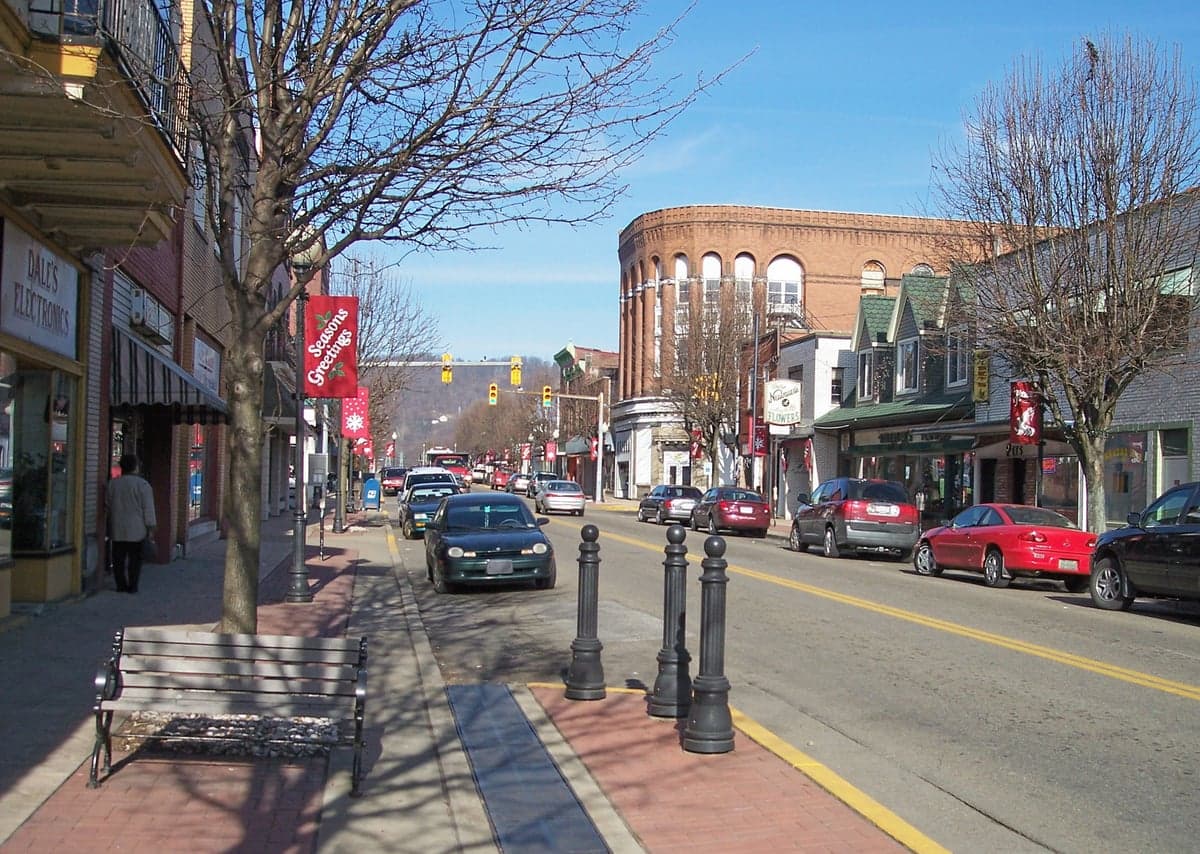
Photo: Wikipedia
Strategic Assessment of Moundsville, WV
Meaningful friction. Expect exposure to either population pressure, blast zones, or natural disaster risk. Consider buying a retreat property.
What does the Strategic Assessment tell us?
Our Strategic Assessment grades tactical survivability of an area. Major population centers, military targets, fallout zones, natural disasters, and border exposure all drive risk — lower exposure means a more defensible position in a crisis.
This is heavily inspired by Joel Skousen's Strategic Relocation book. Highly recommended you checkout the book ($)What does this tell us?
Our Strategic Assessment grades tactical survivability of an area. Major population centers, military targets, fallout zones, natural disasters, and border exposure all drive risk — lower exposure means a more defensible position in a crisis.
This is heavily inspired by Joel Skousen's Strategic Relocation book. Highly recommended you checkout the book ($)Strategic Pillars

Key Distances
Regional Safe Places
Below is our recommended "safe zones" in West Virginia and the surrounding area based on our strategic heuristics. For most people, it's unrealistic to live in a “safe zone” full-time due to work, family or other personal reasons. They tend to be more rural. However, many of these areas are perfect for second homes and retreat properties that double as a vacation home or even a short-term rental.
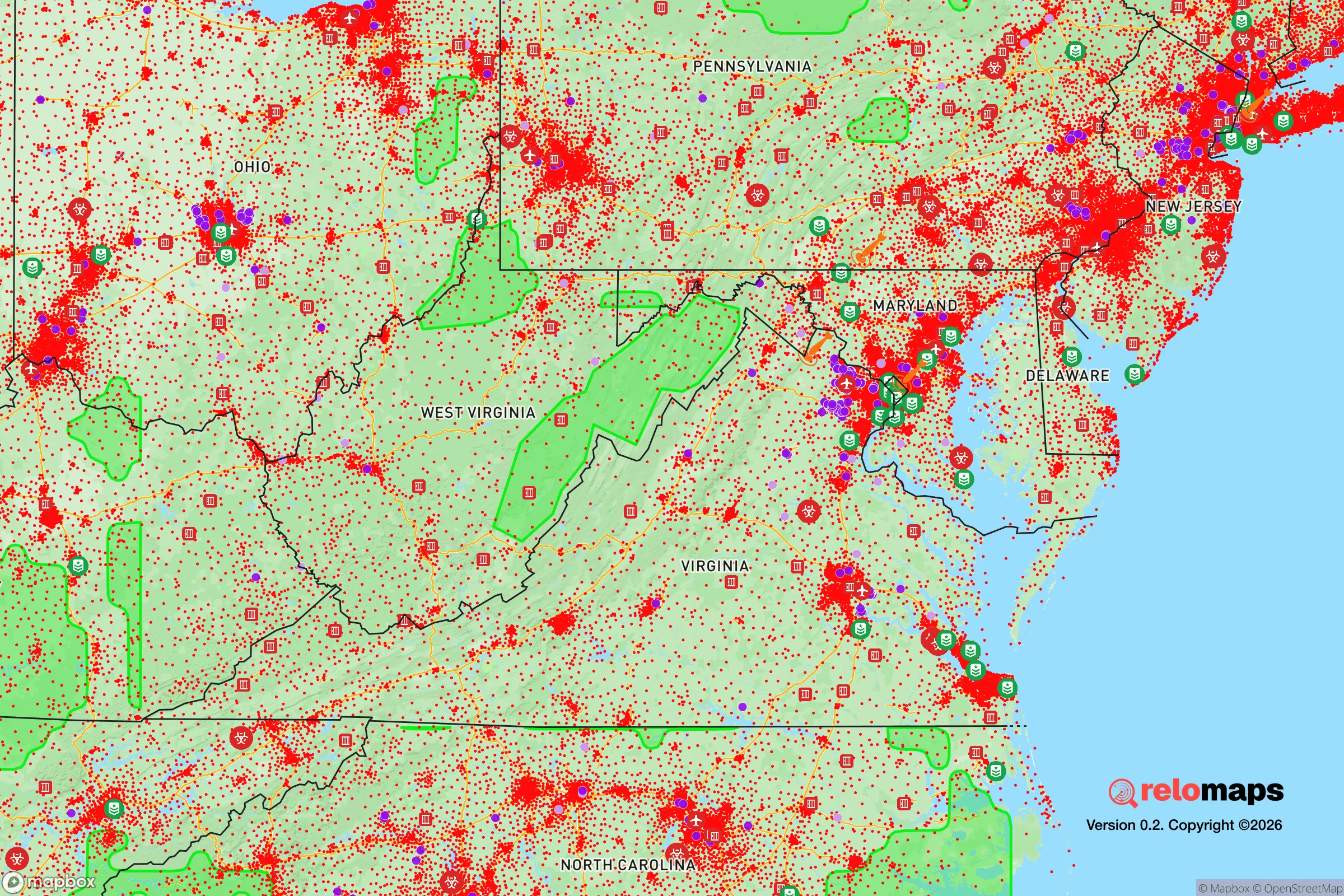
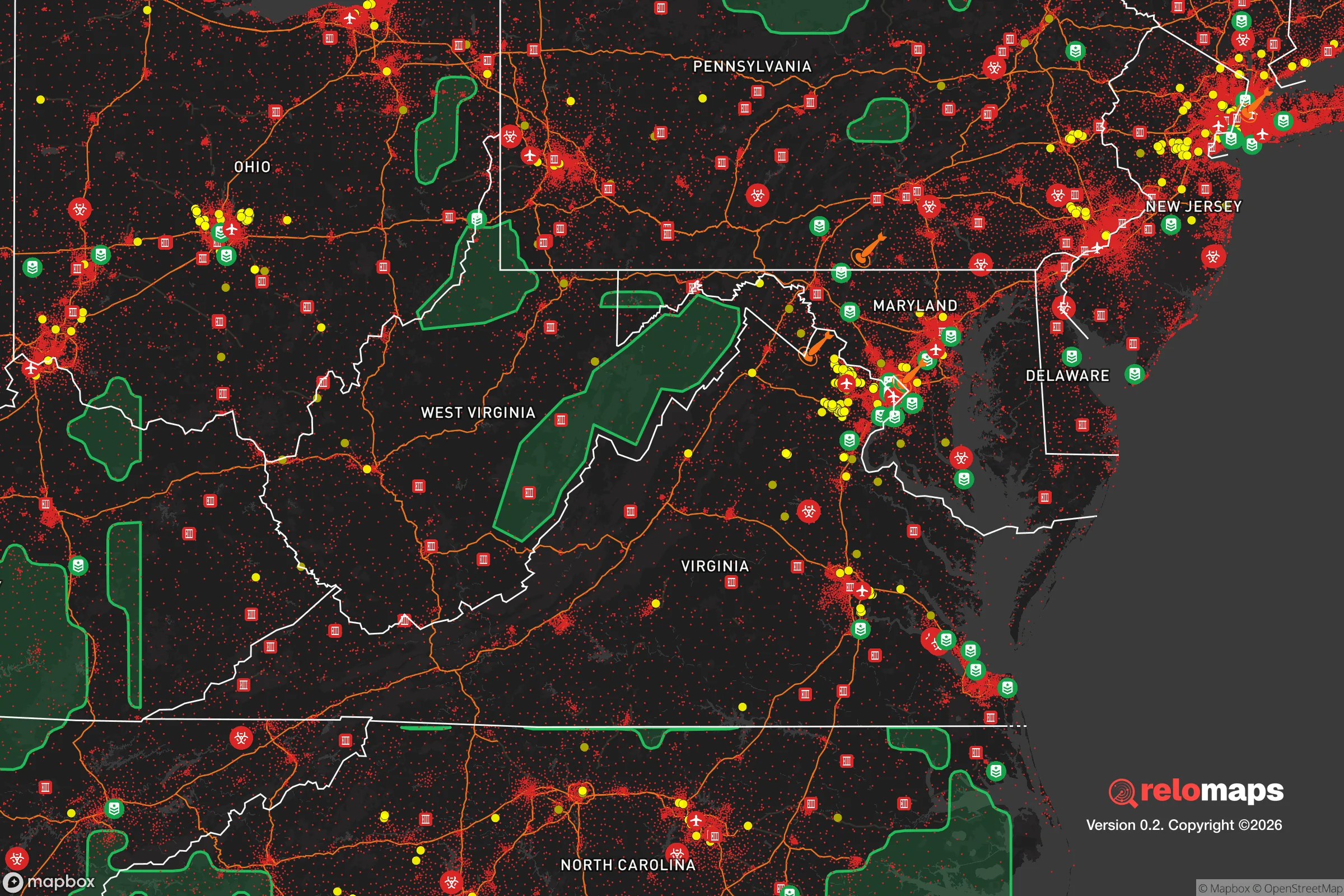


Important Note: For informational purposes only. This does not mean nothing bad ever happens in the green zones. Please use common sense. This is based on public data and modeled with AI. We tried to take a conservative approach but mistakes happen. We update this regularly as new information becomes available.
Solar Generator Recommendations
Backup power matters more here than in safer locations. We've picked three solar generators across budgets and capacity tiers — start with the budget unit if you only need a few essentials, or step up if you want to run a fridge and HVAC for days at a time.

Jackery Portable Power Station Explorer 300
Budget OptionPower on the Go: Weighing only 11 lbs, it's convenient to set up and store with book-sized foldable solar panels

BLUETTI Portable Power Station AC180
Designed for both indoor and outdoor scenarios, AC180 is highly capable as it has a robost capacity and continuous output power.

EF ECOFLOW DELTA Pro Ultra Power Station
Upgraded PickEcoFlow DELTA Pro Ultra is a whole-home energy system designed to grow with your family. Integrated with the Smart Home Panel 2, it scales to meet your evolving energy needs — keeping your home powered, intelligent, and secure through every stage of life.
We earn a commission, at no additional cost to you.
Strategic Assessment Analysis
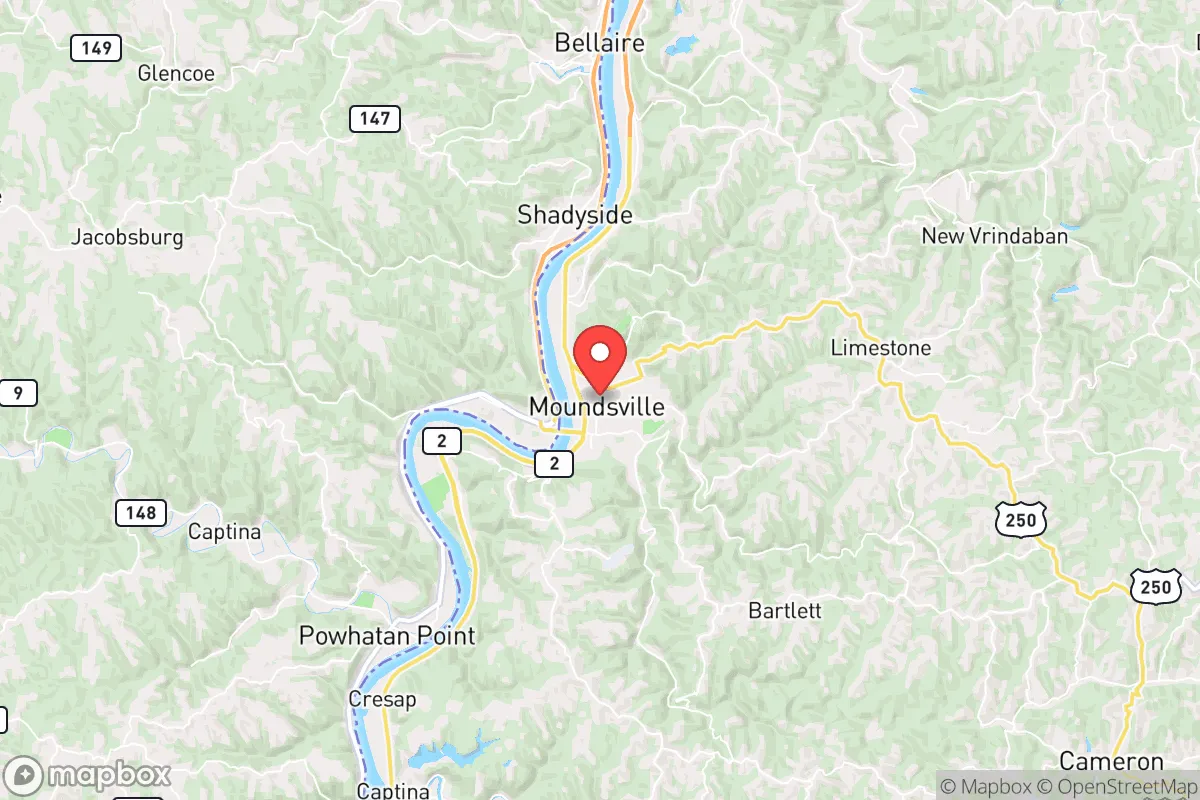
Moundsville, West Virginia, offers a strategic relocation option for those prioritizing resilience and self-sufficiency, sitting in the Ohio River Valley with a population under 9,000. Its location provides a buffer from major metropolitan chaos while maintaining access to critical infrastructure, and the area's historical industrial base means existing utilities and transport links are still viable. For a conservative-leaning prepper concerned with civic unrest or mass casualty events, Moundsville presents a defensible, resource-rich pocket that is close enough to supply lines but far enough from the blast zones of major cities like Pittsburgh (about 60 miles northeast) and Columbus (about 130 miles northwest). The key trade-off is proximity to the massive natural gas storage facility at the former Moundsville Mine, which is both an asset and a liability depending on how you view critical infrastructure in a collapse scenario.
Geographic position and natural advantages for long-term survival
Moundsville sits in the northern panhandle of West Virginia, nestled against the Ohio River, which provides a reliable water source and a natural transportation corridor. The surrounding terrain is hilly and wooded, offering numerous choke points and defensible positions for those who know the back roads. The area is part of the Appalachian Plateau, meaning elevation changes of 200-400 feet are common within a few miles, making it difficult for large-scale mechanized movement off the main highways. The Ohio River itself is a double-edged sword: it provides water and barge transport, but also a predictable avenue of approach. However, the river's width (roughly 1,000 feet at Moundsville) and the steep banks on the West Virginia side create natural barriers. The climate is temperate with four distinct seasons, supporting growing seasons of about 150-170 days for subsistence farming, and the region receives roughly 40 inches of annual rainfall, reducing drought risk compared to the western states. The local geology includes limestone and sandstone bedrock, which supports well water and root cellars, and the area is not prone to earthquakes, hurricanes, or wildfires, making it a stable base for long-term habitation.
Risks, exposures, and proximity to fallout-relevant landmarks
The most significant risk in Moundsville is the Mountaineer Gas Storage Facility, a massive underground natural gas storage field that sits directly beneath the town and surrounding areas. This facility, one of the largest in the eastern U.S., stores billions of cubic feet of natural gas in depleted salt caverns and sandstone formations. While it's been operational for decades without major incident, a catastrophic failure or targeted attack could create a disaster zone comparable to a small nuclear event in terms of immediate blast radius and long-term contamination. The facility is a high-value target in any conflict scenario, and living directly above it is a calculated risk. Additionally, Moundsville is 60 miles from the Beaver Valley Nuclear Power Station (Shippingport, PA) and about 80 miles from the Perry Nuclear Plant in Ohio. While outside the typical 10-mile emergency planning zone, prevailing winds from the west could carry fallout into the Ohio River Valley in a major release. The town is also within 20 miles of the West Virginia State Penitentiary (now a tourist attraction but still a potential civil unrest magnet) and the Northern Regional Jail, which could become focal points during societal breakdown. On the positive side, Moundsville is far enough from Pittsburgh, Columbus, and Cleveland that you won't see the immediate refugee flows that would overwhelm suburbs, but close enough that you can monitor events via radio and make tactical decisions.
Practical resilience for a relocator: food, water, energy, and defensibility
For a prepper or survivalist, Moundsville offers several concrete advantages. Water access is excellent: the Ohio River is a year-round source, and the local water table is high enough that shallow wells (30-60 feet) are common in the surrounding hollows. The town's municipal water comes from the Ohio River, treated at the Moundsville Water Treatment Plant, but a backup well or rainwater catchment system is advisable given the industrial history. Food production is viable: the soil in the river bottom is rich alluvial loam, while the hillsides support orchards and livestock. Local farmers markets operate seasonally, and there are several Amish and Mennonite communities within 30 miles (around New Martinsville and St. Marys) that provide seed stock, livestock, and traditional skills. Energy resilience is mixed: the area is served by Appalachian Power (AEP), and grid reliability is average for rural West Virginia (a few outages per year, usually weather-related). However, natural gas is abundant and cheap, with many homes already using gas for heating and cooking. Solar potential is moderate (about 4.5 peak sun hours per day), but the hilly terrain means you need to carefully site panels. Wood heating is extremely practical, with hardwood forests covering 70% of Marshall County and firewood permits available for $20 per year on state land. Defensibility is strong: the town itself is compact (roughly 2 square miles), with only a few major roads in and out. The back roads through the hills to Cameron, Glen Dale, and into Pennsylvania are narrow, winding, and easily blocked. The local population is predominantly working-class, with a strong hunting and firearms culture—Marshall County has a per-capita gun ownership rate estimated at 55-60%, which is a deterrent to opportunistic threats. The Marshall County Sheriff's Office is professional but small (about 20 deputies), so in a crisis, you are largely responsible for your own security.
The overall strategic picture for Moundsville is one of calculated trade-offs. It is not a remote mountain redoubt—it is a small industrial town with a significant critical infrastructure target sitting beneath it. For the relocator who wants to be within a day's drive of major supply hubs (Pittsburgh, Columbus) but not living in their shadow, Moundsville works. The natural gas storage is the elephant in the room: if you can accept that risk, the water, soil, fuel, and defensibility are solid. The conservative, self-reliant culture is genuine, not transplanted, and the local economy is stable enough that you can work remotely or in trades without drawing attention. For a single individual or family looking to ride out the next decade of potential instability, Moundsville offers a realistic, affordable, and strategically sound base—provided you have a plan for the gas field beneath your feet.

* Values derived from national, state, county, city and local statistics and may differ in a specific area. Last updated: 2026-04-23T06:08:29.000Z
Narrative content on this page is AI-generated and may contain mistakes. Verify any details that matter before acting on them.
ReloMaps may earn a commission from affiliate links at no extra cost to you.

