Photo: Wikipedia
Personal Sovereignty in Mount Pleasant, WI
Moderate friction. Expect trade-offs in some aspect of personal liberty and independence.
What does Personal Sovereignty tell us?
Personal Sovereignty measures your capacity for self-reliance and independence with minimal government friction. Higher scores mean fewer barriers between you and the way you want to live... but it assumes you have the space you need and good neighbors.
What does this tell us?
Personal Sovereignty measures your capacity for self-reliance and independence with minimal government friction. Higher scores mean fewer barriers between you and the way you want to live... but it assumes you have the space you need and good neighbors.
State Policy
Energy independence: Importer (15% of energy produced in-state)
Personal Liberty
Homesteading

Personal Liberty Analysis
Mount Pleasant, Wisconsin offers a mixed bag for those prioritizing personal sovereignty, but the state-level framework provides a stronger foundation for autonomy than many other regions in the Upper Midwest. While local governance in Racine County leans moderately conservative, the real draw for the survivalist or prepper mindset lies in Wisconsin’s constitutional protections and relatively light regulatory touch compared to neighboring Illinois or Minnesota. The area’s affordability and rural-adjacent character allow for a degree of self-reliance that is increasingly rare in 2026, though residents must remain vigilant about creeping local ordinances and state-level overreach on issues like property rights and medical mandates.
Tax burden and regulatory posture: How much the government takes and controls
Wisconsin’s tax burden is moderate but not negligible, and Mount Pleasant benefits from being in a county that has historically resisted aggressive tax hikes. The state’s income tax is a flat 4.4% as of 2026, which is predictable but not as low as no-income-tax states like Texas or Florida. Property taxes in Racine County average around 1.8% of assessed value, which is higher than the national median but typical for the Midwest. For a prepper household, this means a $250,000 home carries an annual tax bill of roughly $4,500—a significant recurring cost that eats into funds better spent on supplies, land improvements, or off-grid infrastructure. On the regulatory side, Wisconsin is a “right-to-work” state, which limits union power and keeps business costs lower, but Mount Pleasant has seen some zoning creep in recent years, particularly around new housing developments that mandate minimum square footage and setback requirements. The county’s regulatory posture is generally permissive for small-scale agriculture and home-based businesses, but anyone planning to run a serious homesteading operation should check local ordinances carefully—some subdivisions have HOA-like restrictions that ban livestock or outdoor storage. The state’s environmental regulations are stricter than those in the Deep South, but far less onerous than California or New York, making it a viable middle ground for those who want to avoid heavy-handed oversight without moving to a completely unregulated jurisdiction.
Self-defense and gun law specifics: What you can own and where you can carry
Wisconsin is a strong Second Amendment state, and Mount Pleasant residents enjoy some of the most permissive gun laws in the Midwest. The state has constitutional carry for both open and concealed carry without a permit as of 2026, meaning law-abiding adults can arm themselves without government permission. There is no state-level magazine capacity ban, no “assault weapon” registry, and no waiting period for long guns or handguns. The Castle Doctrine is fully codified, with no duty to retreat in your home, vehicle, or place of business—a critical protection for anyone serious about self-defense. However, local nuance matters: Mount Pleasant is a village with its own police department, and while Racine County is generally gun-friendly, the city of Racine itself has a more restrictive history. Preppers should note that Wisconsin does have a background check requirement for all firearm purchases from licensed dealers, but private sales between individuals are unregulated. For those building a survival arsenal, the state allows NFA items like suppressors and short-barreled rifles with federal paperwork, and there are no additional state-level taxes or bans on these items. The legal climate for defensive use of force is solid, but anyone involved in a self-defense shooting should expect a thorough investigation—Wisconsin is not a “stand your ground” state in the strictest sense, though the Castle Doctrine provides strong protection inside your home.
Self-reliance and homesteading viability: Lot sizes, zoning, and off-grid feasibility
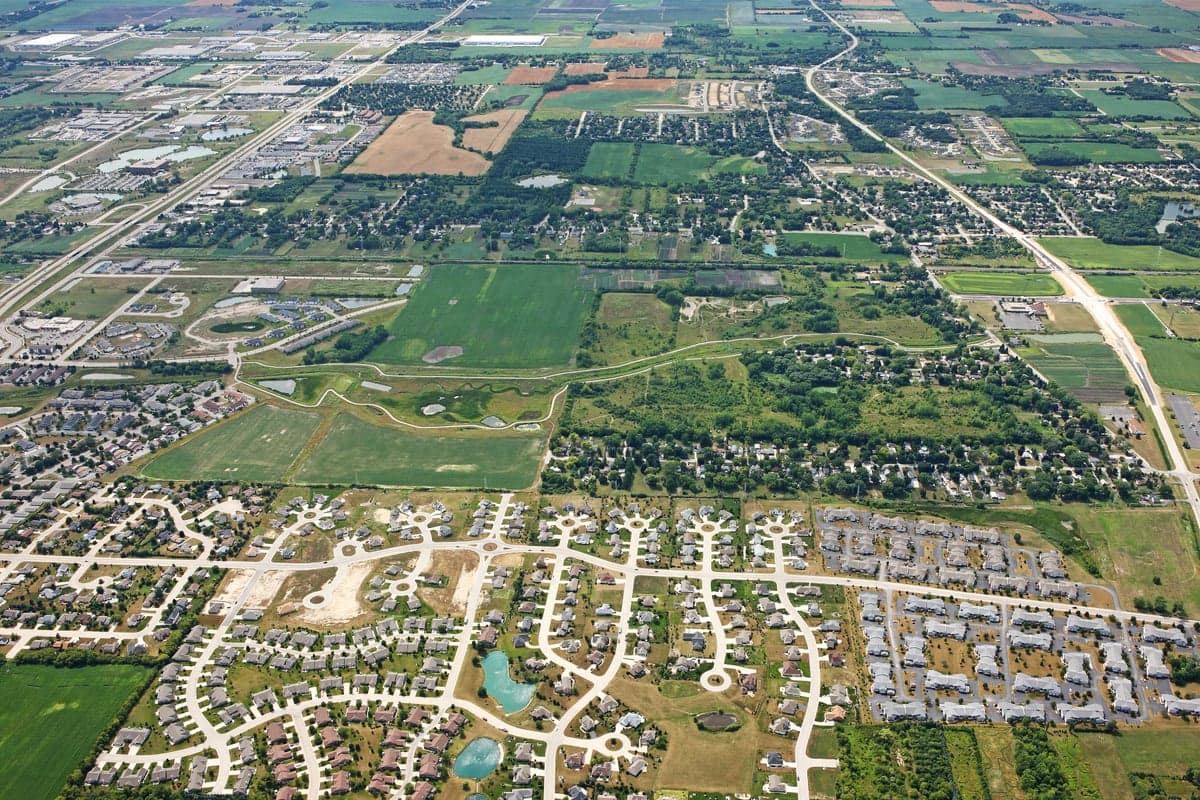
Mount Pleasant’s zoning is a patchwork that requires careful navigation for anyone serious about self-reliance. The village itself is increasingly suburban, with typical lot sizes in newer subdivisions ranging from 0.15 to 0.5 acres, which is too small for meaningful homesteading. However, the surrounding unincorporated areas of Racine County offer much more flexibility, with parcels of 1 to 5 acres still available at reasonable prices—think $50,000 to $100,000 for raw land. Zoning in these rural pockets permits chickens, goats, and even small livestock, though pigs and cattle typically require larger acreage. Off-grid feasibility is limited by Wisconsin’s building codes: the state requires all new homes to be connected to the electrical grid unless you can demonstrate a fully self-sufficient renewable energy system, and septic systems must meet strict DNR standards. Rainwater collection is legal but regulated—you cannot capture it for potable use without a permit, though non-potable irrigation is generally fine. The climate is a major factor: heating season runs seven months, and reliance on wood or propane requires significant storage and labor. For the serious prepper, the best strategy is to buy land just outside Mount Pleasant’s village limits, where zoning is looser and property taxes are lower. The area’s proximity to Lake Michigan provides a reliable water source, but groundwater wells are common and generally produce good quality water with proper filtration.
Personal liberties: Parental rights, medical autonomy, speech, and property
Wisconsin has a mixed record on personal liberties that should concern any sovereignty-minded individual. On the positive side, parental rights are strongly protected under state law, with a 2023 statute affirming that parents have the fundamental right to direct their children’s education, healthcare, and upbringing. This means no forced medical mandates for school attendance, and parents can opt their children out of any curriculum they find objectionable. Medical autonomy is more complicated: Wisconsin did not have a statewide mask or vaccine mandate during the COVID era, but local health departments in Racine County did impose temporary restrictions. The state has no “right to try” legislation for terminal patients, but it does allow for medical freedom of choice regarding treatments—though insurance companies often dictate what’s covered. Free speech is protected under the state constitution, which is generally interpreted broadly, but Mount Pleasant has a noise ordinance that could theoretically be used to suppress amplified speech or protests. Property rights are solid: Wisconsin is a “fee simple” state with strong protections against eminent domain abuse, though the state does have a property tax levy that can increase without a vote if the local government follows specific procedures. For preppers, the biggest concern is the potential for future overreach—Wisconsin’s governor has executive order authority that could be used to impose emergency restrictions, and the state’s history of dairy farming means agricultural regulations are more developed than in purely rural states. Overall, Mount Pleasant offers a better-than-average environment for personal liberty, but it’s not a libertarian paradise—vigilance and local political engagement are necessary to maintain the current level of freedom.
In the broader context of 2026 America, Mount Pleasant represents a viable but not exceptional option for those prioritizing personal sovereignty. It outperforms most of the Northeast and West Coast on gun rights, taxes, and regulatory freedom, but it falls short of the truly low-regulation states like Idaho, Montana, or Texas. For a prepper or survivalist willing to navigate the local zoning quirks and accept a moderate tax burden, the area offers a solid foundation for self-reliance, with good access to water, arable land, and a conservative-leaning local government that generally respects individual rights. The key is to buy land outside the village limits, stay engaged with county politics, and maintain a low profile—Mount Pleasant is not a place where you can openly flout building codes or operate a militia, but it is a place where a determined family can build a resilient, independent life without constant government interference.

* Values derived from national, state, county, city and local statistics and may differ in a specific area. Last updated: 2026-04-21T10:37:43.000Z
Narrative content on this page is AI-generated and may contain mistakes. Verify any details that matter before acting on them.
ReloMaps may earn a commission from affiliate links at no extra cost to you.

