Photo: Wikipedia
Demographics of Mount Pleasant, WI
Affluence Level in Mount Pleasant, WI
A middle-class area roughly in line with national averages across income, home values, education, and employment.
People of Mount Pleasant, WI
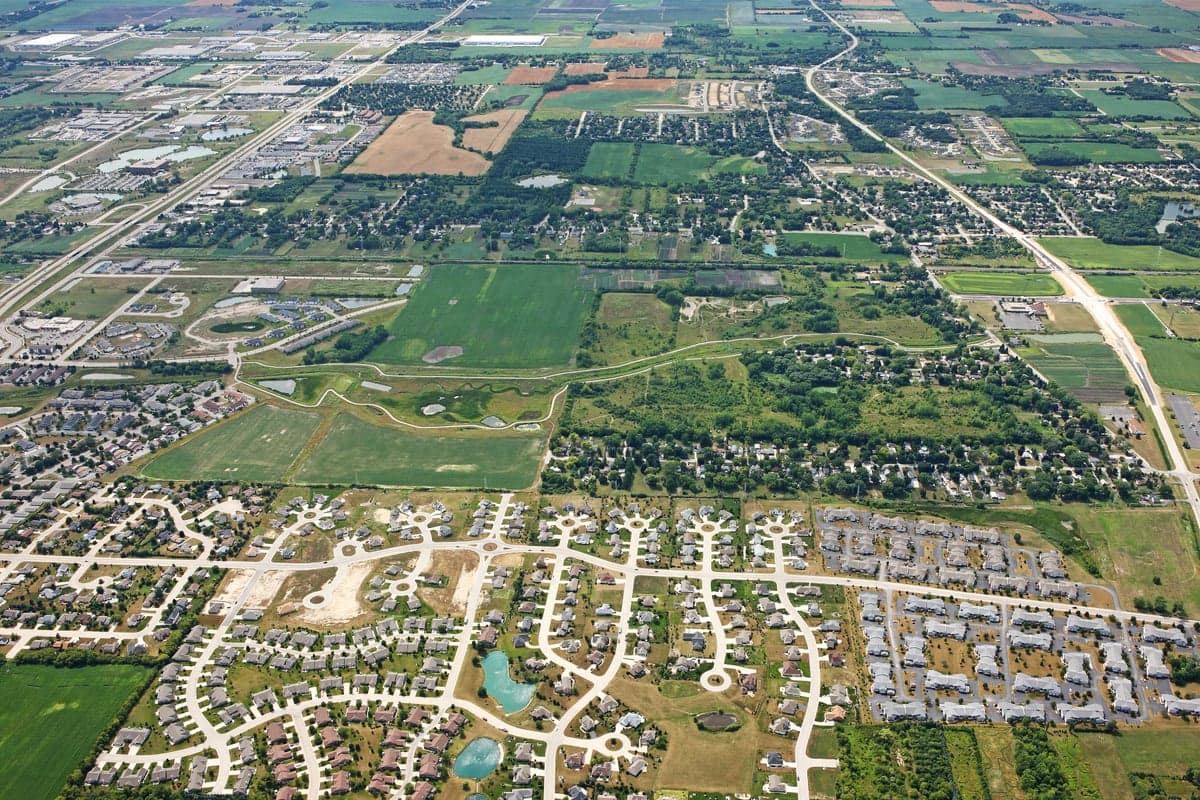
The people of Mount Pleasant, Wisconsin, today form a community of 27,694 that is predominantly White (69.8%) but increasingly diverse, with a notable Hispanic population of 14.2% and a Black population of 9.0%. The city’s character is shaped by its mix of established single-family home neighborhoods, newer suburban subdivisions, and a growing industrial and logistics base, giving it a practical, family-oriented feel. Distinctive identity markers include a strong local pride in the Racine County Fair and a population that is slightly more blue-collar than the national average, with 35.2% holding a college degree. The city is neither a wealthy enclave nor a struggling post-industrial town, but a working-to-middle-class suburb in transition.
How the city was settled and grew
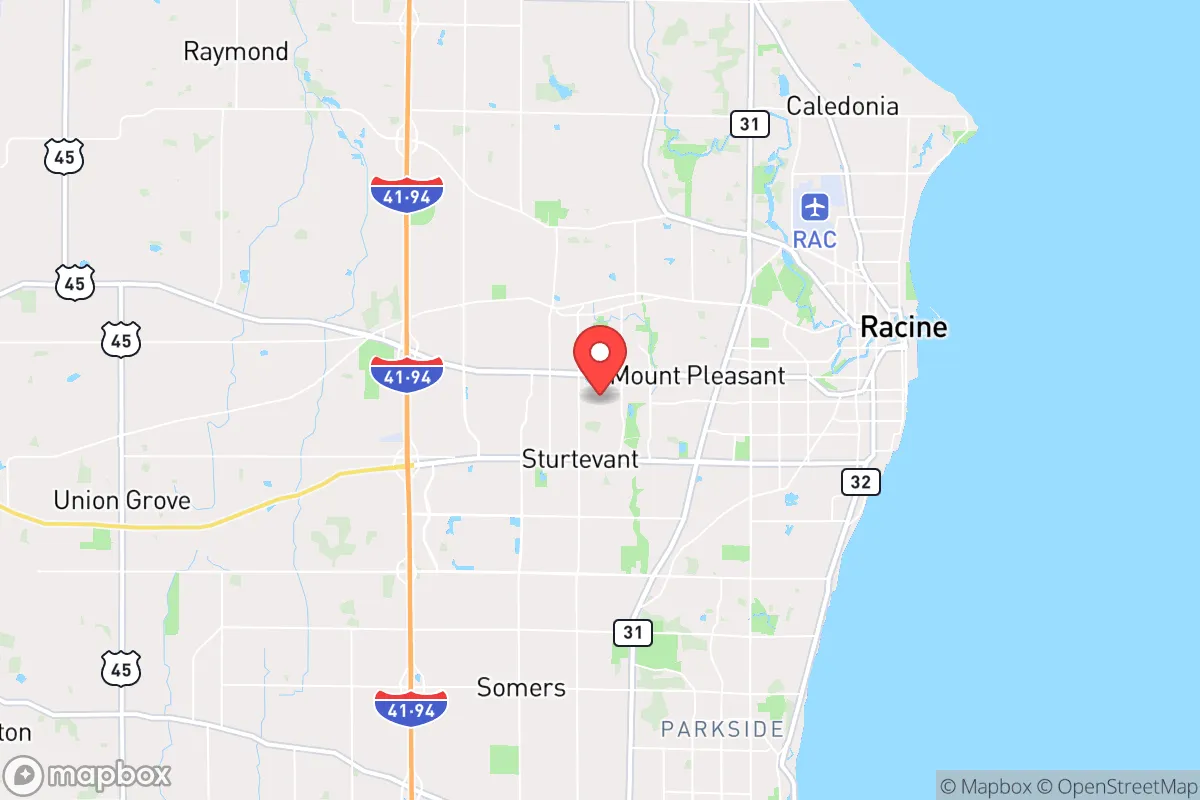
Mount Pleasant’s original population was drawn by agriculture and the promise of land in the mid-19th century. The area was first settled by Yankee and German farmers in the 1840s and 1850s, who established small homesteads and dairy operations. The village of Sturtevant, now a distinct but adjacent community, was a key early node, while the area around Highway 20 and Durand Avenue became the early commercial and residential core. These early settlers were overwhelmingly of Northern European stock—German, Irish, and English—and they built the first churches, schools, and township government. The city remained a rural farming township through the early 20th century, with no major industrial draw until the post-World War II era. The West Lawn neighborhood, with its modest post-war ranch homes, was one of the first areas to see suburban-style development as Racine’s population spilled outward.
Modern era (post-1965)
The post-1965 era brought the first significant demographic shifts. The Immigration and Nationality Act of 1965 opened the door for new arrivals, but Mount Pleasant’s transformation was driven more by domestic in-migration than by foreign-born settlement—the city’s foreign-born population today is just 4.4%. The real change came from suburbanization: as Racine’s manufacturing base (notably at SC Johnson and Case New Holland) expanded, workers sought affordable housing in the township. The Pioneer Park neighborhood, built in the 1970s and 1980s, absorbed many of these new residents, who were largely White families moving from Racine’s older urban core. The Hispanic population began to grow noticeably in the 1990s, driven by agricultural and food-processing jobs in the region. Many of these families settled in the Highway 20 corridor and the area around Spring Street, where older, more affordable housing stock was available. The Black population, at 9.0%, is largely the result of secondary migration from Chicago and Milwaukee, drawn by lower housing costs and the availability of warehouse and logistics jobs. The East/Southeast Asian community (1.6%) is small but present, with families concentrated in the newer subdivisions near Braun Road and County Highway H. The Indian subcontinent population (0.9%) is a very recent arrival, largely tied to professional and tech jobs in the broader Racine-Kenosha corridor, and tends to be dispersed rather than clustered in a single neighborhood.
The future
The population of Mount Pleasant is heading toward greater diversity, but the pace is moderate and the pattern is one of gradual integration rather than tribalization into distinct enclaves. The Hispanic share is likely to continue growing, driven by both natural increase and continued migration for logistics and manufacturing jobs, but it is not expected to create a single ethnic neighborhood—instead, Hispanic families are dispersing across the city’s older housing stock. The Black population appears stable or slowly growing, with no signs of rapid increase. The East/Southeast Asian and Indian communities are small and likely to remain so, as the city lacks the professional job base to attract large numbers of skilled immigrants. The White population, while still the majority, is aging and declining slightly as younger White families move to newer exurban developments in Racine County. The biggest wild card is the Foxconn project (now largely scaled back), which was expected to bring a wave of Asian and Indian professionals but has not materialized. Over the next 10–20 years, Mount Pleasant will likely become a more Hispanic-influenced community, but it will remain a predominantly White, middle-class suburb with a modest but real multicultural character.
For someone moving in now, Mount Pleasant is becoming a quietly diversifying, family-oriented suburb where the old German-farming roots are fading and a more multiethnic, working-to-middle-class identity is emerging. It is not a place of rapid change or stark ethnic divides, but a community where new groups are gradually absorbed into the existing fabric. The practical implication: newcomers will find a city that is welcoming but not transformed, with good schools and affordable housing, but without the deep ethnic institutions or cultural enclaves found in larger cities.

* Values derived from national, state, county, city and local statistics and may differ in a specific area. Last updated: 2026-04-21T10:37:43.000Z
Narrative content on this page is AI-generated and may contain mistakes. Verify any details that matter before acting on them.
ReloMaps may earn a commission from affiliate links at no extra cost to you.

