 Popular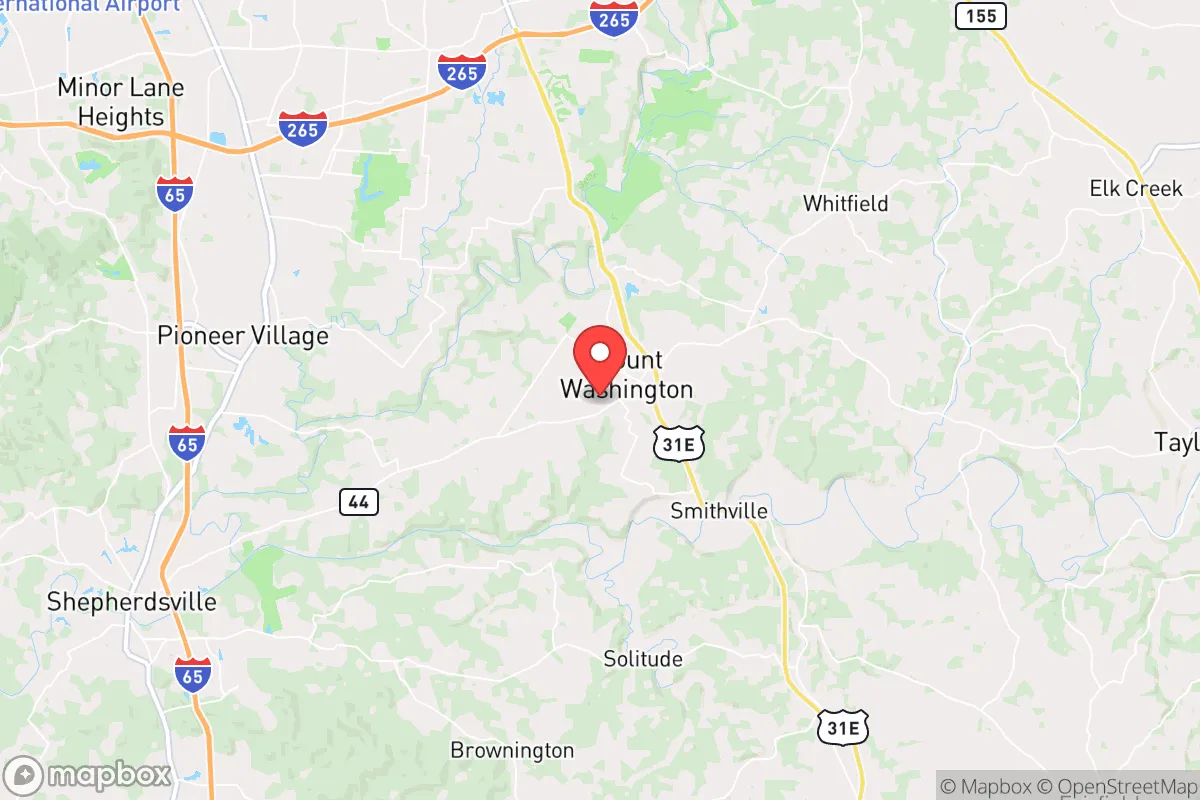
Political ClimatePolitical Climate in Mount Washington, KY
District shown is the primary district for this city’s centroid. Cities may span multiple districts.
Local Political AnalysisPolitical Analysis of Mount Washington, KY
Mount Washington, Kentucky, is about as solidly conservative as small-town America gets, and that’s not changing anytime soon. The Cook PVI clocks the area at R+20, which means Republicans hold a 20-point advantage over Democrats in federal elections—a margin that puts it among the most reliably red suburbs in the state. If you look at the last few presidential cycles, Bullitt County (where Mount Washington sits) has voted Republican by 60-70% of the vote, and local races follow the same pattern. The trajectory here is actually hardening: as Louisville’s progressive policies push outward, more folks are moving south to escape the rising taxes and regulatory creep, and they’re bringing their conservative values with them. You won’t find much appetite for the kind of government overreach that’s become common in bigger cities.
How it compares
Drive 20 minutes north into Louisville’s East End or the Highlands, and you’re in a completely different world—blue-leaning precincts where city council debates focus on bike lanes, diversity initiatives, and higher property taxes. Head west to Shepherdsville, and you’ll find a similar conservative vibe, though Mount Washington tends to be a bit more family-oriented and less industrial. The real contrast is with Bardstown to the south, which has a more mixed political history thanks to its tourism and bourbon industry drawing in a wider range of visitors. But Mount Washington? It’s a bedroom community where people come to raise kids, go to church, and keep government out of their lives. The county commission and school board are dominated by Republicans who prioritize low taxes, gun rights, and local control over schools—no talk of critical race theory or gender ideology in the classroom here.
What this means for residents
For someone moving in, the political climate means you can expect a government that stays out of your business. Property taxes are among the lowest in the region—Bullitt County’s rate is around 0.85% of assessed value, compared to Jefferson County’s 1.2%—and there’s no city income tax. The local sheriff’s office is pro-Second Amendment, and you won’t see mask mandates or business shutdowns like you did in Louisville during 2020. On the flip side, if you’re hoping for rapid transit expansions or big public spending on social programs, you’ll be disappointed. The community prioritizes self-reliance: volunteer fire departments, private schools, and church-based charities handle most of the social safety net. That said, the growth is bringing some tension—new subdivisions are popping up, and with them come debates about zoning and infrastructure. So far, the old guard has held the line against overreach, but keep an eye on city council meetings if you value your property rights.
Culturally, Mount Washington still feels like the Kentucky of 20 years ago. The annual Bullitt County Fair, the 4-H programs, and the heavy presence of Southern Baptist and non-denominational churches set the tone. There’s no push for a “welcoming city” ordinance or a diversity office—the prevailing attitude is that people should be free to live their lives without government interference. The biggest policy distinction you’ll notice is the lack of any noise ordinances or strict building codes that would tell you what color to paint your house or when you can park your boat in the driveway. That’s the kind of freedom that’s getting harder to find in the Bluegrass State, and it’s why folks are willing to pay a premium for land here. If you’re looking for a place where the government trusts you to make your own decisions, Mount Washington is still that place—for now. Just don’t expect it to stay that way if the Louisville sprawl keeps creeping south unchecked.

State Political ClimatePolitical Climate in Kentucky
State Political AnalysisPolitical Environment in the State
Kentucky is a reliably red state at the federal level, having voted for the Republican presidential candidate in every election since 2000, but its politics are far more complex than a simple partisan label suggests. The state is dominated by a conservative coalition that has grown stronger over the last two decades, driven by a sharp rural-urban divide and a steady rightward shift in the state legislature. While Democrats once held a near-total lock on state government, the GOP has controlled both chambers of the General Assembly since 2017 and the governorship for most of the last decade, making Kentucky one of the most reliably conservative states in the South and Midwest.
Urban vs. rural divide
The political map of Kentucky is a textbook study in geographic polarization. The state’s two major urban centers—Louisville (Jefferson County) and Lexington (Fayette County)—are the only reliably blue strongholds, consistently voting Democratic by double digits. Louisville, home to the state’s largest population and a diverse economy anchored by UPS Worldport and healthcare, is the epicenter of progressive activism, while Lexington, with its University of Kentucky influence, leans left but is less intensely partisan. The rest of the state is overwhelmingly red, with rural and exurban counties often delivering 70-80% of their vote to Republicans. The Northern Kentucky suburbs of Cincinnati (Boone, Kenton, Campbell counties) have shifted from swing to solidly red over the past decade, while the Bowling Green area (Warren County) has become a conservative anchor in the south-central region. The Appalachian counties in the east, once reliably Democratic due to union coal mining, have flipped hard to the GOP since 2010, driven by cultural and social issues. The Louisville suburbs like Oldham County remain deeply conservative, while the city itself is a blue island in a red sea.
Policy environment
Kentucky’s policy environment is broadly conservative, with a strong emphasis on low taxes and limited government. The state has a flat income tax rate of 4.5% (down from 6% in 2018) and is on a path to phase it out entirely by 2029 under legislation passed in 2022. Property taxes are among the lowest in the nation, and there is no state-level estate or inheritance tax. The regulatory posture is business-friendly, with a right-to-work law (enacted in 2017) and a tort reform system that caps non-economic damages in medical malpractice cases. Education policy is a flashpoint: the state passed a school choice bill in 2022 creating education opportunity accounts (tax-credit scholarships), but it was struck down by the state Supreme Court in 2023 on constitutional grounds. The legislature is currently pushing a constitutional amendment to allow public funds for private and charter schools. Healthcare is dominated by the expansion of Medicaid under the Affordable Care Act (2014), which covers over 1.5 million Kentuckians, but the state has imposed work requirements (currently blocked in court). Election laws have tightened: voter ID is required (2019), and the state has purged inactive voters from rolls. Abortion is effectively banned after 15 weeks with no exceptions for rape or incest, following a trigger law that took effect in 2022.
Trajectory & freedom
Kentucky is moving in a decidedly more conservative direction on most measures of personal liberty, which is a positive sign for those concerned about government overreach. The state has expanded gun rights significantly: permitless carry (constitutional carry) was signed into law in 2019, and the legislature overrode the governor’s veto in 2021 to allow firearms on school property for staff with concealed carry permits. Parental rights have been strengthened by the 2022 “Parents’ Bill of Rights,” which requires schools to notify parents of any changes to a student’s health or well-being and prohibits instruction on sexual orientation or gender identity in elementary grades. Medical autonomy has been curtailed on the abortion front, but the state has not imposed COVID-19 vaccine mandates or mask mandates beyond federal requirements. Property rights are protected by a strong eminent domain law that requires just compensation and public use. The biggest concern for liberty-minded residents is the state’s high incarceration rate (among the top 10 nationally) and a criminal justice system that has resisted reform, though the 2021 “Safer Kentucky Act” increased penalties for violent crime. The trajectory is toward more freedom on guns, education, and taxes, but less on healthcare choices and criminal justice.
Civil unrest & political movements
Kentucky has seen its share of political flashpoints, though large-scale civil unrest is rare outside of Louisville. The 2020 protests following the death of Breonna Taylor in Louisville led to months of demonstrations, property damage, and a police reform law (the “Breonna Law”) banning no-knock warrants, though it was watered down in the legislature. The state has a strong grassroots conservative movement, particularly in the rural counties, where groups like the Kentucky Family Foundation and local Tea Party chapters are active. Immigration politics are muted compared to border states, but there is a vocal opposition to sanctuary policies—none exist in Kentucky, and the legislature passed a law in 2019 requiring local law enforcement to cooperate with federal immigration authorities. Election integrity has been a major issue since 2020, with the GOP-controlled legislature passing a series of laws to tighten absentee voting, limit ballot drop boxes, and require signature verification. The state has no secession or nullification rhetoric of note, but there is a strong strain of federalism and resistance to federal mandates, particularly on environmental regulations affecting coal country. The most visible flashpoint for a new resident would be the stark cultural divide between Louisville and the rest of the state, which plays out in local news and social media.
Projection
Over the next 5-10 years, Kentucky is likely to become even more conservative, driven by two key demographic trends. First, in-migration from blue states (particularly California, Illinois, and Ohio) is accelerating, with counties like Warren (Bowling Green), Boone (Northern Kentucky), and Oldham (Louisville suburbs) seeing the fastest growth. These newcomers tend to be conservative-leaning, seeking lower taxes and less regulation. Second, the rural population is aging and shrinking, but the remaining voters are becoming more Republican. The state’s flat tax phase-out will likely be completed by 2029, making Kentucky one of the few states with no income tax, which will attract more business and residents. The biggest wildcard is the potential for a school choice constitutional amendment, which could pass in 2024 or 2026 and reshape education policy. The Democratic strongholds in Louisville and Lexington will remain blue, but their influence will be diluted by population growth in red suburbs and exurbs. A new resident moving in now should expect to find a state that is solidly conservative on most issues, with a government that is actively reducing its footprint on taxes and regulation, but with persistent cultural battles over education and healthcare.
For a conservative individual or family considering relocation, Kentucky offers a strong alignment with traditional values: low taxes, gun rights, parental control in schools, and a government that is generally friendly to personal liberty. The trade-offs are a weak social safety net, limited healthcare options in rural areas, and a political environment that can feel polarized between the urban blue islands and the red countryside. If you value a state where your vote counts in a red direction, where your tax burden is shrinking, and where your children’s education is a local matter, Kentucky is a solid bet. Just be prepared for the culture shock if you move from a blue state—the pace of life is slower, the politics are more direct, and the people are fiercely independent.
* Values derived from national, state, county, city and local statistics and may differ in a specific area. Last updated: 2026-04-21T09:11:09.000Z
Narrative content on this page is AI-generated and may contain mistakes. Verify any details that matter before acting on them.
ReloMaps may earn a commission from affiliate links at no extra cost to you.

