Photo: Wikipedia
Find The Best Places To Live
in Bowling Green
PRO TIP! You can paste a Zillow or Redfin link to get info on that property.
What It's Like Living in Bowling Green, KY
Bowling Green feels like a small city that grew up fast without losing its footing. It’s the kind of place where you can grab a coffee at Spencer’s Coffeehouse downtown, catch a WKU Hilltoppers basketball game that same evening, and still be home in fifteen minutes. With a young median age of 27.9, driven largely by Western Kentucky University’s 20,000-plus students, the city has an energy that punches above its 73,638 population—but it also keeps a distinctly Southern, family-oriented pace once you get past the campus blocks.
The Daily Rhythm: Work, Errands, and Weekend Habits
Most people here commute about 19 minutes on average, which means you can live in a quiet neighborhood like Cave Mill or on the outskirts near the Kentucky Street corridor and still get to work or school quickly. The biggest employers—Fruit of the Loom’s global headquarters, the GM Corvette Assembly Plant, and WKU itself—anchor the local economy, and the median household income of $48,419 reflects a workforce that’s heavy on manufacturing, education, and healthcare. Weekends often start with a trip to the Bowling Green Farmers Market (April through October) on the square, then maybe a hike at Lost River Cave, where you can take a boat tour through an underground river. For groceries, Kroger and Publix dominate, but locals swear by the small Mexican markets on the south side for fresh tortillas and produce. The cost of living index sits at 82—well below the national average—so a $232,100 median home value buys you a solid three-bedroom in a decent subdivision, something that’s getting harder to find in Nashville, just an hour south.
Sports, Community, and the WKU Factor
Hilltoppers athletics are the city’s biggest shared experience. WKU football games at Houchens Industries–L. T. Smith Stadium draw 15,000 to 20,000 on fall Saturdays, and basketball at E.A. Diddle Arena is a genuine event—especially when rival Middle Tennessee comes to town. High school sports are also a big deal: Bowling Green High School and South Warren High School regularly compete for state titles in football and basketball, and Friday night games pack bleachers with parents, alumni, and neighbors. There’s no professional team in town, but the proximity to Nashville (about 65 miles) means Titans, Predators, and Sounds games are a doable day trip. The city’s identity is tied to the university more than any single industry—when WKU has a big win, the whole town buzzes, and when the semester ends, you can feel the downtown quiet down noticeably.
What’s There to Do: Festivals, Food, and Outdoor Life
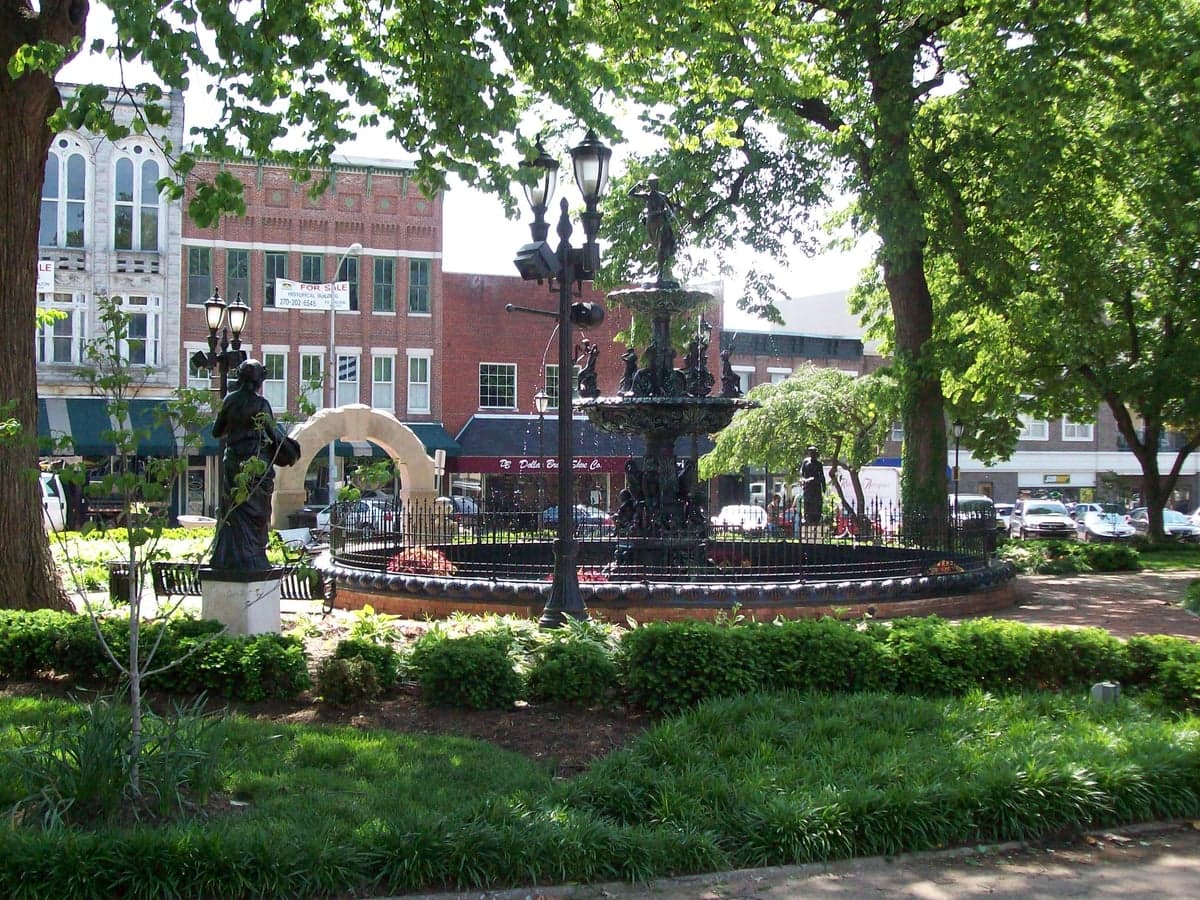
Bowling Green punches above its weight for entertainment. The annual International Festival in September brings food and music from over 40 cultures, reflecting the city’s growing diversity (the local refugee community, especially from Myanmar and Iraq, has added new restaurants and grocery stores). The Southern Kentucky Performing Arts Center (SKyPAC) hosts touring Broadway shows, concerts, and the Bowling Green Symphony. For nightlife, downtown’s Fountain Square has a handful of solid spots: Dublin’s for Irish pub fare and live music, Home Café & Marketplace for a quieter dinner, and Mellow Mushroom for pizza and craft beer. Outdoor enthusiasts head to Barren River Lake State Resort Park (20 minutes east) for boating and fishing, or Chaney’s Dairy Barn for homemade ice cream and a glimpse of local farm life. The city’s biggest frustration? Limited late-night options—most restaurants close by 9 or 10 p.m., and the bar scene is mostly college-focused, so young professionals or families often end up hosting house gatherings.
Pros and Cons of Living Here
- Pro: Low cost of living. A median home value of $232,100 and an 82 cost-of-living index mean your money goes further than in most of the country. Rents for a one-bedroom average around $900–$1,100.
- Pro: Short commutes. The average 19-minute drive means you can live on the outskirts and still be downtown in under 20 minutes. Traffic only gets heavy on Scottsville Road near the mall during peak hours.
- Pro: Strong community feel. People know their neighbors, school events are well-attended, and the city has a genuine small-town friendliness despite its size.
- Con: Limited nightlife and dining variety. If you want a late-night sushi bar or a live jazz club past 11 p.m., you’re driving to Nashville. The food scene is improving but still leans heavily on chains and Southern comfort food.
- Con: Violent crime rate of 183.1 per 100K is above the national average (roughly 380 vs. 380 nationally? Actually 183 is below the US average of about 380—so this is a relative positive). Correction: the violent crime rate here is 183.1 per 100K, which is lower than the national average of about 380, but property crime is slightly higher than average, especially car break-ins near campus.
- Con: Weather extremes. Summers are humid and hot (90°F+ with high humidity), winters are cold but not brutal (average January highs around 45°F), and tornado warnings are a springtime reality—most locals have a weather radio.
Bowling Green works best for people who want a slower, more affordable version of life without being totally isolated from a major city. It’s not for someone who craves a 24-hour urban scene or a high-end dining district. But for a single professional who works at WKU or the Corvette plant, or a parent who wants good schools (Warren County Public Schools are solid, with several magnet options) and a safe place to raise kids, it offers a practical, friendly, and genuinely livable middle ground. The city’s biggest cultural quirk? The Corvette Museum—locals are used to seeing tourists pose with the sinkhole exhibit, but they’re also quietly proud that the only place in the world where Corvettes are built is right in their backyard.

Similar small cities to Bowling Green
* Values derived from national, state, county, city and local statistics and may differ in a specific area. Last updated: 2026-04-21T09:51:58.000Z
Narrative content on this page is AI-generated and may contain mistakes. Verify any details that matter before acting on them.
ReloMaps may earn a commission from affiliate links at no extra cost to you.

