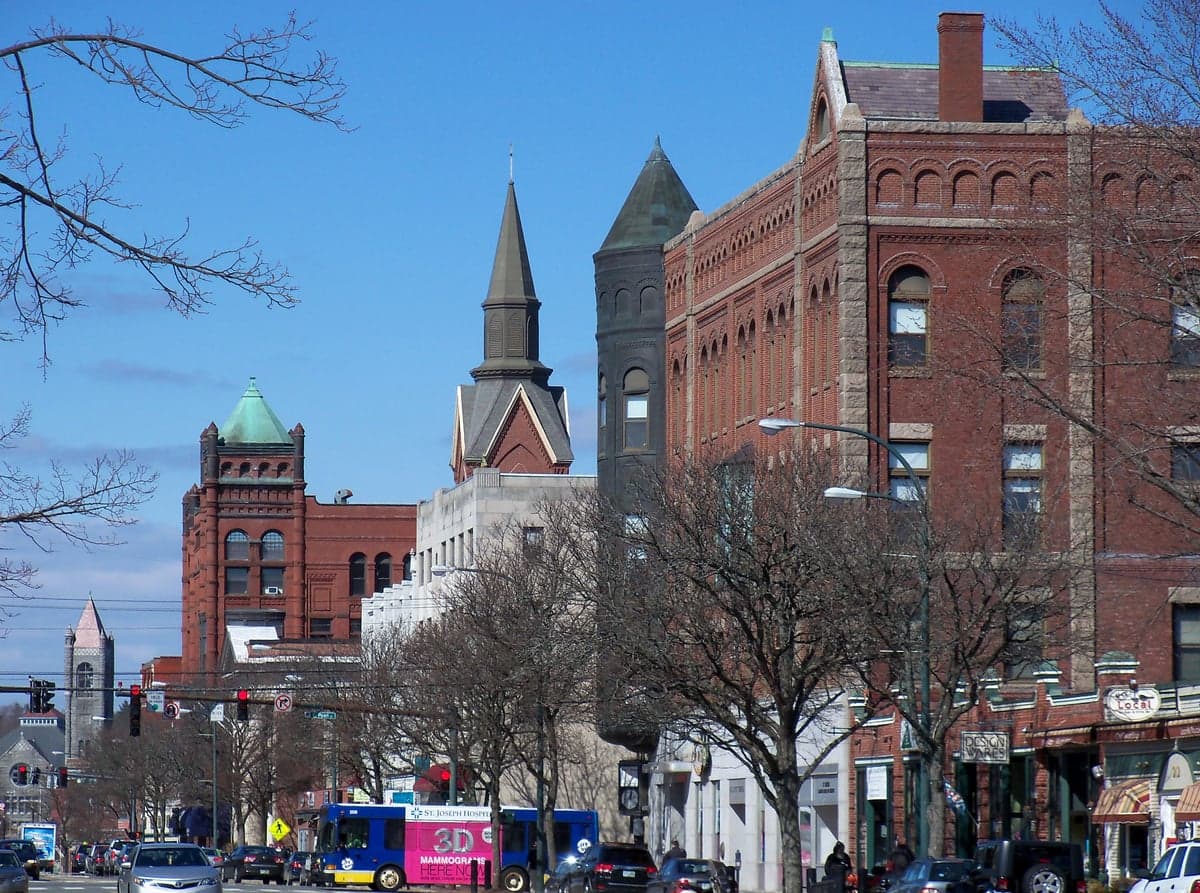
Photo: Wikipedia
Political ClimatePolitical Climate in Nashua, NH
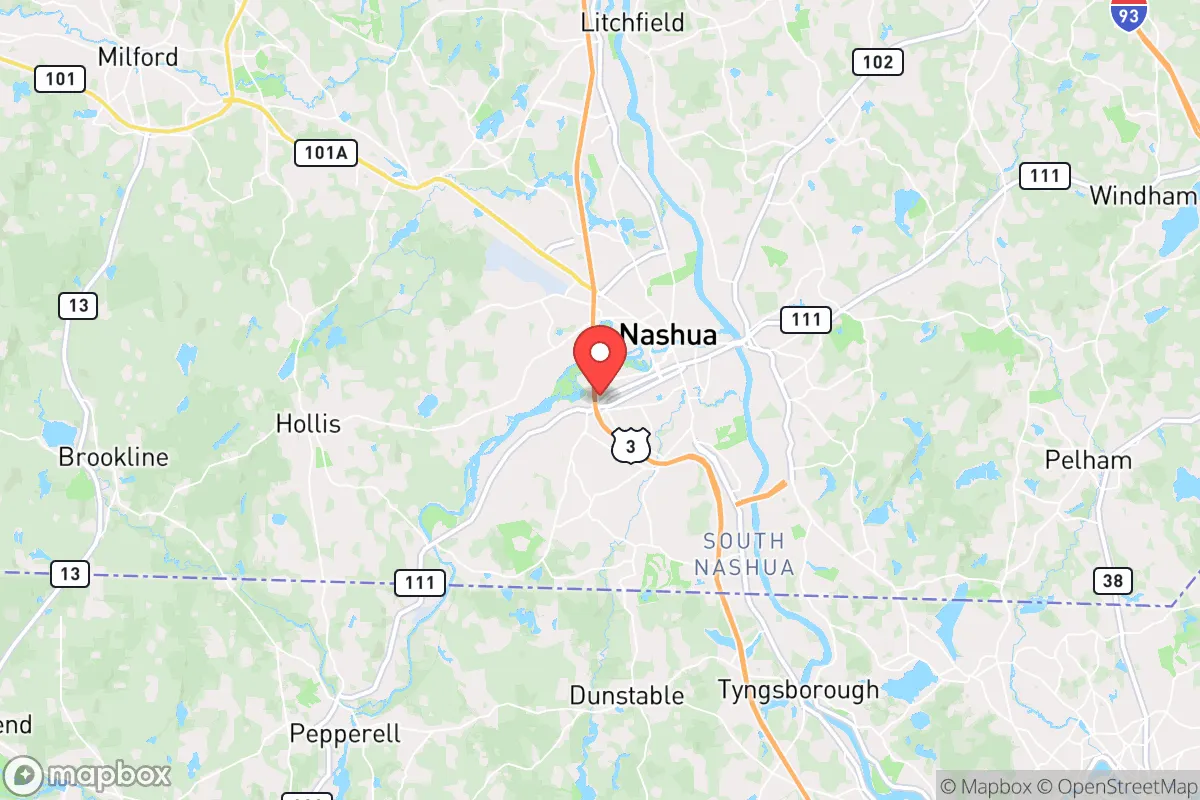
District shown is the primary district for this city’s centroid. Cities may span multiple districts.
Local Political AnalysisPolitical Analysis of Nashua, NH
Nashua, New Hampshire, has a Cook PVI of D+2, meaning it leans slightly Democratic compared to the nation as a whole, but that number doesn't tell the whole story of a city that's been shifting leftward over the past decade. If you've lived here as long as I have, you remember when this was a reliably purple town—a place where fiscal conservatism and live-and-let-live attitudes held real sway. Today, the political center of gravity has moved, and it's worth understanding how that affects your daily life, your wallet, and your freedoms.
How it compares
Nashua sits in a political bubble compared to the surrounding towns. Drive ten minutes north to Hudson or Litchfield, and you'll find communities that vote reliably Republican—places where property taxes are lower and the local government is more skeptical of state mandates. Head west to Hollis or Brookline, and you're in deep-red territory, where town meetings still feel like old-school New England self-governance. Nashua, by contrast, has become a regional hub for progressive policy experiments. The city council has passed ordinances that feel more like what you'd see in Massachusetts—things like stricter rental regulations, plastic bag bans, and a push for "sanctuary city" status that limits cooperation with federal immigration enforcement. For someone who values local control and minimal government interference, the contrast with the surrounding towns is stark.
What this means for residents
For a conservative-leaning resident, the most immediate concern is the steady creep of government overreach into personal choices. The city's school board has embraced critical race theory-inspired curriculum and gender ideology programs that parents are often kept in the dark about—until they try to opt their kids out and hit a wall of bureaucracy. Property taxes in Nashua are already among the highest in the state, and the city's appetite for new spending on social programs and diversity initiatives shows no signs of slowing. Meanwhile, the state legislature in Concord has been flirting with a statewide income tax, which would hit Nashua residents especially hard. If you value the right to keep more of what you earn and raise your family without government telling you how to think, Nashua's trajectory is concerning. The long-term trend is toward more regulation, higher costs, and less room for dissent from the progressive orthodoxy.
What daily life is like for families
On a day-to-day level, most people just go about their business—Nashua is still a safe, well-maintained city with good parks and a decent downtown. But the political climate seeps into everyday life in subtle ways. You'll see "In This House We Believe" signs in front yards, and the local paper's opinion page is dominated by progressive voices. The city's annual "Pride" celebration has grown into a major event, with city resources and school participation that some longtime residents find excessive. If you're a gun owner, you'll notice that the city's police department has been less friendly to concealed carry permit holders in recent years, and there's constant chatter about new local restrictions. The cultural vibe is increasingly one where traditional values are treated as outdated or even harmful. For families who just want to be left alone to live their lives, the pressure to conform to the new orthodoxy is real and growing.
If you're considering a move to Nashua, I'd say come with your eyes open. The city still has a lot going for it—good jobs, solid infrastructure, and proximity to Boston. But the political direction is clear, and it's not turning back anytime soon. The best bet for a conservative-minded person is to get involved in local politics, or at least find your tribe in the surrounding towns where the old New Hampshire spirit of independence still thrives. Just don't expect Nashua to feel like the live-and-let-live place it was twenty years ago.

State Political ClimatePolitical Climate in New Hampshire
State Political AnalysisPolitical Environment in the State
New Hampshire has long been considered a classic swing state with a libertarian streak, but over the past 10-20 years, its political center of gravity has shifted noticeably. While the state still elects a mix of Republicans and Democrats, the dominant coalition in the state legislature and governor’s office has trended conservative, particularly on fiscal issues. However, the southern tier—especially Hillsborough and Rockingham counties—has become a fierce battleground, with the state’s overall lean now best described as leaning Republican in statewide races, but with deep internal fractures that make every election a toss-up. The 2024 presidential race saw the state go for the Republican candidate by a narrow margin, a flip from 2020, driven largely by in-migration of fiscally conservative families from Massachusetts and a backlash against progressive education policies.
Urban vs. rural divide
The political map of New Hampshire is a tale of two distinct regions. The southeastern corner—Manchester, Nashua, Portsmouth, and the Seacoast corridor—is the state’s population center and its most liberal area. Manchester and Nashua are union-heavy, with strong Democratic machines that push progressive social policies. Portsmouth, with its wealthy coastal enclaves, votes reliably blue. In contrast, the rest of the state—the North Country, the Lakes Region, and the western border towns like Keene, Lebanon, and Claremont—is deeply red. The rural-urban divide is stark: Coos County in the north voted +30 points Republican in 2024, while Hillsborough County (home to Manchester) was a virtual tie. The key swing counties are Rockingham and Strafford, where suburban voters in towns like Derry, Londonderry, and Dover have been trending rightward as they flee Massachusetts’ high taxes and restrictive COVID policies.
Policy environment
New Hampshire’s policy environment is a mixed bag that still leans toward freedom compared to its New England neighbors, but the cracks are showing. The state has no broad-based income tax and no sales tax, a huge draw for conservatives. Property taxes are high—averaging around 2.2% of assessed value—but the lack of income tax keeps the overall burden manageable. The regulatory posture is generally light: no state-mandated paid family leave, no rent control, and a right-to-work law (though it’s been under constant attack). Education policy is a flashpoint: the state’s Education Freedom Account program, enacted in 2021, allows families to use public funds for private school tuition, homeschooling, or other educational expenses—a major win for school choice. However, the state’s public schools remain heavily unionized, and curriculum battles over critical race theory and gender ideology have erupted in districts like Bedford and Windham. Healthcare is a mixed bag: the state expanded Medicaid under the Affordable Care Act, but there’s no state-run insurance mandate. Election laws are relatively clean: same-day voter registration is allowed, but voter ID is required. The state’s “Live Free or Die” motto still carries weight, but the legislature has been chipping away at it.
Trajectory & freedom
The trajectory of freedom in New Hampshire is a tug-of-war. On the positive side, the state has seen a major expansion of gun rights: in 2021, the legislature passed a permitless carry law (HB 433), allowing any adult who can legally possess a firearm to carry it concealed without a license. The state also preempts local gun ordinances, so Manchester and Nashua can’t impose their own bans. Parental rights got a boost with the “Parents’ Bill of Rights” (HB 1431) in 2022, which requires schools to notify parents about curriculum changes and medical services. On the negative side, the state’s COVID-era emergency powers were abused by Governor Chris Sununu, who imposed mask mandates and business closures in 2020, though he later resisted vaccine mandates. The legislature has since passed laws limiting future emergency powers, but the memory lingers. Medical autonomy is a bright spot: New Hampshire has no vaccine mandate for adults, and the state’s “Right to Try” law allows terminally ill patients to access experimental treatments. Property rights are generally strong, but the state’s Site Evaluation Committee has been a bottleneck for energy projects, frustrating landowners. The biggest concern is the influx of out-of-state progressives driving up housing costs and pushing for zoning changes in towns like Durham and Hanover.
Civil unrest & political movements
New Hampshire has a long history of political activism, from the Free State Project (a movement of libertarians who moved to the state to shrink government) to the “No Labels” centrist group. The Free State Project, while smaller than its peak, still has a visible presence in towns like Keene and Concord, where they’ve successfully pushed for lower taxes and fewer regulations. On the left, the “Granite State Progress” network and the NH Democratic Party have been active in organizing protests against school choice and gun rights. The most visible flashpoint in recent years was the 2020-2021 COVID protests, where thousands gathered at the State House in Concord to oppose mask mandates and business closures—a stark contrast to the lockdowns in neighboring Massachusetts. Immigration politics are relatively quiet, as New Hampshire has a small foreign-born population, but the state’s “sanctuary city” debate flared up in Manchester in 2023 when the city council considered a resolution to limit cooperation with ICE; it was defeated after heavy pushback. Election integrity controversies have been minimal, though the 2020 election saw a handful of audits in towns like Windham that revealed minor discrepancies, leading to a push for more transparent voting machines. Overall, the political climate is contentious but not violent—more like a family feud than a civil war.
Projection
Looking ahead 5-10 years, New Hampshire is likely to become more Republican at the state level, but more polarized locally. The in-migration from Massachusetts and other blue states is accelerating—the state added over 50,000 new residents between 2020 and 2025—and these newcomers tend to be fiscally conservative but socially moderate. This will likely push the state’s politics toward a “libertarian-leaning Republican” consensus: low taxes, school choice, gun rights, but with a live-and-let-live attitude on social issues like marijuana (already legalized) and abortion (currently legal up to 24 weeks, with no major restrictions). The biggest threat to freedom is the housing crisis: as prices skyrocket, local governments in the southern tier are under pressure to impose rent control and inclusionary zoning, which could erode property rights. The Democratic Party, meanwhile, is doubling down on progressive policies—paid family leave, carbon taxes, and public school funding—which could alienate the moderate voters they need to win. If the national Democratic Party continues its leftward drift, New Hampshire could become a solidly red state by 2032, with the exception of a few blue islands like Portsmouth and Durham. For a conservative moving in now, the state offers a rare combination of low taxes, strong gun rights, and school choice, but you’ll need to pick your town carefully—the Seacoast and Manchester are increasingly hostile to conservative values.
For a new resident, the bottom line is this: New Hampshire is still one of the freest states in the Northeast, but it’s not the libertarian paradise some imagine. You’ll find a low-tax, high-property-tax environment with a strong school choice program and robust gun rights. But you’ll also face a growing progressive presence in the southern cities, a housing crisis that’s driving up costs, and a state government that’s still too comfortable with emergency powers. If you’re willing to live in the rural north or the western towns, you’ll find a community that values independence and self-reliance. If you move to the Seacoast or Manchester, you’ll be in a political battleground where every election feels like a war. Choose your town wisely, and you’ll find a state that still lives up to its motto—but only just barely.
* Values derived from national, state, county, city and local statistics and may differ in a specific area. Last updated: 2026-05-02T04:10:00.000Z
Narrative content on this page is AI-generated and may contain mistakes. Verify any details that matter before acting on them.
ReloMaps may earn a commission from affiliate links at no extra cost to you.

