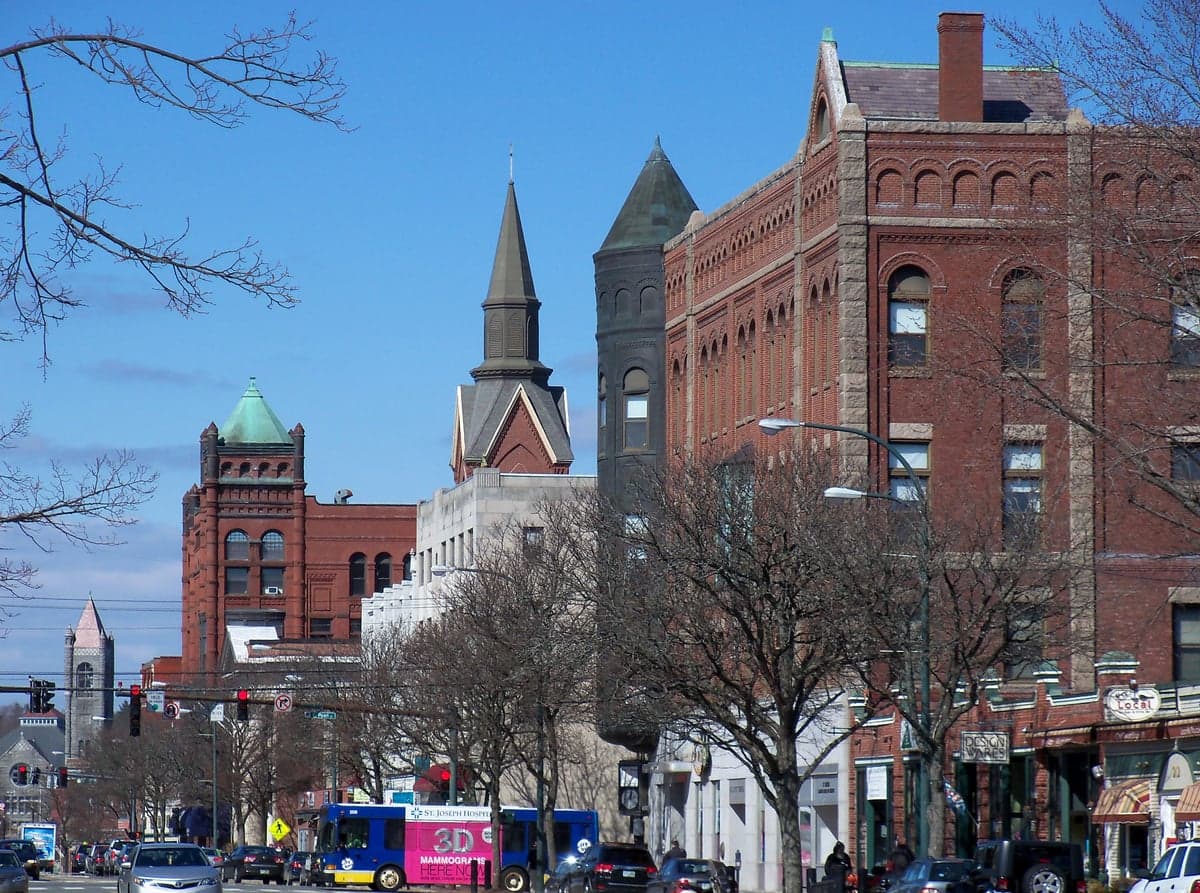
Photo: Wikipedia
Quality of Life in Nashua, NH
Above-average quality of iife. The area offers a reasonable cost of living, decent mobility, and a mix of neighborhood amenities.
What does Quality of Life tell us?
Quality of Life blends cost of living, nearby amenities, socioeconomic signals, and neighborhood character. City-level scores represent the whole municipality; individual neighborhoods can differ.
What does this tell us?
Quality of Life blends cost of living, nearby amenities, socioeconomic signals, and neighborhood character. City-level scores represent the whole municipality; individual neighborhoods can differ.
Cost of Living
38% above national average
The Real Cost of Living in Nashua, NH for 2026
| Tier | Individual | Family (4) |
|---|---|---|
| Survival | $26k | $50k |
| Comfortable | $72k | $107k |
| Luxury | $153k+ | $238k+ |
| Elite (Top 5%) | $180k+ | $280k+ |
87%
The Area Signal
A metric tracking the socioeconomic signals of the area.
Hobbies
Explore the areaGroceries
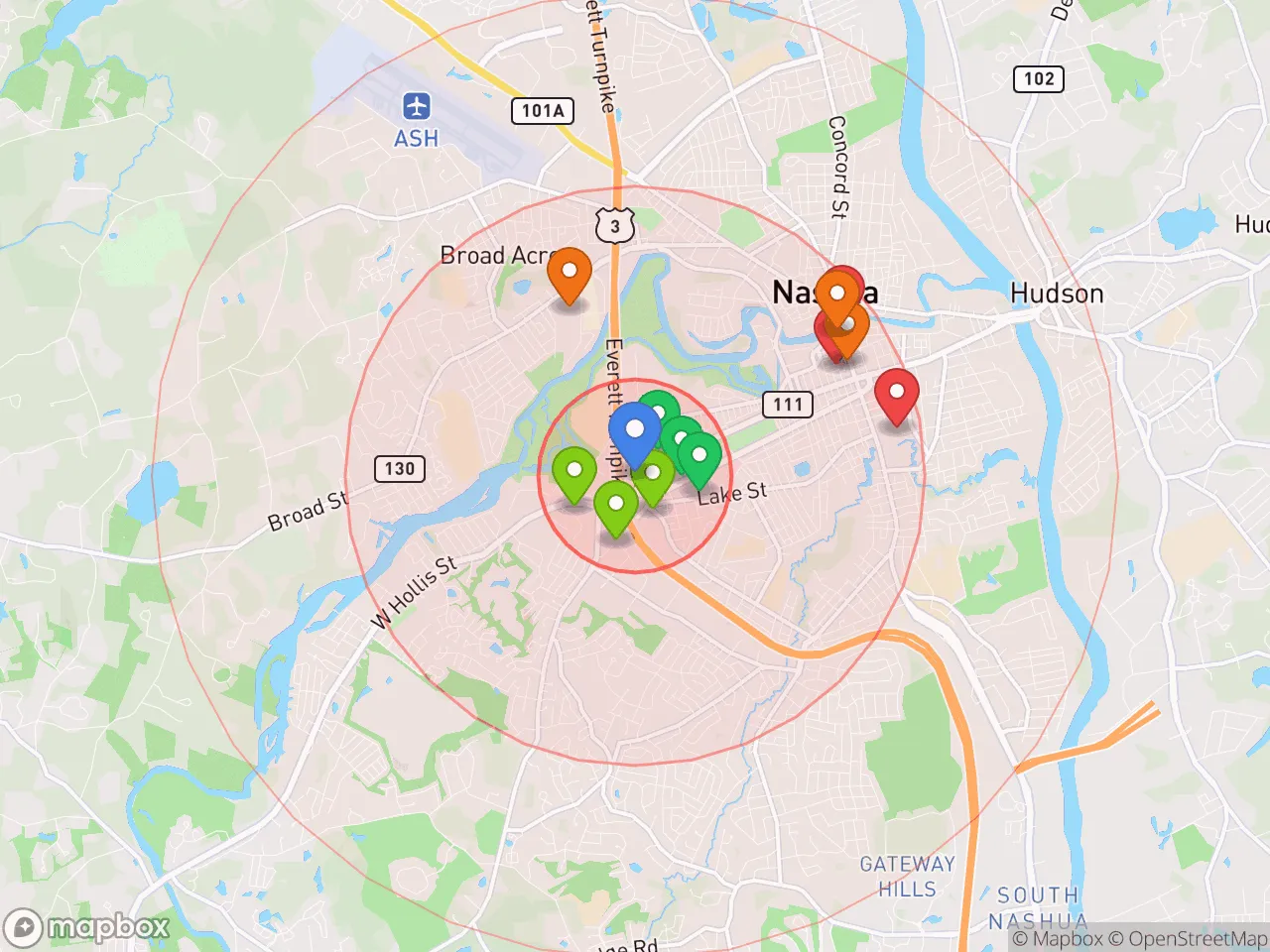
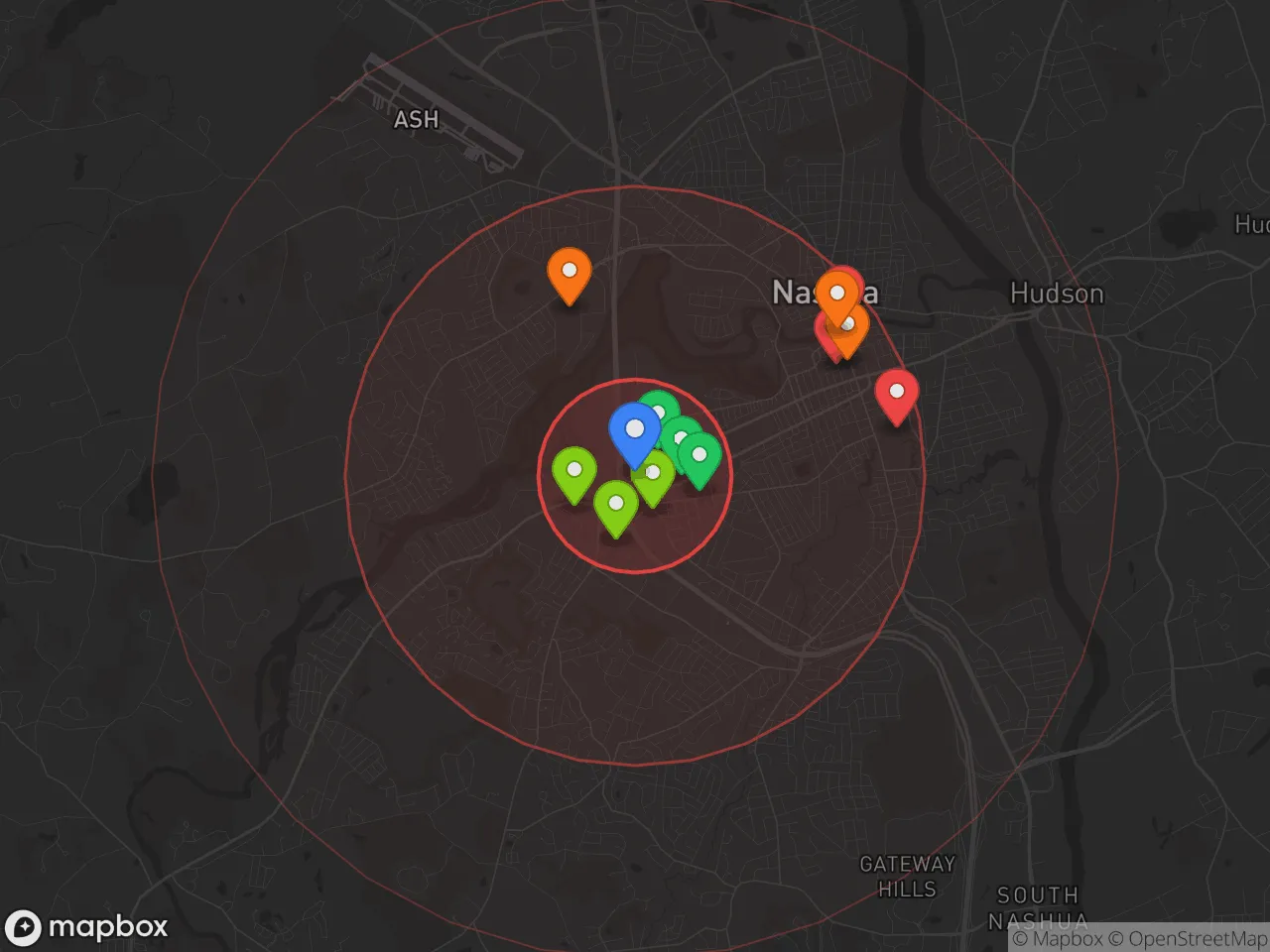
7 within 10 miles
Gas
20 within 10 miles
Hospital
20 within 20 miles
Airport
PDX — Portland International Jetport
Post Office
USPS — 38 Spring Street, Nashua
Critical Amenities
Quality-of-Life Analysis
Nashua, New Hampshire, presents a quality-of-life profile defined by above-average affluence and a strong professional-class tilt, with a cost of living index of 138 (38% above the U.S. average) that reflects its position as a high-wage, high-amenity satellite of the Boston metro. The city attracts a mix of tech workers, healthcare professionals, and young families who trade lower housing costs than Massachusetts for a state with no income or sales tax. With a median home value of $373,100 and median rent of $1,652, Nashua offers a tangible affordability advantage over Boston proper, where comparable housing often costs 50-80% more, while still delivering urban-level services and a notably safe environment.
Cost of living and housing affordability compared to Boston and southern New Hampshire
Nashua’s housing market sits in a competitive middle ground: more expensive than Manchester or Concord, but significantly cheaper than the Massachusetts suburbs just 15 miles south. The median home value of $373,100 is roughly 60% of the median in nearby Lexington, MA, while the median rent of $1,652 undercuts Boston’s citywide median by about $800 per month. Property taxes in New Hampshire are high (averaging roughly 2.2% of assessed value in Hillsborough County), but the absence of a state income tax offsets much of that burden for dual-income households. The average commute of 25.3 minutes is shorter than the Boston metro average of 30+ minutes, a meaningful quality-of-life advantage for workers employed at local anchors like BAE Systems, Southern New Hampshire Medical Center, or Nashua’s growing tech corridor along the Everett Turnpike. For renters, the 1,652 figure represents about 28% of the median household income ($70,000+), keeping housing costs within the generally recommended 30% threshold for most professionals.
Schools, amenities, and the daily rhythm of life in Nashua
Daily life in Nashua centers on a walkable downtown with a restored historic mill district, the Nashua River Rail Trail for cycling and running, and a calendar of community events like the Nashua International Sculpture Symposium and the weekly farmers market. The city’s public schools, particularly Nashua High School North and South, offer strong STEM programs and Advanced Placement options, though some families opt for private or charter alternatives like the Academy for Science and Design. The Nashua Public Library is one of the busiest in the state, and the city’s parks system—including Mine Falls Park’s 325 acres of trails and river access—provides outdoor recreation within a 10-minute drive of most neighborhoods. For daily errands, the city has a dense mix of grocery stores, retail plazas, and restaurants, with the Pheasant Lane Mall and the Amherst Street corridor serving as commercial anchors. The absence of a state sales tax means residents often cross into Massachusetts for big-ticket purchases, but for routine life—school drop-offs, commutes, weekend hikes—Nashua offers a self-contained, low-friction rhythm that appeals to families and remote workers alike.
Nashua is best suited for professionals and families who want Boston-adjacent job access without Boston’s housing costs or commute times, and who value a safe, amenity-rich city with strong schools and no state income tax. The city’s high cost-of-living index is a direct reflection of its desirability and wage base, not a sign of unaffordability for its target demographic. Those who thrive here are typically dual-income households earning $80,000 or more, remote workers who need reliable broadband (Nashua has citywide fiber coverage), and families who prioritize walkable downtowns, good public schools, and proximity to both the White Mountains and the Atlantic coast. For singles or retirees on fixed incomes, the cost structure may be tight, but for the core audience of skilled professionals, Nashua delivers a rare balance of economic opportunity and livable scale.

Crime in Nashua, NH
Lower crime rates than 83% of comparable U.S. locations.
Violent CrimeViolent Crime Analysis
Property CrimeProperty Crime Analysis
Crime Analysis
Nashua, New Hampshire, presents a mixed safety profile that demands careful scrutiny from potential residents. While the city’s violent crime rate of 100 incidents per 100,000 residents is notably lower than the national average, its property crime rate of 929.2 per 100,000 exceeds both state and national benchmarks, signaling a tangible risk for theft and burglary. As a small city within the Boston metropolitan orbit, Nashua’s justice system is influenced by the broader progressive judicial trends common to large metro areas, which can prioritize offender rehabilitation over public safety and victim restitution.
Crime in context
Nashua’s violent crime rate is roughly one-third of the U.S. average, placing it among the safer cities for personal safety in New Hampshire. However, the property crime rate is approximately 30% higher than the national average and significantly above the New Hampshire state average of roughly 600 per 100,000. This disparity suggests that while violent confrontations are rare, residents face a heightened risk of having vehicles, packages, or home belongings stolen. The city’s proximity to the liberal-leaning justice systems of Massachusetts and southern New Hampshire—where progressive district attorneys often advocate for reduced incarceration and alternative sentencing—may contribute to a revolving-door effect for property offenders, undermining deterrence and increasing recidivism.
What residents experience
Daily life in Nashua involves a practical awareness of property crime. Residents commonly report package thefts from porches, bicycle thefts from yards, and occasional vehicle break-ins, particularly in densely populated neighborhoods near downtown and the Pheasant Lane Mall corridor. While violent crime is infrequent, it is not absent: incidents of assault and robbery do occur, often concentrated in areas with higher poverty and transient populations. The progressive judicial philosophy prevalent in Hillsborough County, which includes Nashua, means that first-time and even repeat property offenders frequently receive diversion programs or short sentences, a policy that can leave victims feeling that justice is secondary to offender rehabilitation. For families and retirees, this creates a persistent low-level anxiety about securing personal property.
Neighborhood-level variation is significant. The safer enclaves—such as the North End and areas near the Nashua Country Club—report very low crime rates, with violent crime nearly nonexistent and property crime limited to occasional opportunistic theft. In contrast, the French Hill and Crown Hill neighborhoods, which have higher rental density and closer proximity to the city’s social service hubs, see elevated rates of both property crime and disorder. The Tree Streets area, while historically stable, has experienced a gradual uptick in car break-ins as the city’s overall property crime rate has climbed. Prospective residents should prioritize neighborhoods with strong homeowners’ associations and active neighborhood watch programs, as these have proven effective in mitigating the effects of a lenient justice system. Ultimately, Nashua offers a relatively safe environment for those who take proactive security measures, but the city’s property crime problem—exacerbated by metro-area progressive policies—remains a genuine concern.
* Values derived from national, state, county, city and local statistics and may differ in a specific area. Last updated: 2026-05-02T04:10:00.000Z
Narrative content on this page is AI-generated and may contain mistakes. Verify any details that matter before acting on them.
ReloMaps may earn a commission from affiliate links at no extra cost to you.

