
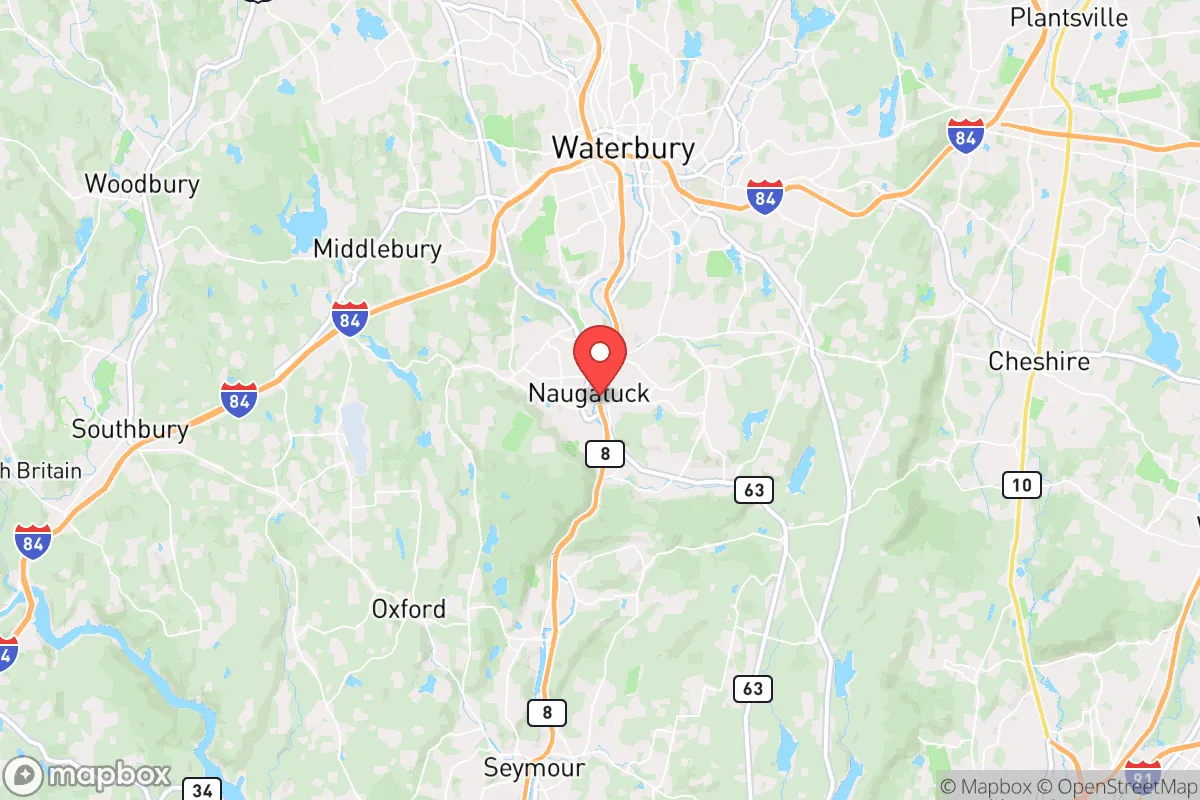
Photo: Wikipedia
Personal Sovereignty in Naugatuck, CT
Viable for self-reliance. Generally workable, though some barriers may limit total independence.
What does Personal Sovereignty tell us?
Personal Sovereignty measures your capacity for self-reliance and independence with minimal government friction. Higher scores mean fewer barriers between you and the way you want to live... but it assumes you have the space you need and good neighbors.
What does this tell us?
Personal Sovereignty measures your capacity for self-reliance and independence with minimal government friction. Higher scores mean fewer barriers between you and the way you want to live... but it assumes you have the space you need and good neighbors.
State Policy
Energy independence: Importer (5% of energy produced in-state)
Personal Liberty
Homesteading

Personal Liberty Analysis
Naugatuck, Connecticut, presents a mixed picture for those prioritizing personal sovereignty, where the town's practical, working-class character often clashes with the state's increasingly centralized regulatory apparatus. While the community itself fosters a certain hands-on, self-reliant ethos, residents must navigate a legal landscape shaped by Hartford that consistently erodes individual autonomy in favor of collective mandates. For the strategic relocator—particularly single individuals and parents with a survivalist or prepper mindset—the key question is whether Naugatuck's local culture can provide enough buffer against Connecticut's broader trajectory of government overreach. The answer is nuanced: the town offers tangible advantages in cost and community, but the state's grip on taxation, self-defense, and medical freedom is tight and tightening.
Tax burden and regulatory posture in Naugatuck
Connecticut's tax burden is among the highest in the nation, and Naugatuck is not exempt from this reality. The state imposes a progressive income tax that can reach nearly 7%, a sales tax of 6.35%, and some of the highest property taxes in the country—Naugatuck's mill rate hovers around 32 mills, meaning a home assessed at $200,000 carries an annual tax bill of roughly $6,400. This is a significant drain on disposable income that could otherwise go toward preparedness supplies, land improvements, or savings. On the regulatory front, Connecticut's posture is aggressively interventionist. The state has a strict building code, extensive environmental regulations (including wetland protections that can complicate any land modification), and a notoriously complex business licensing process. For the prepper, this means that even simple projects—like building a root cellar, installing a rainwater catchment system, or running a small home-based business—can trigger permits, inspections, and fees. The state's regulatory appetite shows no sign of shrinking, making Naugatuck a place where you must budget both time and money for bureaucratic compliance. Compared to a free-state like New Hampshire or even parts of western Massachusetts, the administrative overhead here is a real drag on personal autonomy.
Self-defense and gun law specifics in Connecticut
This is the most critical area of concern for the sovereignty-minded individual. Connecticut has some of the most restrictive gun laws in the nation, and Naugatuck residents must adhere to them without exception. The state requires a permit to purchase any handgun or long gun, a process that includes a background check, a mandatory safety course, and a wait period. "May-issue" concealed carry was replaced by "shall-issue" after a court ruling, but the permitting process remains burdensome and expensive. More alarming for the prepper: Connecticut bans so-called "assault weapons" by name and feature, restricts magazine capacity to ten rounds, and requires registration of all firearms. There is no state-level preemption, meaning local ordinances can add further restrictions—though Naugatuck itself has not gone beyond state law. For the survivalist, this means building a robust personal armory is legally constrained. Stockpiling standard-capacity magazines, owning certain popular rifle platforms (like AR-15s), or carrying a firearm for immediate self-defense without a permit are all illegal. The state also has a "red flag" law allowing for temporary seizure of firearms based on a complaint, which is a direct threat to due process. In a crisis scenario, these laws could become tools for disarmament. For those who view the Second Amendment as a bedrock of personal sovereignty, Naugatuck—and Connecticut as a whole—is a hostile environment.
Self-reliance and homesteading viability in Naugatuck
Naugatuck's zoning and lot sizes offer a glimmer of hope for the self-reliant. The town is a mix of dense urban neighborhoods, older suburban lots, and some rural pockets, particularly in the hills toward the western edge. Minimum lot sizes in residential zones typically range from a quarter-acre to one acre, which is enough for a substantial garden, a small orchard, and a few chickens. The town does allow backyard chickens with a permit, and beekeeping is permitted. However, larger livestock like goats or pigs are generally prohibited in residential zones, and any structure over 200 square feet requires a building permit. Off-grid living is effectively illegal: the town requires connection to municipal water and sewer in most areas, and solar panels must be grid-tied. Rainwater collection for potable use is not explicitly banned but is heavily regulated by the state's Department of Public Health. For the prepper, this means true self-sufficiency—living without utility dependence—is not feasible within town limits. The best strategy is to purchase a property on a larger lot (1-2 acres) in the more rural fringes, where you can maximize gardening and small-scale food production while still complying with zoning. Even then, the state's wetland and conservation regulations can limit clearing, fencing, and building. Naugatuck is a place for incremental self-reliance, not radical off-grid independence.
Personal liberties: parental rights, medical autonomy, speech, and property
Connecticut's record on personal liberties is troubling from a conservative perspective. Parental rights have been systematically weakened: the state mandates comprehensive sex education that includes LGBTQ+ content, and parents cannot opt their children out of specific lessons—only the entire program. Medical autonomy is similarly constrained. Connecticut has some of the strictest vaccine mandates in the country, including for school attendance, and religious exemptions were eliminated in 2021. During the COVID-19 pandemic, the state imposed broad emergency powers that included mask mandates, business closures, and vaccine requirements for healthcare workers, with little legislative check. For the prepper, this raises the specter of future mandates that could affect your family's health choices. Free speech is generally protected, but the state has enacted laws that some interpret as chilling political speech, such as restrictions on "hate speech" and campaign finance regulations. Property rights are under constant pressure from environmental regulations and the state's aggressive use of eminent domain for economic development projects. In Naugatuck, the town's recent downtown revitalization efforts have involved property acquisitions that raised concerns among some residents. The cumulative effect is a legal environment where the state's authority often trumps individual choice, particularly in matters of health, education, and land use.
In the final analysis, Naugatuck offers a lower cost of entry and a more grounded community than many Connecticut towns, but it is still firmly within the orbit of a state government that views personal sovereignty as subordinate to collective control. For the single individual or parent with a survivalist mindset, the calculus is clear: you can build a resilient life here, but you will be doing so within a framework that limits your options for self-defense, medical freedom, and off-grid living. Compared to a state like New Hampshire or even Pennsylvania, Naugatuck's sovereignty score is below average. It is a place for those who are willing to fight for their autonomy within the system, not for those seeking to escape it entirely. If you are committed to Connecticut for family or work reasons, Naugatuck is a reasonable base—but keep your exit strategy ready and your legal compliance meticulous.

* Values derived from national, state, county, city and local statistics and may differ in a specific area. Last updated: 2026-04-30T13:33:15.000Z
Narrative content on this page is AI-generated and may contain mistakes. Verify any details that matter before acting on them.
ReloMaps may earn a commission from affiliate links at no extra cost to you.

